The Puppies of Terra
by Thomas M. Disch
On This Page
Tags
Recommendations





















Member Reviews
My name is White Fang, though of course that is not really my name. At least not any more. My name is really Dennis White, now. I like the old name better; it is more in keeping with the image I have of myself. But perhaps such an attitude is just a hangover from the time I was a pet. Some people would say that once you've been a pet, once you've grown used to the Leash, you're never quite human again- in the sense of being free. I don't know about that. Of course, it is more fun to be Leashed, but one can learn not to want it so badly. I did. And this, in one sense, is the story of how I did it.
It is sixty-seven years since earth was invaded by aliens, and two generations of men have been kept as pets in the Masters' kennels, on earth show more and throughout the solar system. The kennels are campuses where pets are raised and educated in lovely surroundings, and bred by the Masters' who want to improve their pets. Outside the kennels the dingoes, human beings who refused to become pets or were rejected as unsuitable, try to keep things going. The Masters do not have bodies, and appear to be some kind of electromagnetic beings. One of their first acts after the invasion was to take over all electrical generation, and they love auroras and flock to earth when a good display is expected, but when an unusual surge of sun-spot activity knocks the Masters out temporarily it gives the Dingoes a chance to fight back and try to wrest control of Earth back from the aliens.
I liked how this book was written in the form of the memoirs of White Fang, who was born and bought up in the kennels of the Masters. He explains that however unacceptable such terms are nowadays, he must talk of pets and puppies and the Leash since that is how he thought of things at the time. White Fang and his brother Pluto received their names due to a vogue among the first generation of pets for calling their puppies after famous dogs.
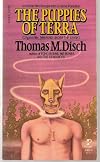
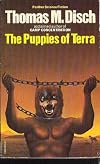
The cover picture doesn't really fit the story. It features a dog standing on its hind-legs, brandishing the broken chain attached to the metal collar round its neck, and two wolves sitting in the background. As the pets of the story aren't dogs but men, it is symbolic of the human pets breaking the mental Leash that controls them, but it still doesn't really work, since most of the pets were freed from the Leash unwillingly and would have preferred to remain pets. During the story we only hear of a single ex-pet who plotted his own escape from the Masters and went Dingo. show less
It is sixty-seven years since earth was invaded by aliens, and two generations of men have been kept as pets in the Masters' kennels, on earth show more and throughout the solar system. The kennels are campuses where pets are raised and educated in lovely surroundings, and bred by the Masters' who want to improve their pets. Outside the kennels the dingoes, human beings who refused to become pets or were rejected as unsuitable, try to keep things going. The Masters do not have bodies, and appear to be some kind of electromagnetic beings. One of their first acts after the invasion was to take over all electrical generation, and they love auroras and flock to earth when a good display is expected, but when an unusual surge of sun-spot activity knocks the Masters out temporarily it gives the Dingoes a chance to fight back and try to wrest control of Earth back from the aliens.
I liked how this book was written in the form of the memoirs of White Fang, who was born and bought up in the kennels of the Masters. He explains that however unacceptable such terms are nowadays, he must talk of pets and puppies and the Leash since that is how he thought of things at the time. White Fang and his brother Pluto received their names due to a vogue among the first generation of pets for calling their puppies after famous dogs.
The cover picture doesn't really fit the story. It features a dog standing on its hind-legs, brandishing the broken chain attached to the metal collar round its neck, and two wolves sitting in the background. As the pets of the story aren't dogs but men, it is symbolic of the human pets breaking the mental Leash that controls them, but it still doesn't really work, since most of the pets were freed from the Leash unwillingly and would have preferred to remain pets. During the story we only hear of a single ex-pet who plotted his own escape from the Masters and went Dingo. show less
This is my second book by Disch. Apparently I need the next one to be the acclaimed novel "Camp Concentration". Otherwise I will see no need to ever read one of his works again. Yes, he can write and some writers praise him. Neither of the two books I read are worth recommendation. The concept, for this one, was good but I didn't like the story enough to finish the book.
Ratings
Members
- Recently Added By
Author Information

165+ Works 8,108 Members
Thomas Disch was a popular & prolific poet, playwright, essayist, & novelist. He is the author of many works of science fiction & the poetry collections "Dark verses & Light" & "Yes, Let's: New & Selected Poems". (Publisher Provided) Thomas M. Disch was born in Des Moines, Iowa on February 2, 1940. He dropped out of the architecture program at show more Cooper Union, and then left New York University after he sold a short story entitled The Double Timer. His first novel, The Genocides, was published in 1965. His other novels include The House That Fear Built, 334, The M.D., The Priest, The Word of God: Or, Holy Writ Rewritten, and Clara Reeve written under the pseudonym Leonie Hargreave. He won several awards including the 1969 Ditmar Award for Camp Concentration, the O. Henry Award in 1975 for Getting into Death and in 1977 for Xmas, the 1980 John W. Campbell, Jr. Memorial Award for On Wings of Song, and the 1981 British Science Fiction Award for The Brave Little Toaster: A Bedtime Story for Small Appliances. He was also wrote poetry, opera librettos, plays, and criticism of theater, films and art. His collections of poetry include Here I Am, There You Are, Where Are We; The Dark Old House; Yes, Let's: New and Selected Poetry; and Dark Verses and Light. He won the 1999 biennial Michael Braude Award for Light Poetry for A Child's Garden of Grammar, the Locus and Hugo Awards for 1999 for The Dreams Our Stuff is Made Of: How Science Fiction Conquered the World, and the Puschcart Prize for The First Annual Performance Art Festival at Slaughter Rock Battlefield. His criticism appeared in several publications including The Nation, The New York Daily News, and The New York Sun. In 1987, he wrote a script for the television series Miami Vice. He shot himself on July 4, 2008 at the age of 68. (Bowker Author Biography) show less
Series
Belongs to Publisher Series
Knaur Science Fiction (5719)
Work Relationships
Common Knowledge
- Original title
- Mankind Under the Leash
- Epigraph
- 'I am His Highness' dog at Kew;
Pray tell me, sir, whose dog are you?'
- Alexander Pope
On the Collar of a Dog - Dedication
- For Olex and Valkyrie,
for Precious and Anathema,
for Sheba and Elf
and good dogs everywhere. - Disambiguation notice
- The Puppies of Terra (Original title: Mankind Under the Leash)
Classifications
Statistics
- Members
- 120
- Popularity
- 270,670
- Reviews
- 2
- Rating
- (3.00)
- Languages
- English, German
- Media
- Paper
- ISBNs
- 3
- ASINs
- 5