
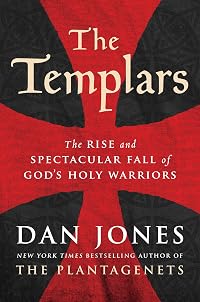
The Templars: The Rise and Spectacular Fall of God's Holy Warriors
by Dan Jones
On This Page
Description
“Dan Jones is an entertainer, but also a bona fide historian. Seldom does one find serious scholarship so easy to read.” – The Times, Book of the YearA New York Times bestseller, this major new history of the knights Templar is “a fresh, muscular and compelling history of the ultimate military-religious crusading order, combining sensible scholarship with narrative swagger" – Simon Sebag Montefiore, author of Jerusalem
A faltering war in the middle east. A band of elite show more warriors determined to fight to the death to protect Christianity’s holiest sites. A global financial network unaccountable to any government. A sinister plot founded on a web of lies.
Jerusalem 1119. A small group of knights seeking a purpose in the violent aftermath of the First Crusade decides to set up a new order. These are the first Knights Templar, a band of elite warriors prepared to give their lives to protect Christian pilgrims to the Holy Land. Over the next two hundred years, the Templars would become the most powerful religious order of the medieval world. Their legend has inspired fervent speculation ever since.
In this groundbreaking narrative history, Dan Jones tells the true story of the Templars for the first time in a generation, drawing on extensive original sources to build a gripping account of these Christian holy warriors whose heroism and alleged depravity have been shrouded in myth. The Templars were protected by the pope and sworn to strict vows of celibacy. They fought the forces of Islam in hand-to-hand combat on the sun-baked hills where Jesus lived and died, finding their nemesis in Saladin, who vowed to drive all Christians from the lands of Islam. Experts at channeling money across borders, they established the medieval world’s largest and most innovative banking network and waged private wars against anyone who threatened their interests.
Then, as they faced setbacks at the hands of the ruthless Mamluk sultan Baybars and were forced to retreat to their stronghold in Cyprus, a vindictive and cash-strapped King of France set his sights on their fortune. His administrators quietly mounted a damning case against the Templars, built on deliberate lies and false testimony. On Friday October 13, 1307, hundreds of brothers were arrested, imprisoned and tortured, and the order was disbanded amid lurid accusations of sexual misconduct and heresy. They were tried by the Pope in secret proceedings and their last master was brutally tortured and burned at the stake. But were they heretics or victims of a ruthlessly repressive state? Dan Jones goes back to the sources tobring their dramatic tale, so relevant to our own times, to life in a book that is at once authoritative and compulsively readable. show less
Tags
Recommendations








Member Reviews
Growing up in a private Christian school, of course I learned about the Templars, but what I learned was heavily biased, if not glossed over. These were not the good guys, even though they thought they were—what Jones calls "the gap between the Templar ideal and real life" (359). They were fanatics. Not only were they vicious, but they were also hypocritical and corrupt. I despise the very notions they held, barging into a land not their own to eradicate its people because they follow a different god. These were campaigns whose repercussions can still be felt today.
I found the epilogue very interesting because Jones delves into the Templars' influence on literature and art (e.g., the Holy Grail). I can see this influence in the show more medieval historical romances I read, which makes those little tidbits I see in fiction even more interesting. He also goes into the connection to freemasonry (which I admit I still do not understand). show less
I found the epilogue very interesting because Jones delves into the Templars' influence on literature and art (e.g., the Holy Grail). I can see this influence in the show more medieval historical romances I read, which makes those little tidbits I see in fiction even more interesting. He also goes into the connection to freemasonry (which I admit I still do not understand). show less
Meg lehetne akár úgy is közelíteni, hogy egy üzleti kézikönyvet olvasunk: hogyan alapítsunk középkori startup-céget, és legyünk irritálóan gazdagok? A helyszín a Templom-hegy Jeruzsálemben, a XII. század legelején, ahol pár férfiember összegyűlik, és brainstormingba kezd. Milyen lefedetlen piaci igény van itt, kérdik egymástól. Körbetekintve látják, hogy özönlik a sok ezer zarándok a Közel-Keletre, ahol épp most foglalták el a keresztesek a partvidék jelentős részét, és minden vágyuk, hogy bibliás helyszíneken szelfizhessenek – dübörög tehát a vallási turizmus. Csakhogy errefelé egyszerűen hemzsegnek a rablók és útonállók, úgyhogy szerencsétlen zarándokokat bármelyik show more pillanatban megkopaszthatják, eladhatják rabszolgának vagy nemes egyszerűséggel kibelezhetik őket. Na, itt villan fel az egyik pacák – Hugues de Payns – fejében az egymillió dukátos gondolat: alakítsunk őrző-védő céget azzal a funkcióval, hogy megvédjük az ideérkező keresztényeket az atrocitásoktól! Sőt, lépjünk eggyel tovább: ezt az őrző-védő céget rögtön jegyeztessünk be mint szerzetesrendet, mert így nem a csóró zarándokoktól kell elszednünk a pénzt, hanem királyokhoz és elsősorban a pápához folyamodhatunk támogatásért. És lőn. A cég a patinás „Templomos Lovagrend” néven megalakul, az igazgatótanács tagjai pedig turnézni kezdenek Nyugat-Európában, hogy befektetőket találjanak maguknak. Ez pedig olyan jól megy, hogy nemcsak a pápa szóbeli támogatását nyerik el, de a lelkes uralkodók is megszórják őket mindenféle földi jóval: birtokokkal, adómentességgel, satöbbivel. Dől a pénz.
A Templomos Rend innentől kezdve sikertörténet, de olyan sikertörténet, aminek alapvetően két arca van. Az egyik a Szentföldön (és a mai Spanyolország területén) vívott folyamatos és változó kimenetelű (de – legalábbis a Szentföldön – egyre esélytelenebb) háború a muszlimok ellen, ahol a lovagok a kereszténység kardjának szerepében tetszeleghetnek. Szó se róla, ezt az ipart igazán profin űzik, gyakorlatilag nem képzelhető el olyan hadmozdulat a vidéken, amiben ne vállalnának szerepet. A másik arcuk nem ilyen látványos, de nem kevésbé lényeges: a templomosoknak juttatott anyagi javak gondozása az európai kontinensen. És hát javaik ugye vannak rendesen, kell is, hogy legyenek, mert a permanens háborúzás elképesztő költségekkel jár, amelyeket elő kell teremteni valahonnan, és ez legitimálja, hogy piszkosul sok földet és ingatlant birtokoljanak. Ez pedig végül oda vezet, hogy a templomosok lassan már királyoknak kölcsönöznek és komplett hajóhadakat (tokkal-vonóval) finanszíroznak. A vállalkozás a csúcsra jutott!
Csak innentől jön a lejtmenet. Főleg azért, mert a Szentföldön a muszlim ellenállás egyre combosabb lesz, egyre-másra foglalják vissza a keresztes háborúkban elveszített területeiket. Ez persze nem a templomosok hibája, mert ők még ekkor is megtesznek mindent, amit csak lehet – más kérdés, hogy ebben a kontextusban ez pusztán azt jelenti, hogy harcolva halnak meg. A baj az, hogy Európa mintha megunta volna a szentföldi kalandot, néha nekibuzdul ugyan, de többnyire magával van elfoglalva, következésképpen az utánpótlás akadozik, a királyok a vállukat vonogatják, ha támogatást kérnek tőlük, sőt, már a templomosokat se hősöknek tekintik, hanem olyasvalakiknek, akik indokolatlanul sok pénz fölött rendelkeznek, de nem tudják megszolgálni azt – értsd: képtelenek egyedül megbirkózni az iszlámmal. Amikor aztán az utolsó keresztény erősség is elbukik a Közel-Keleten, az megpecsételi a lovagok sorsát, bár erről (szokás szerint) ők szereznek utoljára tudomást. Hisz létük értelme a Szentföld elvesztésével megkérdőjeleződött, viszont javaik nagyon is léteznek, és sokan ácsingóznak rájuk – mindenekelőtt Szép Fülöp francia király, aki egy majd kétszáz éves sikersztori végére rak pontot azzal, hogy elindítja a templomosok ellen a csődeljárást. És a csődeljárás ebben a korszakban bizony kínvallatást, várbörtönt és máglyát jelentett. Szívás.
Jól megírt, olvasmányos szöveg egy színes korszakról. Majd olyan érdekes, mint a balga összeesküvés-elméletek, amelyekben a templomosok szerepelnek. Jó, hogy van. show less
A Templomos Rend innentől kezdve sikertörténet, de olyan sikertörténet, aminek alapvetően két arca van. Az egyik a Szentföldön (és a mai Spanyolország területén) vívott folyamatos és változó kimenetelű (de – legalábbis a Szentföldön – egyre esélytelenebb) háború a muszlimok ellen, ahol a lovagok a kereszténység kardjának szerepében tetszeleghetnek. Szó se róla, ezt az ipart igazán profin űzik, gyakorlatilag nem képzelhető el olyan hadmozdulat a vidéken, amiben ne vállalnának szerepet. A másik arcuk nem ilyen látványos, de nem kevésbé lényeges: a templomosoknak juttatott anyagi javak gondozása az európai kontinensen. És hát javaik ugye vannak rendesen, kell is, hogy legyenek, mert a permanens háborúzás elképesztő költségekkel jár, amelyeket elő kell teremteni valahonnan, és ez legitimálja, hogy piszkosul sok földet és ingatlant birtokoljanak. Ez pedig végül oda vezet, hogy a templomosok lassan már királyoknak kölcsönöznek és komplett hajóhadakat (tokkal-vonóval) finanszíroznak. A vállalkozás a csúcsra jutott!
Csak innentől jön a lejtmenet. Főleg azért, mert a Szentföldön a muszlim ellenállás egyre combosabb lesz, egyre-másra foglalják vissza a keresztes háborúkban elveszített területeiket. Ez persze nem a templomosok hibája, mert ők még ekkor is megtesznek mindent, amit csak lehet – más kérdés, hogy ebben a kontextusban ez pusztán azt jelenti, hogy harcolva halnak meg. A baj az, hogy Európa mintha megunta volna a szentföldi kalandot, néha nekibuzdul ugyan, de többnyire magával van elfoglalva, következésképpen az utánpótlás akadozik, a királyok a vállukat vonogatják, ha támogatást kérnek tőlük, sőt, már a templomosokat se hősöknek tekintik, hanem olyasvalakiknek, akik indokolatlanul sok pénz fölött rendelkeznek, de nem tudják megszolgálni azt – értsd: képtelenek egyedül megbirkózni az iszlámmal. Amikor aztán az utolsó keresztény erősség is elbukik a Közel-Keleten, az megpecsételi a lovagok sorsát, bár erről (szokás szerint) ők szereznek utoljára tudomást. Hisz létük értelme a Szentföld elvesztésével megkérdőjeleződött, viszont javaik nagyon is léteznek, és sokan ácsingóznak rájuk – mindenekelőtt Szép Fülöp francia király, aki egy majd kétszáz éves sikersztori végére rak pontot azzal, hogy elindítja a templomosok ellen a csődeljárást. És a csődeljárás ebben a korszakban bizony kínvallatást, várbörtönt és máglyát jelentett. Szívás.
Jól megírt, olvasmányos szöveg egy színes korszakról. Majd olyan érdekes, mint a balga összeesküvés-elméletek, amelyekben a templomosok szerepelnek. Jó, hogy van. show less
With an excellent narrative Dan Jones picks his way across the scorching terrain of the Crusades and how the Templars picked its bones and became the most powerful religious military order in history while using the greed and piety of European Kings to fill their coffers. Gritty, bold and unbiased Dan Jones stands between the Christian and Muslim armies and lets us have it as the arrows fly and the Calvary charges. It's all there. Impetuous Templar leaders, brazen Kings, calculating and precise Muslim leaders all set the scale for centuries of brutal conflict that clearly cannot identify a winner. As you read this book the ground will shake with hooves and the doomed will plead for mercy from their God. The amount of research Jones does show more not only in this volume but all of his works is almost unimaginable. He deserves some serious credit. show less
I haven’t been able to read as much as I usually do, but today (October 13th 2019) I managed to find the time to finish this belter of a book.
And as I’m writing this, it dawned on me that there is an ironic symbolism in that, given the topic of Dan Jones’ superb book.
The Knights Templar – or, to give them their proper title, the Poor Fellow-Soldiers of Christ and of the Temple of Solomon – started out as a rag-tag band of crusading knights based at the Dome of the Rock in Jerusalem, but grew into a major player in world politics (and finance) spreading their influence from the Holy Land to the Hebrides.
They became a vital part of every major operation of successive Crusades, pushed the boundaries of finance and banking – but show more ultimately, this order of what was essentially (intended to be) warrior monks was brought down by very secular means.
And yet, they still influence our collective imagination to this day.
Jones does a spectacular job of boiling down the (at times extremely) motley history of this legendary order to a format that makes it approachable, enjoyable – and at the same time solidly academic.
He draws not only upon Western sources – we also get to hear from chroniclers, courtiers, diplomats and poets from the other side of the conflict. A nice touch, that adds a lot of depth to the narrative.
I flat out loved it, to be honest. Finishing it on October 13th – the date of their downfall in 1307 – was an unexpected little flourish. And if you like your medieval history well-written, impeccably researched and entertaining in tone – you will too.
An easy 5/5 for this one. show less
And as I’m writing this, it dawned on me that there is an ironic symbolism in that, given the topic of Dan Jones’ superb book.
The Knights Templar – or, to give them their proper title, the Poor Fellow-Soldiers of Christ and of the Temple of Solomon – started out as a rag-tag band of crusading knights based at the Dome of the Rock in Jerusalem, but grew into a major player in world politics (and finance) spreading their influence from the Holy Land to the Hebrides.
They became a vital part of every major operation of successive Crusades, pushed the boundaries of finance and banking – but show more ultimately, this order of what was essentially (intended to be) warrior monks was brought down by very secular means.
And yet, they still influence our collective imagination to this day.
Jones does a spectacular job of boiling down the (at times extremely) motley history of this legendary order to a format that makes it approachable, enjoyable – and at the same time solidly academic.
He draws not only upon Western sources – we also get to hear from chroniclers, courtiers, diplomats and poets from the other side of the conflict. A nice touch, that adds a lot of depth to the narrative.
I flat out loved it, to be honest. Finishing it on October 13th – the date of their downfall in 1307 – was an unexpected little flourish. And if you like your medieval history well-written, impeccably researched and entertaining in tone – you will too.
An easy 5/5 for this one. show less
A great treatment of a truly spectacular legend/horrorshow.
The story of the Templar Knights is gloriously varied, complex, courageous, insane, praiseworthy, mysterious, and tragic. It's primarily a history about the five Crusades and chivalry, but it becomes a harrowing monstrosity by the time King Phillipe enacts his vendetta against the Order.
I simplify. There's two hundred years worth of fascinating and edge-of-the-seat crusader action going on here as well as a farce of a trial that cut the head off of the first International Bank that the Templars had become for the sake of stealing its wealth.
Of course, all the Templars COULD have been telling the truth after years of torture in dungeons extracting confessions that they were show more kissing bejeweled bearded heads and penises before and after spitting and trampling across the cross. But... Yeah... That's reasonable.
Dan Brown does a damn good job with the narration, adding bright anecdotes wherever he could.
My only complaint is the summary single-line dismissals in the epilogue for ALL "What Happened Afterward" theories. Whole popular books like [b:Holy Blood, Holy Grail: The Secret History of Jesus, the Shocking Legacy of the Grail|36214125|Holy Blood, Holy Grail The Secret History of Jesus, the Shocking Legacy of the Grail|Michael Baigent; Richard Leigh; Henry Lincoln|https://images.gr-assets.com/books/1505014451s/36214125.jpg|57848486], [b:The Da Vinci Code|968|The Da Vinci Code (Robert Langdon, #2)|Dan Brown|https://images.gr-assets.com/books/1303252999s/968.jpg|2982101], and even Umberto Eco's satire [b:Foucault's Pendulum|17841|Foucault's Pendulum|Umberto Eco|https://images.gr-assets.com/books/1396645125s/17841.jpg|11221066] were given nothing more a few words equivalent to a spit and a trample.
The first was a genuine investigation that might not have panned out with further study, the second was a popular novel that leaves the decision to believe on us, and the third was a funny, sharp-as-nails tongue-in-cheek satire making fun of ALL conspiracies while being erudite at the same time.
Dan Jones could have just kept his history focused on the actual history rather than mentioning, rather dismissively, a rather enormous library of works devoted to the mystery of the Templar Knights and "What Happened Afterward". His opinions in the epilogue are just that. Unsubstantiated opinions. Literally. Single-line dismissals. It mars what was otherwise a fantastic recounting of factual history, even if a lot of the history remains mysterious and missing.
History does require a narrative for us to make sense of it. What Jones left out was the immense amount of learning, from science to history, the exchange of cultures between these two Holy War combatants across the centuries. We are also missing any possible deeper significance to what amounts to the bankrupting of whole nations to retake the Holy Land during a time of plague. It reads like nations preparing for the Olympics or a bloody Football League. WHY would so many resources be thrown at this Search for the Holy Grail?
Oh, wait, see what I did there? I used a metaphor for the whole purpose of the Crusades to illustrate that for a lot of the people there, it was LITERALLY the Search for the Holy Grail.
Narrative. See? Skip the narrative and all you have are a bunch of Monks With Swords aiming to get killed for the Glory of God. Nothing more. It doesn't exactly inspire my imagination. I'm sure the motivations were as varied among the Templars as they would be across any person alive.
Anyway. lol show less
The story of the Templar Knights is gloriously varied, complex, courageous, insane, praiseworthy, mysterious, and tragic. It's primarily a history about the five Crusades and chivalry, but it becomes a harrowing monstrosity by the time King Phillipe enacts his vendetta against the Order.
I simplify. There's two hundred years worth of fascinating and edge-of-the-seat crusader action going on here as well as a farce of a trial that cut the head off of the first International Bank that the Templars had become for the sake of stealing its wealth.
Of course, all the Templars COULD have been telling the truth after years of torture in dungeons extracting confessions that they were show more kissing bejeweled bearded heads and penises before and after spitting and trampling across the cross. But... Yeah... That's reasonable.
Dan Brown does a damn good job with the narration, adding bright anecdotes wherever he could.
My only complaint is the summary single-line dismissals in the epilogue for ALL "What Happened Afterward" theories. Whole popular books like [b:Holy Blood, Holy Grail: The Secret History of Jesus, the Shocking Legacy of the Grail|36214125|Holy Blood, Holy Grail The Secret History of Jesus, the Shocking Legacy of the Grail|Michael Baigent; Richard Leigh; Henry Lincoln|https://images.gr-assets.com/books/1505014451s/36214125.jpg|57848486], [b:The Da Vinci Code|968|The Da Vinci Code (Robert Langdon, #2)|Dan Brown|https://images.gr-assets.com/books/1303252999s/968.jpg|2982101], and even Umberto Eco's satire [b:Foucault's Pendulum|17841|Foucault's Pendulum|Umberto Eco|https://images.gr-assets.com/books/1396645125s/17841.jpg|11221066] were given nothing more a few words equivalent to a spit and a trample.
The first was a genuine investigation that might not have panned out with further study, the second was a popular novel that leaves the decision to believe on us, and the third was a funny, sharp-as-nails tongue-in-cheek satire making fun of ALL conspiracies while being erudite at the same time.
Dan Jones could have just kept his history focused on the actual history rather than mentioning, rather dismissively, a rather enormous library of works devoted to the mystery of the Templar Knights and "What Happened Afterward". His opinions in the epilogue are just that. Unsubstantiated opinions. Literally. Single-line dismissals. It mars what was otherwise a fantastic recounting of factual history, even if a lot of the history remains mysterious and missing.
History does require a narrative for us to make sense of it. What Jones left out was the immense amount of learning, from science to history, the exchange of cultures between these two Holy War combatants across the centuries. We are also missing any possible deeper significance to what amounts to the bankrupting of whole nations to retake the Holy Land during a time of plague. It reads like nations preparing for the Olympics or a bloody Football League. WHY would so many resources be thrown at this Search for the Holy Grail?
Oh, wait, see what I did there? I used a metaphor for the whole purpose of the Crusades to illustrate that for a lot of the people there, it was LITERALLY the Search for the Holy Grail.
Narrative. See? Skip the narrative and all you have are a bunch of Monks With Swords aiming to get killed for the Glory of God. Nothing more. It doesn't exactly inspire my imagination. I'm sure the motivations were as varied among the Templars as they would be across any person alive.
Anyway. lol show less
When I read Dan Jones’ “The Wars of the Roses,” I was hooked onto his style of writing and telling history. So when I decided to pick up this book, I was expecting to love it just as much — and I did. Dan Jones’ capability to narrate history in a way that’s simple yet complex, and in a way that’s completely understandable, is something that I find pleasingly amazing about his writing style.
I personally knew only the basics about the Templars: that they fought in the Crusades and were later accused of heresy and “heinous acts” against the Christian faith. I liked how he pointed out — albeit indirectly — that we don’t really know if they were truly guilty as charged; and he also points out how it is quite possible show more — and feasible — that the Templars’ apparent confessions were coerced.
Personally, some of my favorite facts in this narrative don’t necessarily relate directly to the Templars — they relate to Pope Gregory IX. Fact 1: apparently, Pope Gregory IX thought that cats were the incarnations of Satan (sorry to all you cat lovers). Fact 2: (on page 229) Pope Gregory IX excommunicated the Holy Roman Emperor, Frederick, for procrastinating...which I’m glad isn’t a punishment for procrastination today.
Overall, I really enjoyed “The Templars” and I highly recommend it (along with Dan Jones’ other books). show less
I personally knew only the basics about the Templars: that they fought in the Crusades and were later accused of heresy and “heinous acts” against the Christian faith. I liked how he pointed out — albeit indirectly — that we don’t really know if they were truly guilty as charged; and he also points out how it is quite possible show more — and feasible — that the Templars’ apparent confessions were coerced.
Personally, some of my favorite facts in this narrative don’t necessarily relate directly to the Templars — they relate to Pope Gregory IX. Fact 1: apparently, Pope Gregory IX thought that cats were the incarnations of Satan (sorry to all you cat lovers). Fact 2: (on page 229) Pope Gregory IX excommunicated the Holy Roman Emperor, Frederick, for procrastinating...which I’m glad isn’t a punishment for procrastination today.
Overall, I really enjoyed “The Templars” and I highly recommend it (along with Dan Jones’ other books). show less
Interesting potted history of an enormously influential order that's started out as group of humble knights vowing to protect pilgrims in the Holy Land and ended up as a banking and property cartel that had forgot how to fight in favour of getting very very rich. This of course was their downfall, as an unscrupulous French king greedy for their riches engineered their humiliating downfall. Yet in their heyday, the Templars were feared as the most potent fighting force in the Holy Land, doomed for immediate execution by the Muslims if captured because they were simply too dangerous to let live. Often their bravery was their own worse enemy as they swore to fight to the death, rather than escaping to fight another day. However, as the show more fortunes of the Holy War turned against the Crusaders, and European rulers became less and less interested, their numbers and influence dwindled. Poor choices by reckless and greedy leaders led to them being almost exterminated as a fighting force when the Crusaders were finally evicted from the Holy Land. However, even after they disappeared from Europe, they lived on in fiction and fantasy, the subject of so many conspiracy theories, with which the author deals briefly at the end of the book. Entertaining and well-written history, definitely recommended for those who lack the patience or the inclination to deal with more academic, authoritiave works. show less
Members
- Recently Added By
Lists

al.vick-wishlist-history
70 works; 2 members

Books Read in 2020
4,379 works; 124 members

In Our Time books
4,934 works; 2 members
Author Information

24 Works 9,906 Members
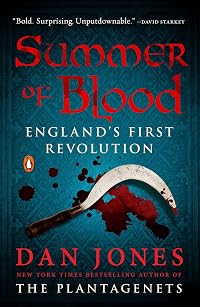
Dan Jones is a British Author, Historian and Journalist. He was born Daniel Gwynne Jones in Reading, England on July 27, 1981, to Welsh parents. Jones was educated at The Royal Latin School before attending Pembroke College, University of Cambridge, where he received a first in History. In addition to his work as a newspaper columnist, Jones show more writes primarily about the middle ages. His titles include The Wars of the Roses, The Plantagenets and Summer of Blood. (Bowker Author Biography) show less
Common Knowledge
- Canonical title
- The Templars: The Rise and Fall of God's Holy Warriors; The Templars: The Rise and Spectacular Fall of God's Holy Warriors
- Original title
- The Templars: The Rise and Fall of God's Holy Warriors
- Dedication
- For Georgina
- First words
- The Templars were holy soldiers. (Introduction)
The story of the Templars takes us across a broad sweep of times, territories and cultures. (Author's Note)
It was a foul autumn morning in Jaffa when the pilgrims came out of the church. - Last words
- (Click to show. Warning: May contain spoilers.)That, perhaps, is the real legacy.
(Click to show. Warning: May contain spoilers.)From time to time I may have achieved neither: I can ask only for your patience and understanding. (Author's Note)
(Click to show. Warning: May contain spoilers.)Enjoy the ride. (Introduction) - Blurbers
- Cornwell, Bernard; Gregory, Philippa; Frankopan, Peter
Classifications
- Genres
- History, Religion & Spirituality, General Nonfiction, Nonfiction
- DDC/MDS
- 271.7913 — Religion History of Christianity Religious congregations and orders in church history Lesser Roman orders Other lesser Roman orders Military Orders Knights Templar
- LCC
- CR4743 .J66 — Auxiliary Sciences of History Heraldry Heraldry Chivalry and knighthood (Orders, decorations, etc.) Orders, etc.
- BISAC
Statistics
- Members
- 1,252
- Popularity
- 19,578
- Reviews
- 19
- Rating
- (3.92)
- Languages
- 13 — Dutch, English, Estonian, French, German, Italian, Lithuanian, Polish, Russian, Spanish, Ukrainian, Portuguese (Portugal), Chinese, traditional
- Media
- Paper, Audiobook, Ebook
- ISBNs
- 33
- ASINs
- 13