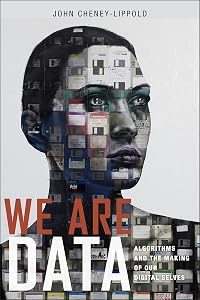
We Are Data: Algorithms and the Making of Our Digital Selves
by John Cheney-Lippold
On This Page
Description
What identity means in an algorithmic age: how it works, how our lives are controlled by it, and how we can resist it Algorithms are everywhere, organizing the near limitless data that exists in our world. Derived from our every search, like, click, and purchase, algorithms determine the news we get, the ads we see, the information accessible to us and even who our friends are. These complex configurations not only form knowledge and social relationships in the digital and physical world, show more but also determine who we are and who we can be, both on and offline. Algorithms create and recreate us, using our data to assign and reassign our gender, race, sexuality, and citizenship status. They can recognize us as celebrities or mark us as terrorists. In this era of ubiquitous surveillance, contemporary data collection entails more than gathering information about us. Entities like Google, Facebook, and the NSA also decide what that information means, constructing our worlds and the identities we inhabit in the process. We have little control over who we algorithmically are. Our identities are made useful not for us—but for someone else. Through a series of entertaining and engaging examples, John Cheney-Lippold draws on the social constructions of identity to advance a new understanding of our algorithmic identities. We Are Data will educate and inspire readers who want to wrest back some freedom in our increasingly surveilled and algorithmically-constructed world. show lessTags
Recommendations



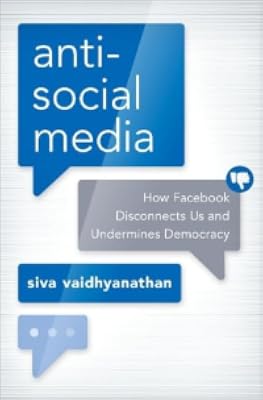
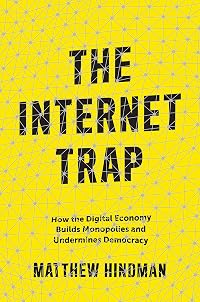

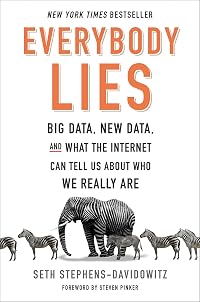








Member Reviews
We Are Roadkill
We all know that web services sell data from our use of the internet. But how do they make that data useful to anyone? That is the purpose of We Are Data. It laboriously elucidates the often arcane machinations of the Googles and Facebooks of the world. At bottom, there is an algorithm, a mathematical construct, ever tweaked to reflect new realities, so you can’t pin it down from one day to the next. Algorithms spit out decisions based on your individual clicks, searches, e-mail, contact lists and chats. They decide who you are in order to appeal to data purchasers. According to your activity and location, it might classify you as a man even though you are a woman, old though you are young, black though you are white, show more and so on. You could be gay one day and straight the next. Doesn’t matter. Your activity and location is just a commodity for sale in bulk.
Web services structure the raw data into algorithmically constructed data objects, according what is useful to clients. It could be ‘terrorist’ for the NSA for example. (There are two kinds of beings in the world – those without quotation marks, and those with, the latter being cyber constructs). Facebook’s ‘terrorist’ could be completely different from Google’s. It’s purely a convenience for the sake of the buyer, be it TSA or Starbucks.
Everything is monetized (but you receive none of it). The dictum is that if it is not in principle measurable, or if it is not being measured, it doesn’t exist. Individuals cease to matter. They become dividuals, the cyber distillation of the data they generate.
We Are Data is a missing link in the chain of how the world operates. it is also quite dense and dry. There are precious few examples of how real people are affected. It is however, festooned with empty when not totally meaningless references to Michel Foucault. Just name dropping, while adding zero insight. I would say he is mentioned about 40 times. In places, We Are Data reads like it was written by an algorithm. But just when you want to give up, Cheney-Lippold sends a missile across the bow: ”Almost everything that is algorithmic is a lie.” I wish he would have led with that instead of his 40 page intro. It would have been a much more dynamic book.
So the bad news is privacy is non-existent. Irretrievable. Gone forever. The good news is nobody wants to know who you really are anyway. Just keep clicking.
David Wineberg show less
We all know that web services sell data from our use of the internet. But how do they make that data useful to anyone? That is the purpose of We Are Data. It laboriously elucidates the often arcane machinations of the Googles and Facebooks of the world. At bottom, there is an algorithm, a mathematical construct, ever tweaked to reflect new realities, so you can’t pin it down from one day to the next. Algorithms spit out decisions based on your individual clicks, searches, e-mail, contact lists and chats. They decide who you are in order to appeal to data purchasers. According to your activity and location, it might classify you as a man even though you are a woman, old though you are young, black though you are white, show more and so on. You could be gay one day and straight the next. Doesn’t matter. Your activity and location is just a commodity for sale in bulk.
Web services structure the raw data into algorithmically constructed data objects, according what is useful to clients. It could be ‘terrorist’ for the NSA for example. (There are two kinds of beings in the world – those without quotation marks, and those with, the latter being cyber constructs). Facebook’s ‘terrorist’ could be completely different from Google’s. It’s purely a convenience for the sake of the buyer, be it TSA or Starbucks.
Everything is monetized (but you receive none of it). The dictum is that if it is not in principle measurable, or if it is not being measured, it doesn’t exist. Individuals cease to matter. They become dividuals, the cyber distillation of the data they generate.
We Are Data is a missing link in the chain of how the world operates. it is also quite dense and dry. There are precious few examples of how real people are affected. It is however, festooned with empty when not totally meaningless references to Michel Foucault. Just name dropping, while adding zero insight. I would say he is mentioned about 40 times. In places, We Are Data reads like it was written by an algorithm. But just when you want to give up, Cheney-Lippold sends a missile across the bow: ”Almost everything that is algorithmic is a lie.” I wish he would have led with that instead of his 40 page intro. It would have been a much more dynamic book.
So the bad news is privacy is non-existent. Irretrievable. Gone forever. The good news is nobody wants to know who you really are anyway. Just keep clicking.
David Wineberg show less
I gave up about 100 pages in and I never give up. But I did. I was excited about this book. Some scholars I follow praised it on social media. This is a topic I am profoundly interested in. And yet, I found it unreadable. It may be that I'm getting older and less tolerant of academic gibberish that papers over relatively simple ideas. So, unless all the insightful stuff is the other 200 pages that I did not read, there was really nothing there that I hadn't read somewhere else, except clearer and much better written.
Members
- Recently Added By
Lists

Books in the Bibliography of Digital Lethargy by Tung-Hui Hu
151 works; 3 members
Author Information
1 Work 62 Members
John Cheney-Lippold is Associate Professor of American Culture and Digital Studies at the University of Michigan.
Some Editions
Common Knowledge
- Original publication date
- 2017
- Publisher's editor
- Nadkami, Lisha
Classifications
Statistics
- Members
- 62
- Popularity
- 500,920
- Reviews
- 2
- Rating
- (2.00)
- Languages
- English
- Media
- Paper, Ebook
- ISBNs
- 4
- ASINs
- 1