On This Page
Description
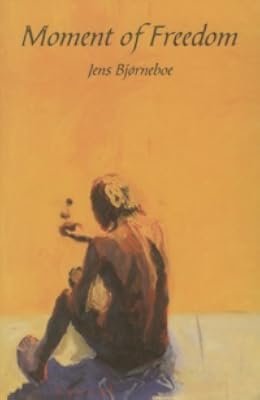
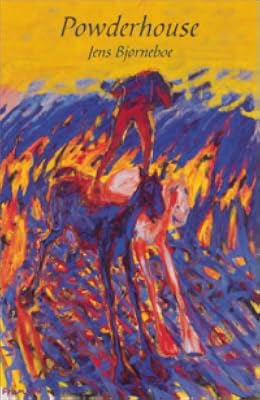
This is the first volume of a trilogy which marks the high point of outspokeness and originality of one of Norway's most controversial modern writers.Tags
Recommendations











Member Reviews
http://msarki.tumblr.com/post/73349279828/moment-of-freedom-by-jens-bj-rneboe
First, this title came highly recommended. And the novel for me began with a bang but then quickly fizzled into something unexpected, like a personal fact-filled and chronological childhood memoir of sorts. Because of this unthinkable development my doubts rose and my spirits waned. I engaged again my reading friends and expressed to them my troubled mind. They assured me to continue on, that soon enough this author Jens would woo me in again with his hateful vitriol. The fact the author was Scandinavian did much to already insure my allegiance as I myself am perfectly a half-Finn. In addition, I knew already that Jens himself had committed suicide by hanging show more so for that event alone he most certainly had hops with me. All my favorite authors commit suicide, or will eventually, that is if an auto accident or some disease fails to get them first. But the novel seemed to have morphed into something more conventional and it just didn't feel right to me. The strong and vicious opening pages were comparable to the graphically violent work of one Josef Winkler whom I had been reading prolifically for the last few months and who was quickly, and violently, doing me in.
But almost as soon as I expressed to my friends the morbid concerns I had over the novel it turned course, and in its way, anecdotally investigated a neighbor's suicide which again got me consulting my own research texts that I am wont to do in such cases in which the writing moves me in ways that are hard otherwise to explain. It was his words a la fenestra that got my attention. The phrase means going to the seventh or eighth floor window for a resolute leap. And from the eighth floor a leap to one's death results in …remains gathered up with a putty knife and a sponge… People splash dreadfully.
From the subject of suicide the text then moved swiftly into all matter of concerns regarding the futility of life on earth. Bjørneboe hastened to demonstrate on the page how chaos abounds and our crust is certainly unstable, as is our fiery universe.
…at bottom all matter is explosive. We eat our sandwiches, pursue our love lives, are born and die on the lid of a powder keg journeying in the cosmos…Furthermore the cosmos itself is located in the middle of a gigantic explosion, with the galaxies fleeing from each other at a speed considerably greater than that of light… Without laughter you sit fast in the pool of excrement, and you will slowly go into decomposition, into autolysis, you will fall apart, and yourself turn into living excrement.
But in the meantime I suppose it to be Bjørneboe who also goes on to show how the great art works in the history of the world are certainly remarkable, and well worth preserving for as many generations as possible. And we all should know that great art is unexampled in its feeling.
The deeper the feeling, said Leonardo, the greater the pain.
The connection Jens Bjørneboe made to public executions and art is notable as well. The subject of public hangings directed me to another study of sorts in the course through the centuries that public hangings evolved to. The length of rope being the most important development due to mathematical calculations based on performing the most humane of executions possible. A shortened rope being the preferred method for the most extreme torture possible through suffocation and slow death of fifteen to twenty minutes. Whereas a rope too long, combined with a sudden drop, made for likely decapitation and a public outcry. Precise math was used to calculate the safe distance to fall based on the victim's weight and height, and an execution which would assure a quick death with little to no mess.
All the great great masters from Tuscany's ateliers took their sketchbooks along when they went to watch the public executions.
It is likely the period covered in this novel coincides to the author's own lifetime. World War II was the deadliest military conflict in history. Over 60 million people were killed, which was over 2.5% of the world population. 26.6 million Soviets alone died during the period of 1939 through 1945. For me, both World War II and the holocaust weigh heavy on me, myself being born in 1953, the son of a U.S. Navy sailor who just happened to go to shore with his commanding officer in order to procure trophy memorabilia it seems for the commander after the atomic bomb named "Fat-Man" destroyed the Japanese city of Nagasaki. I know of nothing my father gained in his walking tour of the destruction except for a story to tell and the kudos he garnered for accompanying his boss on shore.
…The truth is also that we were tired, tired as people get after wars — we were so tired of it that we quite simply performed the necessary on what happened in Japan.
I've noticed the narrator performs the necessary on quite a few events throughout this book. It sounds a bit harsh, or extremely indifferent, but history had been hard on many who suffered through the periods covering both world wars. It has been reported that the author himself in 1943 escaped the Nazi Germans occupying Norway for neutral Sweden in order to not be sent to a forced labor camp. The narrator speaks of the time he spent in Stockholm often in this text. He is a hard drinker and composes much of his writing while under the influence just as the author did. Bjørneboe has been reported to have begun drinking at the age of twelve, suffering extreme bouts of depression and sickness. At thirteen he attempted suicide by hanging himself. Finally, in 1976, after finding no relief from his continued alcoholism and depression, Bjørneboe committed suicide at the end of a rope.
Many years ago, back in a time when I was an adolescent, there was a program on sixties television about the life and death of Abraham Lincoln. I remember being completely enamored with the man and upon viewing on TV his assassination in the Ford Theater I was devastated. My grief was unequaled at that time and rarely has it surfaced to that same degree as the subsequent years have gone by. After the program was over I remember going to my bedroom and sobbing in my bed for the longest time. The emotional pain involved in the dread of my own impending death was remarkable enough to me to have never forgotten that night in the course, at this writing, of over sixty years of them. There have been moments in the reading of this book similar to those same feelings that occurred for me so many years ago.
I was dying because I lived in unfreedom without knowing it, and because unfreedom is naturally more comfortable than freedom: it disperses, or even frees one from, the responsibility of having an existence. Only through the courage of despair can you grasp a handful of freedom. Freedom is not a thing you receive, it's something you take for yourself without asking anybody whether what you're doing is right or moral or harmful or good.
I am still not exactly sure why the narrator mentions the word lemurs so often. It is quite possible he was creatively labeling Teutons due to the cataclysmic shift in the world after WWII. Mythical accounts of the supposed ancient continent of Lemuria differ. It is also believed that man himself evolved somewhere in southern Asia, or possibly, still further south than the present boundary of Asia, in lands now drowned by the Indian Ocean due to some geological change. This supposed land was called Lemuria. He also uses the phrase little bears as well for a handle for all peoples of the world. The author Jens Bjørneboe himself was a center of unrest. He always ruthlessly followed his innermost intentions and knew no other guide than his personal conviction and his own impulses. His passion and concerns ultimately did him in.
For me, Jens Bjørneboe's personality certainly comes through while reading this novel, which now that I am over it I might deem a masterpiece, but not first without admitting to shedding some blood and sweat of my own before arriving at this assessment. The last six pages of the book are completely startling and upsetting given recent mass murders and shooting rampages in my own country today. I certainly subscribe now to the theory that it just might be best to beware the hard cider drinker or a seemingly rare foehn wind. show less
First, this title came highly recommended. And the novel for me began with a bang but then quickly fizzled into something unexpected, like a personal fact-filled and chronological childhood memoir of sorts. Because of this unthinkable development my doubts rose and my spirits waned. I engaged again my reading friends and expressed to them my troubled mind. They assured me to continue on, that soon enough this author Jens would woo me in again with his hateful vitriol. The fact the author was Scandinavian did much to already insure my allegiance as I myself am perfectly a half-Finn. In addition, I knew already that Jens himself had committed suicide by hanging show more so for that event alone he most certainly had hops with me. All my favorite authors commit suicide, or will eventually, that is if an auto accident or some disease fails to get them first. But the novel seemed to have morphed into something more conventional and it just didn't feel right to me. The strong and vicious opening pages were comparable to the graphically violent work of one Josef Winkler whom I had been reading prolifically for the last few months and who was quickly, and violently, doing me in.
But almost as soon as I expressed to my friends the morbid concerns I had over the novel it turned course, and in its way, anecdotally investigated a neighbor's suicide which again got me consulting my own research texts that I am wont to do in such cases in which the writing moves me in ways that are hard otherwise to explain. It was his words a la fenestra that got my attention. The phrase means going to the seventh or eighth floor window for a resolute leap. And from the eighth floor a leap to one's death results in …remains gathered up with a putty knife and a sponge… People splash dreadfully.
From the subject of suicide the text then moved swiftly into all matter of concerns regarding the futility of life on earth. Bjørneboe hastened to demonstrate on the page how chaos abounds and our crust is certainly unstable, as is our fiery universe.
…at bottom all matter is explosive. We eat our sandwiches, pursue our love lives, are born and die on the lid of a powder keg journeying in the cosmos…Furthermore the cosmos itself is located in the middle of a gigantic explosion, with the galaxies fleeing from each other at a speed considerably greater than that of light… Without laughter you sit fast in the pool of excrement, and you will slowly go into decomposition, into autolysis, you will fall apart, and yourself turn into living excrement.
But in the meantime I suppose it to be Bjørneboe who also goes on to show how the great art works in the history of the world are certainly remarkable, and well worth preserving for as many generations as possible. And we all should know that great art is unexampled in its feeling.
The deeper the feeling, said Leonardo, the greater the pain.
The connection Jens Bjørneboe made to public executions and art is notable as well. The subject of public hangings directed me to another study of sorts in the course through the centuries that public hangings evolved to. The length of rope being the most important development due to mathematical calculations based on performing the most humane of executions possible. A shortened rope being the preferred method for the most extreme torture possible through suffocation and slow death of fifteen to twenty minutes. Whereas a rope too long, combined with a sudden drop, made for likely decapitation and a public outcry. Precise math was used to calculate the safe distance to fall based on the victim's weight and height, and an execution which would assure a quick death with little to no mess.
All the great great masters from Tuscany's ateliers took their sketchbooks along when they went to watch the public executions.
It is likely the period covered in this novel coincides to the author's own lifetime. World War II was the deadliest military conflict in history. Over 60 million people were killed, which was over 2.5% of the world population. 26.6 million Soviets alone died during the period of 1939 through 1945. For me, both World War II and the holocaust weigh heavy on me, myself being born in 1953, the son of a U.S. Navy sailor who just happened to go to shore with his commanding officer in order to procure trophy memorabilia it seems for the commander after the atomic bomb named "Fat-Man" destroyed the Japanese city of Nagasaki. I know of nothing my father gained in his walking tour of the destruction except for a story to tell and the kudos he garnered for accompanying his boss on shore.
…The truth is also that we were tired, tired as people get after wars — we were so tired of it that we quite simply performed the necessary on what happened in Japan.
I've noticed the narrator performs the necessary on quite a few events throughout this book. It sounds a bit harsh, or extremely indifferent, but history had been hard on many who suffered through the periods covering both world wars. It has been reported that the author himself in 1943 escaped the Nazi Germans occupying Norway for neutral Sweden in order to not be sent to a forced labor camp. The narrator speaks of the time he spent in Stockholm often in this text. He is a hard drinker and composes much of his writing while under the influence just as the author did. Bjørneboe has been reported to have begun drinking at the age of twelve, suffering extreme bouts of depression and sickness. At thirteen he attempted suicide by hanging himself. Finally, in 1976, after finding no relief from his continued alcoholism and depression, Bjørneboe committed suicide at the end of a rope.
Many years ago, back in a time when I was an adolescent, there was a program on sixties television about the life and death of Abraham Lincoln. I remember being completely enamored with the man and upon viewing on TV his assassination in the Ford Theater I was devastated. My grief was unequaled at that time and rarely has it surfaced to that same degree as the subsequent years have gone by. After the program was over I remember going to my bedroom and sobbing in my bed for the longest time. The emotional pain involved in the dread of my own impending death was remarkable enough to me to have never forgotten that night in the course, at this writing, of over sixty years of them. There have been moments in the reading of this book similar to those same feelings that occurred for me so many years ago.
I was dying because I lived in unfreedom without knowing it, and because unfreedom is naturally more comfortable than freedom: it disperses, or even frees one from, the responsibility of having an existence. Only through the courage of despair can you grasp a handful of freedom. Freedom is not a thing you receive, it's something you take for yourself without asking anybody whether what you're doing is right or moral or harmful or good.
I am still not exactly sure why the narrator mentions the word lemurs so often. It is quite possible he was creatively labeling Teutons due to the cataclysmic shift in the world after WWII. Mythical accounts of the supposed ancient continent of Lemuria differ. It is also believed that man himself evolved somewhere in southern Asia, or possibly, still further south than the present boundary of Asia, in lands now drowned by the Indian Ocean due to some geological change. This supposed land was called Lemuria. He also uses the phrase little bears as well for a handle for all peoples of the world. The author Jens Bjørneboe himself was a center of unrest. He always ruthlessly followed his innermost intentions and knew no other guide than his personal conviction and his own impulses. His passion and concerns ultimately did him in.
For me, Jens Bjørneboe's personality certainly comes through while reading this novel, which now that I am over it I might deem a masterpiece, but not first without admitting to shedding some blood and sweat of my own before arriving at this assessment. The last six pages of the book are completely startling and upsetting given recent mass murders and shooting rampages in my own country today. I certainly subscribe now to the theory that it just might be best to beware the hard cider drinker or a seemingly rare foehn wind. show less
This was an amazing drunken ride, exploring myriad themes now familar with centures of Continental literature. Alienation abounds, the spirit suffers. That said, there remains a freshness to the horror, it is vivid beyond any category and narrative arc.
I had picked this up from the library and was then disconcerted to discover the trilogy is woefully out-of-print and rather difficult to locate.
I had picked this up from the library and was then disconcerted to discover the trilogy is woefully out-of-print and rather difficult to locate.
Se bokanmeldelser:
FRIHETENS ØYEBLIKK – BIND I (http://no.librarything.com/work/details/35589347 )
KRUTTÅRNET – BIND II (http://no.librarything.com/work/details/35589650 )
STILLHETEN – BIND III (http://no.librarything.com/work/details/35589777 )
FRIHETENS ØYEBLIKK – BIND I (http://no.librarything.com/work/details/35589347 )
KRUTTÅRNET – BIND II (http://no.librarything.com/work/details/35589650 )
STILLHETEN – BIND III (http://no.librarything.com/work/details/35589777 )
Contains also an essay about Bjorneboe by Inge Kristiansen, "The Anarchist," 1989.
"Friheten øyeblikk" - første bind i triologien "Bestialitetens historie"
Bokas jeg-person er rettstjener i et lite fyrstedømme i Alpene. Han ser tilbake på sitt omflakkende liv og tar det opp til nærmere analyse. Boka er på mange måter både en indre og ytre reise i hhv. rettstjenerens sinn og i konkrete hendelser på hans reiser i Europa.
Rettstjeneren forsøker å forstå det ondes problem. De meste grusomme og bestialske detaljer om overgrep og maktmisbruk, hvor løgnen står sentralt, beskrives. På sine reiser gjennom Europas byer består livet hans mye godt av drikk og hor. Som protokollfører anser han det som sin livoppgave å opptre på sannhetens vegne. Han registrerer ondskapen som har fulgt menneskeheten helt inn i show more nyere tid. Dette er mao. ingen lystig lesning.
Underveis stiller rettstjeneren spørsmål om hva friheten egentlig er. Frihet til å gjøre onde handlinger? "Tar vi løgnen bort, da står vi der vi står. .... Bare sannheten skal frigjøre eder!" hevder han. Egentlig er vi her ved kjernen av Bjørneboes filosofi, som går som en rød tråd gjennom hele hans forfatterskap; Bjørneboe har aldri godtatt verken maktmisbruk eller løgn, men har villet dette til livs.
Jeg har tidligere kviet meg for å ta fatt på "Bestialitetens historie" fordi jeg har forventet meg et tungt og svært dystert bokverk. Etter å ha lest første bind i triologien har jeg revurdert min oppfatning. Dette er en fantastisk bok som man sikkert vil ha mye igjen for å lese flere ganger gjennom livet. Med Nils Ole Oftebro som en helt fantastisk oppleser, er trilogien nå gjort tilgjengelig for flere fordi det er lettere å "lese" bøkene i lydbokutgave. Jeg gir toppkarakter!
KRUTTÅRNET – BIND II (http://no.librarything.com/work/details/35589650 )
STILLHETEN – BIND III (http://no.librarything.com/work/details/35589777 ) show less
Bokas jeg-person er rettstjener i et lite fyrstedømme i Alpene. Han ser tilbake på sitt omflakkende liv og tar det opp til nærmere analyse. Boka er på mange måter både en indre og ytre reise i hhv. rettstjenerens sinn og i konkrete hendelser på hans reiser i Europa.
Rettstjeneren forsøker å forstå det ondes problem. De meste grusomme og bestialske detaljer om overgrep og maktmisbruk, hvor løgnen står sentralt, beskrives. På sine reiser gjennom Europas byer består livet hans mye godt av drikk og hor. Som protokollfører anser han det som sin livoppgave å opptre på sannhetens vegne. Han registrerer ondskapen som har fulgt menneskeheten helt inn i show more nyere tid. Dette er mao. ingen lystig lesning.
Underveis stiller rettstjeneren spørsmål om hva friheten egentlig er. Frihet til å gjøre onde handlinger? "Tar vi løgnen bort, da står vi der vi står. .... Bare sannheten skal frigjøre eder!" hevder han. Egentlig er vi her ved kjernen av Bjørneboes filosofi, som går som en rød tråd gjennom hele hans forfatterskap; Bjørneboe har aldri godtatt verken maktmisbruk eller løgn, men har villet dette til livs.
Jeg har tidligere kviet meg for å ta fatt på "Bestialitetens historie" fordi jeg har forventet meg et tungt og svært dystert bokverk. Etter å ha lest første bind i triologien har jeg revurdert min oppfatning. Dette er en fantastisk bok som man sikkert vil ha mye igjen for å lese flere ganger gjennom livet. Med Nils Ole Oftebro som en helt fantastisk oppleser, er trilogien nå gjort tilgjengelig for flere fordi det er lettere å "lese" bøkene i lydbokutgave. Jeg gir toppkarakter!
KRUTTÅRNET – BIND II (http://no.librarything.com/work/details/35589650 )
STILLHETEN – BIND III (http://no.librarything.com/work/details/35589777 ) show less
Sep 5, 2008Norwegian
Frihetens Øyeblikk (Het ogenblik van de vrijheid), het eerste deel van de trilogie "De geschiedenis van de bestialiteit". (1966)
Met deze roman begint een nieuwe fase in zijn schrijverschap: in plaats van over anderen schrijft hij nu over zijn eigen waarheid, 'die uitsluitend door mij gekend wordt - omdat uitsluitend ik ik ben, en uitsluitend ik de wereld op mijn manier kan zien'. De hoofdpersoon, gerechtsbode in het vorstendommetje Heiligenberg, is Bjørneboes onverbloemde zelfportret. Met grote inspanning en pijn graaft hij 'in de wonden van zijn geheugen' en delft zodoende steeds meer brokstukken van zijn vroegere leven op - de enige manier waarop hij zichzelf, maar dan ook alleen zichzelf kan bevrijden.
(Achterflaptekst)
Bjørneboe show more schreef een aantal sociaal kritische romans. Als zijn beste werk wordt de trilogie De geschiedenis van de bestialiteit beschouwd die bestaat uit de romans Frihetens Øyeblikk (1966, Momenten van Vrijheid), Kruttårnet (1969, Kruidtoren) en Stillheten (1973, De Stilte). Na lange tijd geworsteld te hebben met alcoholisme en met depressies maakte hij op 9 mei 1976 zelf een einde aan zijn leven. show less
Met deze roman begint een nieuwe fase in zijn schrijverschap: in plaats van over anderen schrijft hij nu over zijn eigen waarheid, 'die uitsluitend door mij gekend wordt - omdat uitsluitend ik ik ben, en uitsluitend ik de wereld op mijn manier kan zien'. De hoofdpersoon, gerechtsbode in het vorstendommetje Heiligenberg, is Bjørneboes onverbloemde zelfportret. Met grote inspanning en pijn graaft hij 'in de wonden van zijn geheugen' en delft zodoende steeds meer brokstukken van zijn vroegere leven op - de enige manier waarop hij zichzelf, maar dan ook alleen zichzelf kan bevrijden.
(Achterflaptekst)
Bjørneboe show more schreef een aantal sociaal kritische romans. Als zijn beste werk wordt de trilogie De geschiedenis van de bestialiteit beschouwd die bestaat uit de romans Frihetens Øyeblikk (1966, Momenten van Vrijheid), Kruttårnet (1969, Kruidtoren) en Stillheten (1973, De Stilte). Na lange tijd geworsteld te hebben met alcoholisme en met depressies maakte hij op 9 mei 1976 zelf een einde aan zijn leven. show less
Jun 4, 2015Dutch
"Friheten øyeblikk" - første bind i triologien "Bestialitetens historie"
Se bokanmeldelser:
FRIHETENS ØYEBLIKK – BIND I (http://no.librarything.com/work/details/35589347 )
KRUTTÅRNET – BIND II (http://no.librarything.com/work/details/35589650 )
STILLHETEN – BIND III (http://no.librarything.com/work/details/35589777 )
Se bokanmeldelser:
FRIHETENS ØYEBLIKK – BIND I (http://no.librarything.com/work/details/35589347 )
KRUTTÅRNET – BIND II (http://no.librarything.com/work/details/35589650 )
STILLHETEN – BIND III (http://no.librarything.com/work/details/35589777 )
Sep 20, 2008Norwegian
Members
- Recently Added By
Author Information

75 Works 1,688 Members
Some Editions
Awards and Honors
Awards
Series

Belongs to Publisher Series
Common Knowledge
- Canonical title*
- Het ogenblik van de vrijheid : het Heiligenberg-manuscript
- Original title
- Frihetens øyeblikk : Heiligenberg manuskriptet; Frihetens øyeblikk. Heiligenbergmanuskriptet
- Original publication date
- 1966 (Noors) (Noors); 1966; 1980 (Nederlands) (Nederlands)
- Important places*
- Heiligenberg
*Some information comes from Common Knowledge in other languages. Click "Edit" for more information.
Classifications
- Genres
- Fiction and Literature, General Fiction
- DDC/MDS
- 839.823 — Literature & rhetoric German & related literatures Other Germanic literatures Danish and Norwegian literatures Norwegian literature Norwegian Bokmål fiction
- LCC
- PT8950 .B528 .F713 — Language and Literature German, Dutch and Scandinavian literatures Norwegian literature Individual authors or works 1900-1960
- BISAC
Statistics
- Members
- 217
- Popularity
- 151,065
- Reviews
- 7
- Rating
- (4.29)
- Languages
- 8 — Danish, Dutch, English, French, Norwegian (Bokmål), Norwegian, Polish, Swedish
- Media
- Paper
- ISBNs
- 17