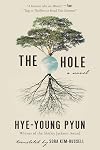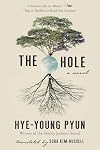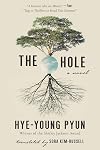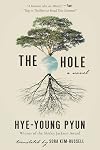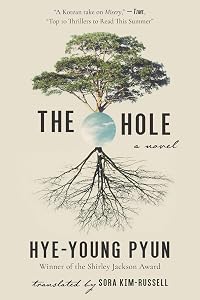
The Hole: A Novel
by Pyun Hye-young
On This Page
Description
In this tense, gripping novel by a star of Korean literature, Oghi wakes from a coma after causing a devastating car accident that took his wife's life and left him paralyzed and badly disfigured. His caretaker is his mother-in-law, a widow grieving the loss of her only child. Oghi is neglected and left alone in his bed. His world shrinks to the room he lies in and his memories of his troubled relationship with his wife, a sensitive, intelligent woman who found all of her life goals thwarted show more except for one: cultivating the garden in front of their house. But soon Oghi notices his mother-in-law in the abandoned garden, uprooting what his wife had worked so hard to plant and obsessively digging larger and larger holes. When asked, she answers only that she is finishing what her daughter started. As Oghi desperately searches for a way to escape, he discovers the difficult truth about his wife and the toll their life together took on her. The winner of the Shirley Jackson Award and a bestseller in Korea, The Hole is a superbly crafted and deeply unnerving novel about the horrors of isolation and neglect in all of its banal and brutal forms. show lessTags
Recommendations

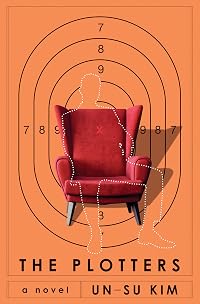
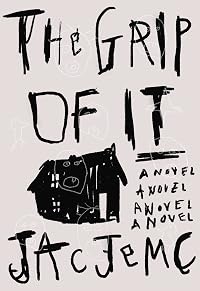
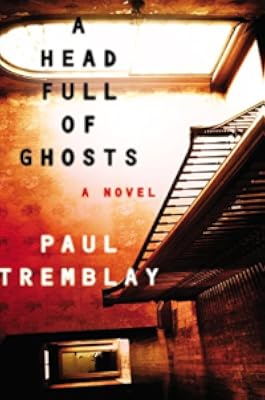
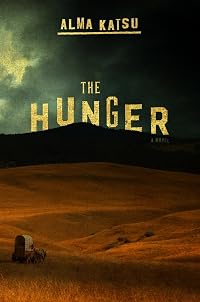






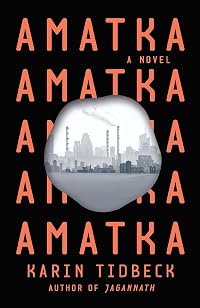
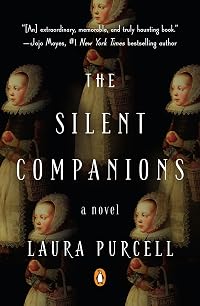
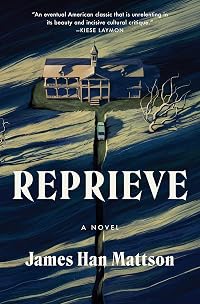
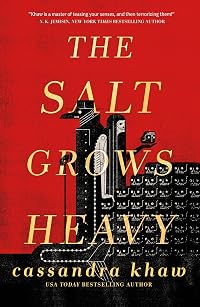
Member Recommendations
Member Reviews
Rating: 5* of five
The Publisher Says: Winner of the 2017 Shirley Jackson Award
Named One of the Top 10 Thrillers to Read This Summer by Time Magazine.
In this tense, gripping novel by a rising star of Korean literature, Oghi has woken from a coma after causing a devastating car accident that took his wife's life and left him paralyzed and badly disfigured. His caretaker is his mother-in-law, a widow grieving the loss of her only child. Oghi is neglected and left alone in his bed. His world shrinks to the room he lies in and his memories of his troubled relationship with his wife, a sensitive, intelligent woman who found all of her life goals thwarted except for one: cultivating the garden in front of their house. But soon Oghi notices his show more mother-in-law in the abandoned garden, uprooting what his wife had worked so hard to plant and obsessively digging larger and larger holes. When asked, she answers only that she is finishing what her daughter started.
A bestseller in Korea, award-winning author Hye-young Pyun's The Hole is a superbly crafted and deeply unnerving novel about the horrors of isolation and neglect in all of its banal and brutal forms. As Oghi desperately searches for a way to escape, he discovers the difficult truth about his wife and the toll their life together took on her.
I RECEIVED A DRC FROM THE PUBLISHER VIA EDELWEISS+. THANK YOU.
My Review: First, read this:
Poor, crippled Oghi has survived a horrific car crash only to be confined to his head. He can barely communicate. He is cluaustrophobically trapped in a nightmare of dependence on others for his existence...a man accustomed to being the center of power in his own life and the delineator of Reality itself (he was a cartographer in his previous existence).
Ironic, that...as a mapmaker he relies on others to provide him data so he can graphically represent reality, yet he was completely and utterly uninterested in learning any single thing about his now-dead wife. I'd be surprised if he could describe her knees or fingers, things marital partners know very intimately about their spouse. He certainly took no trouble to learn a single thing about her wants and needs.
While this all sounds pretty tediously familiar to a generation raised on feminist screeds against the awfulness that is Man, it manages not to be the same old, same old by giving us enough of her thoughts by proxy. Oghi remembers things she said, or did; it's more than enough to reveal to the reader the depths of this man's appalling sense of entitlement to all his wife's energy and attention with no hint of reciprocation. As this is clearly something not reserved for his wife (his career success is clearly down to cheating and chicanery), we learn from his own memories he is that worst of all possible characters: the skilled manipulator of the feelings and needs of others, the sociopath.
This is a novella, so it won't eat your time making its effect on you any less powerful with foreshadowing. It's memorably, involvingly written and translated. It offers no moral uplift, or hint of redemption. Instead it breathes life into the very essence of its titular...object, subject, shape, space?...as well as, with its condign ending, gives us schadenfreude lovers of the world a huge chuckle.
The Publisher Says: Winner of the 2017 Shirley Jackson Award
Named One of the Top 10 Thrillers to Read This Summer by Time Magazine.
In this tense, gripping novel by a rising star of Korean literature, Oghi has woken from a coma after causing a devastating car accident that took his wife's life and left him paralyzed and badly disfigured. His caretaker is his mother-in-law, a widow grieving the loss of her only child. Oghi is neglected and left alone in his bed. His world shrinks to the room he lies in and his memories of his troubled relationship with his wife, a sensitive, intelligent woman who found all of her life goals thwarted except for one: cultivating the garden in front of their house. But soon Oghi notices his show more mother-in-law in the abandoned garden, uprooting what his wife had worked so hard to plant and obsessively digging larger and larger holes. When asked, she answers only that she is finishing what her daughter started.
A bestseller in Korea, award-winning author Hye-young Pyun's The Hole is a superbly crafted and deeply unnerving novel about the horrors of isolation and neglect in all of its banal and brutal forms. As Oghi desperately searches for a way to escape, he discovers the difficult truth about his wife and the toll their life together took on her.
I RECEIVED A DRC FROM THE PUBLISHER VIA EDELWEISS+. THANK YOU.
My Review: First, read this:
It was difficult and exhausting, but he quickly accepted the fact that life had to go on without her. He’d lost love, and yet the world was not the slightest bit shaken by his loss. The part of his life that had had J in it went away, leaving behind a cavity, a hollow, and still the world was unmoved. Nothing would ever fill in that empty space. But Oghi’s world would keep on spinning regardless.
–and–
Oghi looked lovingly on his wife’s shallow vanity. She knew exactly what her goals were, and though she believed in them, she failed at nearly everything she set out to do. Yet she brushed off each failure, hardly any worse for the wear. Then quickly found herself a new role model and extolled their virtues ad nauseam. By doing so, she seemed to come to an understanding of the difference between longing and ambition.
Poor, crippled Oghi has survived a horrific car crash only to be confined to his head. He can barely communicate. He is cluaustrophobically trapped in a nightmare of dependence on others for his existence...a man accustomed to being the center of power in his own life and the delineator of Reality itself (he was a cartographer in his previous existence).
Ironic, that...as a mapmaker he relies on others to provide him data so he can graphically represent reality, yet he was completely and utterly uninterested in learning any single thing about his now-dead wife. I'd be surprised if he could describe her knees or fingers, things marital partners know very intimately about their spouse. He certainly took no trouble to learn a single thing about her wants and needs.
While this all sounds pretty tediously familiar to a generation raised on feminist screeds against the awfulness that is Man, it manages not to be the same old, same old by giving us enough of her thoughts by proxy. Oghi remembers things she said, or did; it's more than enough to reveal to the reader the depths of this man's appalling sense of entitlement to all his wife's energy and attention with no hint of reciprocation. As this is clearly something not reserved for his wife (his career success is clearly down to cheating and chicanery), we learn from his own memories he is that worst of all possible characters: the skilled manipulator of the feelings and needs of others, the sociopath.
This is a novella, so it won't eat your time making its effect on you any less powerful with foreshadowing. It's memorably, involvingly written and translated. It offers no moral uplift, or hint of redemption. Instead it breathes life into the very essence of its titular...object, subject, shape, space?...as well as, with its condign ending, gives us schadenfreude lovers of the world a huge chuckle.
The world’s oldest map, the Babylonian Map of the World, had a little circle bored through the center. Scholars explained that the hole had come from using a compass to trace the two outer rings of the map. Oghi was captivated more by that hole than by the geometric shapes engraved in the clay tablet, and had stared at it for a long time in the darkened exhibit room of the British Museum. That dark, narrow hole went as deep as the memory of an age that no one could ever return to. The only way to reach that lost age was through that hole, but the hole itself could never be reached.show less
The Hole by Hye-Young Pyun is a masterfully crafted slow-burn psychological horror that seeps quietly into the reader’s psyche. The narrative unfolds with deliberate restraint, allowing tension to accumulate in unsettling layers. With only two central characters, the story remains intensely focused, and each is etched with remarkable psychological depth. The shifting perspectives are placed with precision, constantly unsettling assumptions and steering the emotional trajectory. The author skillfully withholds clarity, making the climax both inevitable and devastating. The emotional turbulence leading to the end is deeply affecting. I only wished it had been longer to linger more in its haunting atmosphere.
A slow examination of a marriage from the perspective of a paralysed widower. There are elements of psychological terror as he suffers from neglect and abuse, and an overall sense of helplessness that suffocates the reader. I found the parallel of loneliness in both plot lines compelling, and enjoyed puzzling over how far I could trust the narrator. Not a fun read, maybe, but a good one.
I picked this up at random on my library's new book shelf, and I'm glad I did. This is a seriously creepy short novel that plays with themes of abandonment both physical and emotional. The atmosphere is foreboding from the start and grows darker as the story builds. This is a quick read, but it has stayed with me since I finished it.
Oghi wakes up from a coma after a car accident that took his wife's life and left him paralyzed and disfigured. The only person left in his life to care for him, since he has no other family, is his mother-in-law. She hires an additional caretaker for him, and he also has a physical therapist, although he doesn't see them as often as he maybe should.
All Oghi can do is lay there, try to communicate his needs (he can't speak intelligibly, although he's eventually able to write a bit), and think about the past. Initially, his mother-in-law cares for him reasonably well, but as time goes on, something changes. Oghi notices that she's digging holes in the backyard, uprooting his wife's beloved garden. He also finds himself more and more show more neglected.
The back of the book calls this "Misery meets The Vegetarian." I haven't read The Vegetarian, but as far as the Misery comparison goes, the main thing the two works have in common is that they both feature a main character who is absolutely at the mercy of someone who increasingly doesn't mean them well. That said, Oghi's mother-in-law is more subtly broken than Annie Wilkes and is never entirely presented as a villain.
Oghi is initially presented as a loving husband who is struggling to deal with both the loss of his wife and the massive changes that his paralysis has necessitated in his daily life. As the story progresses, readers learn that things aren't quite so black and white. Oghi, his wife, and his wife's mother all have more to them than readers are initially told, and it's eventually apparent that there are other stories going on here besides Oghi's experiences after the car accident.
I went into this expecting it to be horror and, although there are aspects of horror in Oghi's experiences and his relationship with his mother-in-law, this is more psychological fiction. There were layers here that would likely require a reread to properly process, although even then I'm sure there are aspects I'd miss, not having enough knowledge of Korean culture. This definitely stuck around in my thoughts, although, in the end, I wasn't really sure what to think about the whole.
(Original review posted on A Library Girl's Familiar Diversions.) show less
All Oghi can do is lay there, try to communicate his needs (he can't speak intelligibly, although he's eventually able to write a bit), and think about the past. Initially, his mother-in-law cares for him reasonably well, but as time goes on, something changes. Oghi notices that she's digging holes in the backyard, uprooting his wife's beloved garden. He also finds himself more and more show more neglected.
The back of the book calls this "Misery meets The Vegetarian." I haven't read The Vegetarian, but as far as the Misery comparison goes, the main thing the two works have in common is that they both feature a main character who is absolutely at the mercy of someone who increasingly doesn't mean them well. That said, Oghi's mother-in-law is more subtly broken than Annie Wilkes and is never entirely presented as a villain.
Oghi is initially presented as a loving husband who is struggling to deal with both the loss of his wife and the massive changes that his paralysis has necessitated in his daily life. As the story progresses, readers learn that things aren't quite so black and white. Oghi, his wife, and his wife's mother all have more to them than readers are initially told, and it's eventually apparent that there are other stories going on here besides Oghi's experiences after the car accident.
I went into this expecting it to be horror and, although there are aspects of horror in Oghi's experiences and his relationship with his mother-in-law, this is more psychological fiction. There were layers here that would likely require a reread to properly process, although even then I'm sure there are aspects I'd miss, not having enough knowledge of Korean culture. This definitely stuck around in my thoughts, although, in the end, I wasn't really sure what to think about the whole.
(Original review posted on A Library Girl's Familiar Diversions.) show less
Oghi has woken from a coma only to learn that he has been involved in an accident that has left him paralyzed and unable to speak and his wife dead. He is left in the care of his mother-in-law and is the object of neglect and abuse. He only has the small bedroom and his memories and has no control over anything in his life – his health, his money, his home, his future. His mother-in-law obviously doesn’t have Oghi’s best interests at heart. She starts to work in her dead daughter’s garden, strangely digging larger and larger holes.
To say more about the plot would be to spoil the author’s meticulous rendering of this chilling story. She builds up a feeling of dread and suspense that had me on the edge of my seat. There was one show more scene in the book where I literally jumped out of my chair and walked around the room reading it. I flew through the book and am looking forward to more of this author. It’s a short read but definitely intriguing. Quite a literary accomplishment in the thriller genre.
Recommended.
This book was given to me by the publisher in return for an honest review. show less
To say more about the plot would be to spoil the author’s meticulous rendering of this chilling story. She builds up a feeling of dread and suspense that had me on the edge of my seat. There was one show more scene in the book where I literally jumped out of my chair and walked around the room reading it. I flew through the book and am looking forward to more of this author. It’s a short read but definitely intriguing. Quite a literary accomplishment in the thriller genre.
Recommended.
This book was given to me by the publisher in return for an honest review. show less
3 1/2 stars and rounding to 4 since I don't think I've uncovered all the layers here.
This book has so many layers that I'm not sure I could ever uncover them all. The comparisons to Misery and The Vegetarian is what got my attention and while there are similarities I'm not sure that's a fair assessment. This is for sure a thriller, but it's not violent or gory or heart-pounding. It's terrifying on a more psychological level I think. I mean, waking up from a coma after a horrible car accident where you lost your wife and realizing your only salvation/caretaker/family left is your MIL? That's enough to drive any normal human into a dark hole. This is Oghi's descent into all the holes.
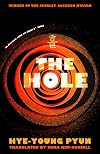
While The Hole does refer to a literal hole it also is show more referenced a few different times in other ways. Oghi has a hole in the middle of his life, he is alone and falling into a hole of despair, he references his favorite map that has a hole in the middle of it from a compass. I mean, the cover is beautiful and hits the bullseye when it comes to describing this story.
“To be human was to be saddled with emptiness.”
“The world's oldest map, the Babylonian Map of the World, had a little circle bored through the center. [...] That dark, narrow hole went as deep as the memory of an age that no one could ever return to. The only way to reach that lost age was through that hole, but the hole itself could never be reached.”
"So that's what I'll do. What my daughter couldn't. What she meant to do. What she wanted to do. I have to do it for her. And I will." show less
This book has so many layers that I'm not sure I could ever uncover them all. The comparisons to Misery and The Vegetarian is what got my attention and while there are similarities I'm not sure that's a fair assessment. This is for sure a thriller, but it's not violent or gory or heart-pounding. It's terrifying on a more psychological level I think. I mean, waking up from a coma after a horrible car accident where you lost your wife and realizing your only salvation/caretaker/family left is your MIL? That's enough to drive any normal human into a dark hole. This is Oghi's descent into all the holes.
While The Hole does refer to a literal hole it also is show more referenced a few different times in other ways. Oghi has a hole in the middle of his life, he is alone and falling into a hole of despair, he references his favorite map that has a hole in the middle of it from a compass. I mean, the cover is beautiful and hits the bullseye when it comes to describing this story.
“To be human was to be saddled with emptiness.”
“The world's oldest map, the Babylonian Map of the World, had a little circle bored through the center. [...] That dark, narrow hole went as deep as the memory of an age that no one could ever return to. The only way to reach that lost age was through that hole, but the hole itself could never be reached.”
"So that's what I'll do. What my daughter couldn't. What she meant to do. What she wanted to do. I have to do it for her. And I will." show less
Members
- Recently Added By
Lists

Shirley Jackson Award Winners and Shortlist 2007-2020
77 works; 6 members

Diverse Horror
262 works; 6 members

Books Read in 2019
4,052 works; 110 members

Global Reads: Books Set in East Asia
139 works; 12 members

Korean literature
68 works; 5 members

Books recommended by Calgary Public Library staff
1,588 works; 4 members

Traveling the world in books
24 works; 1 member
Author Information

12 Works 665 Members
Some Editions
Awards and Honors
Common Knowledge
- Original publication date
- 2016
- First words
- Oghi slowly opened his eyes.
- Last words
- (Click to show. Warning: May contain spoilers.)And at last, Oghi cried. Not because of his wife. But because his time for crying had come.
- Original language
- Korean
Classifications
- Genres
- Fiction and Literature, Horror
- DDC/MDS
- 895.73 — Literature & rhetoric Literatures of other languages Literatures of East and Southeast Asia Korean Korean fiction
- LCC
- PL994.67 .H94 .H6513 — Language and Literature Languages and literatures of Eastern Asia, Africa, Oceania Languages of Eastern Asia, Africa, Oceania Korean language and literature Korean literature Individual authors and works
- BISAC
Statistics
- Members
- 416
- Popularity
- 74,434
- Reviews
- 19
- Rating
- (3.39)
- Languages
- 6 — Dutch, English, French, German, Italian, Turkish
- Media
- Paper, Audiobook, Ebook
- ISBNs
- 18
- ASINs
- 6