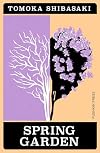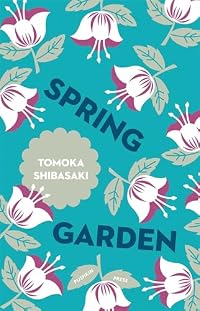
Spring Garden
by Tomoka Shibasaki
On This Page
Description
"Divorced and cut off from his family, Taro lives alone in one of the few occupied apartments in his block, a block that is to be torn down as soon as the remaining tenants leave. Since the death of his father, Taro keeps to himself, but is soon drawn into an unusual relationship with the woman upstairs, Nishi, as she passes on the strange tale of the sky-blue house next door. First discovered by Nishi in the little-known photo-book 'Spring Garden', the sky-blue house soon becomes a focus show more for both Nishi and Taro: of what is lost, of what has been destroyed, and of what hope may yet lie in the future for both of them, if only they can seize it." -- Provided by publisher. show lessTags
Recommendations






























Member Reviews
I love this beautiful take on a really subtle sort of longing and emptiness and need for the overlooked. I see a lot of reviews about loneliness but I thought it was more about context and connection to the environment and observation and peace? Maybe it's just the particular books that come to me, but I feel like Japanese literature makes space for these contemplations that other canons don't.
This is a rather odd little book. Divorced Taro, who seems to have no friends, lives in a rundown apartment building, which will be torn down once the leases all run out. Over a concrete wall, he can see the top of the house next door from his balcony. It’s a big, expensive, house, with a sky blue roof. One day, he sees one of his neighbors trying to climb up the wall. She’s not a robber; she’s obsessed with the house. Years before, she found a book of photographs called “Spring Garden”- the house the photos were taken of is the sky blue house next door. She wants to see the house, inside and out. The photo book, that is all interior shots some of which show the home owners, has given the house a kind of mythic beauty for her. show more As she schemes to get inside the house, Taro finds himself drawn into her obsession.
Not much happens in the book. They see the house. He sees the current house under laid by the photos in the book, just like he sees signs of the rivers and streams that have been tamed and forced into culverts underground all over the city. The whole world is a palimpsest.
Despite the lack of action, I sped through the book. I, too, became enamored of the beauty of the house, and how the now overlays the past. Four stars, even though it is, as I said, odd. show less
Not much happens in the book. They see the house. He sees the current house under laid by the photos in the book, just like he sees signs of the rivers and streams that have been tamed and forced into culverts underground all over the city. The whole world is a palimpsest.
Despite the lack of action, I sped through the book. I, too, became enamored of the beauty of the house, and how the now overlays the past. Four stars, even though it is, as I said, odd. show less
This novella from Tomoko Shibasaki is brief and insubstantial like a breath of fresh air, pleasant and briefly purifying. It evokes the isolation of living alone with few ties amongst neighbour who are little more than strangers, nameless and indistinct. The main character Toro is recently divorced and has lost his father, he is drifting lethargic and unconnected through his life until he forges a link with his neighbour Nishi through her fixation on a nearby sky-blue house.
It is beautifully written with a clarity of vision and restraint of prose that is remarkable in much Japanese literature and poetry and is perfectly captured in Polly Barton's precise and excellent translation. It does, however, lack an emotional foundation that show more would make it truly effective. Toro's isolation is accompanied by a passivity and listlessness that leave the novella unfortunately hollow and apart from a strange but moving passage about grinding down his father's bones in order to scatter his remains in the places he loves I fear most impressions will quickly evaporate. show less
It is beautifully written with a clarity of vision and restraint of prose that is remarkable in much Japanese literature and poetry and is perfectly captured in Polly Barton's precise and excellent translation. It does, however, lack an emotional foundation that show more would make it truly effective. Toro's isolation is accompanied by a passivity and listlessness that leave the novella unfortunately hollow and apart from a strange but moving passage about grinding down his father's bones in order to scatter his remains in the places he loves I fear most impressions will quickly evaporate. show less
I have a vaguely vexed relationship with Japanese literature. While I’m fascinated by the culture it describes, I often have difficulty getting into the writing itself, which, at least in English translation, can feel strangely detached or repressed. However, I’m determined to keep at it and, along the way, I’ve found a few books that I’ve enjoyed unconditionally, like the detective novels of Seishi Yokomizo. Spring Garden, which originally caught my attention by virtue of its gorgeous cover, has been on my shelves for a while: now, as the sun grows stronger and the trees burst into blossom, it seems the right time to read it. It falls into the category of ‘evocative but slightly frustrating’: a tale of two lonely people who show more bond over an old photo-book that records the sky-blue house next door to their block of flats. It’s less a story than a glimpse into someone else’s life – a chance to walk alongside them for a while, without the promise of explanation or catharsis – and it has a bittersweetly nostalgic feel, as Shibasaki explores notions of loss, change and stasis in a world that’s moving too fast...
For the full review, please see my blog:
https://theidlewoman.net/2021/04/26/spring-garden-2014-tomoka-shibasaki/ show less
For the full review, please see my blog:
https://theidlewoman.net/2021/04/26/spring-garden-2014-tomoka-shibasaki/ show less
Earlier this week, a kid asked me what Japan was like. Me, having spent less than two weeks in Japan over a decade ago, and so *clearly* an expert, replied "Wacky. Japan is wacky." And there is a lot of wackiness about Japan, like how I spent my first twenty-four hours there pointing at things and saying "I rolled that up in Katamari" or how things -- toilets, restaurants, buttons -- just play music at you. But there's a lot of other stuff about Japan, like the rusty water stains running down the sides of the stucco houses right up next to the shinkansen train tracks, or sitting out on the reclaimed land in Tokyo in April and just how brown and grey and barren everything looks. Spring Garden hits smack between the Cheery Pop Super Love show more Happy Land of Japan and the just slog of Salarymen and Emptiness and drinking beer depression. Taro is divorced and alone. Nishi moved here because the apartment block is next to a house from a book! Taro has three different ways he can walk from his apartment to the rail station. Nishi stabs herself so she can see a bathroom! They eat octopus and drink beer. They make a friend. The friend moves away. Taro fills his whole apartment with couches! Someone uses the house to film a movie.
And then, bafflingly, the last chapter is told from Taro's sister's perspective, so did Taro die or something? I kept expecting the book to end with him falling, literally, off the fence, and dying because why else would we switch from a third person point to a view to a first person point of view from a character that we've never met before?
So is he dead? Is this all like the alternative, death-God, interpretation of Totoro? I have no idea.
Thus I will finish and say Spring Garden is kinda like a novel or kinda like a string of incidents listed in chronilogical order which may actually be the definition of a novel, I don't know. I guess it's wacky in a non-wacky way, might be the best way to say what it is.
Spring Garden by Tomoka Shibasaki went on sale November 7, 2017.
I received a copy free from Netgalley in exchange for an honest review. show less
And then, bafflingly, the last chapter is told from Taro's sister's perspective, so did Taro die or something? I kept expecting the book to end with him falling, literally, off the fence, and dying because why else would we switch from a third person point to a view to a first person point of view from a character that we've never met before?
So is he dead? Is this all like the alternative, death-God, interpretation of Totoro? I have no idea.
Thus I will finish and say Spring Garden is kinda like a novel or kinda like a string of incidents listed in chronilogical order which may actually be the definition of a novel, I don't know. I guess it's wacky in a non-wacky way, might be the best way to say what it is.
Spring Garden by Tomoka Shibasaki went on sale November 7, 2017.
I received a copy free from Netgalley in exchange for an honest review. show less
Taro lives alone in one of Tokyo’s anonymous block of flats. His family is far away and they are hardly in contact, his father died already ten years ago, yet the memories of him are still alive. His neighbours, he only knows the names that were given to the flats they inhabit, but not who is living close to him. Since the flats are going to be destroyed soon, they will have to leave anyway. One day, he observes a woman walking around the sky-blue house neighbouring their block. She seems to try to look into it through the window. When she realises that she is spotted, they make contact and Nishi explains Taro why she is behaving this strangely: the house is actually quite famous, she even possesses a book about its interior and her show more greatest wish is to enter and have a look herself. A singular friendship forms between the two neighbours, centred around a building close but far away for them.
Tomoka Shibasaki’s novel “Spring Garden” has many typical features of what I expect from Japanese literature. First of all, the characters. We have two protagonists who seem to live a life without close connection to other people, loneliness and isolation are reoccurring themes in Japan’s novels and from the news I read about the country this really seems to be a major topic. Yet, it is not the suffering from being alone that is central, they seem to have accepted that this is just how it is for them. When they finally bond with somebody - even if it is just a weak connection like the one of neighbours – there are many societal rules which prevent an honest friendship in my opinion. E.g. when Taro is given a present he does not like, it is not easy for him and he nevertheless feels obliged to behave in a certain manner. Even to eat things he doesn’t like in order not to appear impolite.
Some aspects I found really strange and I do not know if this is the case because the character of Taro is a bit bizarre or if this is just a cultural matter which is quite far from the world I life in. Taro keeps the mortar and pestle in his kitchen cupboard with which he turned the remains of his father’s bones into powder to distribute them. They remind him of the father and he frequently thinks about him when he comes across the two utensils. Both, first the idea of working on a deceased’s bones and keeping the utensils close to pots and pans is very astonishing to me to put it politely.
The most interesting part of the novel for me was the house that Taro and Nishi go to explore, first through the book and the outside, later also from the inside. It is not only the poetical language, especially about the lighting of the colourful windows, which makes it quite impressive, but also how human boing have an impact on the outer world. Even though the walls and windows are the same, with the change of the inhabitants, the whole ambiance can change and everybody leaves his mark on his surroundings. show less
Tomoka Shibasaki’s novel “Spring Garden” has many typical features of what I expect from Japanese literature. First of all, the characters. We have two protagonists who seem to live a life without close connection to other people, loneliness and isolation are reoccurring themes in Japan’s novels and from the news I read about the country this really seems to be a major topic. Yet, it is not the suffering from being alone that is central, they seem to have accepted that this is just how it is for them. When they finally bond with somebody - even if it is just a weak connection like the one of neighbours – there are many societal rules which prevent an honest friendship in my opinion. E.g. when Taro is given a present he does not like, it is not easy for him and he nevertheless feels obliged to behave in a certain manner. Even to eat things he doesn’t like in order not to appear impolite.
Some aspects I found really strange and I do not know if this is the case because the character of Taro is a bit bizarre or if this is just a cultural matter which is quite far from the world I life in. Taro keeps the mortar and pestle in his kitchen cupboard with which he turned the remains of his father’s bones into powder to distribute them. They remind him of the father and he frequently thinks about him when he comes across the two utensils. Both, first the idea of working on a deceased’s bones and keeping the utensils close to pots and pans is very astonishing to me to put it politely.
The most interesting part of the novel for me was the house that Taro and Nishi go to explore, first through the book and the outside, later also from the inside. It is not only the poetical language, especially about the lighting of the colourful windows, which makes it quite impressive, but also how human boing have an impact on the outer world. Even though the walls and windows are the same, with the change of the inhabitants, the whole ambiance can change and everybody leaves his mark on his surroundings. show less
I enjoyed reading this novella which won an Akutagawa Prize, but I'm not sure what its point was, or what I was supposed to get out of it.
Taro lives in a soon to be demolished apartment block in which only two other units are occupied. One of the other tenants, Nishi, ignites his interest in a nearby house, which is painted sky blue. Two of the previous occupants of the sky blue house had published a book of photographs of themselves in various rooms of the house, entitling the book "Spring Garden." Nishi and Taro insinuate themselves into the lives of the current occupants of the house, to see and compare the rooms in their current state to the way in which the rooms appeared in the book of photographs. Beyond this nothing much show more happens, until abruptly, and I thought strangely, about 3/4 through the book, it switches to a first person narrative by Taro's sister who comes to visit him.
Despite this, the language is beautiful. It's a glimpse at life in contemporary Japan for a couple of odd characters, but beyond this I don't see a compelling reason to read it. If this description attracts you, it's not necessarily a waste of time. I just didn't get it.
3 stars show less
Taro lives in a soon to be demolished apartment block in which only two other units are occupied. One of the other tenants, Nishi, ignites his interest in a nearby house, which is painted sky blue. Two of the previous occupants of the sky blue house had published a book of photographs of themselves in various rooms of the house, entitling the book "Spring Garden." Nishi and Taro insinuate themselves into the lives of the current occupants of the house, to see and compare the rooms in their current state to the way in which the rooms appeared in the book of photographs. Beyond this nothing much show more happens, until abruptly, and I thought strangely, about 3/4 through the book, it switches to a first person narrative by Taro's sister who comes to visit him.
Despite this, the language is beautiful. It's a glimpse at life in contemporary Japan for a couple of odd characters, but beyond this I don't see a compelling reason to read it. If this description attracts you, it's not necessarily a waste of time. I just didn't get it.
3 stars show less
Members
- Recently Added By
Author Information

4+ Works 160 Members
Some Editions
Awards and Honors
Awards
Series
Belongs to Publisher Series
Common Knowledge
- Canonical title
- Spring Garden
- Original title
- 春の庭
- Original publication date
- 2014
- Original language
- Japanese
Classifications
- Genres
- Fiction and Literature, General Fiction
- DDC/MDS
- 895.63 — Literature & rhetoric Literatures of other languages Literatures of East and Southeast Asia Japanese Japanese fiction
- LCC
- PL875.5 .H52 .H3713 — Language and Literature Languages and literatures of Eastern Asia, Africa, Oceania Languages of Eastern Asia, Africa, Oceania Japanese language and literature Japanese literature
- BISAC
Statistics
- Members
- 141
- Popularity
- 231,061
- Reviews
- 9
- Rating
- (3.19)
- Languages
- 5 — Dutch, English, French, Japanese, Spanish
- Media
- Paper, Ebook
- ISBNs
- 8
- ASINs
- 3