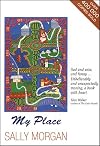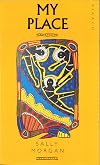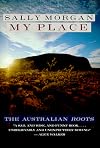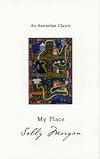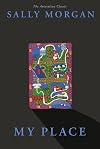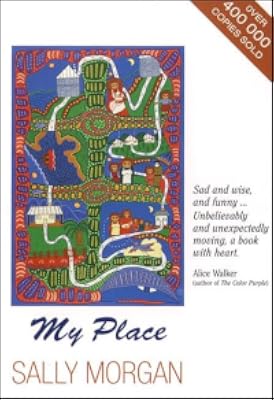
My Place
by Sally Morgan
On This Page
Description
In 1982, Sally Morgan travelled back to her grandmother's birthplace. What started as a tentative search for information about her family, turned into an overwhelming emotional and spiritual pilgrimage. My Place is a moving account of a search for truth into which a whole family is gradually drawn, finally freeing the tongues of the author's mother and grandmother, allowing them to tell their own stories.Tags
Recommendations




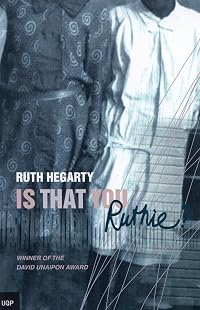


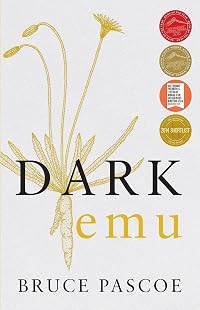

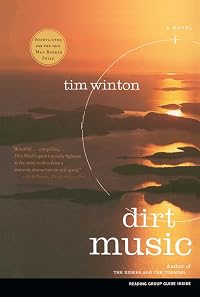


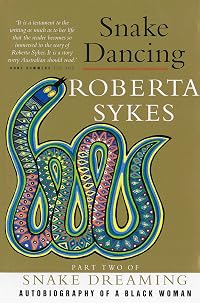





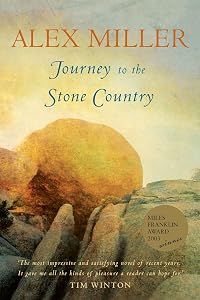
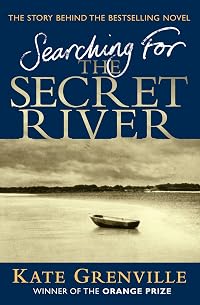


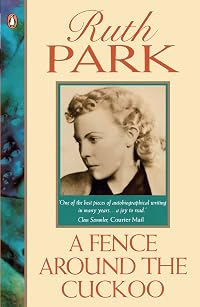
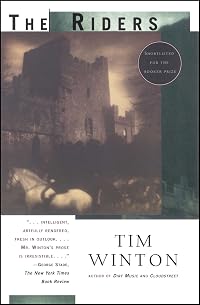







Member Recommendations
Sorry by Gail Jones
by KimB
Member Reviews
I read what turned out to be a cheesy romance novel recently, just because the story was set in the outback, but the author recommended this book in her acknowledgements so I bought a copy. What a difference! Sally Morgan's family history/memoir is witty, endearing, honest and painful in places, recounting her discovery and acceptance of her Aboriginal heritage. She grew up in Perth in the 1980s, with her mother Gladys, four siblings and her nan, Daisy, and once asked her mother, in all innocence, which country they originally came from. Her mother and grandmother had learned to be ashamed, even fearful, of admitting that they were Aboriginal Australians and never told Sally and her brothers and sisters about where their family came show more from. After reading the personal memories of Gladys, Daisy and Daisy's brother Arthur, told through Sally, that bitter secret seems almost understandable.
The first part of the book is a standard memoir, with the thread of identity running through Sally's vault of hilarious childhood anecdotes. Young Sally reminded me of Scout in Mockingbird, a wilful and individual child whose imagination keeps getting her into trouble. Her father, who was a POW during the Second World War and suffered from (undiagnosed) PTSD when he returned home, took his life when his children were still young, but despite poverty and prejudice, the family stuck together and looked out for each other. 'You lot stick like glue,' a classmate tells Sally, and I love that about them. Nan is a fantastic character, leaving onions all over the house and chatting up Jehovah's witnesses to use their leaflets as toilet paper, but beneath all the humour, there is a sadness and a frustration too. When Sally realises that her family are Aboriginal, she wants to learn more, but both Gladys and Daisy have distanced themselves from the past.
I suppose, in hundreds of years time, there won't be any black Aboriginals left. Our colour dies out; as we mix with other races, we'll lose some of the physical characteristics that distinguish us now. i like to think that, no matter what we become, our spiritual tie with the land and the other unique qualities we possess, will somehow weave their way through to future generations of Australians. I mean, this is our land after all, surely we've got something to offer.'
Daisy, born in 1900, and Gladys, born in 1931, were both used and abused by white men, in particular, fathered by employers but then sent away from the land like dirty secrets. Children fathered by white men who 'passed' for white were even taken from their Aboriginal mothers and adopted out (the 'Stolen Generations'). I can't even begin to take in how they were treated. Everybody knows about the history of slavery in America, but the same disgusting practices and attitudes were still happening in twentieth century Australia, thanks to men like A O Neville.
Thank you to Sally Morgan, her mother Gladys and grandmother Daisy, for sharing their stories. Definitely recommended. show less
The first part of the book is a standard memoir, with the thread of identity running through Sally's vault of hilarious childhood anecdotes. Young Sally reminded me of Scout in Mockingbird, a wilful and individual child whose imagination keeps getting her into trouble. Her father, who was a POW during the Second World War and suffered from (undiagnosed) PTSD when he returned home, took his life when his children were still young, but despite poverty and prejudice, the family stuck together and looked out for each other. 'You lot stick like glue,' a classmate tells Sally, and I love that about them. Nan is a fantastic character, leaving onions all over the house and chatting up Jehovah's witnesses to use their leaflets as toilet paper, but beneath all the humour, there is a sadness and a frustration too. When Sally realises that her family are Aboriginal, she wants to learn more, but both Gladys and Daisy have distanced themselves from the past.
I suppose, in hundreds of years time, there won't be any black Aboriginals left. Our colour dies out; as we mix with other races, we'll lose some of the physical characteristics that distinguish us now. i like to think that, no matter what we become, our spiritual tie with the land and the other unique qualities we possess, will somehow weave their way through to future generations of Australians. I mean, this is our land after all, surely we've got something to offer.'
Daisy, born in 1900, and Gladys, born in 1931, were both used and abused by white men, in particular, fathered by employers but then sent away from the land like dirty secrets. Children fathered by white men who 'passed' for white were even taken from their Aboriginal mothers and adopted out (the 'Stolen Generations'). I can't even begin to take in how they were treated. Everybody knows about the history of slavery in America, but the same disgusting practices and attitudes were still happening in twentieth century Australia, thanks to men like A O Neville.
Thank you to Sally Morgan, her mother Gladys and grandmother Daisy, for sharing their stories. Definitely recommended. show less
Another book I’m glad I picked up thanks to a fellow Viner. This is a non-fiction account of the life of Aboriginal professor, artist and author Sally Morgan. The book goes through her memories of childhood dealing with her sometimes abusive father, the struggles of her mother and grandmother trying to provide for Sally and her siblings, and her discovery of her Aboriginal culture.
Prior to this book I had no idea of the Aboriginal culture or Austrialia’s history for that matter. This was a good introduction into the topic. Morgan’s book not only touches on Morgan’s own personal story and struggle, but also that of her grandmother and her great uncle helping to give a well rounded view of the cultural and generational change show more towards national acceptance.
Morgan has an honest way of writing, which makes it almost seem like she is just chatting with you and telling you her story of discovery. There were moments that I was cracking up at her smartassness and other moments that were genuinely touching. By the end of the book I was sobbing uncontrollably because Morgan’s grandmother reminded me of my own grandmother who passed away. It made me miss her and wonder what stories I may have missed from her. show less
Prior to this book I had no idea of the Aboriginal culture or Austrialia’s history for that matter. This was a good introduction into the topic. Morgan’s book not only touches on Morgan’s own personal story and struggle, but also that of her grandmother and her great uncle helping to give a well rounded view of the cultural and generational change show more towards national acceptance.
Morgan has an honest way of writing, which makes it almost seem like she is just chatting with you and telling you her story of discovery. There were moments that I was cracking up at her smartassness and other moments that were genuinely touching. By the end of the book I was sobbing uncontrollably because Morgan’s grandmother reminded me of my own grandmother who passed away. It made me miss her and wonder what stories I may have missed from her. show less
This has been one of my favorite books as I "read my way around the world," and this is one of the best autobiographies I've ever read. The book gave a good feel for Australian culture in general. It touched on growing up, family secrets, Australian history, Aboriginal culture, race issues, even war and mental health. It was a page-turner for me. I found myself picking up the book during breakfast, work breaks, even staying up late at night to read the next couple of chapters. The writing slogged a bit during the stories of her grandmother and her great uncle, but nothing you can't get through, and I learned a lot. This was a very enjoyable book, and I can easily see how it claims the descriptor as "An Australian Classic." I'll be show more donating my paperback to the public library and buying a hardcover copy to read again in the future. show less
3.5 Stars--
I honestly have to say that I probably never would have picked up this book if it wasn't sent to me by a friend. Mostly because I never knew it existed, but that's beside the point, hehe. I'm not really a memoir reader, but I am trying to read more non-fiction this year, so this blended perfectly with this goal.
My Place tells the story of how Sally Morgan discovered who she is. In a way, it was a very touching story, and I'm glad that I read it. I've never really given much thought to my own family history when it comes to race, but then race has never been something that I think about. I register different skin tones, yes, but I can't say that I label or judge people because of them. It's just not how I think. Which is why show more racism makes me so angry. I just don't understand the way that certain people feel that they are better than others because of the color of their skin.
Sally's story is a quest to find out about her racial origins. To make a long story short, she discovers that she is Aboriginal, and then sets about learning the stories of her family members to find out why this is such a shameful secret that must be hidden at all costs - even to the point of blatantly lying.
To be perfectly honest, I know next to nothing about Australian history, and still less about Aboriginal Australian history. This book has definitely piqued my interest, so I think that I'll be reading other books about this so that I can get a fuller picture. Morgan describes a sort of bonded-slavery as being the main interaction between "whitefellas" and "blackfellas" (Aboriginals). White people essentially forced Aboriginal people into servitude, took away their children if they were of mixed-blood ("half-caste") and looked white, and generally made their lives exceptionally difficult according to how dark their skin is. I say that this is a sort of bonded-slavery because even though it is technically slavery, with laws prohibiting Aboriginals travelling without a permit, etc, it's more like indentured servitude, as there were wages involved - even though they weren't paid most of the time. Not to mention that Aboriginals could be let go and hired into service elsewhere. They were owned, in a way, but more in terms of lack of options than actual slave ownership.
Not that this makes it any better. Slavery and racism and bigotry and ignorance are slavery and racism and bigotry and ignorance. The forms that they take matter not one bit. Aboriginal people were taken from their homes, and forced to work for nothing or next to nothing for white people who held everything over their heads at unattainable heights. It was an accomplishment just to survive. And this, still going on in the early parts of the 20th century. It's shameful.
It's also shameful that people should be made to feel so ashamed of their heritage and history that they would deny it. It's understandable that people would want to deny what they are to avoid prejudice and hatred, but it's incredibly sad that the very things that define us are the things that we wish to be rid of in order to be accepted.
I feel like it is an important book, and that it brings awareness to something that people outside of Australia are probably completely oblivious to, and people inside Australia would likely wish to forget. Just as people in the US would like to forget that we were slave-owners once too. I don't understand this seemingly universal drive for a group of people to wish to have dominance over other groups of people. I refuse to believe that this is an ingrained trait.
Anyway, I wish that I could actually give this book a higher rating. I do feel like it is important, but I wish that it was a little more accessible. It feels like it was written with native Australians in mind - people who would already know what a goanna is, and what a didgeridoo is, etc. Things are mentioned but not explained, so there's a lot that has to be looked up in order to get the full story. It feels like it was written for people who already have an academic knowledge of Australia's Aboriginal history, but now just need a few more details to really understand. In a way, this book gives them that, but not with the depth that it could have.
It is written in very simple and straightforward language, which, to me, depersonalizes the story a bit too much. Granted, this should be a story in which you could fit yourself in there and think "This could have happened to anyone... this could have happened to ME and MY family," but really it is a personal story about Sally's family, and the way it was written was too detached to really allow the reader in. The story told us what happened ("And then I was beaten with a whip.") but in a very clinical fashion which makes it hard to feel for someone who doesn't seem to be upset themselves. After telling her mother's story, Sally mentions that she felt close to her mother, but that was all there was. Just that mention. Sally mentions later that there are "depths to {the story} that she knows that she will never plumb." Which is true, but telling us that there are depths isn't the same as communicating them. I would have liked to feel like I was being told the story directly, not a fact-based reproduction of it. I know that this story is a memoir, and that the information in it relies on the information that the contributors are willing or able to share. But it just seems to me that there was a lack of personalization that would have really brought the story together and made it something amazing.
Also there were quite a few typos and errors in the text, which was distracting. One in particular really threw me for a loop - Sally's mother is relaying the story of her father's death, and how she was concerned about his afterlife whereabouts, so she asked "Gold" to show her where he was. I racked my brains for about a minute, trying to think of who Gold was, when it dawned on me that it was supposed to be "God".
And that brings me to my next point, which is that there is a "spiritual realism" aspect to parts of the book. Several of the family members are stated to have seen visions, both of the future and of God and angels, and to have seen signs and omens and the like. I feel like this part of the story wasn't very believable. It was relayed as fact, as was everything else, but I'm a natural skeptic, so I found it hard to believe in visions of angels and the like. I'm not saying that they didn't happen - I don't know what they saw or didn't see - I just would have liked for there to have been a little explanation as to the spiritual nature of Aboriginal people. Parts struck me as being almost voodooish in nature (and this is NOT meant in the "EVIL BLACK MAGIC" way, but as the spiritual religious way), but also mixed in with Christianity in a way that just... I don't know. It didn't feel right for some reason. Like it was tacked on to show how they just knew things would work out, but the history for these feelings wasn't prsented to make it believeable to me. Again, I'm not saying that it didn't happen, because I can't know that. People's faith and spiritualism takes all different shapes and forms, and that's perfectly fine by me. I just wish that there was a basis - a tradition - that explained that Aboriginal people are more in tune with this part of life than other people. This is barely hinted at, but not in the way that I'd like to be able to appreciate these sections.
Overall, I did enjoy the book. It was a quick read, and has started an interest in Australian history that I wouldn't have had before. I will definitely look into more books in the future to see if I can get a fuller understanding of the way life was there, and how it is now. I appreciate having read this book, at having my horizons widened.
Thanks for sharing this book with me, Jon! :) show less
I honestly have to say that I probably never would have picked up this book if it wasn't sent to me by a friend. Mostly because I never knew it existed, but that's beside the point, hehe. I'm not really a memoir reader, but I am trying to read more non-fiction this year, so this blended perfectly with this goal.
My Place tells the story of how Sally Morgan discovered who she is. In a way, it was a very touching story, and I'm glad that I read it. I've never really given much thought to my own family history when it comes to race, but then race has never been something that I think about. I register different skin tones, yes, but I can't say that I label or judge people because of them. It's just not how I think. Which is why show more racism makes me so angry. I just don't understand the way that certain people feel that they are better than others because of the color of their skin.
Sally's story is a quest to find out about her racial origins. To make a long story short, she discovers that she is Aboriginal, and then sets about learning the stories of her family members to find out why this is such a shameful secret that must be hidden at all costs - even to the point of blatantly lying.
To be perfectly honest, I know next to nothing about Australian history, and still less about Aboriginal Australian history. This book has definitely piqued my interest, so I think that I'll be reading other books about this so that I can get a fuller picture. Morgan describes a sort of bonded-slavery as being the main interaction between "whitefellas" and "blackfellas" (Aboriginals). White people essentially forced Aboriginal people into servitude, took away their children if they were of mixed-blood ("half-caste") and looked white, and generally made their lives exceptionally difficult according to how dark their skin is. I say that this is a sort of bonded-slavery because even though it is technically slavery, with laws prohibiting Aboriginals travelling without a permit, etc, it's more like indentured servitude, as there were wages involved - even though they weren't paid most of the time. Not to mention that Aboriginals could be let go and hired into service elsewhere. They were owned, in a way, but more in terms of lack of options than actual slave ownership.
Not that this makes it any better. Slavery and racism and bigotry and ignorance are slavery and racism and bigotry and ignorance. The forms that they take matter not one bit. Aboriginal people were taken from their homes, and forced to work for nothing or next to nothing for white people who held everything over their heads at unattainable heights. It was an accomplishment just to survive. And this, still going on in the early parts of the 20th century. It's shameful.
It's also shameful that people should be made to feel so ashamed of their heritage and history that they would deny it. It's understandable that people would want to deny what they are to avoid prejudice and hatred, but it's incredibly sad that the very things that define us are the things that we wish to be rid of in order to be accepted.
I feel like it is an important book, and that it brings awareness to something that people outside of Australia are probably completely oblivious to, and people inside Australia would likely wish to forget. Just as people in the US would like to forget that we were slave-owners once too. I don't understand this seemingly universal drive for a group of people to wish to have dominance over other groups of people. I refuse to believe that this is an ingrained trait.
Anyway, I wish that I could actually give this book a higher rating. I do feel like it is important, but I wish that it was a little more accessible. It feels like it was written with native Australians in mind - people who would already know what a goanna is, and what a didgeridoo is, etc. Things are mentioned but not explained, so there's a lot that has to be looked up in order to get the full story. It feels like it was written for people who already have an academic knowledge of Australia's Aboriginal history, but now just need a few more details to really understand. In a way, this book gives them that, but not with the depth that it could have.
It is written in very simple and straightforward language, which, to me, depersonalizes the story a bit too much. Granted, this should be a story in which you could fit yourself in there and think "This could have happened to anyone... this could have happened to ME and MY family," but really it is a personal story about Sally's family, and the way it was written was too detached to really allow the reader in. The story told us what happened ("And then I was beaten with a whip.") but in a very clinical fashion which makes it hard to feel for someone who doesn't seem to be upset themselves. After telling her mother's story, Sally mentions that she felt close to her mother, but that was all there was. Just that mention. Sally mentions later that there are "depths to {the story} that she knows that she will never plumb." Which is true, but telling us that there are depths isn't the same as communicating them. I would have liked to feel like I was being told the story directly, not a fact-based reproduction of it. I know that this story is a memoir, and that the information in it relies on the information that the contributors are willing or able to share. But it just seems to me that there was a lack of personalization that would have really brought the story together and made it something amazing.
Also there were quite a few typos and errors in the text, which was distracting. One in particular really threw me for a loop - Sally's mother is relaying the story of her father's death, and how she was concerned about his afterlife whereabouts, so she asked "Gold" to show her where he was. I racked my brains for about a minute, trying to think of who Gold was, when it dawned on me that it was supposed to be "God".
And that brings me to my next point, which is that there is a "spiritual realism" aspect to parts of the book. Several of the family members are stated to have seen visions, both of the future and of God and angels, and to have seen signs and omens and the like. I feel like this part of the story wasn't very believable. It was relayed as fact, as was everything else, but I'm a natural skeptic, so I found it hard to believe in visions of angels and the like. I'm not saying that they didn't happen - I don't know what they saw or didn't see - I just would have liked for there to have been a little explanation as to the spiritual nature of Aboriginal people. Parts struck me as being almost voodooish in nature (and this is NOT meant in the "EVIL BLACK MAGIC" way, but as the spiritual religious way), but also mixed in with Christianity in a way that just... I don't know. It didn't feel right for some reason. Like it was tacked on to show how they just knew things would work out, but the history for these feelings wasn't prsented to make it believeable to me. Again, I'm not saying that it didn't happen, because I can't know that. People's faith and spiritualism takes all different shapes and forms, and that's perfectly fine by me. I just wish that there was a basis - a tradition - that explained that Aboriginal people are more in tune with this part of life than other people. This is barely hinted at, but not in the way that I'd like to be able to appreciate these sections.
Overall, I did enjoy the book. It was a quick read, and has started an interest in Australian history that I wouldn't have had before. I will definitely look into more books in the future to see if I can get a fuller understanding of the way life was there, and how it is now. I appreciate having read this book, at having my horizons widened.
Thanks for sharing this book with me, Jon! :) show less
Sally persists in finding the truth about her heritage. Her mother and grandmother were raised in a strongly prejudiced society that would take mixed blood babies away from their aborigine mothers and so kept secrets.
If this was a novel, I would not have rated it 4 star, because the tale drags in parts, e.g. when no progress is made, but the importance of speaking the truth makes this a worthwhile memoir.
If this was a novel, I would not have rated it 4 star, because the tale drags in parts, e.g. when no progress is made, but the importance of speaking the truth makes this a worthwhile memoir.
Read in one afternoon, evening, and night. Just mesmerizing. I still think people should not drink if they're having trouble, and not have more kids if they can't take care of the ones they have, but I feel a bit more sympathy for what it must be like to be in desperate straits or whatever.
I highly recommend this to everyone who cares about racism, or family, or history, or slavery, not just in Australia but anywhere - universal themes that apply to American Indians and African-Americans for sure, probably also Canadian First Peoples, Tibetans, East Indians, etc.
I highly recommend this to everyone who cares about racism, or family, or history, or slavery, not just in Australia but anywhere - universal themes that apply to American Indians and African-Americans for sure, probably also Canadian First Peoples, Tibetans, East Indians, etc.
What a charming, upsetting and perception challenging book. An excellent read. Provides some deep insights into how this country (Australia) treated Indigenous Australians from the perspective of an Indigenous family. The book was published in the mid 80's, however is still relevant today. - Perhaps even more so.
Members
- Recently Added By
Lists

500 Great Books by Women
507 works; 60 members

Australian Classics: Fifty Great Writers and Their Celebrated Works
43 works; 1 member

2021 - List of books read
53 works; 1 member

Travel Reading List
5 works; 1 member
Author Information

42+ Works 1,886 Members
Sally Morgan was born on January 18, 1951 in Perth, Western Australia. She is of Aboriginal descent from the Bailgu people of the Pilbara region of Western Australia. Her books, My Place, and Wanamurraganya, the story of Jack McPhee, won the Human Rights Literature and Other Writing Award in 1987 and 1989. Her other awards include Order of show more Australia Book Prize 1990; Fremantle Print Award with Bevan Hone in 1993; Notable Book, Children's Book Council in 1998 and Notable Book, Children's Book Council of Australia in 2012. Her other books include Sally's Story, Mother and Daughter, and Arthur Corinna's Story. Her children's books include Little piggies, The flying emu and other Australian stories, Hurry up, Oscar!, Pet problem, Dan's grandpa, In your dreams, and Just a little brown dog. She won the 2016 Prime Minister's Literary Award for Children's Fiction for her book, Sister Heart. (Bowker Author Biography) show less
Awards and Honors
Common Knowledge
- Canonical title
- My Place
- Original title
- My Place
- Alternate titles*
- Terug naar Corunna
- Original publication date
- 1987
- People/Characters
- Sally Morgan
- Important places
- Australia; Western Australia, Australia
- Dedication
- To My Family
How deprived we would have been if we had been willing to let things stay as they were. We would have survived, but not as a whole people. We would never have known our place. - First words
- The hospital again, and the echo of my reluctant feet though the long, empty corridors.
- Last words
- (Click to show. Warning: May contain spoilers.)'Oh, Nan', I cried with sudden certainty, 'I heard it, too. In my heart, I heard it.'
- Blurbers
- Walker, Alice
*Some information comes from Common Knowledge in other languages. Click "Edit" for more information.
Classifications
Statistics
- Members
- 998
- Popularity
- 26,217
- Reviews
- 25
- Rating
- (3.65)
- Languages
- 9 — Chinese, Czech, Dutch, English, German, Indonesian, Italian, Portuguese, Spanish
- Media
- Paper, Audiobook, Ebook
- ISBNs
- 46
- ASINs
- 10