On This Page
Description
"Twelve-year-old Milo is stuck spending the winter holidays in a house full of strange guests who are not what they seem-again! He will have to work with friends old and new to uncover clues in search of a mysterious map and a famous smuggler's lost haul"--Tags
Recommendations



Member Reviews
Milo Pine, his family, and a number of his friends return in this marvelous follow-up to Greenglass House, one which is every bit as atmospheric, every bit as mysterious, and every bit as involving as its predecessor. It is Christimas-time again, and Milo, still smarting from some recent experiences at school with an insensitive teacher, is attempting in vain to get into the holiday spirit. Missing Meddy, who hasn't shown herself since the previous year, Milo is excited when Clem and Georgie return to the inn, this time on the lam from some shady confederates. Having attempted a heist involving artefacts that once belonged to Violet Cross - Nagspeake's most famous runner (i.e.: smuggler) - the girls come to Greenglass House to hide out, show more when things go wrong. No sooner have they arrived however, than an odd assortment of strangers once again descends upon the inn, this time in the form of the Waits - a group of Christmas carolers who preserve the ancient traditions of the season. Now the Pines once again have a packed house, and Milo must solve a number of different mysteries. Is Cantlebone - a legendary thief admired by both Georgie and Clem - also after the Violet Cross haul, and has he come to Greenglass House? Is there an agent of Gilawfer, the unscrupulous fence who is tracking Clem and Georgie, in the mix? Who is Emmett Syebuck, the overly enthusiastic art student who never seems to want to leave? Will Milo be able to answer these and other questions, and will he be able to reunite the two eponymous ghosts of Greenglass House - Meddy, and her father, Doc Holystone...?
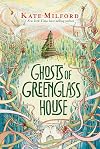
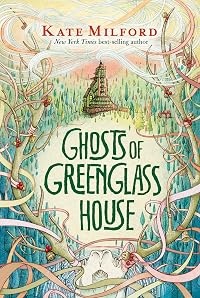
It's quite rare that I enjoy a sequel more than the original book, but Ghosts of Greenglass House is such a delightful, charming tale, one that I found appealing on so many different levels, that I think it safe to say that it is one of those deviations from the rule. With one small exception (more on that later), I loved everything about this book, from the front cover - artwork here is provided by the talented Jaime Zollars, who also worked on the first book - to the final page. I loved the Christmas-time setting, and found Greenglass House itself just as much of a character in its own right, as in the first book. I always appreciate authors who can make you feel invested in place, who can create such an engrossing locale/environment, that you feel that the story simply wouldn't be the same, without that setting. Kate Milford certainly has done that here, and I am eager to jump into the third Greenglass House book, Bluecrowne! I also loved the Christmas doings and customs introduced by the band of Waits, all of which are based on some very ancient real-world folklore and beliefs. The figures of the sweep and the hobby horse, and the details about the latter in particular, are just fascinating. Milford captures the eldritch charm and beauty of this ghostly equine figure, both in the scene in which the Waits come to Greenglass House, and in the inset story related by Lucy, later on in the book. The role played by the hobby horse, toward the conclusion of the book, is both spine-chilling and (oddly) heartwarming. I loved the deepening sense of Nagspeake and the Skidwrack as places here, and the greater knowledge we are given of them in the story. It's clear that Nagspeake is some kind of independent political entity, located (I believe) somewhere in the Middle Atlantic region of the United States. The importance of story itself, something also touched upon in Greenglass House, is expanded upon here, and the tales told by some of the Waits, addressing the history and nature of the Liberty of Gammerbund - a semi-autonumous area within Nagspeake - were intensely involving, and absolutely amazing. I love the story within a story structure, one that is well established in world literature (everything from Chaucer's The Canterbury Tales to Rowling's Harry Potter and the Deathly Hallows), and can't wait for the publication of The Raconteur's Commonplace Book, a collection mentioned in both novels, which sets out some of the tales told in Milford's fictional world of Nagspeake. The characters all felt vibrantly alive, and I enjoyed returning to those of them who also appeared in the first book, and meeting those that were debuting here. Clem and George were more appealing than ever, as were Meddy and Milo. As for Marzana andher parents , I hope to see more of them in the future! Finally, I loved the resolution of this second mystery, precisely because I thought I saw everything coming, after the surprises at the conclusion of the first book, but was proved wrong. I felt sure I was prepared, but there were reveals that I didn't expect at all - well done, Kate Milford, in pulling that off a second time!
As should be apparent, I enjoyed Ghosts of Greenglass House immensely, and it really would have been one of my rare five-star books, were it not for a single discordant note (the aforementioned exception). Although I do appreciate the sensitive way that Milford dealt with Milo's mixed feelings about being a Chinese adoptee of a white couple, both here and in the previous book, I thought there was something of a lack of clarity, in the way she handled the issue of Milo's teacher, and how one should approach a situation in which people have competing ideas and perceptions about history and/or culture. It's clear that the teacher is a bit arrogant and "know-it-all-ish" (as Milo would put it), as he refuses to listen to Milo, when he tries to mention the partial Chinese heritage of the builders of Greenglass House. Mr. Chancelor thinks he knows the history of Nagspeake better, and Milo is so distraught about the situation that he never presents any evidence or aguments to back up his counter-claim. It's worth noting that Mr. Chancelor is insensitive and a little clueless, as evidenced by his assumption that Milo will be able to understand Chinese, just because of his ethnic identity. I liked how these issues were discussed, both between Milo and his father, and between Milo and Owen, Clem's fiancee, who is (like Milo) also a Chinese adoptee of a white couple. Where it all broke down for me was in the scene in which Milo realizes that he has hurt Marzana, with his story about Violet Cross, and his further realization that he, in his subsequent discussion with her, is inadvertently playing the role of Mr. Chancelor. I thought that this provided the perfect opportunity for him to gain a little insight into his own situation, and to grow a little in wisdom, at it concerns how we communicate with one another, and what to do when we disagree. After all, here's someone (Marzana) who is distraught at the fact that he has presented a historical narrative (a story about Violet Cross) that is (in her view) wrong. Although her hurt is apparent, and is addressed by Milo immediately (to his credit), its cause is not (at least, until much later), and she refuses to elaborate. Like Milo himself, she refuses to present an argument more extensive than "you're wrong." Rather than leading him to a moment of understanding of his own situation, a moment in which he realizes that if he wants Mr. Chancelor to acknowledge his point (about Greenglass House specifically, and about Nagspeake in general), he will have to provide something more than his feelings - he will have to make a compelling argument, and present evidence to back it up - he instead is simply horrified about the emotional aspect of it all, and his role in hurting another. Now this is a very minor scene, in an otherwise outstanding novel, but it highlights a wider social problem that has really been bothering me recently, which is this idea that emotion trumps reason, and that argument and evidence are irrelevant, in the face of that emotion. I believe that this is an immensely harmful outlook, one that is becoming increasingly dominant in our current cultural zeitgeist, and one that can lead us to very dark places. Does this one scene ruin the book? By no means, this is still a high 4.5-star title for me. Do I think it is a "mistake?" No, but I do think it reveals a philosophical difference between myself and the author, one that, given the strength of my belief on the subject, detracted from my enjoyment.
No doubt others will perceive this matter differently, and it is (as I have acknowledged) a minor scene within the story, so I would not hesitate to recommend this one to other readers who enjoyed Greenglass House. After all, the positives here far, far outweigh this one negative. Marvelously written, intricately constructed, wonderfully conceived - this is an outstanding children's novel. I hope that Milford will bring us more of Milo and all his friends, and much more from Nagspeake, the Skidwrack, and the Liberty... show less
It's quite rare that I enjoy a sequel more than the original book, but Ghosts of Greenglass House is such a delightful, charming tale, one that I found appealing on so many different levels, that I think it safe to say that it is one of those deviations from the rule. With one small exception (more on that later), I loved everything about this book, from the front cover - artwork here is provided by the talented Jaime Zollars, who also worked on the first book - to the final page. I loved the Christmas-time setting, and found Greenglass House itself just as much of a character in its own right, as in the first book. I always appreciate authors who can make you feel invested in place, who can create such an engrossing locale/environment, that you feel that the story simply wouldn't be the same, without that setting. Kate Milford certainly has done that here, and I am eager to jump into the third Greenglass House book, Bluecrowne! I also loved the Christmas doings and customs introduced by the band of Waits, all of which are based on some very ancient real-world folklore and beliefs. The figures of the sweep and the hobby horse, and the details about the latter in particular, are just fascinating. Milford captures the eldritch charm and beauty of this ghostly equine figure, both in the scene in which the Waits come to Greenglass House, and in the inset story related by Lucy, later on in the book. The role played by the hobby horse, toward the conclusion of the book, is both spine-chilling and (oddly) heartwarming. I loved the deepening sense of Nagspeake and the Skidwrack as places here, and the greater knowledge we are given of them in the story. It's clear that Nagspeake is some kind of independent political entity, located (I believe) somewhere in the Middle Atlantic region of the United States. The importance of story itself, something also touched upon in Greenglass House, is expanded upon here, and the tales told by some of the Waits, addressing the history and nature of the Liberty of Gammerbund - a semi-autonumous area within Nagspeake - were intensely involving, and absolutely amazing. I love the story within a story structure, one that is well established in world literature (everything from Chaucer's The Canterbury Tales to Rowling's Harry Potter and the Deathly Hallows), and can't wait for the publication of The Raconteur's Commonplace Book, a collection mentioned in both novels, which sets out some of the tales told in Milford's fictional world of Nagspeake. The characters all felt vibrantly alive, and I enjoyed returning to those of them who also appeared in the first book, and meeting those that were debuting here. Clem and George were more appealing than ever, as were Meddy and Milo. As for Marzana and
As should be apparent, I enjoyed Ghosts of Greenglass House immensely, and it really would have been one of my rare five-star books, were it not for a single discordant note (the aforementioned exception). Although I do appreciate the sensitive way that Milford dealt with Milo's mixed feelings about being a Chinese adoptee of a white couple, both here and in the previous book, I thought there was something of a lack of clarity, in the way she handled the issue of Milo's teacher, and how one should approach a situation in which people have competing ideas and perceptions about history and/or culture. It's clear that the teacher is a bit arrogant and "know-it-all-ish" (as Milo would put it), as he refuses to listen to Milo, when he tries to mention the partial Chinese heritage of the builders of Greenglass House. Mr. Chancelor thinks he knows the history of Nagspeake better, and Milo is so distraught about the situation that he never presents any evidence or aguments to back up his counter-claim. It's worth noting that Mr. Chancelor is insensitive and a little clueless, as evidenced by his assumption that Milo will be able to understand Chinese, just because of his ethnic identity. I liked how these issues were discussed, both between Milo and his father, and between Milo and Owen, Clem's fiancee, who is (like Milo) also a Chinese adoptee of a white couple. Where it all broke down for me was in the scene in which Milo realizes that he has hurt Marzana, with his story about Violet Cross, and his further realization that he, in his subsequent discussion with her, is inadvertently playing the role of Mr. Chancelor. I thought that this provided the perfect opportunity for him to gain a little insight into his own situation, and to grow a little in wisdom, at it concerns how we communicate with one another, and what to do when we disagree. After all, here's someone (Marzana) who is distraught at the fact that he has presented a historical narrative (a story about Violet Cross) that is (in her view) wrong. Although her hurt is apparent, and is addressed by Milo immediately (to his credit), its cause is not (at least, until much later), and she refuses to elaborate. Like Milo himself, she refuses to present an argument more extensive than "you're wrong." Rather than leading him to a moment of understanding of his own situation, a moment in which he realizes that if he wants Mr. Chancelor to acknowledge his point (about Greenglass House specifically, and about Nagspeake in general), he will have to provide something more than his feelings - he will have to make a compelling argument, and present evidence to back it up - he instead is simply horrified about the emotional aspect of it all, and his role in hurting another. Now this is a very minor scene, in an otherwise outstanding novel, but it highlights a wider social problem that has really been bothering me recently, which is this idea that emotion trumps reason, and that argument and evidence are irrelevant, in the face of that emotion. I believe that this is an immensely harmful outlook, one that is becoming increasingly dominant in our current cultural zeitgeist, and one that can lead us to very dark places. Does this one scene ruin the book? By no means, this is still a high 4.5-star title for me. Do I think it is a "mistake?" No, but I do think it reveals a philosophical difference between myself and the author, one that, given the strength of my belief on the subject, detracted from my enjoyment.
No doubt others will perceive this matter differently, and it is (as I have acknowledged) a minor scene within the story, so I would not hesitate to recommend this one to other readers who enjoyed Greenglass House. After all, the positives here far, far outweigh this one negative. Marvelously written, intricately constructed, wonderfully conceived - this is an outstanding children's novel. I hope that Milford will bring us more of Milo and all his friends, and much more from Nagspeake, the Skidwrack, and the Liberty... show less
This is a delicious sequel to Greenglass House, and a surprise in so many ways. First, I didn't think Greenglass was going to have a sequel -- truly it can stand alone, but I also didn't expect that Milford would be able to infuse quite as much mysterious and magical delights into a second book, and I was astonished to find that she could. It's a bit of a challenge this one if you haven't read the first -- I kept having to try and remember who all the characters were. It became clear pretty quickly, but I think I would have enjoyed them more back to back.
Another excellent mystery, another smuggling related intrigue, and more Christmas adjacent shenanigans in our favorite historical house. Milo is a year older, and having some show more frustrations in school with a teacher that seems to fail at engaging with him on the subject of his Chinese heritage and his adoption. This is a strong and well handled theme throughout the book -- how to be who you are, feel comfortable, and find ways to interact with people who don't get you at all. A new ghost appears, some previous acquaintances return, and the house is visited by the marvelously creepy Christmas Waits, a caroling tradition/Abbots Bromley mashup that I want to exist in the real world -- it kind of does in the Christmas Revels, but anyway, let's hear it for reviving folkloric practices and dressing up in bones. It's complicated, not as spooky as it sounds, and a completely engrossing read. I so want Nagspeake to be a real place, and I really hope we get more stories. I do, I do, I do. show less
Another excellent mystery, another smuggling related intrigue, and more Christmas adjacent shenanigans in our favorite historical house. Milo is a year older, and having some show more frustrations in school with a teacher that seems to fail at engaging with him on the subject of his Chinese heritage and his adoption. This is a strong and well handled theme throughout the book -- how to be who you are, feel comfortable, and find ways to interact with people who don't get you at all. A new ghost appears, some previous acquaintances return, and the house is visited by the marvelously creepy Christmas Waits, a caroling tradition/Abbots Bromley mashup that I want to exist in the real world -- it kind of does in the Christmas Revels, but anyway, let's hear it for reviving folkloric practices and dressing up in bones. It's complicated, not as spooky as it sounds, and a completely engrossing read. I so want Nagspeake to be a real place, and I really hope we get more stories. I do, I do, I do. show less
A brilliant follow-up to Greenglass House, which returns readers to the atmosphere of wonder and intrigue with a new mystery to unravel with Milo and Meddy. Milo's struggle with his teacher's microagressions and his identity was so well laid out, and I just want everyone to read the chapter that he talks it out with Owen. What a model for kids, and for those who want to be allies but will inevitably get it wrong sometimes.
This story starts exactly a year after the first one ends, on the first day of winter vacation at the inn. Only, this year, there's no snow--only disappointing frost--and also a guest who keeps extending his stay. So, once again, Milo has to cope with a non-standard break that only gets crazier as the days pass. Filled with Nagspeakian history and lore, indoor adventures, and, yes, ghosts, this was another amazing read.
I love Kate Milford's books for so many reasons but I realized a new one this time. She normalizes late risers! Milo and his parents keep late hours because they need to take care of inn guests so they stay up past midnight and then get up at 9 or 10 in the morning and IT'S OKAY. These are people who keep different hours show more and they aren't lazy or missing out or anything else. They have activities, conversations, and adventures late into the night instead. Thank you, Kate! There were also great discussions about respecting boundaries, more about adoption, and even some lessons on lock-picking. I loved it all.
http://webereading.com/2017/11/new-release-ghosts-of-greenglass-house.html show less
I love Kate Milford's books for so many reasons but I realized a new one this time. She normalizes late risers! Milo and his parents keep late hours because they need to take care of inn guests so they stay up past midnight and then get up at 9 or 10 in the morning and IT'S OKAY. These are people who keep different hours show more and they aren't lazy or missing out or anything else. They have activities, conversations, and adventures late into the night instead. Thank you, Kate! There were also great discussions about respecting boundaries, more about adoption, and even some lessons on lock-picking. I loved it all.
http://webereading.com/2017/11/new-release-ghosts-of-greenglass-house.html show less
Literary Merit: Very Good
Characterization: Great
Recommended: Highly Recommended
Reading Level: Tween/Middle Grade
This absolutely charming mystery takes place in the idyllic, fanciful town of Nagspeake, where smugglers and thieves abound and ghosts haunt the mysterious inn, Greenglass House. The book is part of Milford's series on the Greenglass House, but reading the first book isn't necessary to enjoy this delightful tale. Milo, an adopted Chinese-American boy with anxiety, finds himself wrapped up in a mystery when a whole crowd of unusual guests descend upon his family's inn during the Christmas holiday. The whole thing reads like a fantastical Agatha Christie novel for young readers, and it's great. Milford also addresses Milo's show more struggles with his anxiety, and with the unknowing racism of those around him, in a gentle and nuanced way that's sure to resonate with young readers. The underlying theme of finding courage and compassion within yourself is also a beautiful and nice touch, and there are some genuinely shocking twists that would make Christie herself proud. show less
Characterization: Great
Recommended: Highly Recommended
Reading Level: Tween/Middle Grade
This absolutely charming mystery takes place in the idyllic, fanciful town of Nagspeake, where smugglers and thieves abound and ghosts haunt the mysterious inn, Greenglass House. The book is part of Milford's series on the Greenglass House, but reading the first book isn't necessary to enjoy this delightful tale. Milo, an adopted Chinese-American boy with anxiety, finds himself wrapped up in a mystery when a whole crowd of unusual guests descend upon his family's inn during the Christmas holiday. The whole thing reads like a fantastical Agatha Christie novel for young readers, and it's great. Milford also addresses Milo's show more struggles with his anxiety, and with the unknowing racism of those around him, in a gentle and nuanced way that's sure to resonate with young readers. The underlying theme of finding courage and compassion within yourself is also a beautiful and nice touch, and there are some genuinely shocking twists that would make Christie herself proud. show less
Once again, Greenglass House has been inundated at Christmas time, just as it was the previous year. Thirteen-year-old Milo Pine has been struggling with being the odd kid at school, a Chinese adoptee in an insensitive, mostly white, world. He was hoping to nurse his wounds over Christmas break, alone with his innkeeper parents at the 200-year-old Greenglass House; instead, visitors — some cherished friends and some odd newcomers — make their way to the inn. And, clearly from the title, it’s no spoiler to say that there a couple of ghosts, too.
Author Kate Milford had no problem with the much-vaunted sophomore slump: I enjoyed her sequel just as much as the original. Charming characters, plenty of suspense and some lessons that are show more subtle enough to go down easy. I can’t recommend this series enough to both its target audience and adults who love a fabulous tale. show less
Author Kate Milford had no problem with the much-vaunted sophomore slump: I enjoyed her sequel just as much as the original. Charming characters, plenty of suspense and some lessons that are show more subtle enough to go down easy. I can’t recommend this series enough to both its target audience and adults who love a fabulous tale. show less
It's been a year since a group of mismatched strangers showed up at Greenglass House and upended Milo Pine's quiet family holiday. Now, the holidays are rolling around again, and Milo is anxious for the inn's lone guest to leave. But soon, more guests arrive -- some old friends, some new strangers. What brings them to Greenglass House this time? And will Milo's friend Meddy put in an appearance, or is she gone for good?
I found this book a little slower to start than its predecessor, but once it got rolling, it was just as enjoyable. Part of the problem I had was that the group assembled was larger than before, and I found the characters harder to distinguish from each other. In the last book, the visitors arrived separately, so Milo show more (and the reader) could observe their individual characteristics. In this book, a group called the Waits arrived all at once -- Waits being like a group of mummers or morris dancers, basically. So not only were they in strange costumes, which some of them took off and some of them left on, but some of them had nicknames for each other in addition to their actual names, and they all entered together, without much individual description. Perhaps this was intentional; the experience would have been just as confusing in real life -- but I still had a hard time sorting them out for at least half of the book.
However, as I said, once the story really got going and I got the characters figured out, the mystery was top-notch. A couple of the plot twists surprised me, and I made a few wrong guesses, but once things were revealed, it was obvious how the groundwork for that revelation had been laid. We also learned more about a particularly intriguing area of Nagspeake, the Liberty of Gammerbund. I hope we'll hear more about Milo and Nagspeake in the future, as it's obvious that the author has created a vibrant and detailed world containing any number of fascinating stories. If you loved Greenglass House, don't miss this book! show less
I found this book a little slower to start than its predecessor, but once it got rolling, it was just as enjoyable. Part of the problem I had was that the group assembled was larger than before, and I found the characters harder to distinguish from each other. In the last book, the visitors arrived separately, so Milo show more (and the reader) could observe their individual characteristics. In this book, a group called the Waits arrived all at once -- Waits being like a group of mummers or morris dancers, basically. So not only were they in strange costumes, which some of them took off and some of them left on, but some of them had nicknames for each other in addition to their actual names, and they all entered together, without much individual description. Perhaps this was intentional; the experience would have been just as confusing in real life -- but I still had a hard time sorting them out for at least half of the book.
However, as I said, once the story really got going and I got the characters figured out, the mystery was top-notch. A couple of the plot twists surprised me, and I made a few wrong guesses, but once things were revealed, it was obvious how the groundwork for that revelation had been laid. We also learned more about a particularly intriguing area of Nagspeake, the Liberty of Gammerbund. I hope we'll hear more about Milo and Nagspeake in the future, as it's obvious that the author has created a vibrant and detailed world containing any number of fascinating stories. If you loved Greenglass House, don't miss this book! show less
Members
- Recently Added By
Lists

2018 Hugo Eligible Novels
170 works; 16 members
Author Information

14+ Works 4,133 Members
Kate Milford is originally from Annapolis, Maryland. She is the author of The Boneshaker, The Broken Lands, The Kairos Mechanism, Bluecrowne, and Greenglass House, which was long-listed for the National Book Award. She is also a New York Times Best Seller from 2016. (Bowker Author Biography)
All Editions
Awards and Honors
Series

Common Knowledge
- Original publication date
- 2017
- Important places
- Nagspeake
- Dedication
- To Tess, Evy Lou, and Zoey, at the start of their adventures, with love
- First words
- Frost was pretty much the worst.
- Last words
- (Click to show. Warning: May contain spoilers.)"Everyone's going to hear it."
(Click to show. Warning: May contain spoilers.)Snow, at last.
Classifications
Statistics
- Members
- 498
- Popularity
- 60,219
- Reviews
- 14
- Rating
- (4.11)
- Languages
- English, Spanish
- Media
- Paper, Audiobook, Ebook
- ISBNs
- 11
- ASINs
- 2