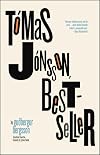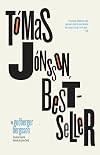
Tómas Jónsson, Bestseller
by Guðberger Bergsson
On This Page
Description
"Guðbergur Bergsson achieved success with his novel Tómas Jónsson, bestseller, which shocked Icelandic readers in innumerable ways, lashing out as it does at the Icelandic society of the post-war years for its cultural confusion, amorality, and hypocrisy. The main character is a grumpy old man who speaks and writes in various styles, grumbles and babbles and criticizes everything."--Dagný Kristjansdottir A retired, senile bank clerk confined to his basement apartment, Tomas Jónsson show more decides that, since memoirs are all the rage, he's going to write his own-a sure bestseller-that will also right the wrongs of contemporary Icelandic society. Egoistic, cranky, and digressive, Tómas blasts away while relating pick-up techniques, meditations on chamber pot use, ways to assign monetary value to noise pollution, and much more. His rants parody and subvert the idea of the memoir-something that's as relevant today in our memoir-obsessed society as it was when the novel was first published. Considered by many to be the "Icelandic Ulysses" for its wordplay, neologisms, structural upheaval, and reinvention of what's possible in Icelandic writing, Tómas Jónsson, Bestseller, was a bestseller, heralding a new age of Icelandic literature. Guðbergur Bergsson is the author of twenty-one books, from novels to children's literature, and a translator from Spanish into Icelandic. He has received the Icelandic Literary Prize and the Nordic Prize. Lytton Smith is the author of The All-Purpose Magical Tent, and has translated works from Bragi Olafsson, Jon Gnarr, and Kristin Tomarsdottir, among others"-- show lessTags
Recommendations

















Member Reviews
Tómas Jónsson is a retired bank-clerk living in a basement flat in Reykjavik, part of which he has been obliged to let out to a young family (who have in turn sub-let a room to a young man who plays the guitar...). He has taken a strong dislike to Iceland, the rest of the world, other people (especially, but not exclusively, old people, children, Icelanders, foreigners, and women), himself, and literature, and has decided to get his revenge on all of them by writing a bestseller, which he does, in a pile of 17 school composition books. We get 400 gloriously random and inconsistent pages, where he can switch around freely between memories, descriptions of his current life as an invalid, reflections on this and that, anecdotes, parodies show more of Great Works of Icelandic Literature, sexual fantasies, and much else. Apart from the anecdotes and parodies, he rarely sticks to the same topic for more than a few lines, and indeed often gets side-tracked before even reaching the end of the sentence he's writing. (And from time to time his transcriber has to tell us that some crucial piece of information is illegible in the original manuscript, so we're left hanging.) Most of the time, we aren't given quite enough information to be sure whether Tómas means us to take something as a real event in his life or as a dream or fantasy.
I found reading this a very mixed experience - some parts were absolutely hilarious, some all-but unintelligible. And it is in the nature of Tómas as a narrator that he keeps coming back to certain topics and (when he's not contradicting himself) he repeats himself a bit too often.
A problem with the book is that Tómas's constant misogyny and his fantasies (at least we hope they're just fantasies) about attacking women aren't as funny as they may have been fifty years ago. We're obviously meant to see that they reflect what a failure he is as a human being and laugh at him for trying to use these stories to impress us as readers, but a little of that sort of thing goes a long way, and Tómas doesn't do anything in small doses.
Tómas (or rather Guðbergur) has obviously read his Joyce and Beckett, and knows that a bestseller has to offend the sensitive reader to get the right sort of publicity - Tómas tells us in loving detail about his chamber-pot and how he fills it and empties it, and we hear a remarkable amount about Icelandic excretion customs. We also hear a great deal about Tómas's penis (which notoriously has its own passport). Guðbergur must have known about the weird and wonderful things that were going on in Spanish literature in the fifties and sixties (Cortázar, Goytisolo, etc.) of course, and he's obviously borrowing ideas from them about how to smash apart the conventions of narrative structure. I particularly enjoyed the way he destabilises the text in the last few pages - the transcriber starts to tell us about how he found the composition books and typed them up, but what we are expecting to be a realistic narrative establishing the history of the text mysteriously drifts off into an allegorical nightmare set in the North Atlantic, so we're no surer than we were before how we come to be reading the book...
With a book like this, which doesn't follow any known rules of narrative logic and obeys or ignores the conventions of language and typography at the author's whim, you have to trust the translator implicitly: there's little we can do to check what he's doing without learning Icelandic ourselves. Most of the time Lytton Smith seems to do a remarkably good job of turning the book into lively and varied English text, so I think we probably can trust him (besides, this must have been a labour of love: I can't imagine that there's any significant money to be made translating obscure 1960s texts for small presses). But I did have a few little quibbles - silly things that should have been caught at the proofreading stage, like famous "false friends" (you don't earn "rent" on a savings account in English), or placenames outside Iceland that are left in the Icelandic form (e.g. "Kílarskurðinn canal" instead of Kiel Canal). Most confusing was the use of the word "pensioners" for the people who ate with Tómas every day in some sort of canteen (Smith calls it a "refectory", which is OK too). From the context it's obvious that the people who eat there are in their lunch break from work, and definitely not retired! I suppose the Icelandic word that gets translated as "pensioners" must have been something parallel to French "pensionnaires", i.e. paying guests, nothing to do with the English sense of people who receive a retirement pension. Language does sometimes have a way of turning round and biting you, doesn't it? show less
I found reading this a very mixed experience - some parts were absolutely hilarious, some all-but unintelligible. And it is in the nature of Tómas as a narrator that he keeps coming back to certain topics and (when he's not contradicting himself) he repeats himself a bit too often.
A problem with the book is that Tómas's constant misogyny and his fantasies (at least we hope they're just fantasies) about attacking women aren't as funny as they may have been fifty years ago. We're obviously meant to see that they reflect what a failure he is as a human being and laugh at him for trying to use these stories to impress us as readers, but a little of that sort of thing goes a long way, and Tómas doesn't do anything in small doses.
Tómas (or rather Guðbergur) has obviously read his Joyce and Beckett, and knows that a bestseller has to offend the sensitive reader to get the right sort of publicity - Tómas tells us in loving detail about his chamber-pot and how he fills it and empties it, and we hear a remarkable amount about Icelandic excretion customs. We also hear a great deal about Tómas's penis (which notoriously has its own passport). Guðbergur must have known about the weird and wonderful things that were going on in Spanish literature in the fifties and sixties (Cortázar, Goytisolo, etc.) of course, and he's obviously borrowing ideas from them about how to smash apart the conventions of narrative structure. I particularly enjoyed the way he destabilises the text in the last few pages - the transcriber starts to tell us about how he found the composition books and typed them up, but what we are expecting to be a realistic narrative establishing the history of the text mysteriously drifts off into an allegorical nightmare set in the North Atlantic, so we're no surer than we were before how we come to be reading the book...
With a book like this, which doesn't follow any known rules of narrative logic and obeys or ignores the conventions of language and typography at the author's whim, you have to trust the translator implicitly: there's little we can do to check what he's doing without learning Icelandic ourselves. Most of the time Lytton Smith seems to do a remarkably good job of turning the book into lively and varied English text, so I think we probably can trust him (besides, this must have been a labour of love: I can't imagine that there's any significant money to be made translating obscure 1960s texts for small presses). But I did have a few little quibbles - silly things that should have been caught at the proofreading stage, like famous "false friends" (you don't earn "rent" on a savings account in English), or placenames outside Iceland that are left in the Icelandic form (e.g. "Kílarskurðinn canal" instead of Kiel Canal). Most confusing was the use of the word "pensioners" for the people who ate with Tómas every day in some sort of canteen (Smith calls it a "refectory", which is OK too). From the context it's obvious that the people who eat there are in their lunch break from work, and definitely not retired! I suppose the Icelandic word that gets translated as "pensioners" must have been something parallel to French "pensionnaires", i.e. paying guests, nothing to do with the English sense of people who receive a retirement pension. Language does sometimes have a way of turning round and biting you, doesn't it? show less
Nope. Nope. Nope. Not at all engaged by the minutiae of this oddball memoir.
Ratings
Members
- Recently Added By
Lists

Speculative Fiction from around the World
610 works; 18 members
Author Information

44+ Works 238 Members
Awards and Honors
Awards
Common Knowledge
- Important places
- Reykjavik, Iceland
Classifications
- Genres
- Fiction and Literature, General Fiction
- DDC/MDS
- 839.6934 — Literature & rhetoric German & related literatures Other Germanic literatures Old Norse, Old Icelandic, Icelandic, Faroese literatures Modern West Scandinavian; Modern Icelandic Modern Icelandic fiction 1900-1999
- LCC
- PT7511 .G78 .T6613 — Language and Literature German, Dutch and Scandinavian literatures Modern Icelandic literature Individual authors or works 19th-20th centuries
- BISAC
Statistics
- Members
- 60
- Popularity
- 515,062
- Reviews
- 2
- Rating
- (3.60)
- Languages
- English, Icelandic
- Media
- Paper, Ebook
- ISBNs
- 4
- ASINs
- 1