On This Page
Description
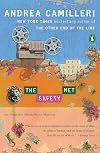
"Vigàta is bustling as the new filming location for a Swedish television series set in 1950. In the production frenzy, the director asks the locals to track down movies and vintage photos to faithfully recreate the air of Vigata in that time. Engineer Ernesto Sabatello, while rummaging in the attic of his house, finds some films shot by his father from 1958 to 1963, always on the same day, March 27 and always the same shot; the outside wall of a country house. Montalbano hears the story, show more and intrigued by the mystery of it, begins to investigate its meaning. Meanwhile, a middle school is threatened by a group of armed men, and a closer look at the situation finds Montalbano looking into the students themselves and finally delving into the world of social media"--Provided by publisher. show lessTags
Recommendations























Member Reviews
I rate this as one of the most enjoyable Montalbanos. It has all the usual elements of Camilleri’s Montalbano formula:
(1) Montalbano’s quirky personality.
(2) The interplay between him and his team.
(3) Lots of humour.
(4) The occasional critical social comment from Camilleri’s left-leaning perspective.
In the TV version we also get:
(5) The beautiful Sicilian scenery.
I’m a great fan of Montalbano, but not an uncritical one. A couple of Camilleri’s books have felt like he was going through the motions; a couple have contained themes or scenes which were too dark or distasteful for my liking; and a couple have contained irritating paranormal incidents. But there was nothing that spoiled this one for me.
There are two strands to the show more plot, and both of them are unusual and intriguing. I really wanted to read on and on. Like in a couple of his other books, one of the strands involves events going back decades. And Camilleri has some interesting things to say about our smartphone-addicted society. But I’m not going to spoil things by saying anything else about the plot.
Escape for a while to Montalbano’s world!
PS:
I'm adding a postscript after reading an interesting point made by another reviewer. That reviewer is not happy about the accents that translator Stephen Sartarelli gives to Catarella and Adelina.
When I read a Montalbano novel for the first time several years ago, I too felt doubtful about those accents. I thought at first that Sartarella was using the sort of corny, stereotyped language that writers often condescendingly put into the mouths of working class characters.
But I soon realised that this was not the case. What Sartarelli is actually doing is carrying out the difficult task of translating Camilleri’s original Italian editions, in which:
(1) Adelina’s Italian is of a rough and ready working class type, with lots of grammatical errors.
(2) Both Adelina and Catarella use a lot of Sicilian dialect. (I’ve had a go at reading some stories in the original Italian, and Camilleri’s use of Sicilian dialect makes them difficult.)
(3) Catarella is a clownish character whose linguistic confusion is used for comic effect.
So Sartarelli is actually making a good job of a difficult task. Once you get tuned into it, this language adds to the humour – unless Catarella-ish humour doesn’t appeal to you, of course. show less
(1) Montalbano’s quirky personality.
(2) The interplay between him and his team.
(3) Lots of humour.
(4) The occasional critical social comment from Camilleri’s left-leaning perspective.
In the TV version we also get:
(5) The beautiful Sicilian scenery.
I’m a great fan of Montalbano, but not an uncritical one. A couple of Camilleri’s books have felt like he was going through the motions; a couple have contained themes or scenes which were too dark or distasteful for my liking; and a couple have contained irritating paranormal incidents. But there was nothing that spoiled this one for me.
There are two strands to the show more plot, and both of them are unusual and intriguing. I really wanted to read on and on. Like in a couple of his other books, one of the strands involves events going back decades. And Camilleri has some interesting things to say about our smartphone-addicted society. But I’m not going to spoil things by saying anything else about the plot.
Escape for a while to Montalbano’s world!
PS:
I'm adding a postscript after reading an interesting point made by another reviewer. That reviewer is not happy about the accents that translator Stephen Sartarelli gives to Catarella and Adelina.
When I read a Montalbano novel for the first time several years ago, I too felt doubtful about those accents. I thought at first that Sartarella was using the sort of corny, stereotyped language that writers often condescendingly put into the mouths of working class characters.
But I soon realised that this was not the case. What Sartarelli is actually doing is carrying out the difficult task of translating Camilleri’s original Italian editions, in which:
(1) Adelina’s Italian is of a rough and ready working class type, with lots of grammatical errors.
(2) Both Adelina and Catarella use a lot of Sicilian dialect. (I’ve had a go at reading some stories in the original Italian, and Camilleri’s use of Sicilian dialect makes them difficult.)
(3) Catarella is a clownish character whose linguistic confusion is used for comic effect.
So Sartarelli is actually making a good job of a difficult task. Once you get tuned into it, this language adds to the humour – unless Catarella-ish humour doesn’t appeal to you, of course. show less
By this time (book 25 of 28 in the series), I feel as though Salvo Montalbano is a beloved uncle, and The Safety Net brings this wily curmudgeon into the world of teenagers and social media. It also brings him into a situation all too familiar to Americans-- gun violence in schools.
With his trademark humor, Andrea Camilleri sets us down in a town seething with excitement over the presence of a film crew in its midst. Some of the situations Montalbano and his team have to deal with are quite funny. But Camillleri can be quite serious, too.
The author shares his opinions about gun violence in schools as well as what he thinks about the internet and social media. ("How was it possible... that this vast new realm had only created a show more multitude of loners...?") And Montalbano shines when dealing with teenagers in this story. He starts out believing that he doesn't even come close to speaking the same language as the youngsters, but once he begins to apply himself to the task, he's better at it than he'd imagined. And-- wonder of wonders-- he even sits down with Catarella to do some work on the computer!
I've loved this series for a good long time. I love the setting, the food, the humor. The mystery of the home movies here in The Safety Net is a good one as well. But what I really love is Salvo Montalbano, a man so particular about his food that, if you invite him to dinner and he makes an excuse not to come, you know you're a bad cook. I hate to see my time with this series getting nearer to the end. show less
With his trademark humor, Andrea Camilleri sets us down in a town seething with excitement over the presence of a film crew in its midst. Some of the situations Montalbano and his team have to deal with are quite funny. But Camillleri can be quite serious, too.
The author shares his opinions about gun violence in schools as well as what he thinks about the internet and social media. ("How was it possible... that this vast new realm had only created a show more multitude of loners...?") And Montalbano shines when dealing with teenagers in this story. He starts out believing that he doesn't even come close to speaking the same language as the youngsters, but once he begins to apply himself to the task, he's better at it than he'd imagined. And-- wonder of wonders-- he even sits down with Catarella to do some work on the computer!
I've loved this series for a good long time. I love the setting, the food, the humor. The mystery of the home movies here in The Safety Net is a good one as well. But what I really love is Salvo Montalbano, a man so particular about his food that, if you invite him to dinner and he makes an excuse not to come, you know you're a bad cook. I hate to see my time with this series getting nearer to the end. show less
A Swedish film-crew have taken over the town of Vigata to make a fifties costume-drama, which leads to the welcome return of Ingrid, the Swedish rally driver we met in some of the early novels, now acting as translator and community-liaison for the film people. But of course the town is all at sixes and sevens, Montalbano's favourite restaurant is full of noisy foreigners, Mimì Augello has embarrassingly been caught taking a moonlit boat-trip with the Swedish leading lady, and worse, the general disruption seems to have caused a suspension of all normal criminal activity, leaving the police bored and frustrated. Montalbano resorts to working on his backlog of paperwork, and even sets out to investigate a minor oddity the Borough show more Engineer has discovered in his father's collection of Super-8 films, a puzzle that none but the most habituated of crime-novel addicts could possibly imagine has any connection with violent death. (We know better, of course...)
Then, some 150 pages into the book, when we have made our minds up that nothing is going to happen at all and Montalbano has made the supreme sacrifice and got on a plane to the North to visit his girlfriend, all hell breaks loose. There's been a shooting in a school in Vigata. To track down those responsible, Montalbano has to delve into the murky world of blogghi, tuiti, and fessibuc. Even with Catarella by his side to translate American into Sicilian, we can tell it's not going to end well...
Camilleri tells us in a note that this is the first novel he's dictated rather than writing it himself, and that perhaps accounts for the rather rambling structure and the absence of much real mystery in the solutions to either of the two plotlines. But there are still plenty of nice jokes, a few sharp moral observations, lots of good food, and rather more Sicilian dialect than they would have got away with earlier in the series.
Not for newcomers to Montalbano, but addicts will find plenty to keep them happy. show less
Then, some 150 pages into the book, when we have made our minds up that nothing is going to happen at all and Montalbano has made the supreme sacrifice and got on a plane to the North to visit his girlfriend, all hell breaks loose. There's been a shooting in a school in Vigata. To track down those responsible, Montalbano has to delve into the murky world of blogghi, tuiti, and fessibuc. Even with Catarella by his side to translate American into Sicilian, we can tell it's not going to end well...
Camilleri tells us in a note that this is the first novel he's dictated rather than writing it himself, and that perhaps accounts for the rather rambling structure and the absence of much real mystery in the solutions to either of the two plotlines. But there are still plenty of nice jokes, a few sharp moral observations, lots of good food, and rather more Sicilian dialect than they would have got away with earlier in the series.
Not for newcomers to Montalbano, but addicts will find plenty to keep them happy. show less
Montalbano Disrupted
Review of the Penguin Books paperback (March 2020) English language translation of the Italian language original [book:La rete di protezione|34506537] (2017)
Commissario Montalbano's daily routine in Vigàta, Sicily is disrupted when a Swedish film crew takes over the town to film a romantic comedy TV movie about a Swedish/Sicilian love relationship. The town's store facades are converted back several decades, streets and locations are shut down and even the main room of Montalbano's favourite lunch spot is swarming daily with noisy film crews.
Fortunately two cases come along to divert Montalbano's attention in the meantime, one a seemingly inexplicable mystery based on archival Super 8 films and the other a possible show more terrorist act at a local school. The regular cast is all in place and hit their lines perfectly, the bumbling receptionist Cat, the faithful Fazio and the wily Mimi. Montalbano even manages a quick trip to Genoa to visit love-of-his-life Livia while puzzling over the cases. The significance of the book's title doesn't become apparent until the very end.
Although his eye sight was failing when he dictated this book in 2015, Camilleri (1925-2019) showed no drop off in quality. Due to the delays of publication and translation, we still have 3 more Montalbano adventures [book:Il metodo Catalanotti|39988328] (planned English title The Sicilian Method) (2018), [book:Il cuoco dell'Alcyon|45187054] (The Cook of Alcyon) (2019) and Riccardino (2020? not yet published in Italian) to look forward to in English. show less
Review of the Penguin Books paperback (March 2020) English language translation of the Italian language original [book:La rete di protezione|34506537] (2017)
Commissario Montalbano's daily routine in Vigàta, Sicily is disrupted when a Swedish film crew takes over the town to film a romantic comedy TV movie about a Swedish/Sicilian love relationship. The town's store facades are converted back several decades, streets and locations are shut down and even the main room of Montalbano's favourite lunch spot is swarming daily with noisy film crews.
Fortunately two cases come along to divert Montalbano's attention in the meantime, one a seemingly inexplicable mystery based on archival Super 8 films and the other a possible show more terrorist act at a local school. The regular cast is all in place and hit their lines perfectly, the bumbling receptionist Cat, the faithful Fazio and the wily Mimi. Montalbano even manages a quick trip to Genoa to visit love-of-his-life Livia while puzzling over the cases. The significance of the book's title doesn't become apparent until the very end.
Although his eye sight was failing when he dictated this book in 2015, Camilleri (1925-2019) showed no drop off in quality. Due to the delays of publication and translation, we still have 3 more Montalbano adventures [book:Il metodo Catalanotti|39988328] (planned English title The Sicilian Method) (2018), [book:Il cuoco dell'Alcyon|45187054] (The Cook of Alcyon) (2019) and Riccardino (2020? not yet published in Italian) to look forward to in English. show less
The Chief Inspector Salvo Montalbano’s fictional town of Vigàta has been turned upside down by an international movie crew filming in the Sicilian town; however, neither of the two mysteries in this, the 25th novel in this exceptional series, has anything to do with that.
Montalbano finds himself looking into two very different events: a set of six ancient home movies filmed in the late 1950s and early 1960s by a long-dead man and the appearance of two gun-toting men in a classroom of 13-year-old boys. To give away much more or to reveal the meaning of the title would be to spoil the fun. Let’s just say there are memories and remorse aplenty mixed up with the mysteries. And now that author Andrea Camillieri is dead, every Montalbano show more novel — like the exquisite treats they are — must be savored without anyone spoiling this delightful morsel.
In the interest of full disclosure, I received this book from NetGalley and Penguin Books in exchange for an honest review. show less
Montalbano finds himself looking into two very different events: a set of six ancient home movies filmed in the late 1950s and early 1960s by a long-dead man and the appearance of two gun-toting men in a classroom of 13-year-old boys. To give away much more or to reveal the meaning of the title would be to spoil the fun. Let’s just say there are memories and remorse aplenty mixed up with the mysteries. And now that author Andrea Camillieri is dead, every Montalbano show more novel — like the exquisite treats they are — must be savored without anyone spoiling this delightful morsel.
In the interest of full disclosure, I received this book from NetGalley and Penguin Books in exchange for an honest review. show less
Chief Inspector Montalbano is about to be seriously inconvenienced when a film crew arrives in town to make a television series set in the 1950s. The townspeople are asked to see if they have any momentos from that time and an engineer finds some old film that his father had taken every year on the same date between 1958 and 1963: a film showing the wall of an old barn. Intrigued, Montalbano starts to look into the matter, but he is distracted when a pair of gunmen threaten a classroom full of young teenagers, including Mimi’s young son. How these investigations are connected, and what he learns from them, will come to surprise Montalbano once again….”The Safety Net” is the 25th and, alas, the last of the Montalbano series; show more Camilleri died a few years ago, but the English translation of this final novel just came out in 2020. As ever, Montalbano is more or less stumbling in the dark until, suddenly, he isn’t; and his faithful team trusts that he knows what he’s doing even if he is sure he does not. And food, of course, is at the heart of the story, or at least helps to supply its soul. I suppose one could read this book without having read any of the rest of the series, but this is a series where starting at the beginning is really worth doing. And someone new to reading Camilleri will have the joy of knowing there are fully 25 of these books (along with some novellas) ahead of them (I’m already jealous)! Recommended! show less
We flew through this one. Couldn't put it down. An unusual mystery for Montalbano. We love the Montalbano series and were delighted to find such originality in this plot. Very different and very satisfying. All the usual suspects with lots of laughs and great food! Highly recommend!
Members
- Recently Added By
Published Reviews
ThingScore 100
Vertrouwd zijn weer de ingrediënten die elke Montalbano thriller zo kenmerken. De liefde voor het Italiaanse eten en het eiland van de Siciliaanse levensgenieter. Daarnaast de onorthodoxe aanpak van de commissaris die niet binnen de lijntjes wenst te lopen. Bovendien verschillende verhaallijnen en zelfs het ontbreken van een moord zorgen voor een originele Siciliaanse thriller…lees verder >
added by Jordaan
Lists

Maybe This Year? Books to Look Forward To
413 works; 9 members
Author Information

428+ Works 42,069 Members
Andrea Camilleri lives in Italy. Andrea Camilleri was born in Porto Empedocle, Sicily on September 6, 1925. He began his studies at Faculty of Literature in 1944 but never finished. He started to publish poems and short stories. He studied stage and film direction at the Silvio D'Amico Academy of Dramatic Arts from 1948 to 1950 and soon began work show more as a director and screen writer. Andrea Camilleri worked on several TV productions such as Inspector Maigret wirh Gino Cervi. In 1971 he returned to the Academy of Dramatic Arts holding the chair of Movie Direction and keeping it for 20 years. In 1978 he wrote his first novel - The Way Things Go which was followed by A Thread of Smoke in 1980. In 1992 he published The Hunting Season which turned out to be a best seller. In 1994 Andrea Camilleri published the first in a long series of novels - The Shape of Water which features the character Inspector Montalbano - a ficticious Sicilian detective in the police force of Vigata, an imaginary Sicilian town. The TV adaption of this book took off in popularity and Andrea Camilleri's home town was renamed Porto Empedocle Vigata. In 1998 he won the Nino Mortoglio International Book Award. He received an honorary degree from the University of Pisa in 2005. Camilleri has worked as a television and theater director, as well as a screenwriter. In 1978 he wrote his first novel, Il Corso delle Cose. The Montalbano series, featuring the Sicilian detective Inspector Montalbano, is Camilleri's most famous work of fiction, and it has been adapted into a television series. Camilleri had written a few historical novels when, in 1994, he wrote The Shape of Water, the first book starring a Sicilian detective based in the fictional town of Vigata. Camilleri won the Nino Martoglio International Book Award in 1998. He is considered to be one of Italy's greatest contemporary writers. Andrea Camilleri passed away on July 17, 2019 at the age of 93. (Bowker Author Biography) show less
Series

Belongs to Publisher Series
La memoria [Sellerio] (1066)
Common Knowledge
- Canonical title
- The Safety Net
- Original title
- La rete di protezione
- Original publication date
- 2017
- People/Characters
- Commissario Salvo Montalbano; Vice commissario Mimì Augello; Ispettore Fazio; Ingegner Sabatello; Luigino Sciarabba
- Important places
- Vigata, Sicilia, Italia
- First words*
- El despertador es va posar a sonar desaforadament.
- Quotations*
- Quanno era arrivato a Vigàta si era fattto doviri d'accanosciri il territorio nel quale doviva travagliare. Epperciò si era fatto un longo e largo giro di ricognizioni. 'Na vota la campagna, che ora stava sutta ai sò occhi... (show all), era feconda, virdi e china di vita pirchì curata e rispittata dall'omo. Ora era addivintata squasi un diserto, regno di serpi e di erba giallusa 'nacapaci pirsino di fari un sciuri. Pariva che quella terra fusse stata tocccata da 'na malidizioni biblica che la cunnannava alla stirilità e che macari le case, malannate com'erano, ne fussiro state suggette.
Com'era possibili che l'era della comunicazioni globali, che l'era indove tutte le frontiere culturali, linguistiche, geografiche ed economiche erano state scancillate dalla facci della terra, che questo spazio immenso avissi... (show all) provocato 'na moltitudini di solitudini, 'n'infinità di solitudini 'n comunicazioni tra di loro, sì, ma sempre in assoluta solitudini?
Per quanto si sforzassi, dintra al ciriveddro non gli s'addrumava nisciuna lamadina. Forsi con l'età, quella vecchia, a incandescenza, era stata sostituita da una nova, a vascio consumo, che prima di arrinesciri a fari piena... (show all) luci ci 'mpiega ure e ure di tempo.
Ma quanti modi di protezioni esistivano! C'era 'na gana diffusa di proteggirisi da ogni cosa: da quello che s'accanosci, da quello che non s'accanosci, da quello che potrebbi essiri e che non è ditto che sarà, da quelli che... (show all) venno dal mari, da quelli che hanno un Dio diverso, da quelli che hanno macari lo stesso Dio ma lo pregano differenti. E comunque sempre meglio quartiarisi. Epperciò le forme di protezioni si moltiplicavano.
'Mpossibili. Era 'na supposizioni troppo pazza, troppo campata 'n aria. E po' quello era una bravo navicatore. Però, attenzioni, nel mari aperto, nel mari magno si 'ncontrano pirati o navi che navicano sutta nomi di convenie... (show all)nza o battono bannera di un paìsi che manco esisti. E allura come fai a distinguiri il vero dal fàvuso?
«C'è una bellissima commedia francese» arrispunnì Montalbano «nella quale Ulisse tenta, parlando con Ettore, di scongiurare l'inizio della guerra di Troia. E quando Ettore, stupito, gliene domanda la ragione, Ulisse risp... (show all)onde: perché Andromaca, tua moglie, ha lo stesso battito di ciglia di Penelope»
Sidoti gli aviva ditto la virità. Quanno era picciotto, nel '68, macari lui aviva gridato che la virità è rivoluzionaria, che la virità va sempri ditta. - Last words*
- (Click to show. Warning: May contain spoilers.)No, no, ja feia temps que sabia que la veritat, de vegades, val més tenir-la ben guardada, tancada amb pany i forrellat, perquè res no la pugui il·luminar.
- Publisher's editor*
- Edicions 62
- Original language
- italian
- Canonical DDC/MDS
- 853.914
- Canonical LCC
- PQ4863.A3894
*Some information comes from Common Knowledge in other languages. Click "Edit" for more information.
Classifications
- Genres
- Fiction and Literature, Mystery
- DDC/MDS
- 853.914 — Literature & rhetoric Italian, Romanian & related literatures Italian fiction 1900- 20th Century 1945-1999
- LCC
- PQ4863 .A3894 — Language and Literature French, Italian, Spanish and Portuguese literatures Italian literature Individual authors, 1961-2000
- BISAC
Statistics
- Members
- 372
- Popularity
- 84,705
- Reviews
- 15
- Rating
- (3.72)
- Languages
- 7 — Catalan, Dutch, English, German, Greek, Italian, Spanish
- Media
- Paper, Audiobook, Ebook
- ISBNs
- 32
- ASINs
- 10