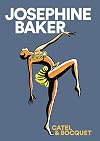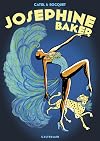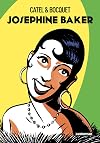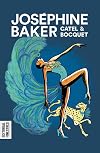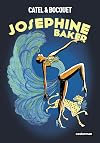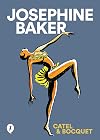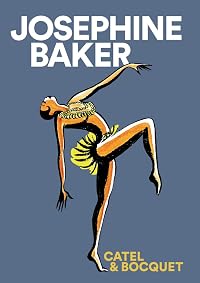
Josephine Baker
by Jose-Luis Bocquet (Author), Catel, (Illustrator)
On This Page
Description
Josephine Baker (1906--1975) was nineteen years old when she found herself in Paris for the first time in 1925. Overnight, the young American dancer became the idol of the Roaring Twenties, captivating Picasso, Cocteau, Le Corbusier, and Simenon. In the liberating atmosphere of the 1930s, Baker rose to fame as the first black star on the world stage, from London to Vienna, Alexandria to Buenos Aires. After World War II, and her time in the French Resistance, Baker devoted herself to the show more struggle against racial segregation, publicly battling the humiliations she had for so long suffered personally. She led by example, and over the course of the 1950s adopted twelve orphans of different ethnic backgrounds: a veritable Rainbow Tribe. A victim of racism throughout her life, Josephine Baker would sing of love and liberty until the day she died. show lessTags
Recommendations






































Member Recommendations

Member Reviews
A hefty tome dramatizing the life of dancer and singer Josephine Baker is an engaging read even if it leaves a muddled impression of the international superstar.
Born in St. Louis, Missouri, and married twice before she was fifteen, Baker drew attention on stage with her humorous antics and facial mugging while dancing in the chorus line. When the chance to appear in a new show took her across the Atlantic to Paris in 1925, she found herself turning twenty in a place that didn't discriminate against her nearly as much as the segregated United States. She bloomed in the freer environment and became a headliner on stage and screen, settling in France and returning stateside over the next fifty years only for the occasional family visit, show more concert tour, and/or civil rights protest.
Financially careless and generous to a fault, her wealth was poured first into a menagerie of pets, then into a foster family of a dozen orphans from around the world -- her "Rainbow Tribe" -- and ultimately her own version of Dollywood, a castle-like home surrounded by a compound of entertainment facilities in which she would perform for tourists whenever she wasn't out on the road.
The narrative generally tends toward the neutral or positive but it does let through some hints of negativity when recounting Baker's sexual exploits (numerous), politics (Fidel Castro is her idea of a fun hang), and parenting style (No bikes for you!), with the extensive end matter carrying a lot of the weight in that regard. A timeline and biographies of all the secondary characters fill up a hundred pages in the back of the book after the story ends. I tried reading the bios as the story progressed, and I regret that choice as it sometimes killed the momentum, especially since the bios are rather long, spanning one to two pages for each person and filled with digressions with little impact on an understanding of Baker's life. At the same time, I can't imagine how hard and boring it would have been to try to read the end matter straight through after finishing the main story.
The art is striking at times, but also struggles frequently with the depiction of Black people. The white artist seems at times to be trying to evoke the stereotypical imagery that was used on the contemporary posters promoting Baker's shows and movies, especially during the segments set in her childhood and early career in St. Louis. Her style evolves over the course of the book, but often Black people are depicted with a dark black circle around the perimeter of their skulls with a white patch in the middle of their faces to allow an clear view of their expressions. It can be off-putting.
Side note: This is a thick and heavy book. It might be better enjoyed as an ebook if you are easily distracted by muscle strain and cracked spines.
FOR REFERENCE:
End Matter: Timeline for Josephine Baker -- Biographical Notes of main and secondary characters in Josephine's story, accompanied by portraits -- The Rainbow Tribe / Jean-Claude Bouillon-Baker -- Bibliography show less
Born in St. Louis, Missouri, and married twice before she was fifteen, Baker drew attention on stage with her humorous antics and facial mugging while dancing in the chorus line. When the chance to appear in a new show took her across the Atlantic to Paris in 1925, she found herself turning twenty in a place that didn't discriminate against her nearly as much as the segregated United States. She bloomed in the freer environment and became a headliner on stage and screen, settling in France and returning stateside over the next fifty years only for the occasional family visit, show more concert tour, and/or civil rights protest.
Financially careless and generous to a fault, her wealth was poured first into a menagerie of pets, then into a foster family of a dozen orphans from around the world -- her "Rainbow Tribe" -- and ultimately her own version of Dollywood, a castle-like home surrounded by a compound of entertainment facilities in which she would perform for tourists whenever she wasn't out on the road.
The narrative generally tends toward the neutral or positive but it does let through some hints of negativity when recounting Baker's sexual exploits (numerous), politics (Fidel Castro is her idea of a fun hang), and parenting style (No bikes for you!), with the extensive end matter carrying a lot of the weight in that regard. A timeline and biographies of all the secondary characters fill up a hundred pages in the back of the book after the story ends. I tried reading the bios as the story progressed, and I regret that choice as it sometimes killed the momentum, especially since the bios are rather long, spanning one to two pages for each person and filled with digressions with little impact on an understanding of Baker's life. At the same time, I can't imagine how hard and boring it would have been to try to read the end matter straight through after finishing the main story.
The art is striking at times, but also struggles frequently with the depiction of Black people. The white artist seems at times to be trying to evoke the stereotypical imagery that was used on the contemporary posters promoting Baker's shows and movies, especially during the segments set in her childhood and early career in St. Louis. Her style evolves over the course of the book, but often Black people are depicted with a dark black circle around the perimeter of their skulls with a white patch in the middle of their faces to allow an clear view of their expressions. It can be off-putting.
Side note: This is a thick and heavy book. It might be better enjoyed as an ebook if you are easily distracted by muscle strain and cracked spines.
FOR REFERENCE:
End Matter: Timeline for Josephine Baker -- Biographical Notes of main and secondary characters in Josephine's story, accompanied by portraits -- The Rainbow Tribe / Jean-Claude Bouillon-Baker -- Bibliography show less
I think I mentioned that I am enjoying graphic biographies. This one is no exception. I did not know much about Joséphine Baker besides the banana skirt image, and of course there is so much more to this remarkable woman. Trailblazer, speaking out against racism, spy, freedom fighter, dedicated mother to 12 orphans she found around the world, adopted and created as a model for the rest of the world. This book is a quick and fun read to get you started.
I absolutely loved this. It was a great biography that allowed me to get to know Josephine from birth until death. The drawings are outstanding and beautiful and help tell the tale of Josephine Baker. I can't believe we don't talk about Ms. Baker more in history. She did so much and I think it's just wonderful that she adopted 10 kids. A little crazy but wonderful. Highly recommend for people who love history, biographies or anything to do with the 1920's. You'll enjoy this educational romp through history.
Ratings
Members
- Recently Added By
Lists

Graphic Biographies of Women
59 works; 6 members
Author Information


All Editions
Some Editions
Common Knowledge
- Canonical title
- Josephine Baker
- Original title
- Joséphine Baker
- Original publication date
- 2016-09-07
- People/Characters
- Josephine Baker; Carrie McDonald (mother of Josephine Baker); Eddie Carson (father of Josephine Baker); Arthur Martin (stepfather of Josephine Baker); Willie Wells (husband of Josephine Baker); Red Bernett (show all 68); Bob Russell (of the Dixie Steppers); Jones Family Band; Willie Baker (husband of Josephine Baker); Eva Spencer; Richard Martin (brother of Josephine Baker); Margaret Wallace (sister of Josephine Baker); Eubie Blake; Caroline Dudley; Sidney Bechet; Rolf de Maré; André Daven; Paul Colin; Joe Alex; Mistinguett (b. Jeanne Florentine Bourgeois); Man Ray; Ernest Hemingway; Harry Kessler; Max Reinhardt; Ruth Landshoff-Yorck; Paul Derval; Ada "Bricktop" Smith; Giuseppe "Pepito" Abatino; Georges Simenon; Régine Renchon (Tigy Simenon); Tigy Simenon (Ré | gine Renchon); Colette (Sidonie-Gabrielle Colette); Sidonie-Gabrielle Colette; Maurice Dekobra; Henri Étiévant; Mario Nalpas; Luis Buñuel; Pierre Batcheff; Robert Mallet-Stevens; Adolf Loos; Le Corbusier; Henri Varna; Vincent Scotto; Erich Maria Remarque; Albert Willemetz; Sacha Guitry; Marc Allégret; Jean Gabin; Luigi Pirandello; Jean Lion; Jacques Abtey; Mohammed Menebhi; Charles de Gaulle; Jo Bouillon; Bessie Allison Buchanan; Grace Kelly; Princess Grace of Monaco; Miki Sawada; Akio Bouillon; Jean-Claude Bouillon-Baker; Brian Bouillon-Baker; Jocelyne Coffre; Martin Luther King, Jr.; Sammy Davis, Jr.; Brigitte Bardot; Fidel Castro; Jean-Claude Brialy; Walter Winchell
- Important places
- Paris, France; St. Louis, Missouri, USA; Berlin, Germany; New York, New York, USA; Périgord, Nouvelle-Aquitaine, France; Roquebrune-Cap-Martin
- Important events
- World War II; Million Man March
- Dedication
- Dedicated to the memory of Benoite Groult, journalist, writer and feminist activist.
- First words
- My name's Eddie – Eddie Carson. And you are?
- Last words
- (Click to show. Warning: May contain spoilers.)When sometimes, from shore, in the distance I spy . . .
An ocean liner setting sail, I reach out and cry . . .
Sweetly and gently, o'er the beating of my heart: "Take me away!" - Original language
- French
Classifications
- Genres
- Nonfiction, Graphic Novels & Comics
- DDC/MDS
- 792.802 — Arts & recreation Recreation, sports, and performing arts Stage presentations Ballet and modern dance modified standard subdivisions Techniques, procedures, apparatus, equipment, materials, miscellany
- LCC
- GV1785 .B3 .B6313 — Geography, Anthropology and Recreation Recreation. Leisure Recreation. Leisure Dancing
- BISAC
Statistics
- Members
- 91
- Popularity
- 353,464
- Reviews
- 3
- Rating
- (3.67)
- Languages
- Catalan, English, French, Spanish
- Media
- Paper, Ebook
- ISBNs
- 9