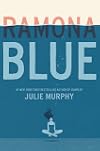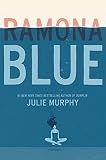
Ramona Blue
by Julie Murphy
On This Page
Description
Ramona was only five years old when Hurricane Katrina changed her life forever. Since then, it's been Ramona and her family against the world. Standing over six feet tall with unmistakable blue hair, Ramona is sure of three things: she likes girls, she's fiercely devoted to her family, and she knows she's destined for something bigger than the trailer she calls home in Eulogy, Mississippi. But juggling multiple jobs, her flaky mom, and her well-meaning but ineffectual dad forces her to be show more the adult of the family. Now, with her sister, Hattie, pregnant, responsibility weighs more heavily than ever. The return of her childhood friend Freddie brings a welcome distraction. Ramona's friendship with the former competitive swimmer picks up exactly where it left off, and soon he's talked her into joining him for laps at the pool. But as Ramona falls in love with swimming, her feelings for Freddie begin to shift too, which is the last thing she expected. With her growing affection for Freddie making her question her sexual identity, Ramona begins to wonder if perhaps she likes girls and guys or if this new attraction is just a fluke. Either way, Ramona will discover that, for her, life and love are more fluid than they seem. show lessTags
Recommendations

Member Reviews
Ramona lives in Eulogy, Mississippi; she lives in a trailer with her hardworking father and pregnant sister Hattie (and soon, Hattie's useless boyfriend Tyler). Ramona's about to start her senior year but is struggling to hang on to her summer fling, a girl named Grace, even though Grace has a boyfriend at home. A friend from Ramona's childhood, Freddie, returns to town with his grandmother, and they become friends again; Freddie is also trying to hold on to a relationship. Both relationships fail rather spectacularly, and Ramona, to her surprise and discomfort, finds herself attracted to Freddie, as he is to her.
Julie Murphy's characters are wonderful, complex and complicated and unusual within fiction: Southern, rural, black and show more white, gay and straight, well-off and poor. They run into misconceptions about each other and they work through them: for example, Ramona doesn't realize why Freddie is nervous about using a stranger's pool until he explains that, being black, he's more likely to get shot for trespassing than she is. Ramona faces confusion about herself, too; she has always known she has liked girls, so how can she suddenly like a boy? And - with more ramifications for her future - how can she leave Eulogy when her sister needs her? The characters' different priorities (and race, socioeconomic status, and sexual identity) are different but all, they begin to understand, equally valid.
Quotes
Sometimes catastrophes split you in half, and even if all the pieces are there, they might not ever fit back together. (30)
"You've never dated any guys? ...Then how do you know you don't like guys?"
"I don't know, Freddie," I say, trying to hide my irritation. "How many boys did you kiss before you realized you were straight?"
"That's not what I meant. You know it."
"So what did you mean?"
"I meant that, like, boy-girl is kind of the default that people go for even if it's not how they were born or whatever."
"It wasn't my default. Or whatever." (71)
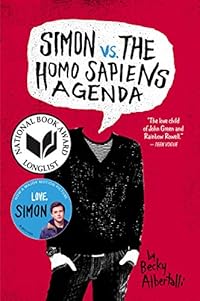
See also: Simon vs. the Homo Sapiens Agenda by Becky Albertalli
...sometimes it's easy to forget that it takes some amount of bravery to live your life one way and then suddenly diverge from that path. (75)
...I'm a human being. I think about sex. Girls think about sex. Sometimes a lot. I hate this idea that boys are thinking about sex nonstop and girls are thinking about - what? Stationery and garden gnomes? No. (115)
At what point does another person's extraordinary become your ordinary?
See also: An Abundance of Katherines by John Green
"You keep talking about me being in the closet like it's some sin to not know who I am yet! ...I'm going through something here, Ramona, and that doesn't mean I'm hiding. It means I'm learning, and I get to do that, don't I?" (drunk Grace to Ramona, 126)
I wonder, for a moment, what it would be like if we could take these feelings we have for other people and pour them into each other, like that could in some way fill the empty space eating the both of us up. (134)
There are times when my life feels like a shrinking box that only money can expand, but most days it is a simple life that we've worked hard to maintain. (165)
I'll never figure out how it is that some people can work so hard and get paid so little, while so many people who are paid the most hardly work at all. (166)
It's a generic answer that I immediately regret, but I don't always know how to say the things I can so clearly see in my head and feel in my heart. (Thanksgiving, 180)
It makes me feel uncomfortable, but I'm starting to think that maybe the gist of life is learning how to be comfortable with being uncomfortable. (217)
"It's sad that sometimes we let ourselves believe that if it's not bad, it must be good." (Freddie to Ramona, 237)
My heart is elastic. I realize it for the first time. For so long I thought there was a limit to how much love I could hold and who I could give it to. But life is so much more dynamic than that. Love doesn't disappear when you give it away, and new love doesn't make old love any less legitimate. (282)
I can't help but wonder how much of life is predestined simply by the house you were born into. (321)
"You don't have to do this. You don't have to give in to the idea that your life is supposed to turn out a certain way." (Freddie to Ramona, 326)
Maybe it's not all the little labels that make us who we are. Maybe it's about how all those labels interact with the world around us. It's not that I'm gay. It's that I'm gay in Eulogy, Mississippi. It's not that I'm tall. It's that I'm too tall for the trailer I live in. It's not that I'm poor. It's that I'm too poor to do and have everything I want. Life is a series of conflicts, and maybe the only resolution is accepting that not all problems are meant to be solved. (363) show less
Julie Murphy's characters are wonderful, complex and complicated and unusual within fiction: Southern, rural, black and show more white, gay and straight, well-off and poor. They run into misconceptions about each other and they work through them: for example, Ramona doesn't realize why Freddie is nervous about using a stranger's pool until he explains that, being black, he's more likely to get shot for trespassing than she is. Ramona faces confusion about herself, too; she has always known she has liked girls, so how can she suddenly like a boy? And - with more ramifications for her future - how can she leave Eulogy when her sister needs her? The characters' different priorities (and race, socioeconomic status, and sexual identity) are different but all, they begin to understand, equally valid.
Quotes
Sometimes catastrophes split you in half, and even if all the pieces are there, they might not ever fit back together. (30)
"You've never dated any guys? ...Then how do you know you don't like guys?"
"I don't know, Freddie," I say, trying to hide my irritation. "How many boys did you kiss before you realized you were straight?"
"That's not what I meant. You know it."
"So what did you mean?"
"I meant that, like, boy-girl is kind of the default that people go for even if it's not how they were born or whatever."
"It wasn't my default. Or whatever." (71)
See also: Simon vs. the Homo Sapiens Agenda by Becky Albertalli
...sometimes it's easy to forget that it takes some amount of bravery to live your life one way and then suddenly diverge from that path. (75)
...I'm a human being. I think about sex. Girls think about sex. Sometimes a lot. I hate this idea that boys are thinking about sex nonstop and girls are thinking about - what? Stationery and garden gnomes? No. (115)
At what point does another person's extraordinary become your ordinary?
See also: An Abundance of Katherines by John Green
"You keep talking about me being in the closet like it's some sin to not know who I am yet! ...I'm going through something here, Ramona, and that doesn't mean I'm hiding. It means I'm learning, and I get to do that, don't I?" (drunk Grace to Ramona, 126)
I wonder, for a moment, what it would be like if we could take these feelings we have for other people and pour them into each other, like that could in some way fill the empty space eating the both of us up. (134)
There are times when my life feels like a shrinking box that only money can expand, but most days it is a simple life that we've worked hard to maintain. (165)
I'll never figure out how it is that some people can work so hard and get paid so little, while so many people who are paid the most hardly work at all. (166)
It's a generic answer that I immediately regret, but I don't always know how to say the things I can so clearly see in my head and feel in my heart. (Thanksgiving, 180)
It makes me feel uncomfortable, but I'm starting to think that maybe the gist of life is learning how to be comfortable with being uncomfortable. (217)
"It's sad that sometimes we let ourselves believe that if it's not bad, it must be good." (Freddie to Ramona, 237)
My heart is elastic. I realize it for the first time. For so long I thought there was a limit to how much love I could hold and who I could give it to. But life is so much more dynamic than that. Love doesn't disappear when you give it away, and new love doesn't make old love any less legitimate. (282)
I can't help but wonder how much of life is predestined simply by the house you were born into. (321)
"You don't have to do this. You don't have to give in to the idea that your life is supposed to turn out a certain way." (Freddie to Ramona, 326)
Maybe it's not all the little labels that make us who we are. Maybe it's about how all those labels interact with the world around us. It's not that I'm gay. It's that I'm gay in Eulogy, Mississippi. It's not that I'm tall. It's that I'm too tall for the trailer I live in. It's not that I'm poor. It's that I'm too poor to do and have everything I want. Life is a series of conflicts, and maybe the only resolution is accepting that not all problems are meant to be solved. (363) show less
I would give this book ten stars if I could, I loved it so much.
First, let me acknowledge the scuttlebutt that's been going around about this book, about how it's "lesbian erasure" because Ramona's only gay until she finds "the right man". That's bullshit, and is probably espoused only by people who haven't actually read the book, because that VERY THING is addressed WITHIN THE NARRATIVE ITSELF. Ramona's mother thinks her lesbianism is "just a phase" and she's delighted when Freddie comes along. Ramona herself is worried, briefly, that she's somehow changed, that she's been living a lie, then realizes that, nope, she still likes girls. At the end of the book she says that she doesn't really know what to call herself, but she's not too show more concerned about it. And I think that's ok.
When I first read the description, I thought it would be the kind of story where the MC is the only "good" person in her white trash family. But, happily, I was wrong. Ramona's dad and sister are awesome and the three of them love each other deeply. They've just had some rough times. A "there but for the grace of God go I" situation. Even Ramona's mom, who is the least likable character in the book, has some redeeming qualities. Ramona doesn't excuse her mom's behavior, but she accepts it as being who her mom is.
The supporting characters were all fantastic, and I felt like we got to know all of them a little bit. I want to be Agnes when I grow up.
I listened to the audiobook, and the narrator was fantastic. She really brought the story and the characters to life. I highly recommend listening to it if you have the opportunity (and enjoy audiobooks). show less
First, let me acknowledge the scuttlebutt that's been going around about this book, about how it's "lesbian erasure" because Ramona's only gay until she finds "the right man". That's bullshit, and is probably espoused only by people who haven't actually read the book, because that VERY THING is addressed WITHIN THE NARRATIVE ITSELF. Ramona's mother thinks her lesbianism is "just a phase" and she's delighted when Freddie comes along. Ramona herself is worried, briefly, that she's somehow changed, that she's been living a lie, then realizes that, nope, she still likes girls. At the end of the book she says that she doesn't really know what to call herself, but she's not too show more concerned about it. And I think that's ok.
When I first read the description, I thought it would be the kind of story where the MC is the only "good" person in her white trash family. But, happily, I was wrong. Ramona's dad and sister are awesome and the three of them love each other deeply. They've just had some rough times. A "there but for the grace of God go I" situation. Even Ramona's mom, who is the least likable character in the book, has some redeeming qualities. Ramona doesn't excuse her mom's behavior, but she accepts it as being who her mom is.
The supporting characters were all fantastic, and I felt like we got to know all of them a little bit. I want to be Agnes when I grow up.
I listened to the audiobook, and the narrator was fantastic. She really brought the story and the characters to life. I highly recommend listening to it if you have the opportunity (and enjoy audiobooks). show less
Ramona works two part-time jobs, is a high school senior, and is struggling in love. The girl she fell for over the summer has gone back home with her family and there aren't many other romantic prospects in her small town. When an old friend moves back to town and they rekindle their childhood friendship, Ramona begins to question her sexuality. So sure of who she thought she was and who she was attracted to, Ramona finds herself wondering what term she should use now, or if a redefinition of her sexuality is even necessary.
I've read a lot of reviews that bash this book because they were upset with Ramona, who describes herself as a lesbian, beginning a relationship with a boy. I didn't understand the issue. Throughout the book, Ramona show more is so confused by her own feelings, wondering if should change how she identifies. Should she start saying she is bisexual? Pan? Queer? Does she really need a new word?
I think it's an important story to tell of a young woman who is allowed to define and explore her sexuality any way she sees fit. And maybe she doesn't see the need for a specific word. Ramona doesn't ever "turn straight." She doesn't deny her attraction to women, and she shouldn't have to qualify her sexuality to anyone. show less
I've read a lot of reviews that bash this book because they were upset with Ramona, who describes herself as a lesbian, beginning a relationship with a boy. I didn't understand the issue. Throughout the book, Ramona show more is so confused by her own feelings, wondering if should change how she identifies. Should she start saying she is bisexual? Pan? Queer? Does she really need a new word?
I think it's an important story to tell of a young woman who is allowed to define and explore her sexuality any way she sees fit. And maybe she doesn't see the need for a specific word. Ramona doesn't ever "turn straight." She doesn't deny her attraction to women, and she shouldn't have to qualify her sexuality to anyone. show less
The narrow-minded folks complaining in the comments that this book is 'anti-lesbian' are exactly why this book is important. If a book gets that kind of bitter and unfair criticism before it's even been published, imagine the exclusionary vitriol that gets directed at actual queer women who start out identifying as lesbian and later shift their identity to include the possibility of romantic relationships with men. (Which is true of me personally and a number of other women I know.)
I loved this book, and I thought it dealt thoughtfully and compassionately with sexual orientation and the shifting landscape of identity, along with issues of poverty, family, and race.
I loved this book, and I thought it dealt thoughtfully and compassionately with sexual orientation and the shifting landscape of identity, along with issues of poverty, family, and race.
This book has content warnings for mild racism (not condoned), mild heterosexism (not condoned), one acemisic line, and natural disasters.
Ramona Blue is a book that is important to me personally because of its questioning rep. There are so, so few books out there that have a character questioning their sexuality and end the book being okay with continuing to question, and as someone who primarily IDs as bi but isn’t 100% certain if it fits and is still questioning, I really loved this. I loved how she was taking the time to figure herself out; she acknowledged who she knew she liked at that moment in time, she acknowledged some identities that could potentially fit her, but she didn’t force herself to choose one just for the sake of show more having a label. And that’s okay. If she decides on a label she thinks fits later, she’ll probably take it as quickly as she took on the label of “lesbian” before realizing she liked Freddie, too.
As someone who is demisexual, I also liked that we had an on-page and named demisexual character. I do kind of wish that we could have gone deeper into that because that was mostly left at “what is that?” and “exactly,” which is the most relatable thing ever, but just seeing the word on the page made me happy, and because the character is a side character I don’t mind quite as much that it wasn’t talked about a lot. It’s something I gloss over a lot too because people don’t understand it and it’s tiring to explain to people.
I really felt for Ramona when she felt the need to be the “adult” of the family. She was a high school student with multiple jobs and a pregnant sister whose boyfriend was an irresponsible loser, and she spent most of her energy trying to provide for her family and insisting that that was more important than her going to college or otherwise trying to find her own path. It’s frustrating to be that young with such high levels of responsibility on your shoulders, and while she had a lot of external encouragement to put herself first, she didn’t really get the same type of encouragement from the place where it mattered: her sister and her dad. I also really loved how their poverty from after Hurricane Katrina was shown; everything from saving to buy her new niece furniture to thrifting her prom dress and altering it with her sister were nice touches.
I also loved the swimming side plot. Because Ramona was so tied up in helping her family with everything, I really liked watching her discover something that she herself loved to do, even while it took her a bit to realize just how interested she was in it. It gave her some room to grow outside of the other people around her, and it also REALLY made me want to go swimming…
There was a lot of ignorance in relation to race and queerness in this book from minor characters, and because of the book’s setting it felt realistic and most of the time it wasn’t brushed off. Several characters express some really awkward remarks about mixed-race relationships (because Freddie is Black and Ramona is white), but they’re portrayed as awkward and racist in the text. Additionally, there is a scene where Freddie has to explain that he can’t take the same risks that Ramona can because he is FAR more likely to be shot than she is if they’re caught because of his race; Ramona does feel guilty after, and it does not happen again in the text.
There are also a handful of characters who aren’t very accepting of Ramona’s queerness, and those negative perceptions are portrayed as wrong. Additionally, there is a bunch of misunderstanding of her sexuality, especially from Freddie; Freddie did admit, though, that he hadn’t had many non-straight people in his life, and though he made several awkward comments he did appear to be actually trying to do better throughout the book. Though the lines were frustrating at the time they were spoken, I did appreciate the character growth and that he was okay with Ramona liking him and girls. There was one line spoken by Ramona in the book that was acemisic, implying that to be human is to want sex. It was only one line, but it’s still there and a little awkward.
One part of the book that I didn’t like so much was when Freddie kissed Ramona without her permission at first. Consent was present later in the book, which was very good, but it wasn’t at first and that was a little irritating.
Overall, I felt like this book was handled really well. It wouldn’t really be right to consider this book bi rep because it really isn’t; it’s very much questioning rep, which is something that we need more of. There are queer teenagers in the world who go through this same thing, and denouncing queer people in m/f relationships is really frustrating because it invalidates the queerness of those people. And those people are very much still queer, no matter who they are with.
Final rating: 4.5/5 stars show less
Ramona Blue is a book that is important to me personally because of its questioning rep. There are so, so few books out there that have a character questioning their sexuality and end the book being okay with continuing to question, and as someone who primarily IDs as bi but isn’t 100% certain if it fits and is still questioning, I really loved this. I loved how she was taking the time to figure herself out; she acknowledged who she knew she liked at that moment in time, she acknowledged some identities that could potentially fit her, but she didn’t force herself to choose one just for the sake of show more having a label. And that’s okay. If she decides on a label she thinks fits later, she’ll probably take it as quickly as she took on the label of “lesbian” before realizing she liked Freddie, too.
As someone who is demisexual, I also liked that we had an on-page and named demisexual character. I do kind of wish that we could have gone deeper into that because that was mostly left at “what is that?” and “exactly,” which is the most relatable thing ever, but just seeing the word on the page made me happy, and because the character is a side character I don’t mind quite as much that it wasn’t talked about a lot. It’s something I gloss over a lot too because people don’t understand it and it’s tiring to explain to people.
I really felt for Ramona when she felt the need to be the “adult” of the family. She was a high school student with multiple jobs and a pregnant sister whose boyfriend was an irresponsible loser, and she spent most of her energy trying to provide for her family and insisting that that was more important than her going to college or otherwise trying to find her own path. It’s frustrating to be that young with such high levels of responsibility on your shoulders, and while she had a lot of external encouragement to put herself first, she didn’t really get the same type of encouragement from the place where it mattered: her sister and her dad. I also really loved how their poverty from after Hurricane Katrina was shown; everything from saving to buy her new niece furniture to thrifting her prom dress and altering it with her sister were nice touches.
I also loved the swimming side plot. Because Ramona was so tied up in helping her family with everything, I really liked watching her discover something that she herself loved to do, even while it took her a bit to realize just how interested she was in it. It gave her some room to grow outside of the other people around her, and it also REALLY made me want to go swimming…
There was a lot of ignorance in relation to race and queerness in this book from minor characters, and because of the book’s setting it felt realistic and most of the time it wasn’t brushed off. Several characters express some really awkward remarks about mixed-race relationships (because Freddie is Black and Ramona is white), but they’re portrayed as awkward and racist in the text. Additionally, there is a scene where Freddie has to explain that he can’t take the same risks that Ramona can because he is FAR more likely to be shot than she is if they’re caught because of his race; Ramona does feel guilty after, and it does not happen again in the text.
There are also a handful of characters who aren’t very accepting of Ramona’s queerness, and those negative perceptions are portrayed as wrong. Additionally, there is a bunch of misunderstanding of her sexuality, especially from Freddie; Freddie did admit, though, that he hadn’t had many non-straight people in his life, and though he made several awkward comments he did appear to be actually trying to do better throughout the book. Though the lines were frustrating at the time they were spoken, I did appreciate the character growth and that he was okay with Ramona liking him and girls. There was one line spoken by Ramona in the book that was acemisic, implying that to be human is to want sex. It was only one line, but it’s still there and a little awkward.
One part of the book that I didn’t like so much was when Freddie kissed Ramona without her permission at first. Consent was present later in the book, which was very good, but it wasn’t at first and that was a little irritating.
Overall, I felt like this book was handled really well. It wouldn’t really be right to consider this book bi rep because it really isn’t; it’s very much questioning rep, which is something that we need more of. There are queer teenagers in the world who go through this same thing, and denouncing queer people in m/f relationships is really frustrating because it invalidates the queerness of those people. And those people are very much still queer, no matter who they are with.
Final rating: 4.5/5 stars show less
My heart is elastic. I realize it for the first time. For so long, I thought there was a limit to how much love I could hold and who I could give it to. But life is so much more dynamic than that. Love doesn’t disappear when you give it away, and new love doesn’t make old love any less legitimate.
4.5 Stars
This book was all heart. There was something so human about Ramona and her situation. She’s resigned herself to a life she feels trapped in and starts to fundamentally question who she believes she is as a person. This is a story full of love, family, personal growth, friendship, and hope that you can't put down.
Things I Liked
Ramona was such a relatable character. She was so endearing and warm and she does everything for her show more family. Ramona constantly carries the weight of their reality on her shoulders and appoints herself their patron, giving all she has and hopes for to her father and sister. Because of this, she feels resigned to small town life. She knows her place and what’s expected of her. Through the story, we see Ramona begin to hope for more and entertain the idea that her fate is not as defined as she once believed. This parallels beautifully with Ramona realizing that love and happiness are as dynamic as her future. She has choice, she has power, she has control. Ramona begins to recognize her own worth, outside of her family role, and embraces it.
The writing was so beautiful and immersive. I felt like I was a part of the town, like I knew these characters. Their stories embedded themselves in my heart and I cared. Everyone was real and accessible creating a story that felt authentic and true.
The characters in this story were all so vibrant. They’re dealing with their families, they’re worrying about the future, they’re falling in love, they’re getting their heart broken, they are on the path of self discovery. They feel sincere and all became real people.
Sexuality and sex are discussed openly and honestly in the story with no regrets from the characters or judgement passed on them by others. Ramona says multiple times that her feelings toward Freddie and their potential relationship are not about ‘fixing’ her or ‘curing’ her - because she still very much likes girls - but it’s about her learning about herself and realizing things aren’t as defined as she thought. I found Ramona’s journey to be powerful and meaningful. As she discovers her own agency in this rigid small town system, trapped by limitations, she allows herself to find happiness and hope for more.
Things I Liked Less
The story begins with Ramona saying goodbye to her summer romance Grace, who still has a boyfriend in her hometown. I’m just over cheating in YA books. I don’t need it to create tension or drama. I don’t need it to propel someone forward or make them have a grand revelation. I just don’t need it. It doesn’t help any party involved.
I felt like some details in the story were over explained, like the Star Wars movies, or reiterated to make a point. Trust the audience to understand what you’re saying and don’t use more words than necessary.
This story was about self discovery and acceptance. It’s about realizing your worth and embracing a future you didn’t think was possible. Ramona grows and learns and adapts. She is both steadfast and dynamic, hopeful and resigned, judgmental and compassionate. This is Ramona’s story and it is given the weight it deserves. We are with her and support her and want her to succeed. This story a beautiful story that showcases family, love, and growth.
I received a copy of this book from from Balzer Bray via Edelweiss in exchange for an honest review. show less
I loved that Ramona talked about her sexuality being fluid and how one label didn't necessarily define her. I loved that she felt like she should hide the fact that she was into a guy because she had had such a struggle with people (like her mother) coming to terms with her being a lesbian that she didn't want them to think it was just a phase and that she was making a big deal over nothing. This is SUCH a real experience. People identify as one thing, and then go a bit outside the bounds of that label, and other people invalidate them and tell them they're wrong about themselves. So I super appreciated reading about that.
I loved that I didn't read the synopsis because I would have found it eye-rolling-ly predictable if I had. I loved show more that she's queer in Mississippi. I loved that this wasn't really a romance, it was a book about sisters and dealing with finding your own life while wanting to stand up for someone you love. And I loved one scene that talks about the privilege us white people have of assuming safety in certain situations, as well as how it was handled.
But this was my least favourite of Murphy's books I've read. It was a lot slower. I picked up and read several other books while reading this. There wasn't enough conflict for me to really be invested, and while I really liked Ramona, I felt like I could close the book and she'd still be happy. show less
I loved that I didn't read the synopsis because I would have found it eye-rolling-ly predictable if I had. I loved show more that she's queer in Mississippi. I loved that this wasn't really a romance, it was a book about sisters and dealing with finding your own life while wanting to stand up for someone you love. And I loved one scene that talks about the privilege us white people have of assuming safety in certain situations, as well as how it was handled.
But this was my least favourite of Murphy's books I've read. It was a lot slower. I picked up and read several other books while reading this. There wasn't enough conflict for me to really be invested, and while I really liked Ramona, I felt like I could close the book and she'd still be happy. show less
Members
- Recently Added By
Lists

Best Young Adult
399 works; 101 members

Kirkus Starred Fiction Reviews of Books Published in 2017
412 works; 7 members

Books recommended by Calgary Public Library staff
1,588 works; 4 members
Author Information

21+ Works 8,231 Members
Julie Murphy's debut contemporary young adult novel, Side Effects May Vary, is out from Balzer + Bray/HarperCollins and was well-received by Kirkus, School Library Journal, VOYA, Booklist, Seventeen Magazine, and Teen Vogue. Dumplin', Julie's sophomore novel has received glowing reviews including two stars from Publishers Weekly, Booklist and is a show more 2016 New York Times Best Seller. Film rights have been optioned by Disney. (Bowker Author Biography) show less
Some Editions
Awards and Honors
Awards
Distinctions
Common Knowledge
- Original publication date
- 2017-05-09
- Epigraph
- Well, I may be just a fool
But I know you’re just as cool
And cool kids, they belong together
—Yeah Yeah Yeahs, “Poor Song” - Dedication
- For my own holy trinity: Bethany, Natalie, and Tess—
this book would not exist and I would not have survived
writing it without you three - First words
- This is a memory I want to keep forever: Grace standing at the stove of her parents’ rental cottage in one of her dad’s oversize T-shirts as she makes us a can of SpaghettiOs.
- Last words
- (Click to show. Warning: May contain spoilers.)May my voyage be prosperous and my return safe.
Classifications
- Genres
- Teen, LGBTQ+, Fiction and Literature, Young Adult
- DDC/MDS
- 813.6 — Literature & rhetoric American literature in English American fiction in English 2000-
- LCC
- PZ7 .M95352 .R — Language and Literature Fiction and juvenile belles lettres Fiction and juvenile belles lettres Juvenile belles lettres
- BISAC
Statistics
- Members
- 509
- Popularity
- 58,764
- Reviews
- 17
- Rating
- (3.93)
- Languages
- English, German, Portuguese, Spanish
- Media
- Paper, Audiobook, Ebook
- ISBNs
- 22
- ASINs
- 2