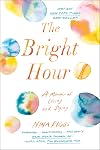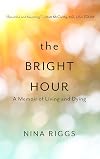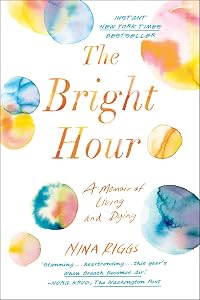
The Bright Hour: A Memoir of Living and Dying
by Nina Riggs
On This Page
Description
* INSTANT NEW YORK TIMES BESTSELLER *"Stunning...heartrending...this year's When Breath Becomes Air." —Nora Krug, The Washington Post
"Beautiful and haunting." —Matt McCarthy, MD, USA TODAY
"Deeply affecting...simultaneously heartbreaking and funny." —People (Book of the Week)
"Vivid, immediate." —Laura Collins-Hughes, The Boston Globe
Starred reviews from * Kirkus Reviews * Publishers Weekly * Library Journal *
Best Books of 2017 Selection by * The Washington Post *
Most show more Anticipated Summer Reading Selection by * The Washington Post * Entertainment Weekly * Glamour * The Seattle Times * Vulture * InStyle * Bookpage * Bookriot * Real Simple * The Atlanta Journal-Constitution *
The New York Times bestseller by poet Nina Riggs, mother of two young sons and the direct descendant of Ralph Waldo Emerson, is "a stunning...heart-rending meditation on life...It is this year's When Breath Becomes Air" (The Washington Post).
We are breathless but we love the days. They are promises. They are the only way to walk from one night to the other.
Poet and essayist Nina Riggs was just thirty-seven years old when initially diagnosed with breast cancer—one small spot. Within a year, she received the devastating news that her cancer was terminal.
How does a dying person learn to live each day "unattached to outcome"? How does one approach the moments, big and small, with both love and honesty? How does a young mother and wife prepare her two young children and adored husband for a loss that will shape the rest of their lives? How do we want to be remembered?
Exploring motherhood, marriage, friendship, and memory, Nina asks: What makes a meaningful life when one has limited time? "Profound and poignant" (O, The Oprah Magazine), The Bright Hour is about how to make the most of all the days, even the painful ones. It's about the way literature, especially Nina's direct ancestor, Ralph Waldo Emerson, and her other muse, Montaigne, can be a balm and a form of prayer.
Brilliantly written and exceptionally moving, it's a "deeply affecting memoir, a simultaneously heartbreaking and funny account of living with loss and the specter of death. As Riggs lyrically, unflinchingly details her reality, she finds beauty and truth that comfort even amid the crushing sadness" (People, Book of the Week).
Tender and heartwarming, The Bright Hour "is a gentle reminder to cherish each day" (Entertainment Weekly, Best New Books) and offers us this important perspective: "You can read a multitude books about how to die, but Riggs, a dying woman, will show you how to live" (The New York Times Book Review, Editor's Choice). show less
Tags
Recommendations

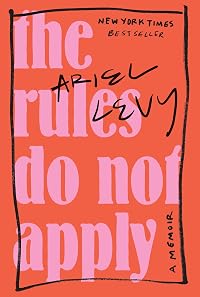
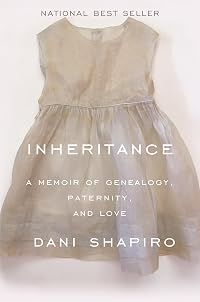
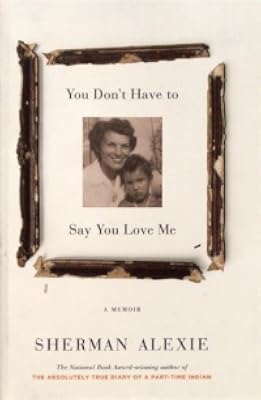
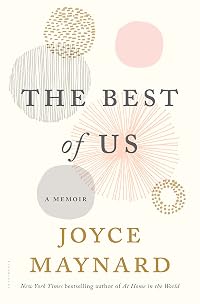
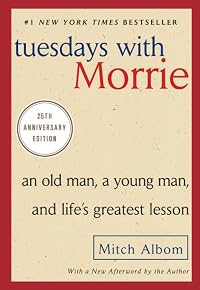
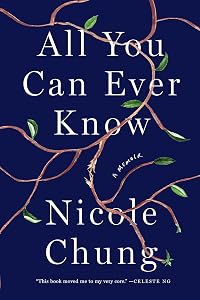
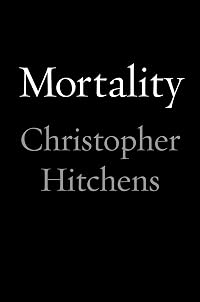
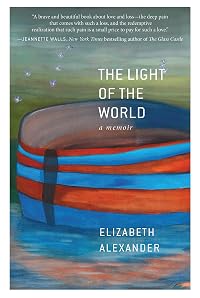
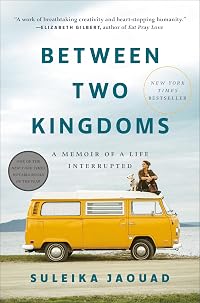
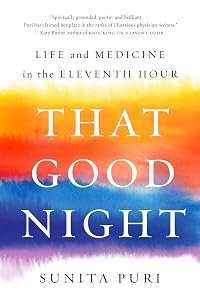
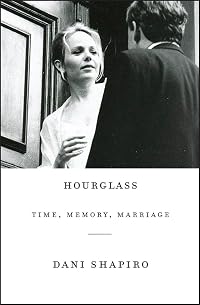


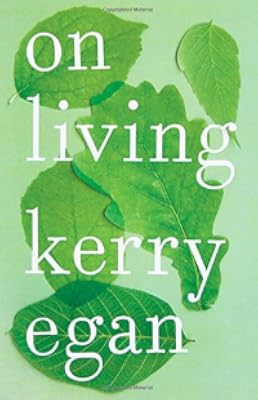
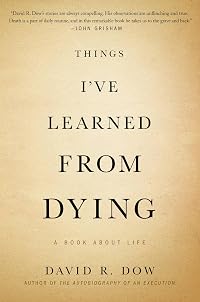
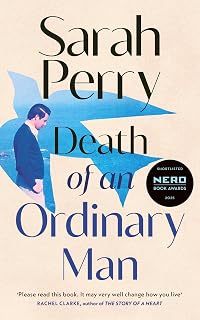
Member Recommendations
lottpoet Another emotional, lyrical memoir by a poet.
Member Reviews
Well, here I am talking about cancer and dying again. I swear it's the last of these for a good long while, guys. (I hope I don't end up eating my words.) The Bright Hour: A Memoir of Living and Dying by Nina Riggs was recommended to me after reading When Breath Becomes Air because Nina's widowed husband is now dating the widow of Paul Kalinithi who wrote the aforementioned. O_O At the start of her story, Nina was 38 years old and her biggest problems centered around publishing her newest bit of writing and mothering her two young sons with her husband...and then Cancer rapidly derailed her life. When Nina was initially diagnosed with breast cancer her mother was fighting her own battle with an aggressive myeloma. At first, Nina's show more diagnosis seemed quite straightforward in comparison. Her doctor felt it was quite treatable with a mastectomy and chemo but right as her life seemed to stabilize a stabbing back pain (reminiscent of Paul Kalinithi) made itself known. This turned out to be the harbinger of Stage 4 cancer which unfortunately was not curable. To add insult to injury, her mother's cancer stopped responding to treatment and she opted to stop her treatment. Overwhelming and almost unbelievably melodramatic as this all sounds Nina chose to view each day through a positive lens. It is obvious to me that she was a special person with a whole lot of spirit. Sadly, she passed away before final publication of her book but her legacy still lives and breathes on each page of her memoir. I'm sorry we can't enjoy more writing from her in the future. 9/10 show less
Thirty-eight-year-old Nina Riggs wrote her memoir of metastatic breast cancer in snippets and vignettes that are gently illuminating and often funny despite a tragic outcome. She’s not overtly sad here. Instead, she’s thoughtful and philosophical as she turns to the writings of Montaigne and of her great-great-great-grandfather, Ralph Waldo Emerson, to deal not only with her own treatment and mortality but also her mother’s death from myeloma and her son’s diagnosis with diabetes.
"So, you’re watching a cancer show?" [Nina's older son] says sheepishly. "Why would you do that?"
"I don’t know," [she says]. "I guess it makes me feel a little more normal. Plus it has really terrible writing, so it makes me laugh."
I ask a version show more of that question to myself ("So I’m reading a cancer memoir -- why would I do that?") and come up with a partly identical answer. It puts my own non-cancer problems in perspective ... plus it has really lovely writing, so it fills me with awe.
(Review based on an advance reading copy provided by the publisher.) show less
"So, you’re watching a cancer show?" [Nina's older son] says sheepishly. "Why would you do that?"
"I don’t know," [she says]. "I guess it makes me feel a little more normal. Plus it has really terrible writing, so it makes me laugh."
I ask a version show more of that question to myself ("So I’m reading a cancer memoir -- why would I do that?") and come up with a partly identical answer. It puts my own non-cancer problems in perspective ... plus it has really lovely writing, so it fills me with awe.
(Review based on an advance reading copy provided by the publisher.) show less
[b:The Bright Hour: A Memoir of Living and Dying|34104392|The Bright Hour A Memoir of Living and Dying|Nina Riggs|https://images.gr-assets.com/books/1507193499s/34104392.jpg|55126924] is a very personal book written by a poet and young mother diagnosed with terminal breast cancer at thirty-seven. I don't usually go for illness memoirs but this was special with the humor, irony and simply lovely writing about nature, family, dogs, and memento mori. I appreciated her references to Emerson and Montaigne, her depiction of her young sons, love for her husband and her folks and fellow patients, and the heaven and hell of medical treatment.
I just finished listening to this lovely and painful memoir. Nina Riggs lived fully until she died of cancer in her late 30s - She wrote poetically of her life and the process of dying and shockingly had to witness her mother's illness and death from cancer while she was undergoing her own treatment.
Her sweetness and inner strength was evident even in the midst of her physical and emotional pain and the torment of knowing she was leaving behind her loving husband and two young sons who she adored. She wrote beautifully and, though I was deeply saddened by the book, it was never difficult to return to her lovely words. Cassandra Campbell was a worthy narrator and I hope to listen to more books read by her.
Her sweetness and inner strength was evident even in the midst of her physical and emotional pain and the torment of knowing she was leaving behind her loving husband and two young sons who she adored. She wrote beautifully and, though I was deeply saddened by the book, it was never difficult to return to her lovely words. Cassandra Campbell was a worthy narrator and I hope to listen to more books read by her.
Best for: People who enjoy memoirs such as When Breath Becomes Air
In a nutshell: Now-deceased writer Nina Riggs documents her illness from diagnosis onward
Line that sticks with me: “These are the things we all say at the end of book club now: ‘I love you.’ Of course we do. Why haven’t we been saying that all along?”
Why I chose it: Memoir + death = A Lollygagger staple.
Review: Author Nina Riggs gives us a gift with this book, in that it isn’t filled with terror and it isn’t overly optimistic. I’d imagine that both of those styles of memoir are necessary for people depending on how they view life, but it seems necessary to also have a book that deals with illness and terminal diagnoses via a third path. I won’t say this show more is more ‘realistic’ that a book full of fear or of hope, because I know everyone experiences life differently.
Ms. Riggs has two sons, but this isn’t a book addressed directly to them (although in the acknowledgments her husband confirms that they hope their sons will better know their mother as they read and re-read it over the years). It isn’t directed to her husband. It doesn’t even feel as though it is directed at women facing similar life events. It’s just a book that explores life and death via the unexpected twists and the fully expected turns. And it is lovely.
Ms. Riggs is the great-great-great-granddaughter of Ralph Waldo Emerson, so there is a lot of discussion of nature and of him. She is also a very big fan of Montaigne, so he pops up frequently as well. But so do her best friends, and family, and neighbors. She takes her kids to school. She goes through radiation treatment. She buys a wig. She goes on vacation. She has moments of fear and panic, but even she acknowledges that the movie version of her life will likely have more dramatic scenes than her reality.
Her writing style is lovely. The chapters are often very short (sometimes only a paragraph), and while it could have ventured into overly flowery language, it straddles that line of near poetry and reality. show less
In a nutshell: Now-deceased writer Nina Riggs documents her illness from diagnosis onward
Line that sticks with me: “These are the things we all say at the end of book club now: ‘I love you.’ Of course we do. Why haven’t we been saying that all along?”
Why I chose it: Memoir + death = A Lollygagger staple.
Review: Author Nina Riggs gives us a gift with this book, in that it isn’t filled with terror and it isn’t overly optimistic. I’d imagine that both of those styles of memoir are necessary for people depending on how they view life, but it seems necessary to also have a book that deals with illness and terminal diagnoses via a third path. I won’t say this show more is more ‘realistic’ that a book full of fear or of hope, because I know everyone experiences life differently.
Ms. Riggs has two sons, but this isn’t a book addressed directly to them (although in the acknowledgments her husband confirms that they hope their sons will better know their mother as they read and re-read it over the years). It isn’t directed to her husband. It doesn’t even feel as though it is directed at women facing similar life events. It’s just a book that explores life and death via the unexpected twists and the fully expected turns. And it is lovely.
Ms. Riggs is the great-great-great-granddaughter of Ralph Waldo Emerson, so there is a lot of discussion of nature and of him. She is also a very big fan of Montaigne, so he pops up frequently as well. But so do her best friends, and family, and neighbors. She takes her kids to school. She goes through radiation treatment. She buys a wig. She goes on vacation. She has moments of fear and panic, but even she acknowledges that the movie version of her life will likely have more dramatic scenes than her reality.
Her writing style is lovely. The chapters are often very short (sometimes only a paragraph), and while it could have ventured into overly flowery language, it straddles that line of near poetry and reality. show less
I don't know what to say about this, except that it's lovely. Beautiful and sad, but also really funny. Well, and just really real. Riggs faces her illness and awareness of her mortality with such powerful courage and insight, honesty and humor. She has a fierce passion to dig deep, to fully experience, to discover and explore the fullness of everything she is dealing with, to recognize the beautiful and profound, and to think through and articulate her fears and hopes. As much as possible, given her illness and the exhausting treatments, she is determined not to miss the everyday moments of beauty and sweetness with her children, friends, and family. As she says to her husband early on in the book, “I have to love these days in the show more same way I love any other. There might not be a 'normal' from here on out.” I love the wideness and depth of her sympathy – her ability to appreciate the struggles of others even as she is suffering herself. And I love how she brings in Montaigne and Emerson, all mixed in with reflections and stories about her children, parents, travels, and treatments. show less
[b:The Bright Hour: A Memoir of Living and Dying|34104392|The Bright Hour A Memoir of Living and Dying|Nina Riggs|https://images.gr-assets.com/books/1507193499s/34104392.jpg|55126924] is a very personal book written by a poet and young mother diagnosed with terminal breast cancer at thirty-seven. I don't usually go for illness memoirs but this was special with the humor, irony and simply lovely writing about nature, family, dogs, and memento mori. I appreciated her references to Emerson and Montaigne, her depiction of her young sons, love for her husband and her folks and fellow patients, and the heaven and hell of medical treatment.
Members
- Recently Added By
Author Information
3+ Works 558 Members
Nina Riggs was a poet and author. She received her MFA in poetry in 2004. Her collection of poems, Lucky, Lucky, was published in 2009. She wrote a blog entitled Suspicious Country, where she wrote about living with metastatic breast cancer. She wrote a memoir entitled The Bright Hour. She passed away in February 2017. (Bowker Author Biography)
Some Editions
Awards and Honors
Distinctions
Notable Lists
Common Knowledge
- Original publication date
- 2017
- Epigraph
- I am cheered with the moist, warm, glittering, budding and melodious hour that takes down the narrow walls of my soul and extends its pulsation and life to the very horizon. That is morning; to cease for a bright hour to be ... (show all)a prisoner of this sickly body and to become as large as the World.
--Ralph Waldo Emerson, 1838 - Dedication
- for my boys: John, Freddy, and Benny; and in memory of my mom, Janet Angela Riggs, 1947-2015
- First words
- "Dying isn't the end of the world," my mother liked to joke after she was diagnosed as terminal.
- Last words
- (Click to show. Warning: May contain spoilers.)There is nothing in this whole world that could make me call them back in.
Classifications
- Genres
- Biography & Memoir, General Nonfiction, Nonfiction
- DDC/MDS
- 362.19699 — Society, government, & culture Social problems and social services Social Welfare People with physical illnesses Services to people with specific conditions Diseases Other diseases
- LCC
- RC280 .B8 .R5355 — Medicine Internal medicine Internal medicine Neoplasms. Tumors. Oncology
- BISAC
Statistics
- Members
- 554
- Popularity
- 53,543
- Reviews
- 29
- Rating
- (4.16)
- Languages
- Chinese, Dutch, English
- Media
- Paper, Audiobook, Ebook
- ISBNs
- 19
- ASINs
- 2