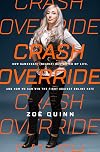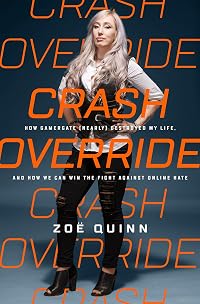
Crash Override: How Gamergate (Nearly) Destroyed My Life, and How We Can Win the Fight Against Online Hate
by Zoë Quinn
On This Page
Description
You've heard the stories about the dark side of the internet—hackers, #gamergate, anonymous mobs attacking an unlucky victim, and revenge porn—but they remain just that: stories. Surely these things would never happen to you.Zoe Quinn used to feel the same way. She is a video game developer whose ex-boyfriend published a crazed blog post cobbled together from private information, half-truths, and outright fictions, along with a rallying cry to the online hordes to go after her. They show more answered in the form of a so-called movement known as #gamergate—they hacked her accounts; stole nude photos of her; harassed her family, friends, and colleagues; and threatened to rape and murder her. But instead of shrinking into silence as the online mobs wanted her to, she raised her voice and spoke out against this vicious online culture and for making the internet a safer place for everyone.
In the years since #gamergate, Quinn has helped thousands of people with her advocacy and online-abuse crisis resource Crash Override Network. From locking down victims' personal accounts to working with tech companies and lawmakers to inform policy, she has firsthand knowledge about every angle of online abuse, what powerful institutions are (and aren't) doing about it, and how we can protect our digital spaces and selves.
Crash Override offers an up-close look inside the controversy, threats, and social and cultural battles that started in the far corners of the internet and have since permeated our online lives. Through her story—as target and as activist—Quinn provides a human look at the ways the internet impacts our lives and culture, along with practical advice for keeping yourself and others safe online. show less
Tags
Recommendations








Member Reviews
This is an important book.
Quinn has managed, in relatively few pages, to provide
- a horrifying account of the impact one person made on her life
- the snowball effect of Gamergate
- a memoir of sorts of a self-described geek who isn't comfortable with the spotlight
- some thought-provoking thoughts on harassment from both sides of the fence
- some tips and best practices if this happens to you, as well as how to help prevent it
- a call to arms for those in power to fucking do something about it, aside from a shrug of the shoulders
It's a heartbreaking, funny, horrifying, and ultimately sobering look into one person's life that was very nearly destroyed by the caustic actions of cowards who hide behind keyboards and screens.
And a very show more special message for those of you who are slamming this book:
You are the trolls that she speaks of in this book you label as "badly-written" or "full of lies." That's fine. Maybe the truth is stretched. Maybe the writing isn't Pulitzer-worthy...
Or maybe you're pissed that someone was able to dig themselves out from under the mountain of shit that was piled on her and find a way to, if not stop you, at least stick it to you once in a while.
Others have castigated Quinn for naming the man that authored the manifesto that launched the ensuing attacks against her. They claim that she's speaking up against bullying, yet names the person so that they can be bullied. I say, has she not the right to defend herself? Has she not the right to name her harasser? He sure as hell named her.
This book is terrifying, because of the abuse it details, because of the lack of support from legal authorities, and social media owners, and because I wonder how many of us could have weathered a storm of this magnitude.
Quinn may not have been ready for the spotlight, but she's using her time in the light to shine it on some dark corners that need to be revealed. show less
Quinn has managed, in relatively few pages, to provide
- a horrifying account of the impact one person made on her life
- the snowball effect of Gamergate
- a memoir of sorts of a self-described geek who isn't comfortable with the spotlight
- some thought-provoking thoughts on harassment from both sides of the fence
- some tips and best practices if this happens to you, as well as how to help prevent it
- a call to arms for those in power to fucking do something about it, aside from a shrug of the shoulders
It's a heartbreaking, funny, horrifying, and ultimately sobering look into one person's life that was very nearly destroyed by the caustic actions of cowards who hide behind keyboards and screens.
And a very show more special message for those of you who are slamming this book:
You are the trolls that she speaks of in this book you label as "badly-written" or "full of lies." That's fine. Maybe the truth is stretched. Maybe the writing isn't Pulitzer-worthy...
Or maybe you're pissed that someone was able to dig themselves out from under the mountain of shit that was piled on her and find a way to, if not stop you, at least stick it to you once in a while.
Others have castigated Quinn for naming the man that authored the manifesto that launched the ensuing attacks against her. They claim that she's speaking up against bullying, yet names the person so that they can be bullied. I say, has she not the right to defend herself? Has she not the right to name her harasser? He sure as hell named her.
This book is terrifying, because of the abuse it details, because of the lack of support from legal authorities, and social media owners, and because I wonder how many of us could have weathered a storm of this magnitude.
Quinn may not have been ready for the spotlight, but she's using her time in the light to shine it on some dark corners that need to be revealed. show less
Hell this books gets depressing AF. Because you realize that nothing has ended or subsided. Because as she says, the reality is that the internet can never be a better place than the people who inhabit it. And the people who inhabit it are the ones who elected Trump, who voted for the Brexit, who put many major Nazi parties in many European countries' parliaments but cry that our main problem is political correctness and sjws.
I like her voice. I always followed the gamer-gate debacle from the very beginning and was pretty invested in it for a couple of years. Writing feminist posts, creating podcasts raising awareness, trying to exist in online gaming spaces without being harassed -and failing at it, reading the stories of all these show more women being abused and nothing being done about it.
And then, some time passed and I saw them creating again and I thought things were better for them, and I enjoyed the things they were creating thinking, hoping, that at least the relentless abuse they suffered daily had finally ended.
SIGH
Welp I sure am naive.
I love and admire what Zoe has achieved, what she still achieves. I am in awe of her kindness and her strength in being able to write this, to create Crash Override, to help so many others. I am so sad that those misogynistic nerds managed to ruin her life and cause her so much damage and I’m grateful I got to read this book. I hope many people do. I hope they get disturbed enough to realize that we need to try and fix this. show less
I like her voice. I always followed the gamer-gate debacle from the very beginning and was pretty invested in it for a couple of years. Writing feminist posts, creating podcasts raising awareness, trying to exist in online gaming spaces without being harassed -and failing at it, reading the stories of all these show more women being abused and nothing being done about it.
And then, some time passed and I saw them creating again and I thought things were better for them, and I enjoyed the things they were creating thinking, hoping, that at least the relentless abuse they suffered daily had finally ended.
SIGH
Welp I sure am naive.
I love and admire what Zoe has achieved, what she still achieves. I am in awe of her kindness and her strength in being able to write this, to create Crash Override, to help so many others. I am so sad that those misogynistic nerds managed to ruin her life and cause her so much damage and I’m grateful I got to read this book. I hope many people do. I hope they get disturbed enough to realize that we need to try and fix this. show less
I was expecting more of a memoir out of this, but pleasantly, Crash Override analyzes and offers suggestions of how to fight the internet hate machine. Quinn is also aware that POC and trans people have long gotten attacked in this fashion before she has, and uplifts by ceding the 'mic' to marginalized voices on experiences & the importance of community. Her organization, Crash Override Network (named in reference to the Hackers movie) provides support work for internet abuse victims, and helps with documentation, filing reports on the myriad of websites abusers use, etc.
Quick read. At a little over 200 pages, it's not a comprehensive analysis of every single thing that happened (and I'd guess other writers will document that at some show more point), but it's a great overview & more importantly, a toolbook to use in this current era of fake news and twitterbots. show less
Quick read. At a little over 200 pages, it's not a comprehensive analysis of every single thing that happened (and I'd guess other writers will document that at some show more point), but it's a great overview & more importantly, a toolbook to use in this current era of fake news and twitterbots. show less
https://nwhyte.livejournal.com/3014436.html
This is a crucial book, a finalist for this year's Hugo in the Best Related Work category; its author was the first victim of the appalling #Gamergate affair, in which the forces of the dark side of the Internet were unleashed upon her for supposedly securing a positive review of a game she had written by having sex with the journalist (who in fact did not write or publish any such review). Being white, male and cishet, I've faced very little of this myself. (There was one Brexiter who argued with me on Facebook and eventually resorted to sending me obscene messages from sockpuppet accounts and emailing cartooney threats of legal action when I gave him the silent treatment, but at least he show more involved only his imaginary friends rather than any real ones.) I've seen quite enough of it both online and offline, though; it's very chilling indeed to read what it's like to be at ground zero of one of the Internet's most notorious and vicious attacks. (And I am not interested in hearing from any Gamergate supporters who do not start their contribution by admitting that Gamergate's treatment of Zoe Quinn was inexcusably evil.)
Zoe Quinn also writes about what can be done to fix the problem. It's clearly been a very wearing and learning political process for her and her allies. She has tried to take the issue to the US government, the UN, the titans of the private sector; she has set up her own organisation to help people mitigate similar situations when it happens to them. Good for her to take this dreadful experience and turn it into something positive.
The other point I took from it is that it doesn't cost you to be nice. The waves of harassment diminished every time a celebrity spoke in public against Gamergate. Even on the micro-level, if we see an internet pile-on among our own social circles, it costs nothing to say "this isn't cool" - particularly if the object of the pile-on is not white, male and cishet. Often the harassers are motivated by the low-hanging fruit of an easy target. Telling our friends to calm down can sometimes make the world a better place.
The book is only distantly related to sf literature, but games are definitely part of the genre (so far not much recognised by the Hugos) and as Gamergate fed into the Puppies, it became relevant to the wider discourse around the Hugos themselves. So I have no hesitation in finding this a suitable candidate for Best Related Work, and of the three finalists I've read so far, it's getting my top vote. show less
This is a crucial book, a finalist for this year's Hugo in the Best Related Work category; its author was the first victim of the appalling #Gamergate affair, in which the forces of the dark side of the Internet were unleashed upon her for supposedly securing a positive review of a game she had written by having sex with the journalist (who in fact did not write or publish any such review). Being white, male and cishet, I've faced very little of this myself. (There was one Brexiter who argued with me on Facebook and eventually resorted to sending me obscene messages from sockpuppet accounts and emailing cartooney threats of legal action when I gave him the silent treatment, but at least he show more involved only his imaginary friends rather than any real ones.) I've seen quite enough of it both online and offline, though; it's very chilling indeed to read what it's like to be at ground zero of one of the Internet's most notorious and vicious attacks. (And I am not interested in hearing from any Gamergate supporters who do not start their contribution by admitting that Gamergate's treatment of Zoe Quinn was inexcusably evil.)
Zoe Quinn also writes about what can be done to fix the problem. It's clearly been a very wearing and learning political process for her and her allies. She has tried to take the issue to the US government, the UN, the titans of the private sector; she has set up her own organisation to help people mitigate similar situations when it happens to them. Good for her to take this dreadful experience and turn it into something positive.
The other point I took from it is that it doesn't cost you to be nice. The waves of harassment diminished every time a celebrity spoke in public against Gamergate. Even on the micro-level, if we see an internet pile-on among our own social circles, it costs nothing to say "this isn't cool" - particularly if the object of the pile-on is not white, male and cishet. Often the harassers are motivated by the low-hanging fruit of an easy target. Telling our friends to calm down can sometimes make the world a better place.
The book is only distantly related to sf literature, but games are definitely part of the genre (so far not much recognised by the Hugos) and as Gamergate fed into the Puppies, it became relevant to the wider discourse around the Hugos themselves. So I have no hesitation in finding this a suitable candidate for Best Related Work, and of the three finalists I've read so far, it's getting my top vote. show less
Best for: Everyone who spends time online. So, you know, all of us.
In a nutshell: Video game designer who experienced the hell of online attacks tells her story and provides us all with the tools to fight back.
Line that sticks with me: So many! But this is a great one: “Pretty much everything we’ve been told about dealing with online abuse is wrong, but the misconception that ‘trolls’ will just go away if they’re ignored is possibly the most damaging.”
Why I chose it: My husband purchased it (he’s works in the same field as Ms. Quinn), and I was excited for the opportunity to read about how she’s handled the abuse and what she is working on these days.
Review:
You may have heard of Zoë Quinn. She is the incredibly show more talented video game designer behind Depression Quest (http://www.depressionquest.com/). Unfortunately, you may be more familiar with her as the person viciously targeted by an abusive ex-boyfriend in what eventually became known as GamerGate.
In this well-written and incredibly relevant book, Ms. Quinn shares her story. We hear first-hand about what it can be like to be in the center of a near-literal shit storm, and learn about how she worked (and is still working) through it. This changed her life. She went from being a couple of weeks away from moving with her boyfriend to France (where he was to start a new job) to having to couch surf and eventually leave her home in Boston because of the harassment.
The men who decided that they would believe Ms. Quinn’s abuser went after her like a mob. They targeted her online presence from multiple angles, but also doxxed her, finding out her phone number, her address, her dad’s phone number. Anyone who spoke out in her support — especially those who work in her industry — as also targeted. She, and those associated with her, have had to take very serious security precautions, to the point where she urges people to not share her location if they see her in public.
Instead of disappearing, though, Ms. Quinn has been a vocal advocate for change in our systems. She spends time in this book discussing the ways law enforcement is ill equipped to handle this, including how the system of restraining orders can actually make contact with abusers unavoidable (via court appearances) as well as make personal information readily available (as most of these orders require the petitioner to provide their address and phone number). More importantly, Ms. Quinn is quite aware that involving the police is not something a lot of people want to do if they are part of a group that has a history of being treated poorly by law enforcement. She has also been trying to work with tech companies that, as she points out, can somehow quickly ban for life a person who posts copyrighted Olympics footage, but claim their hands are tied with people spewing death threats.
Another thing that has come from this is that Ms. Quinn and her former boyfriend Alex started Crash Override (http://www.crashoverridenetwork.com/) to assist others who are being targeted by online abuse. They — along with unnamed agents — help people address the abuse, from assisting with gaining back control of hacked accounts to escalating issues at tech companies. They are temporarily not taking new cases, but have a wealth of resources available on their website to help people navigate the systems.
Some of this book will get your blood boiling, because it’s so frustrating to read tech companies essentially doing the bare minimum and not taking the steps that exist to help fix things. Its infuriating to learn that a judge could say with a straight face that Ms. Quinn should just find a new line of work, as though that should be an acceptable outcome of the abuse her ex boyfriend instigated. It’s frustrating that this is all continuing today, on a regular basis.
One thing I also wanted to mention is that Ms. Quinn is good at pointing out that her story is just her story, and that other people — especially people of color and trans people — also experience this kind of harassment, and, unless famous, usually are ignored. I appreciate that she is focused on finding solutions that will work for the most marginalized, not just people like her, who have some measure of privilege.
Please go read this book. show less
In a nutshell: Video game designer who experienced the hell of online attacks tells her story and provides us all with the tools to fight back.
Line that sticks with me: So many! But this is a great one: “Pretty much everything we’ve been told about dealing with online abuse is wrong, but the misconception that ‘trolls’ will just go away if they’re ignored is possibly the most damaging.”
Why I chose it: My husband purchased it (he’s works in the same field as Ms. Quinn), and I was excited for the opportunity to read about how she’s handled the abuse and what she is working on these days.
Review:
You may have heard of Zoë Quinn. She is the incredibly show more talented video game designer behind Depression Quest (http://www.depressionquest.com/). Unfortunately, you may be more familiar with her as the person viciously targeted by an abusive ex-boyfriend in what eventually became known as GamerGate.
In this well-written and incredibly relevant book, Ms. Quinn shares her story. We hear first-hand about what it can be like to be in the center of a near-literal shit storm, and learn about how she worked (and is still working) through it. This changed her life. She went from being a couple of weeks away from moving with her boyfriend to France (where he was to start a new job) to having to couch surf and eventually leave her home in Boston because of the harassment.
The men who decided that they would believe Ms. Quinn’s abuser went after her like a mob. They targeted her online presence from multiple angles, but also doxxed her, finding out her phone number, her address, her dad’s phone number. Anyone who spoke out in her support — especially those who work in her industry — as also targeted. She, and those associated with her, have had to take very serious security precautions, to the point where she urges people to not share her location if they see her in public.
Instead of disappearing, though, Ms. Quinn has been a vocal advocate for change in our systems. She spends time in this book discussing the ways law enforcement is ill equipped to handle this, including how the system of restraining orders can actually make contact with abusers unavoidable (via court appearances) as well as make personal information readily available (as most of these orders require the petitioner to provide their address and phone number). More importantly, Ms. Quinn is quite aware that involving the police is not something a lot of people want to do if they are part of a group that has a history of being treated poorly by law enforcement. She has also been trying to work with tech companies that, as she points out, can somehow quickly ban for life a person who posts copyrighted Olympics footage, but claim their hands are tied with people spewing death threats.
Another thing that has come from this is that Ms. Quinn and her former boyfriend Alex started Crash Override (http://www.crashoverridenetwork.com/) to assist others who are being targeted by online abuse. They — along with unnamed agents — help people address the abuse, from assisting with gaining back control of hacked accounts to escalating issues at tech companies. They are temporarily not taking new cases, but have a wealth of resources available on their website to help people navigate the systems.
Some of this book will get your blood boiling, because it’s so frustrating to read tech companies essentially doing the bare minimum and not taking the steps that exist to help fix things. Its infuriating to learn that a judge could say with a straight face that Ms. Quinn should just find a new line of work, as though that should be an acceptable outcome of the abuse her ex boyfriend instigated. It’s frustrating that this is all continuing today, on a regular basis.
One thing I also wanted to mention is that Ms. Quinn is good at pointing out that her story is just her story, and that other people — especially people of color and trans people — also experience this kind of harassment, and, unless famous, usually are ignored. I appreciate that she is focused on finding solutions that will work for the most marginalized, not just people like her, who have some measure of privilege.
Please go read this book. show less
I wasn’t sure I wanted to read this as I thought it would be rather depressing, but I’m glad I checked it out. Internet abuse is a horrible thing to read about, and some really rotten things happened to Quinn, but I liked how she dedicated a large chunk of her book to prevention and suggestions of what to do if it happens to you. I really appreciate her repeated points that internet abuse is never OK, even toward the “deserving,” like the abusers themselves, and that she called herself out on past abusive behavior of her own.
Her tips on how to support someone who has been the recipient of abuse were helpful and not always obvious, like not sharing anything without consent, even if it’s to share something that happened in show more order to express outrage. Another connected point was about how you inadvertently help spread toxic stuff by clicking on links to see what’s being said by abusers. Having just done some reading for a class on search engine optimization, this rang true. By linking to abusive content or following links, we’re adding to the “legitimacy” attributed to them by page ranking algorithms.
The author emphasized that giving unsolicited advice or pressure about how to handle abuse is not as effective as offering support, listening, and pointing to the positive things they do instead of just this horrible thing that happened to them. Not defining people by the abuse they’ve endured is an important piece.
I like how Quinn took a seemingly insurmountable problem and didn’t stop at helping herself but contributed considerably to the fight against the larger problem to help others too.
Although she was pretty good about defining her jargon, I think the book would have benefited from a glossary of terms. I had to stop a few times and look things up.
A valuable read, whether or not you’re an internet whiz kid, actually probably more so if you’re not. show less
Her tips on how to support someone who has been the recipient of abuse were helpful and not always obvious, like not sharing anything without consent, even if it’s to share something that happened in show more order to express outrage. Another connected point was about how you inadvertently help spread toxic stuff by clicking on links to see what’s being said by abusers. Having just done some reading for a class on search engine optimization, this rang true. By linking to abusive content or following links, we’re adding to the “legitimacy” attributed to them by page ranking algorithms.
The author emphasized that giving unsolicited advice or pressure about how to handle abuse is not as effective as offering support, listening, and pointing to the positive things they do instead of just this horrible thing that happened to them. Not defining people by the abuse they’ve endured is an important piece.
I like how Quinn took a seemingly insurmountable problem and didn’t stop at helping herself but contributed considerably to the fight against the larger problem to help others too.
Although she was pretty good about defining her jargon, I think the book would have benefited from a glossary of terms. I had to stop a few times and look things up.
A valuable read, whether or not you’re an internet whiz kid, actually probably more so if you’re not. show less
As a read, this book let me down, but it's my fault. I was expecting the inside dish on GamerGate in all its hideous ravages, complete with an in-depth look at the trolls, Mens Rights Activists, and other evil scum that still walk and stalk the internet. But Zoe's much wiser than that. She lived through it, lived to tell, thrives, and knows how to survive based on what she can and can't say and do to re-awaken the scumsucking pigs. So while the first half is a retelling of the miserable saga, the second is advice on how to avoid or at least reduce the damage inflicted on Zoe. She's such an admirable person, and very "woke" on how her white privilege works in her favor, even as a gay woman. She's also co-founder of Crash Override, a show more group that provides tools for handling on line harassment, she shares a ton of useful info, and if it ever happens to me, I will buy the book for sure. But as far as reading goes, it just didn't hold me.
Quotes: "He moved his masterpiece to the parts of the web populated by people who are recreational life-destroyers."
"We can't let "diversity" become a code word for "more white cis women" or "straight white men, but ones who, like, REALLY REALLY care."
"Do you share your experiences in navigating the world as a marginalized person, knowing that your pain might overshadow your abilities, or do you keep your head down and not make a fuss, hoping that it evens out?"
"Instead of weighing in with your own hot take, signal boost someone else's firsthand perspective. Learn when to sit down and let someone else speak. Try to be aware of how much space you're occupying, and let people speak for themselves and the community they're part of." show less
Quotes: "He moved his masterpiece to the parts of the web populated by people who are recreational life-destroyers."
"We can't let "diversity" become a code word for "more white cis women" or "straight white men, but ones who, like, REALLY REALLY care."
"Do you share your experiences in navigating the world as a marginalized person, knowing that your pain might overshadow your abilities, or do you keep your head down and not make a fuss, hoping that it evens out?"
"Instead of weighing in with your own hot take, signal boost someone else's firsthand perspective. Learn when to sit down and let someone else speak. Try to be aware of how much space you're occupying, and let people speak for themselves and the community they're part of." show less
Members
- Recently Added By
Lists

Books Read in 2018
4,360 works; 110 members

Best Biographies of Notable Women
277 works; 101 members

Reading Glasses Podcast
410 works; 3 members
Author Information

10+ Works 323 Members
Awards and Honors
Awards
Common Knowledge
Classifications
- Genres
- Nonfiction, Technology, Biography & Memoir, General Nonfiction, Sexuality and Gender Studies
- DDC/MDS
- 794.8 — Arts & recreation Recreation, sports, and performing arts Chess, Computer Games / Card Games Electronic games
- LCC
- GV1469.34 .A97 .Q56 — Geography, Anthropology and Recreation Recreation. Leisure Recreation. Leisure Games and amusements Indoor games and amusements Computer games. Video games. Fantasy games
- BISAC
Statistics
- Members
- 260
- Popularity
- 124,528
- Reviews
- 15
- Rating
- (4.15)
- Languages
- English
- Media
- Paper, Audiobook, Ebook
- ISBNs
- 6
- ASINs
- 3