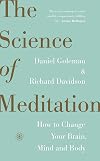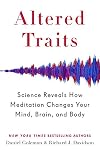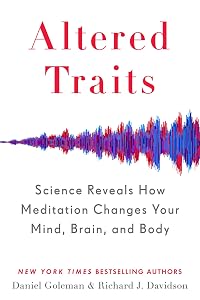
Altered Traits: Science Reveals How Meditation Changes Your Mind, Brain, and Body
by Daniel Goleman, Richard Davidson, Richard J. Davidson
On This Page
Description
More than forty years ago, two friends and collaborators at Harvard, Daniel Goleman and Richard Davidson were unusual in arguing for the benefits of meditation. Now, as mindfulness and other brands of meditation become ever more popular, promising to fix everything from our weight to our relationship to our professional career, these two bestselling authors sweep away the misconceptions around these practices and show how smart practice can change our personal traits and even our genome for show more the better. Drawing on cutting-edge research, Goleman and Davidson expertly reveal what we can learn from a one-of-a-kind data pool that includes world-class meditators. They share for the first time remarkable findings that show how meditation - without drugs or high expense - can cultivate qualities such as selflessness, equanimity, love and compassion, and redesign our neural circuitry. Demonstrating two master thinkers at work, The Science of Meditation explains precisely how mind training benefits us. More than daily doses or sheer hours, we need smart practice, including crucial ingredients such as targeted feedback from a master teacher and a more spacious worldview. Gripping in its storytelling and based on a lifetime of thought and action, this is one of those rare books that has the power to change us at the deepest level. show lessTags
Recommendations




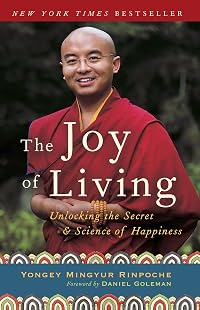
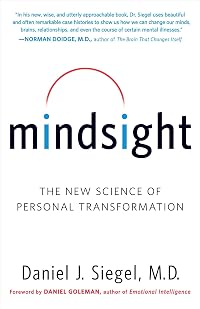

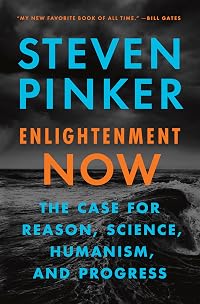
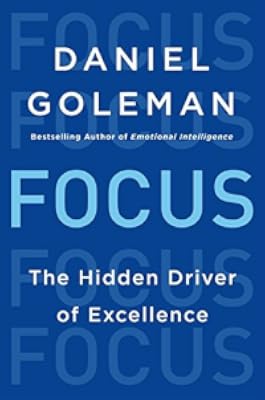


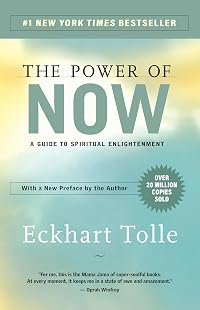
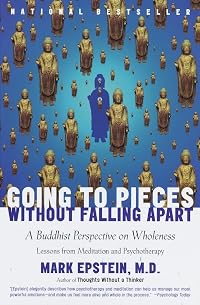
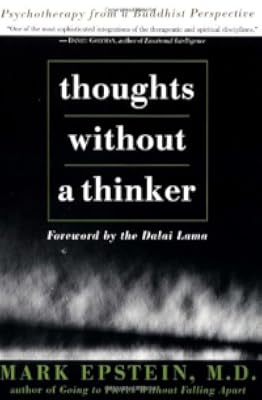
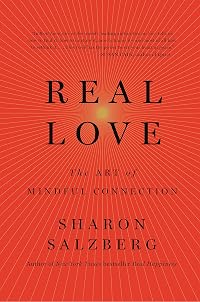
Member Recommendations
melmore Both works explore the neuroscience behind mindfulness and traditional contemplative practices, demonstrating that this stuff actually *works*, and why it does.
Member Reviews
In the last twenty years, meditation and mindfulness have gone from being kind of cool to becoming an omnipresent Band-Aid for fixing everything from your weight to your relationship to your achievement level. Unveiling here the kind of cutting-edge research that has made them giants in their fields, Daniel Goleman and Richard Davidson show us the truth about what meditation can really do for us, as well as exactly how to get the most out of it.
Sweeping away common misconceptions and neuromythology to open readers' eyes to the ways data has been distorted to sell mind-training methods, the authors demonstrate that beyond the pleasant states mental exercises can produce, the real payoffs are the lasting personality traits that can show more result. But short daily doses will not get us to the highest level of lasting positive change--even if we continue for years--without specific additions. More than sheer hours, we need smart practice, including crucial ingredients such as targeted feedback from a master teacher and a more spacious, less attached view of the self, all of which are missing in widespread versions of mind training. The authors also reveal the latest data from Davidson's own lab that point to a new methodology for developing a broader array of mind-training methods with larger implications for how we can derive the greatest benefits from the practice.
Exciting, compelling, and grounded in new research, this is one of those rare books that has the power to change us at the deepest level. show less
Sweeping away common misconceptions and neuromythology to open readers' eyes to the ways data has been distorted to sell mind-training methods, the authors demonstrate that beyond the pleasant states mental exercises can produce, the real payoffs are the lasting personality traits that can show more result. But short daily doses will not get us to the highest level of lasting positive change--even if we continue for years--without specific additions. More than sheer hours, we need smart practice, including crucial ingredients such as targeted feedback from a master teacher and a more spacious, less attached view of the self, all of which are missing in widespread versions of mind training. The authors also reveal the latest data from Davidson's own lab that point to a new methodology for developing a broader array of mind-training methods with larger implications for how we can derive the greatest benefits from the practice.
Exciting, compelling, and grounded in new research, this is one of those rare books that has the power to change us at the deepest level. show less
Two giants of science journalism and neuroscience research, Daniel Goleman and Richard Davidson, collaborate to separate fact from folklore about the benefits of mediation in this important, factually intensive, and readable book. Their research has been guided by the idea that: “Some of what you know about meditation may be wrong. But what is true about meditation you may not know.”
Fair warning to hippies and new age practitioners; this is a well-researched book about science.
In 1970 Dan traveled to Bodh Gaya India where he met an elderly Tibetan monk, Khunu Lama. Dan was so impressed by the monk’s attentive, peaceful, and compassionate qualities that he returned to India later that year and studied with the esteemed Maharaji show more Neen Karoli Baba.
Three years later at Dan’s encouragement, Richie and his wife Susan traveled to Dalhousie India for a ten-day meditation retreat with S. N. Goenka, a teacher with whom Dan had earlier studied. By the third day of the retreat Richie had learned to overcome intense pain through mental discipline. He became convinced that powerful methods that transform minds in healthy directions could be learned.
While both were Harvard University students in the early 1970s, they shared an interest in meditation. Despite sober warnings from their advisers to resist the lure of mysticism and avoid the career ending path followed earlier by Timothy Leary, they both chose to study meditation-related topics for their Ph.D. dissertations. They have been good friends and life-long collaborators in the practice of meditation and scientific study of contemplative science ever since.
During the several decades of their collaborations, these researchers have debunked the false claims of charlatans while scientifically confirming the surprising yet subjective reports of many skilled meditators. Their collaborations have engaged: Ram Dass, Krishna Das, Jon Kabat-Zinn, Matthieu Ricard, Mingyur Rinpoche, and the Dalai Lama.
The varieties of contemplative practices described collectively as meditation rival the wide range of athletic activities described collectively as sport. These include: mindfulness, compassion, attention, insight, loving-kindness, monitoring thoughts, deconstructing and reappraising pain, integrating experiences, and other methods and outcomes. They recognized the importance of clearly differentiating among these varieties of mediation to allow careful study.
They continually improved research methods, including: determining the total lifetime hours of meditation practice of each person studied, use of comparison conditions by the control groups in each experiment, rigorous operational definitions of mindfulness, and other experimental disciplines. They dismissed studies that did not meet their strict standards for scientific research so they could to draw more reliable conclusions.
As suggested by the book’s title, they emphasized the distinction between short lived mental states and enduring mental and physical traits. They recognized that “After the high goes, you’re still the same schmuck you were before.” They endeavored to study extremely positive altered traits. “It is not the highs that matter. It is who you become.”
Many chapters end with a concise summary of the key findings of the chapter conveniently presented “In a Nutshell”. These findings include: 1) experienced Zen practitioners can withstand higher levels of pain, and have less reaction to pain, 2) loving-kindness meditation increases the likelihood practitioners will provide help to those in need, 3) as little as ten hours of mindfulness meditation over a two-week period strengthened attention and working memory, 4) long-term practitioners can deconstruct the default narrative we interpret as our “self”, 5) mindfulness training can decrease production of cytokines—the molecules responsible for inflammation, and 6) combinations of mindfulness and cognative therapy are well-validated treatments for some mental disorders. While meditating on empathy a yogi master with a remarkable 62,000 hours of mediation practice was able increase his EEG signature of empathy by 700 to 800 percent compared his levels at rest. Gamma wave EEG activity, which occurs for only a few seconds when novices attain a satisfying “A Ha” insight, can be sustained for minutes at a time by the most experienced yogis.
As research continues, the authors are enthused by the possibility of validating attainment of many positive altered traits. These include: generosity, ethical conduct, patience, concentration, wisdom, and others. The authors boldly envision a world where “… by transforming our minds we could improve not only our own health and well-being but also those of our communities and the wider world.”
The book ends with a helpful list of resources for the study and practice of mediation and extensive reference notes.
This important book is well researched, well argued, and well written. Sound arguments based on valid logic and representative evidence are presented with a narrative flair resulting in an enjoyable read. Interesting stories and rigorous research meld into this readable and authoritative treatment of an important and enduring topic. show less
Fair warning to hippies and new age practitioners; this is a well-researched book about science.
In 1970 Dan traveled to Bodh Gaya India where he met an elderly Tibetan monk, Khunu Lama. Dan was so impressed by the monk’s attentive, peaceful, and compassionate qualities that he returned to India later that year and studied with the esteemed Maharaji show more Neen Karoli Baba.
Three years later at Dan’s encouragement, Richie and his wife Susan traveled to Dalhousie India for a ten-day meditation retreat with S. N. Goenka, a teacher with whom Dan had earlier studied. By the third day of the retreat Richie had learned to overcome intense pain through mental discipline. He became convinced that powerful methods that transform minds in healthy directions could be learned.
While both were Harvard University students in the early 1970s, they shared an interest in meditation. Despite sober warnings from their advisers to resist the lure of mysticism and avoid the career ending path followed earlier by Timothy Leary, they both chose to study meditation-related topics for their Ph.D. dissertations. They have been good friends and life-long collaborators in the practice of meditation and scientific study of contemplative science ever since.
During the several decades of their collaborations, these researchers have debunked the false claims of charlatans while scientifically confirming the surprising yet subjective reports of many skilled meditators. Their collaborations have engaged: Ram Dass, Krishna Das, Jon Kabat-Zinn, Matthieu Ricard, Mingyur Rinpoche, and the Dalai Lama.
The varieties of contemplative practices described collectively as meditation rival the wide range of athletic activities described collectively as sport. These include: mindfulness, compassion, attention, insight, loving-kindness, monitoring thoughts, deconstructing and reappraising pain, integrating experiences, and other methods and outcomes. They recognized the importance of clearly differentiating among these varieties of mediation to allow careful study.
They continually improved research methods, including: determining the total lifetime hours of meditation practice of each person studied, use of comparison conditions by the control groups in each experiment, rigorous operational definitions of mindfulness, and other experimental disciplines. They dismissed studies that did not meet their strict standards for scientific research so they could to draw more reliable conclusions.
As suggested by the book’s title, they emphasized the distinction between short lived mental states and enduring mental and physical traits. They recognized that “After the high goes, you’re still the same schmuck you were before.” They endeavored to study extremely positive altered traits. “It is not the highs that matter. It is who you become.”
Many chapters end with a concise summary of the key findings of the chapter conveniently presented “In a Nutshell”. These findings include: 1) experienced Zen practitioners can withstand higher levels of pain, and have less reaction to pain, 2) loving-kindness meditation increases the likelihood practitioners will provide help to those in need, 3) as little as ten hours of mindfulness meditation over a two-week period strengthened attention and working memory, 4) long-term practitioners can deconstruct the default narrative we interpret as our “self”, 5) mindfulness training can decrease production of cytokines—the molecules responsible for inflammation, and 6) combinations of mindfulness and cognative therapy are well-validated treatments for some mental disorders. While meditating on empathy a yogi master with a remarkable 62,000 hours of mediation practice was able increase his EEG signature of empathy by 700 to 800 percent compared his levels at rest. Gamma wave EEG activity, which occurs for only a few seconds when novices attain a satisfying “A Ha” insight, can be sustained for minutes at a time by the most experienced yogis.
As research continues, the authors are enthused by the possibility of validating attainment of many positive altered traits. These include: generosity, ethical conduct, patience, concentration, wisdom, and others. The authors boldly envision a world where “… by transforming our minds we could improve not only our own health and well-being but also those of our communities and the wider world.”
The book ends with a helpful list of resources for the study and practice of mediation and extensive reference notes.
This important book is well researched, well argued, and well written. Sound arguments based on valid logic and representative evidence are presented with a narrative flair resulting in an enjoyable read. Interesting stories and rigorous research meld into this readable and authoritative treatment of an important and enduring topic. show less
 This review was written for LibraryThing Early Reviewers.
Yep, this is a good book.
But watch out for it might ruin your hopes and dreams that meditating for 5 minutes everyday will cure/ease/heal all you mental/physical ailments.
I liked the style of this book and its logical progression (looking at the results of some(most) recent research, examining the empirical protocol used in it, pointing out its flaws, making another study that's a bit better designed, and drawing better conclusions).
They also ruthlessly criticize (debunk if you will) a lot of the hyped up research in the field.
In the end, when it comes to scientific findings, the old heuristic "If it's too good to be true, it probably isn't true" still is king, ...
If you want to reap the benefits, you gotta work hard mate.
Which i guess show more also poses the question, Is putting in thousand of hours worth it?
I mean, i can hardly imagine myself reaching the Olympic level of the Yogis, but i can easily see reaching at least the long-term level outlined in this book (1000-10000 hours).
Personally, I say yes, but read on and see for yourself. (plus, some benefits can be noted from as early as 30 hours of practice so it's not that bad)
Edit: This was my first reading of this book, and i will be returning to some chapters i am more interested in (especially the ones talking about anything that helps raising 'attention' and such -attentional meditation-), to reread notes or studies even, as i am less interested in loving-kindness, compassion meditation (for now atleast) show less
But watch out for it might ruin your hopes and dreams that meditating for 5 minutes everyday will cure/ease/heal all you mental/physical ailments.
I liked the style of this book and its logical progression (looking at the results of some(most) recent research, examining the empirical protocol used in it, pointing out its flaws, making another study that's a bit better designed, and drawing better conclusions).
They also ruthlessly criticize (debunk if you will) a lot of the hyped up research in the field.
In the end, when it comes to scientific findings, the old heuristic "If it's too good to be true, it probably isn't true" still is king, ...
If you want to reap the benefits, you gotta work hard mate.
Which i guess show more also poses the question, Is putting in thousand of hours worth it?
I mean, i can hardly imagine myself reaching the Olympic level of the Yogis, but i can easily see reaching at least the long-term level outlined in this book (1000-10000 hours).
Personally, I say yes, but read on and see for yourself. (plus, some benefits can be noted from as early as 30 hours of practice so it's not that bad)
Edit: This was my first reading of this book, and i will be returning to some chapters i am more interested in (especially the ones talking about anything that helps raising 'attention' and such -attentional meditation-), to reread notes or studies even, as i am less interested in loving-kindness, compassion meditation (for now atleast) show less
The first part of this book talks about the first scientific studies on the effects of meditation on the brain, starting in the early 1970's. It follows the career paths of the authors, Goleman and Davidson, through their days both at Harvard and in India where they studied various forms of meditation. Of course, progress was very slow at first since meditation was not taken seriously in the scientific world, but over time their research gained momentum and has led to, well, this book!
The authors talk about both the triumphs and setbacks that the research went through, the dead-ends, all the trial-and-errors that go with pioneering a new scientific field of study. But they had a lot of help from many other interested researchers, show more students, Indian yogis, Buddhist monks, and of course, the Dalai Lama himself.
The second half of the book goes over much of what has been discovered so far, what works and what does not. They explain what is being used in modern therapy, how it helps people with varying mental problems like depression, PTSD, etc., and how, over time, these practices can alter your brain to a point where your behavior has developed a new and healthier trait. Hence the title, "Altered Traits".
The last few chapters talk about the studies done on advanced meditation practitioners, people who have tens of thousands lifetime hours of meditation practice under their belt. They put these meditation masters inside a fMRI scanner and scan their brain while meditating, and the results are astonishing.
They end with their final thoughts on the hopeful future of meditation research and integration into more peoples' lives. How these practices, like physical exercise, need to be practiced by more people. Not only for personal health, but health for humanity overall.
A fantastic book that should be read by anyone even remotely interested in the effects of meditation. show less
The authors talk about both the triumphs and setbacks that the research went through, the dead-ends, all the trial-and-errors that go with pioneering a new scientific field of study. But they had a lot of help from many other interested researchers, show more students, Indian yogis, Buddhist monks, and of course, the Dalai Lama himself.
The second half of the book goes over much of what has been discovered so far, what works and what does not. They explain what is being used in modern therapy, how it helps people with varying mental problems like depression, PTSD, etc., and how, over time, these practices can alter your brain to a point where your behavior has developed a new and healthier trait. Hence the title, "Altered Traits".
The last few chapters talk about the studies done on advanced meditation practitioners, people who have tens of thousands lifetime hours of meditation practice under their belt. They put these meditation masters inside a fMRI scanner and scan their brain while meditating, and the results are astonishing.
They end with their final thoughts on the hopeful future of meditation research and integration into more peoples' lives. How these practices, like physical exercise, need to be practiced by more people. Not only for personal health, but health for humanity overall.
A fantastic book that should be read by anyone even remotely interested in the effects of meditation. show less
This review was written for LibraryThing Early Reviewers.What a privilege to get a copy of “Altered Traits” early to read. I don’t even know where to begin with this book, it was great in so many ways. This is not a how to book for meditation, but all people who have an interest in meditation should read this book.
I will start with the research, it took me a while to read only because I had to go over details several times to get everything it was saying. At times I had to take a break for my mind to grasp the amount of information packed into each chapter. This book is not about the most recent research on meditation. It is about virtually all research on meditation from the beginning to the end. It is about what went well and didn’t go well. It seems to me that honesty is always show more the best policy. I gained so much by reading their reports of self-discovery through learning from their mistakes. It was nice to see what meditations worked on specific traits and what did not. I have used meditation to work with patients with mental illness for years. This book allows me to be more tactical in my approach based on the individual needs of the patient. I know for sure I will be using loving kindness more often with those who struggle with anger. I can now use specific mediations to focus on calming and focusing the mind. Basically I learned that I don’t have one tool, I have multiple tools when it comes to using mediation. I wish I had time to study MBSR, I could see how that also could add to my toolbox.
Having said that about the research piece, I would like to say that this book reminds me of another book I once read called “A biography of The World’s Most Famous Equation E=MC2”. I feel “Altered Traits” was a wonderful story of the history of meditation research and the people that were a part of that research. To have a lasting relationship with people such as the Dalai lama and other great people of the Middle East. The book told me a story instead of the potential dry research that many book present when discussing there topic of research. What a journey they present that started in the early 70’s and brings you to the present moment. Sadly there are hints of handing the baton to the next generation of researchers in the area of meditation. Could this book be the final Opus of Rich and Dan? If so, thank you for the hard work and integrity in the field! show less
I will start with the research, it took me a while to read only because I had to go over details several times to get everything it was saying. At times I had to take a break for my mind to grasp the amount of information packed into each chapter. This book is not about the most recent research on meditation. It is about virtually all research on meditation from the beginning to the end. It is about what went well and didn’t go well. It seems to me that honesty is always show more the best policy. I gained so much by reading their reports of self-discovery through learning from their mistakes. It was nice to see what meditations worked on specific traits and what did not. I have used meditation to work with patients with mental illness for years. This book allows me to be more tactical in my approach based on the individual needs of the patient. I know for sure I will be using loving kindness more often with those who struggle with anger. I can now use specific mediations to focus on calming and focusing the mind. Basically I learned that I don’t have one tool, I have multiple tools when it comes to using mediation. I wish I had time to study MBSR, I could see how that also could add to my toolbox.
Having said that about the research piece, I would like to say that this book reminds me of another book I once read called “A biography of The World’s Most Famous Equation E=MC2”. I feel “Altered Traits” was a wonderful story of the history of meditation research and the people that were a part of that research. To have a lasting relationship with people such as the Dalai lama and other great people of the Middle East. The book told me a story instead of the potential dry research that many book present when discussing there topic of research. What a journey they present that started in the early 70’s and brings you to the present moment. Sadly there are hints of handing the baton to the next generation of researchers in the area of meditation. Could this book be the final Opus of Rich and Dan? If so, thank you for the hard work and integrity in the field! show less
This review was written for LibraryThing Early Reviewers.While I found the book highly informative and authoritative, considering the authors first-hand experience with both research on meditation and meditation as such, I simply cannot force myself to rate it higher then 3/5 stars because of the form.
Its a common habit of many authors of popular science books today to puff up ideas worth 100 pages to 300 pages by various means of repetition, useless anecdotes and interviews and what not instead of filling the book with more information / coming up with their unique views etc. This book unfortunately follows the same pattern - about 100 pages is really good, informative, you learn a lot about state of research on meditation, issues with devising experiments in a highly subjective field, show more various kinds of meditation and benefits that science could prove, but the rest 200 is simply.. dispensable.
Its possible that many readers will not agree with me and I guess that really depends on expectation - I have personally expected more focus on raw information and less / no focus on stuff like personal paths of authors, their meetings with various monks and dalai lama, their dying friend etc. and I am sure that if not 100/200 split then it is at least 150/150 split between those two sides.
Even though my review is rather harsh, I still recommend this book to all readers interested in meditation who would like to get a clear picture of what it actually is about and what benefits it can provide - its just that you will often feel like speed reading certain parts or even skipping them. show less
Its a common habit of many authors of popular science books today to puff up ideas worth 100 pages to 300 pages by various means of repetition, useless anecdotes and interviews and what not instead of filling the book with more information / coming up with their unique views etc. This book unfortunately follows the same pattern - about 100 pages is really good, informative, you learn a lot about state of research on meditation, issues with devising experiments in a highly subjective field, show more various kinds of meditation and benefits that science could prove, but the rest 200 is simply.. dispensable.
Its possible that many readers will not agree with me and I guess that really depends on expectation - I have personally expected more focus on raw information and less / no focus on stuff like personal paths of authors, their meetings with various monks and dalai lama, their dying friend etc. and I am sure that if not 100/200 split then it is at least 150/150 split between those two sides.
Even though my review is rather harsh, I still recommend this book to all readers interested in meditation who would like to get a clear picture of what it actually is about and what benefits it can provide - its just that you will often feel like speed reading certain parts or even skipping them. show less
Two heavyweights in the field of psychologiy partner up in this book on meditation and their theory of perceived changes in traits for individuals practicing. The book itself if well researched and backed by extensive studies primarily of monks who are in a sense professional meditators. That is where I kind of got lost in correlating how this applies to the everyday kind of person matching up against this level of devotion and discipline. That I felt was never really addressed adequately in the book.
The studies and testing the monks go through is thorough and academically applied. Their conclusion which is not always wholly supported is that indeed things happen in the brains of these individuals that is trait altering. But again we show more are looking a people who have compiled thousands of hours and the time to practice something that most would not come close to.
Yet despite this limitation there is no doubt in my mind having read the book that meditation offers much to each of us that even at the minimal level will benefit us and maybe substantially. It is ground breaking study here that leads to some hopeful results and worth paying attention to. No pun intended. show less
The studies and testing the monks go through is thorough and academically applied. Their conclusion which is not always wholly supported is that indeed things happen in the brains of these individuals that is trait altering. But again we show more are looking a people who have compiled thousands of hours and the time to practice something that most would not come close to.
Yet despite this limitation there is no doubt in my mind having read the book that meditation offers much to each of us that even at the minimal level will benefit us and maybe substantially. It is ground breaking study here that leads to some hopeful results and worth paying attention to. No pun intended. show less
This review was written for LibraryThing Early Reviewers.Members
- Recently Added By
Lists

Books on Spirituality
7 works; 1 member

Real Good Religion
32 works; 1 member
Author Information

99+ Works 19,444 Members
Psychologist Daniel Goleman was born on March 7, 1946 in Stockton, California. He earned a Ph.D. from Harvard. Goleman wrote his first book, "The Meditative Mind" after studying ancient psychology systems and meditation practices in India and Sri Lanka. Goleman wrote about psychology and related fields for the New York Times for 12 years beginning show more in 1984. In 1993 he co-founded the Collaborative for Academic, Social, and Emotional Learning. He is also a co-chairman of The Consortium for Research on Emotional Intelligence in Organizations and a member of the Mind and Life Institute's board of directors. Goleman has written several popular books, including "Emotional Intelligence," "Social Intelligence," "Ecological Intelligence" and "Focus: The Hidden Driver of Excellence." He received a Career Achievement award for journalism from the American Psychological Association and was elected a Fellow of the American Association for the Advancement of Science to recognize his efforts to communicate the behavioral sciences to the public. (Bowker Author Biography) show less
20 Works 515 Members

16+ Works 1,084 Members
Some Editions
Awards and Honors
Work Relationships
Common Knowledge
- Canonical title
- Altered Traits: Science Reveals How Meditation Changes Your Mind, Brain, and Body
- Original title
- The Science of Meditation: How to Change Your Brain, Mind and Body
- Alternate titles
- The Science of Meditation: The Expert Guide to the Neuroscience of Mindfulness and How to Harness It
- Original publication date
- 2017-09-05
Classifications
- Genres
- Nonfiction, General Nonfiction, Religion & Spirituality, Science & Nature
- DDC/MDS
- 158.12 — Philosophy & psychology Psychology Applied psychology Personal improvement and analysis Personal improvement and analysis through meditation
- LCC
- BL627 .G644 — Philosophy, Psychology and Religion Religions. Mythology. Rationalism Religions. Mythology. Rationalism Religious life
- BISAC
Statistics
- Members
- 488
- Popularity
- 62,037
- Reviews
- 21
- Rating
- (3.58)
- Languages
- 15 — Chinese, traditional, Dutch, English, Estonian, Greek, Hungarian, Italian, Farsi/Persian, Polish, Portuguese (Brazil), Portuguese (Portugal), Russian, Spanish, Swedish, Turkish
- Media
- Paper, Audiobook, Ebook
- ISBNs
- 20
- ASINs
- 6