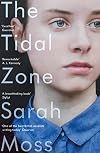
The Tidal Zone
by Sarah Moss
On This Page
Description
Adam is a stay-at-home dad who is also working on a history of the bombing and rebuilding of Coventry Cathedral. He is a good man and he is happy. But one day, he receives a call from his daughter's school to inform him that, for no apparent reason, fifteen-year-old Miriam has collapsed and stopped breathing. In that moment, he is plunged into a world of waiting, agonising, not knowing. The story of his life and the lives of his family are rewritten and re-told around this shocking central show more event, around a body that has inexplicably failed.In this exceptionally courageous and unflinching novel of contemporary life Sarah Moss goes where most of us wouldn't dare to look, and the result is riveting - unbearably sad, but also miraculously funny and ultimately hopeful. The Tidal Zone explores parental love, overwhelming fear, illness and recovery. It is about clever teenagers and the challenges of marriage. It is about the NHS, academia, sex and gender in the twenty-first century, the work-life juggle, and the politics of packing lunches and loading dishwashers. It confirms Sarah Moss as a unique voice in modern fiction and a writer of luminous intelligence. show lessTags
Recommendations
















Member Reviews
This is genuinely excellent.
Narrated by Adam Goldschmidt, a stay at home father and part time academic who is currently writing an interactive experience of Coventry Cathedral. The story starts with Miriam's beginning in the womb and carries on until we reach the day when she stops breathing and collapses at school. We travel with him to hospital and through Miriam's stay in hospital as they fail to get answers to what happened and if it might happen again. The impact of this on the family, overwork GP wife Emma and younger daughter Rose are played out over the next 9 months. The sense of doom that overhangs the family is heavy and appears to separate them from the rest of reality, as if viewed through a glass darkly. As a historian, show more Adam takes comfort in the fact that this has been a state of normality for most of history, it is only since the turn of the 20th century that we have had a decrease in childhood mortality to make child death seem unusual. Amidst the doom, life does go on, it has to. Adam & Emma learn to live with, or at least stifle, the fear that their child may die, while said child behaves like a really annoying teenager (as all teenager are).
Through this Adam writes of the destruction and resurrection of Coventry Cathedral. The phases of this mirror the phases of Miriam's case, with the rebuilding standing as metaphor for the rebuilding of family life. The ending is not despairing, there is a hope for a life beyond the present, even if it retains the uncertainty that the future always holds.
I listened to this and the narrator did an excellent job with the text. show less
Narrated by Adam Goldschmidt, a stay at home father and part time academic who is currently writing an interactive experience of Coventry Cathedral. The story starts with Miriam's beginning in the womb and carries on until we reach the day when she stops breathing and collapses at school. We travel with him to hospital and through Miriam's stay in hospital as they fail to get answers to what happened and if it might happen again. The impact of this on the family, overwork GP wife Emma and younger daughter Rose are played out over the next 9 months. The sense of doom that overhangs the family is heavy and appears to separate them from the rest of reality, as if viewed through a glass darkly. As a historian, show more Adam takes comfort in the fact that this has been a state of normality for most of history, it is only since the turn of the 20th century that we have had a decrease in childhood mortality to make child death seem unusual. Amidst the doom, life does go on, it has to. Adam & Emma learn to live with, or at least stifle, the fear that their child may die, while said child behaves like a really annoying teenager (as all teenager are).
Through this Adam writes of the destruction and resurrection of Coventry Cathedral. The phases of this mirror the phases of Miriam's case, with the rebuilding standing as metaphor for the rebuilding of family life. The ending is not despairing, there is a hope for a life beyond the present, even if it retains the uncertainty that the future always holds.
I listened to this and the narrator did an excellent job with the text. show less
"It is not all right, but there is beauty. We have ways of saying that it is not all right, that there is death and suffering and evil, and they are the same ways we have had for hundreds of years. Buildings. Glass. Weaving.
Words."
+++++++++++++++++++++++++++++++++++++++
I loved this novel. Adam and Emma and their two daughters, Miriam and Rose, are characters I will cherish for a while. In this story, 15-year-old Miriam experiences an episode of anaphylaxis and stops breathing. She is resuscitated and she survives, and this novel explores the dynamics of the family in the weeks and months following this terrible confrontation with mortality, especially the mortality of the young.
Sarah Moss, who is becoming one of my favorite authors, show more writes exquisitely, whether she is describing the bickering of the two girls, or the history of the design and construction of the Coventry Cathedral which is the subject of Adam's academic research. The gender roles are secondary here; Adam is narrating the story and marital tension, including that created by nontraditional arrangements regarding income and household duties, is certainly one theme. But Moss is less concerned with how we navigate marital strife than with how we navigate love and loss and the terror of our mortality. As Emma says, "you can't go round not loving things because they'll die," but how on Earth do we tolerate the risk? show less
Words."
+++++++++++++++++++++++++++++++++++++++
I loved this novel. Adam and Emma and their two daughters, Miriam and Rose, are characters I will cherish for a while. In this story, 15-year-old Miriam experiences an episode of anaphylaxis and stops breathing. She is resuscitated and she survives, and this novel explores the dynamics of the family in the weeks and months following this terrible confrontation with mortality, especially the mortality of the young.
Sarah Moss, who is becoming one of my favorite authors, show more writes exquisitely, whether she is describing the bickering of the two girls, or the history of the design and construction of the Coventry Cathedral which is the subject of Adam's academic research. The gender roles are secondary here; Adam is narrating the story and marital tension, including that created by nontraditional arrangements regarding income and household duties, is certainly one theme. But Moss is less concerned with how we navigate marital strife than with how we navigate love and loss and the terror of our mortality. As Emma says, "you can't go round not loving things because they'll die," but how on Earth do we tolerate the risk? show less
The latest novel by the brilliant English writer Sarah Moss is set in a contemporary Midlands town and is narrated by Adam, a non-tenured academician who teaches entry level courses at the local university and spends the majority of his time working on a book about the bombing and rebuilding of Coventry Cathedral and tending to the home and his family, his 15 and 8 year old daughters Miriam and Rose, and his wife Emma, an overworked general practitioner for the National Health Service. The family is an ordinary one, until one day tragedy strikes: Miriam goes into sudden cardiorespiratory arrest at school, is successfully resuscitated, and is admitted to hospital for further evaluation. Her mysterious condition places a great strain on show more every member of the family: Adam's passive-aggressive tendencies, anxieties and insecurities are expressed as verbal darts thrown at his wife; Emma wrestles with her dual roles as a even-keeled clinician and a terrified mother who fears every parent's worst nightmare, that they will outlive their child; Rose feels both unimportant and anxious over her sister's uncertain condition, and displays apparent indifference toward Miriam's plight and makes repeated unreasonable, selfish demands on her parents; and Miriam, a very intelligent, independent minded and defiant teen, who seethes at being admitted to hospital, not having medical decision making capability, and, underneath it all, fears her own mortality.
The family must recover from the lightning bolt from the sky that has altered all of their lives, and adjust to the "new normal", similar to many of the families I see in my role as a pediatric hospitalist whose children are given life altering or life threatening medical diagnoses during their stay in hospital, and to other individuals, families and groups who are stricken by tragedy and must pick themselves up and recover from a sudden shock.
Moss does a fabulous job in portraying these four as very believable, imperfect and sympathetic individuals, and, despite the difference between the British and American health care systems, the experiences Adam, Emma and Miriam had with the NHS rang true as well.
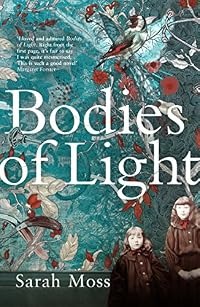
"The Tidal Zone" is another outstanding effort by one of England's most talented writers, which I liked only slightly less than her brilliant earlier novel "Bodies of Light". It was chosen for this year's fabulous Wellcome Book Prize shortlist, and despite the strength of the field, this novel would be a worthy winner of this superb literary award. show less
The family must recover from the lightning bolt from the sky that has altered all of their lives, and adjust to the "new normal", similar to many of the families I see in my role as a pediatric hospitalist whose children are given life altering or life threatening medical diagnoses during their stay in hospital, and to other individuals, families and groups who are stricken by tragedy and must pick themselves up and recover from a sudden shock.
Moss does a fabulous job in portraying these four as very believable, imperfect and sympathetic individuals, and, despite the difference between the British and American health care systems, the experiences Adam, Emma and Miriam had with the NHS rang true as well.
"The Tidal Zone" is another outstanding effort by one of England's most talented writers, which I liked only slightly less than her brilliant earlier novel "Bodies of Light". It was chosen for this year's fabulous Wellcome Book Prize shortlist, and despite the strength of the field, this novel would be a worthy winner of this superb literary award. show less
A hard novel to read for any parent, this nightmare scenario of a daughter who collapsed and stopped breathing for no reason. A multitude of tests mean that much of the novel is spent in the claustrophobic atmosphere of a hospital, a parent sleeping by the bedside of Miriam, the 15-year old daughter. Sarah Moss writes brilliantly and openly about how the parents and sibling cope with this family emergency. Alongside this is the story of granddad and his journey across America, from commune to commune. Adam, the father, is also researching and writing about the building of Coventry Cathedral and the creation and building of this magnificent cathedral pops up during the novel. Sarah Moss writes at the end of this novel, 'Stories have show more endings; that's why we tell them, for reassurance that there is meaning in our lives.' But she adds, 'Stories are not the truth ... We are not all, not only, the characters written by our ancestors. I have told my stories now, and we are still here ...' A moving and passionate read that felt full of love and interest. show less
2020 was my year for reading Maggie O’Farrell; 2021 is becoming my year for reading Sarah Moss. After being impressed with her Ghost Wall and Summerwater, I thought I’d read one of her earlier novels.
The novel’s narrator is Adam Goldschmidt, an underemployed academic and stay-at-home dad. His wife Emma is a chronically stressed, overworked, and exhausted doctor so Adam is the primary caregiver to 15-year-old Miriam and 8-year-old Rose. When not taking care of the household (shopping, cooking, cleaning, doing laundry) and the girls’ activities, he is writing a guidebook on the post-war reconstruction of Coventry cathedral.
One day Miriam collapses at school. She is revived and hospitalized for a time to determine why a healthy show more teenager would suffer cardiac arrest. Since the cause cannot be determined, the family has to adapt to living with the possibility that Miriam might again stop breathing at any time. The book focuses on life’s impermanence and learning to live with that uncertainty: “how can we live once we have understood that any or all of us may be killed while tying our shoes or going up the stairs? While reading a novel, or writing one?”
Miriam must face the possibility of death but the novel focuses more on Adam’s reaction to “the new reality in which death stood in the corner of every room and came to breathe over my shoulder whenever I took my eye off him.” As expected, he worries and struggles not to be overprotective but to give Miriam “her own tidal zone.” Like the parents of a newborn, he regularly checks that his daughters are breathing. Miriam has had a brush with death and their safe world has been shattered, but a parent’s daily responsibilities continue: “Everything is paused, except that Rose still needs to go to school and to eat her meals, and the laundry must still be done and the bathroom cleaned.”
Adam finds some comfort in being part of a global web of suffering parents: “It is normal for children to die. Look at Syria, at Palestine, at Eritrea and Somalia. Look at the tidelines of beaches in Italy and Greece. Look, while we’re on the subject, at certain parts of Chicago and Los Angeles.” He tells Emma that “’the way things are for us now is the normal one, globally and historically. It’s everyone else who’s anomalous. Everyone who doesn’t think it could happen to them. . . . It comforts me to think that most parents in most of time and most of the world have lived with this fear as a matter of course.’”
The message is that we are all fragile and though we should acknowledge the possibility of sudden death, we should not let it dominate our lives: “there is death and suffering and evil” but “there is beauty” too. Though we should appreciate life and health and life’s ordinary extraordinariness, “May we forget. It is a pity that the things we learn in crisis are all to be found on fridge magnets and greeting cards: seize the day, savour the moment, tell your love – May we live long enough to despise the clichés again, may we heal enough to take for granted sky and water and light, because the state of blind gratitude for breath and blood is not a position of intelligence.” We must continue living because “’You can’t go round not loving things because they’ll die.’”
Interspersed with the family narrative are two other stories of rebuilding and moving forward after a catastrophe: we learn how Coventry cathedral was designed and reconstructed after being bombed during World War II and about Adam’s father’s life in the U.S. after his Jewish parents “crossed the seas to escape bad times.”
Readers in England will undoubtedly note the many criticisms of the National Health Service, the publicly funded healthcare system. Emma comments that the NHs is so stretched that “’the only people who get treatment are the ones who aren’t safe’” and “’the whole system is now running on the last dregs of the goodwill of burnt-out doctors.’” Adam notes the injustice “that we are all in a country that pays young women more to impersonate elves in a shop than to give expert care to critically ill children.”
The book shows role-reversal parenting. It is the woman who is the workaholic who is usually home late and even when home is working. Adam is usually the only father dropping off and picking up a child at school, and faces challenges because of his gender. For example, he takes Rose to a swimming pool for a birthday party and has to rely on the help of another woman: “the father of daughters too young to be sent alone into the women’s changing room . . . must take them with him into the men’s room. Even stay-at-home dads who know how to use the delicates cycle on the washing machine and clean a toilet before it needs doing can’t go into the women’s changing room. The power dynamic between small girls and a room full of naked men is not . . . the obvious way round.” When he waits in the lobby and watches the pool to make certain Rose has come through the changing room to the pool, he is told, “’Some of the mums don’t think it’s right, a man standing there watching the kiddies like that.’”
Like the other Sarah Moss novels, this one is thought-provoking. Though it touches on serious topics, there is humour. And it is so beautifully written and breathtakingly realistic!
Note: Please check out my reader's blog (https://schatjesshelves.blogspot.com/) and follow me on Twitter (@DCYakabuski). show less
The novel’s narrator is Adam Goldschmidt, an underemployed academic and stay-at-home dad. His wife Emma is a chronically stressed, overworked, and exhausted doctor so Adam is the primary caregiver to 15-year-old Miriam and 8-year-old Rose. When not taking care of the household (shopping, cooking, cleaning, doing laundry) and the girls’ activities, he is writing a guidebook on the post-war reconstruction of Coventry cathedral.
One day Miriam collapses at school. She is revived and hospitalized for a time to determine why a healthy show more teenager would suffer cardiac arrest. Since the cause cannot be determined, the family has to adapt to living with the possibility that Miriam might again stop breathing at any time. The book focuses on life’s impermanence and learning to live with that uncertainty: “how can we live once we have understood that any or all of us may be killed while tying our shoes or going up the stairs? While reading a novel, or writing one?”
Miriam must face the possibility of death but the novel focuses more on Adam’s reaction to “the new reality in which death stood in the corner of every room and came to breathe over my shoulder whenever I took my eye off him.” As expected, he worries and struggles not to be overprotective but to give Miriam “her own tidal zone.” Like the parents of a newborn, he regularly checks that his daughters are breathing. Miriam has had a brush with death and their safe world has been shattered, but a parent’s daily responsibilities continue: “Everything is paused, except that Rose still needs to go to school and to eat her meals, and the laundry must still be done and the bathroom cleaned.”
Adam finds some comfort in being part of a global web of suffering parents: “It is normal for children to die. Look at Syria, at Palestine, at Eritrea and Somalia. Look at the tidelines of beaches in Italy and Greece. Look, while we’re on the subject, at certain parts of Chicago and Los Angeles.” He tells Emma that “’the way things are for us now is the normal one, globally and historically. It’s everyone else who’s anomalous. Everyone who doesn’t think it could happen to them. . . . It comforts me to think that most parents in most of time and most of the world have lived with this fear as a matter of course.’”
The message is that we are all fragile and though we should acknowledge the possibility of sudden death, we should not let it dominate our lives: “there is death and suffering and evil” but “there is beauty” too. Though we should appreciate life and health and life’s ordinary extraordinariness, “May we forget. It is a pity that the things we learn in crisis are all to be found on fridge magnets and greeting cards: seize the day, savour the moment, tell your love – May we live long enough to despise the clichés again, may we heal enough to take for granted sky and water and light, because the state of blind gratitude for breath and blood is not a position of intelligence.” We must continue living because “’You can’t go round not loving things because they’ll die.’”
Interspersed with the family narrative are two other stories of rebuilding and moving forward after a catastrophe: we learn how Coventry cathedral was designed and reconstructed after being bombed during World War II and about Adam’s father’s life in the U.S. after his Jewish parents “crossed the seas to escape bad times.”
Readers in England will undoubtedly note the many criticisms of the National Health Service, the publicly funded healthcare system. Emma comments that the NHs is so stretched that “’the only people who get treatment are the ones who aren’t safe’” and “’the whole system is now running on the last dregs of the goodwill of burnt-out doctors.’” Adam notes the injustice “that we are all in a country that pays young women more to impersonate elves in a shop than to give expert care to critically ill children.”
The book shows role-reversal parenting. It is the woman who is the workaholic who is usually home late and even when home is working. Adam is usually the only father dropping off and picking up a child at school, and faces challenges because of his gender. For example, he takes Rose to a swimming pool for a birthday party and has to rely on the help of another woman: “the father of daughters too young to be sent alone into the women’s changing room . . . must take them with him into the men’s room. Even stay-at-home dads who know how to use the delicates cycle on the washing machine and clean a toilet before it needs doing can’t go into the women’s changing room. The power dynamic between small girls and a room full of naked men is not . . . the obvious way round.” When he waits in the lobby and watches the pool to make certain Rose has come through the changing room to the pool, he is told, “’Some of the mums don’t think it’s right, a man standing there watching the kiddies like that.’”
Like the other Sarah Moss novels, this one is thought-provoking. Though it touches on serious topics, there is humour. And it is so beautifully written and breathtakingly realistic!
Note: Please check out my reader's blog (https://schatjesshelves.blogspot.com/) and follow me on Twitter (@DCYakabuski). show less
A very fine piece of work, for which I thank jeniwren for the recommendation. As a father who has worked in a university and spent a lot of time as home-maker parent, I could really relate to the main character in this book. Dr Moss seems to be very perceptive about the experiences of a man who is both looking after children and yet trying to maintain a position in the world of paid work.The real heart of the book, however, is the story of a parent's response to a teenage daughter's near-death experience in which the cause of the incident cannot be definitively established and therefore could recur at any time. The author explores the impact on all the individuals and their relationship to each other. How do you deal with the show more ever-present risk of death from a killer with unknown identity, and yet live some semblance of normal life? All this is set in the context of a very modern family, living in a world of Brexit, terrorist threats, and obsessive attention to the risks of child molesters. This isn't a perfect book, but for me it was right up there in the top 10%. I found both daughters, but especially the teenager, just a little too precocious to be believable. I'm certainly glad my own daughter was kinder to me in her teenage years. show less
I've been meaning to read Sarah Moss for a few years, and, prompted by an event at my local independent bookshop, I finally got around to it. I was not disappointed! I was unsure whether the theme -- middle class family suffering near-death of daughter -- would chime with me at all, but the writing is superb, and it is not all as gloomy as it sounds. The characters are well drawn, and you will be certain to recognise aspects of them in yourself or your friends and family. Above all, it really gets to the heart of worry, modern childrearing, living a good life (for your family and the wider world), family, and ultimately hope. None of these have easy answers of course, and the book doesn't shy away from the agonies of the uncertainty of show more knowing what to do for the best.
The main story would by itself make a fine book, but this is cleverly paralleled by the story of the near destruction of Coventry in WW2 and the subsequent rebuilding of the cathedral with all the attendant wobbles along the way. Having lived in and around Coventry for a few years, this added an extra dimension to the book for me -- the unnamed town, unnamed university, and even the fields in between I could instantly picture!
If you get the chance to hear Sarah talk about her books, leap at the chance - she is an engaging and intellectual speaker, and there is a huge amount distilled into her books. I'll certainly be reading more by her. show less
The main story would by itself make a fine book, but this is cleverly paralleled by the story of the near destruction of Coventry in WW2 and the subsequent rebuilding of the cathedral with all the attendant wobbles along the way. Having lived in and around Coventry for a few years, this added an extra dimension to the book for me -- the unnamed town, unnamed university, and even the fields in between I could instantly picture!
If you get the chance to hear Sarah talk about her books, leap at the chance - she is an engaging and intellectual speaker, and there is a huge amount distilled into her books. I'll certainly be reading more by her. show less
Members
- Recently Added By
Lists

BBC Radio 4 Bookclub
340 works; 13 members

Books Read in 2017
4,249 works; 130 members

Books Read in 2019
4,052 works; 110 members
Author Information

16+ Works 4,240 Members
Awards and Honors
Awards
Distinctions
The Guardian Book of the Day (2016-07-09)
Common Knowledge
- Original publication date
- 2016
- Important places
- Cornwall, England, UK
- Quotations
- ..., look, mate, it's a job, the making of cakes and the washing of sheets, the coordination of laundry with PE lessons, the handling of the Christmas shopping and the girls' dental appointments, and the fact that your wife d... (show all)oes it on top of her paid work without you noticing does not make you clever.
Classifications
Statistics
- Members
- 342
- Popularity
- 92,046
- Reviews
- 12
- Rating
- (4.02)
- Languages
- English, French, German, Turkish
- Media
- Paper, Audiobook, Ebook
- ISBNs
- 14
- ASINs
- 3