On This Page
Description
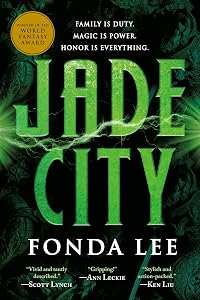
In this World Fantasy Award-winning novel of magic and kungfu, four siblings battle rival clans for honor and power in an Asia-inspired fantasy metropolis.*Named one of TIME's Top 100 Fantasy Books Of All Time
?* World Fantasy Award for Best Novel, winner
Jade is the lifeblood of the island of Kekon. It has been mined, traded, stolen, and killed for — and for centuries, honorable Green Bone warriors like the Kaul family have used it to enhance their magical abilities and defend the show more island from foreign invasion.
Now, the war is over and a new generation of Kauls vies for control of Kekon's bustling capital city. They care about nothing but protecting their own, cornering the jade market, and defending the districts under their protection. Ancient tradition has little place in this rapidly changing nation.
When a powerful new drug emerges that lets anyone — even foreigners — wield jade, the simmering tension between the Kauls and the rival Ayt family erupts into open violence. The outcome of this clan war will determine the fate of all Green Bones — and of Kekon itself.
Praise for Jade City:
"An epic drama reminiscent of the best classic Hong Kong gangster films but set in a fantasy metropolis so gritty and well-imagined that you'll forget you're reading a book." —Ken Liu, Hugo, Nebula, and World Fantasy Award-winning author
"A beautifully realized setting, a great cast of characters, and dramatic action scenes. What a fun, gripping read!" —Ann Leckie, Hugo, Nebula, and Arthur C. Clarke Award-winning author
"An instantly absorbing tale of blood, honor, family and magic, spiced with unexpectedly tender character beats." —NPR
The Green Bone Saga
Jade City
Jade War
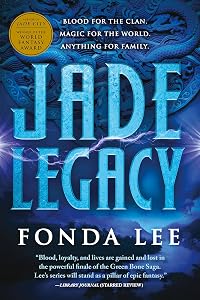
Jade Legacy. show less
Tags
Recommendations
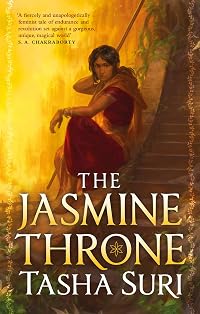
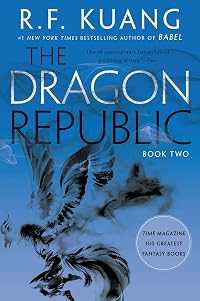
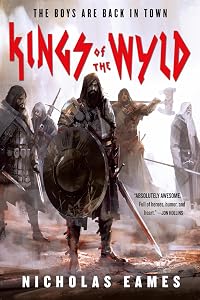

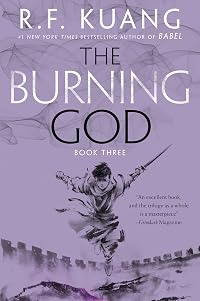




Member Reviews
I was much more impressed with Jade City than Exo, the other Fonda Lee book I read. Better story, better characters, excellent world-building. The book was very much an Asian version of Mario Puzo's The Godfather, with some added magical elements: family, power, politics, loyalty and rivalry. Much of the wealth and commerce of Kekon is based on jade and the power it can provide to its warriors (Green Bones.) There are two dominant clans: No Peak and the Mountain. The head of the clan is the Pillar, and in lieu of a consiglieri, there are two roles: the Horn (enforcer) and the Weather Man (business strategist), which makes a great deal of sense. This is primarily the story of the Kaul family (No Peak clan) and their war with the Ayts show more (Mountain clan.) Quite violent, but I was somewhat disappointed with the ending so 4.5 stars, not 5. I hope Fonda Lee broadens her saga, with the story of the Ayts in the next volume. show less
Sometimes along comes a book that so specifically pushes all of your weird little buttons you’re left in awe, because it feels like it’s been made especially for you. That’s how I felt reading Jade City.
It literally has it all: the perfectly realized world, the cast of incredibly compelling characters, DRAMA, ~feelings~, chilling one liners that close the chapter so that you just have to read a bit more… It’s all there! I actively resented the times when I had to stop reading in order to work, do chores, or whatever, because I kept thinking, “I could be reading Jade City right now”.
Fonda Lee is such a skillful author to weave this type of involved and complicated story without losing its heart. Definitely in my top 3 of show more the year. show less
It literally has it all: the perfectly realized world, the cast of incredibly compelling characters, DRAMA, ~feelings~, chilling one liners that close the chapter so that you just have to read a bit more… It’s all there! I actively resented the times when I had to stop reading in order to work, do chores, or whatever, because I kept thinking, “I could be reading Jade City right now”.
Fonda Lee is such a skillful author to weave this type of involved and complicated story without losing its heart. Definitely in my top 3 of show more the year. show less
4.75/5
I try to wait a bit more before writing a review for a book, but i just finished this one and do want to talk about it while it's still fresh in my mind. For starters, I picked up this book without knowing anything about it besides that a lot of people loved it. I was expecting, as it is common for the fantasy genre, a medieval setting with any modern-like technology coming from magic. BUT THEN I GOT 20TH CENTURY SOUTH-EAST ASIAN GANG WAR AND IT WAS AMAZING.
The setting drew me in so easily I was astonished. It's such an interesting and fun place to set the story, pretty much every single chapter was great and made me want to keep reading. Even though the setting is clearly fantastic and depends a lot on the history of this show more world, it's amazing how easy it is to understand the rules and workings of this story.
When it comes to the magic in this fantasy world, it's a very subtle one. Sure, the power of Jade is omnipresent in the story and drives pretty much all relations between characters to some degree. But it is not the focus of the book, it's not a book about the amazing things that can be done with Jade, but a story about how the day-to-day uses of this superpower molds and affects the lives and relationships of it's characters. Which is, in my humble opinion, exactly what makes a fantasy book be a good story before being a good fantasy story.
The characters are amazing, you can clearly see how much their own personalities and personal faults work behind their actions. Lan and Shae were tied as my favorites, but even the ones I liked the least were fantastic as additions to this world and it's inner workings.
The point into which the characters ended this story felt very natural, even though they were quite unpredictable based on their initial positions. Lan dies with the, almost literal, weight of his function and Jade, dragging him down to a fate he could've easily avoided in better circumstances. Hilo, faced with the death of his brother and a brutal war, also suffers as a Pillar and does things that he would've rather avoided, hurting his family and friends by the weight of his position in the clan. Anden, who always fought against his mixed blood and above average sensitivity to Jade, falls victim to it, although not completely. He sees how sensitive and dangerous he can become with his powers and stops himself, desperately trying to avoid becoming like his mother or even Lan. With that decision, he also loses the support of most of his family. And Shae is in a position that, although very adequate for, she never wanted. She can't really escape the clan and it's weight. And now, with the war, she must keep herself on this path, sacrificing herself and her independence for her family. And Bero continues to be, in his own way, the biggest error Lan ever made. In the next book, I'm sure he will be more dangerous as a ticking time bomb fueled with Jade and Shine.
The only part of this book that stops it from being a 5/5 is the ending that, while good, does arrive a bit too suddenly and in a way I wasn't expecting. It makes me wonder if the author wanted to save certain things for the sequel.
All in all, this is an AMAZING book. Everything a modern fantasy should aspire to be and a read I would recommend to anyone even remotely interested in something like this. While I never read books from the same series back to back, it will not be long at all before I read the next one in the series. show less
I try to wait a bit more before writing a review for a book, but i just finished this one and do want to talk about it while it's still fresh in my mind. For starters, I picked up this book without knowing anything about it besides that a lot of people loved it. I was expecting, as it is common for the fantasy genre, a medieval setting with any modern-like technology coming from magic. BUT THEN I GOT 20TH CENTURY SOUTH-EAST ASIAN GANG WAR AND IT WAS AMAZING.
The setting drew me in so easily I was astonished. It's such an interesting and fun place to set the story, pretty much every single chapter was great and made me want to keep reading. Even though the setting is clearly fantastic and depends a lot on the history of this show more world, it's amazing how easy it is to understand the rules and workings of this story.
When it comes to the magic in this fantasy world, it's a very subtle one. Sure, the power of Jade is omnipresent in the story and drives pretty much all relations between characters to some degree. But it is not the focus of the book, it's not a book about the amazing things that can be done with Jade, but a story about how the day-to-day uses of this superpower molds and affects the lives and relationships of it's characters. Which is, in my humble opinion, exactly what makes a fantasy book be a good story before being a good fantasy story.
The characters are amazing, you can clearly see how much their own personalities and personal faults work behind their actions. Lan and Shae were tied as my favorites, but even the ones I liked the least were fantastic as additions to this world and it's inner workings.
The only part of this book that stops it from being a 5/5 is the ending that, while good, does arrive a bit too suddenly and in a way I wasn't expecting. It makes me wonder if the author wanted to save certain things for the sequel.
All in all, this is an AMAZING book. Everything a modern fantasy should aspire to be and a read I would recommend to anyone even remotely interested in something like this. While I never read books from the same series back to back, it will not be long at all before I read the next one in the series. show less
A third of the way into Jade City, I found myself feeling sick to my stomach with fear. One of Kaul siblings, the leaders of one of Janloon’s biggest magically enhanced gang families, has just been challenged by the champion of a rival and needs to respond with overwhelming force, even though they could be killed in the process and the outcome is far from certain. Other characters object, but are overruled – in the brutal logic of the world the Kauls live in, this is all they can do, even if their death risks bringing down their entire family. The ten or so Kindle pages for this to resolve were some of the longest reading of my life.
That’s the magic that Fonda Lee brings to Jade City, an epic fantasy set in a modernised world show more where ancient families wield magic powers through training to control a particular type of jade found only on their island home. Most of the main characters in this book come from the aforementioned Kaul family, who lead the No Peak clan: there’s young Pillar (leader) Lan, trying to establish himself while dealing with forces still loyal to his retired, ill grandfather; his aggressive younger brother and Horn (general) Hilo, whose skill in developing individual relationships does not extend to a general understanding of politics; his estranged sister Shae, who has just returned to Janloon after following a boyfriend abroad to study two years previously and is trying to stay out of the family business; and adoptive youngest “cousin” Anden, still in his last year of school and attempting to overcome prejudice both from being mixed-race and from his mother’s highly stigmatised death from jade overexposure. The clan as a whole are dealing with an increasingly strong and belligerent rival, the Mountain clan, whose quiet machinations to control the production of jade and of a new drug which allows foreigners to harness its power are just beginning to be felt.
While “20th-century-analogue Asian City undergoing a post-war economic miracle” is hardly a common setting for epic fantasy, the level of detail in the world of Jade City, and the sense of complex history and culture behind the characters and their actions, more than justifies the label. As noted above, one of the book’s greatest strengths is how gripping it is – its been a while since a book made me this viscerally fearful for the people in it – and the narrative goes along at a strong pace from start to finish. The other impressive aspect is how successfully Fonda Lee’s characters encouraged me to think like them. Without spoiling anything at all in the plot, there is a point around halfway through where an opportunity is taken by one character when I felt strongly (and I’m sure this was intended) that this person wasn’t suitable and another character should have had it instead. Instead of glossing over that discrepancy, or resolving it in the second character’s favour in some messy pyrrhic victory later down the line (which is what I expected to happen), the apparent unfairness is quickly raised and just as soon dismissed in text by another character, who makes it clear why, in the world of Janloon, things had to turn out in a particular way. Most characters are very morally grey, but in a way where it’s clear they’re always trying to do “good” – it’s just that all of their actions are so tied up in a causal web of obligations and expected behaviour and far-reaching consequences that “good” sometimes ends up being “do an honourable murder”. It’s such a testament to Fonda Lee’s skills that these constraints don’t feel artificial in context, and I always believed the characters were acting in the ways they felt they had to act, even when as a reader I didn’t agree with their logic.
This is a book which takes a lot of its narrative cues and setup from media I associate too much with shitty masculinity to ever watch – things like the Godfather, and similar TV shows that former male “friends” loved to quote to each other over dinner when they wanted to exclude me from conversation. It doesn’t shy away from showing a highly patriarchal society, albeit one where women can break in when they show themselves to be overwhelmingly more competent and/or ruthless than their male counterparts. Again, this was handled well, with casual misogyny (and racism, and occasional homophobia) present among the characters but not at all condoned by the text, and no mentions of sexual violence or lingering descriptions of the particular victimisation of women in the war between the gangs (although as most of the Green Bones trained for fighting are men, and there’s a pretty significant body count involved, the fighting clearly does have gendered impacts). This is hardly a comfort read to begin with, so I didn’t mind reading about discrimination alongside transnational drug trading and arms races and the like – but if you like your fantasy to include a critical mass of unquestioned fighting women at all levels, this isn’t the book to give you that.
In short, this book is excellent and well worth your time if you enjoy morally ambiguous character driven epic fantasy, even if the list of influences leaves you a bit cold. I’m eagerly awaiting the next volume of this unusual series. show less
That’s the magic that Fonda Lee brings to Jade City, an epic fantasy set in a modernised world show more where ancient families wield magic powers through training to control a particular type of jade found only on their island home. Most of the main characters in this book come from the aforementioned Kaul family, who lead the No Peak clan: there’s young Pillar (leader) Lan, trying to establish himself while dealing with forces still loyal to his retired, ill grandfather; his aggressive younger brother and Horn (general) Hilo, whose skill in developing individual relationships does not extend to a general understanding of politics; his estranged sister Shae, who has just returned to Janloon after following a boyfriend abroad to study two years previously and is trying to stay out of the family business; and adoptive youngest “cousin” Anden, still in his last year of school and attempting to overcome prejudice both from being mixed-race and from his mother’s highly stigmatised death from jade overexposure. The clan as a whole are dealing with an increasingly strong and belligerent rival, the Mountain clan, whose quiet machinations to control the production of jade and of a new drug which allows foreigners to harness its power are just beginning to be felt.
While “20th-century-analogue Asian City undergoing a post-war economic miracle” is hardly a common setting for epic fantasy, the level of detail in the world of Jade City, and the sense of complex history and culture behind the characters and their actions, more than justifies the label. As noted above, one of the book’s greatest strengths is how gripping it is – its been a while since a book made me this viscerally fearful for the people in it – and the narrative goes along at a strong pace from start to finish. The other impressive aspect is how successfully Fonda Lee’s characters encouraged me to think like them. Without spoiling anything at all in the plot, there is a point around halfway through where an opportunity is taken by one character when I felt strongly (and I’m sure this was intended) that this person wasn’t suitable and another character should have had it instead. Instead of glossing over that discrepancy, or resolving it in the second character’s favour in some messy pyrrhic victory later down the line (which is what I expected to happen), the apparent unfairness is quickly raised and just as soon dismissed in text by another character, who makes it clear why, in the world of Janloon, things had to turn out in a particular way. Most characters are very morally grey, but in a way where it’s clear they’re always trying to do “good” – it’s just that all of their actions are so tied up in a causal web of obligations and expected behaviour and far-reaching consequences that “good” sometimes ends up being “do an honourable murder”. It’s such a testament to Fonda Lee’s skills that these constraints don’t feel artificial in context, and I always believed the characters were acting in the ways they felt they had to act, even when as a reader I didn’t agree with their logic.
This is a book which takes a lot of its narrative cues and setup from media I associate too much with shitty masculinity to ever watch – things like the Godfather, and similar TV shows that former male “friends” loved to quote to each other over dinner when they wanted to exclude me from conversation. It doesn’t shy away from showing a highly patriarchal society, albeit one where women can break in when they show themselves to be overwhelmingly more competent and/or ruthless than their male counterparts. Again, this was handled well, with casual misogyny (and racism, and occasional homophobia) present among the characters but not at all condoned by the text, and no mentions of sexual violence or lingering descriptions of the particular victimisation of women in the war between the gangs (although as most of the Green Bones trained for fighting are men, and there’s a pretty significant body count involved, the fighting clearly does have gendered impacts). This is hardly a comfort read to begin with, so I didn’t mind reading about discrimination alongside transnational drug trading and arms races and the like – but if you like your fantasy to include a critical mass of unquestioned fighting women at all levels, this isn’t the book to give you that.
In short, this book is excellent and well worth your time if you enjoy morally ambiguous character driven epic fantasy, even if the list of influences leaves you a bit cold. I’m eagerly awaiting the next volume of this unusual series. show less
Jade rules the city of Janloon, conferring supernatural powers on those who have the ability to harness it. In the aftermath of war, two clans born out of resistance to foreign powers fight for dominance. Jade City centers on the Kaul siblings, the inheritors of No Peak clan, and their fight for survival and jade against the Mountain clan. All of this takes place on the island of Kekon, a modern, Asia-inspired metropolis. AND IT IS EPIC.
This book is seriously one of the best books I've have read all year long. Nominated for a Nebula Award, Jade City is a fantastic book, with a really deep, richly imagined world and great characters. Filled with violence, action, and family intrigue, Jade City is a story about loyalty, family, and the show more thirst for power. It was so thrilling that I can’t wait for the sequel, Jade War.
The premise is so unique and it is what makes it feel particularly fresh. It is essentially a mashup of both eastern and western influences. According to Fonda Lee it "... came about from watching kung fu movies and thinking, "You know, I'm a long-time student of martial arts, so why can't I punch through concrete or fly thirty feet into the air yet?" I started envisioning a society where magical jade granted special abilities to warriors with the proper training and bloodline, and the idea merged with my longstanding enthusiasm for mafia stories to become this modern gangster family saga. " Basically, Jade City is an epic fantasy drama that is reminiscent of mafia stories from both American and Asian cinema as well as particular Asian sources—kung fu films, Hong Kong crime dramas, and wuxia comic books.
Complete with the mythos of the fictional gangster, human drama, tragedy, and fantastic action scenes, Jade City is simply gripping, stylish, gritty, and insightful. This is a MUST read. show less
This book is seriously one of the best books I've have read all year long. Nominated for a Nebula Award, Jade City is a fantastic book, with a really deep, richly imagined world and great characters. Filled with violence, action, and family intrigue, Jade City is a story about loyalty, family, and the show more thirst for power. It was so thrilling that I can’t wait for the sequel, Jade War.
The premise is so unique and it is what makes it feel particularly fresh. It is essentially a mashup of both eastern and western influences. According to Fonda Lee it "... came about from watching kung fu movies and thinking, "You know, I'm a long-time student of martial arts, so why can't I punch through concrete or fly thirty feet into the air yet?" I started envisioning a society where magical jade granted special abilities to warriors with the proper training and bloodline, and the idea merged with my longstanding enthusiasm for mafia stories to become this modern gangster family saga. " Basically, Jade City is an epic fantasy drama that is reminiscent of mafia stories from both American and Asian cinema as well as particular Asian sources—kung fu films, Hong Kong crime dramas, and wuxia comic books.
Complete with the mythos of the fictional gangster, human drama, tragedy, and fantastic action scenes, Jade City is simply gripping, stylish, gritty, and insightful. This is a MUST read. show less
"Jade City is a mob novel, set in a world where jade enhances warriors’ senses and fighting abilities—at least, for those who aren’t either immune to jade’s properties, or are so sensitive that jade drives them mad or kills them. On the island nation of Kekon, a generation ago jade-wielding warriors known as Green Bones defended their people against foreign invaders, but as the tide of peace and progress has marched on, now the most prominent clans—descendants of war heroes—are more concerned with defending their profits. The world is changing, and the jade export business is booming, as foreign militaries seek ways to harness the power of jade. The addictive drug known as shine can counteract the worst problems of jade show more sensitivity, but it comes with its own issues, not least of which are health-related.
Jade City focuses on the adult children of the No Peak clan, one of the two largest clans in Kekon’s bustling capital city. No Peak are being targeted for takeover by the other largest clan, the Mountain clan, whose ruthless Pillar (leader) has a vision for the future of Kekon and Kekonese jade that breaks with some of the traditions of the past. Kaul Lan, the Pillar of No Peak, is a sensitive and compassionate leader, whose aging and bitter war-hero grandfather recently stood aside so that he could inherit the role.
Lan isn’t suited for the role of a wartime Pillar, and that’s what the conflict will become: a war fought in the streets and in boardrooms over loyalty and patronage and cold hard cash. His charismatic younger brother Kaul Hilo is the clan’s Horn, leader of its street fighters, its Fists and Fingers, a competitive and aggressive young man who believes strongly in family and tradition, and who is in love with a stone-blind (immune to jade) woman from an unlucky family. The youngest sibling, their sister Kaul Shae, has only just returned to Kekon after two years abroad: she left her family and her jade behind for a relationship with an Espenian military officer and an education in the Republic of Espenia. She is determined to make her own way, to wear no jade, and to not use her family’s connections to forge her career. (Her feelings towards her family are rather ambivalent, and justly so, considering how they reacted to her relationship with a foreigner.) And their adopted cousin, adolescent Anden Emery, is a student at the Kaul Du Academy, in training to learn how to wield jade. He feels keenly that he’s an outsider: half-foreign, with a mother both incredibly powerful and so sensitive to jade that she eventually died of the reaction known as the “Itches,” adopted into the Kaul family but not really feeling as though he’s one of them, and queer in a society where same-gender attraction is seen as unlucky. The circumstances that they each find themselves in put them under incredible pressure. They’re caught by conflicting imperatives: tradition, duty, honour, family, reputation, and personal inclination all at different times pull them in different directions.
Stylistically, Jade City feels as though it mixes The Legend of Korra with Gangs of New York and a generous helping of Hong Kong action cinema. Lee builds a vivid, densely believable world, and a vivid, densely believable city: Kekon’s cars and televisions, its economic boom and history of conflict, exist in productive tension with its traditions and its clans, its jade and the code known as aisho, its gambling dens and restaurants and boardrooms. A deep attention to detail gives us a view of a society—and people within that society—not all quite yet at home with the changes that have occurred. Shae and Wen, Hilo’s lover, let us see that despite some changes, patriarchal ways of thinking (and hypocrisy) have a deep hold on Kekonese life and on No Peak clan, but we also see that a great deal of change has occurred since their grandfather’s heyday. Lee’s characters are vibrantly human, who have the virtues of their flaws, and the flaws of their virtues.
Excellently-paced and brilliantly constructed, Jade City glitters with life. It’s immensely compelling—and very satisfying as a mob narrative—and I really hope Fonda Lee writes more in this world." Liz Bourke review on Tor.com 2017 show less
Jade City focuses on the adult children of the No Peak clan, one of the two largest clans in Kekon’s bustling capital city. No Peak are being targeted for takeover by the other largest clan, the Mountain clan, whose ruthless Pillar (leader) has a vision for the future of Kekon and Kekonese jade that breaks with some of the traditions of the past. Kaul Lan, the Pillar of No Peak, is a sensitive and compassionate leader, whose aging and bitter war-hero grandfather recently stood aside so that he could inherit the role.
Lan isn’t suited for the role of a wartime Pillar, and that’s what the conflict will become: a war fought in the streets and in boardrooms over loyalty and patronage and cold hard cash. His charismatic younger brother Kaul Hilo is the clan’s Horn, leader of its street fighters, its Fists and Fingers, a competitive and aggressive young man who believes strongly in family and tradition, and who is in love with a stone-blind (immune to jade) woman from an unlucky family. The youngest sibling, their sister Kaul Shae, has only just returned to Kekon after two years abroad: she left her family and her jade behind for a relationship with an Espenian military officer and an education in the Republic of Espenia. She is determined to make her own way, to wear no jade, and to not use her family’s connections to forge her career. (Her feelings towards her family are rather ambivalent, and justly so, considering how they reacted to her relationship with a foreigner.) And their adopted cousin, adolescent Anden Emery, is a student at the Kaul Du Academy, in training to learn how to wield jade. He feels keenly that he’s an outsider: half-foreign, with a mother both incredibly powerful and so sensitive to jade that she eventually died of the reaction known as the “Itches,” adopted into the Kaul family but not really feeling as though he’s one of them, and queer in a society where same-gender attraction is seen as unlucky. The circumstances that they each find themselves in put them under incredible pressure. They’re caught by conflicting imperatives: tradition, duty, honour, family, reputation, and personal inclination all at different times pull them in different directions.
Stylistically, Jade City feels as though it mixes The Legend of Korra with Gangs of New York and a generous helping of Hong Kong action cinema. Lee builds a vivid, densely believable world, and a vivid, densely believable city: Kekon’s cars and televisions, its economic boom and history of conflict, exist in productive tension with its traditions and its clans, its jade and the code known as aisho, its gambling dens and restaurants and boardrooms. A deep attention to detail gives us a view of a society—and people within that society—not all quite yet at home with the changes that have occurred. Shae and Wen, Hilo’s lover, let us see that despite some changes, patriarchal ways of thinking (and hypocrisy) have a deep hold on Kekonese life and on No Peak clan, but we also see that a great deal of change has occurred since their grandfather’s heyday. Lee’s characters are vibrantly human, who have the virtues of their flaws, and the flaws of their virtues.
Excellently-paced and brilliantly constructed, Jade City glitters with life. It’s immensely compelling—and very satisfying as a mob narrative—and I really hope Fonda Lee writes more in this world." Liz Bourke review on Tor.com 2017 show less
https://adrijoyreads.wordpress.com/2018/01/15/jade-city-by-fonda-lee/
A third of the way into Jade City, I found myself feeling sick to my stomach with fear. One of Kaul siblings, the leaders of one of Janloon’s biggest magically enhanced gang families, has just been challenged by the champion of a rival and needs to respond with overwhelming force, even though they could be killed in the process and the outcome is far from certain. Other characters object, but are overruled – in the brutal logic of the world the Kauls live in, this is all they can do, even if their death risks bringing down their entire family. The ten or so Kindle pages for this to resolve were some of the longest reading of my life.
That’s the magic that Fonda show more Lee brings to Jade City, an epic fantasy set in a modernised world where ancient families wield magic powers through training to control a particular type of jade found only on their island home. Most of the main characters in this book come from the aforementioned Kaul family, who lead the No Peak clan: there’s young Pillar (leader) Lan, trying to establish himself while dealing with forces still loyal to his retired, ill grandfather; his aggressive younger brother and Horn (general) Hilo, whose skill in developing individual relationships does not extend to a general understanding of politics; his estranged sister Shae, who has just returned to Janloon after following a boyfriend abroad to study two years previously and is trying to stay out of the family business; and adoptive youngest “cousin” Anden, still in his last year of school and attempting to overcome prejudice both from being mixed-race and from his mother’s highly stigmatised death from jade overexposure. The clan as a whole are dealing with an increasingly strong and belligerent rival, the Mountain clan, whose quiet machinations to control the production of jade and of a new drug which allows foreigners to harness its power are just beginning to be felt.
While “20th-century-analogue Asian City undergoing a post-war economic miracle” is hardly a common setting for epic fantasy, the level of detail in the world of Jade City, and the sense of complex history and culture behind the characters and their actions, more than justifies the label. As noted above, one of the book’s greatest strengths is how gripping it is – its been a while since a book made me this viscerally fearful for the people in it – and the narrative goes along at a strong pace from start to finish. The other impressive aspect is how successfully Fonda Lee’s characters encouraged me to think like them. Without spoiling anything at all in the plot, there is a point around halfway through where an opportunity is taken by one character when I felt strongly (and I’m sure this was intended) that this person wasn’t suitable and another character should have had it instead. Instead of glossing over that discrepancy, or resolving it in the second character’s favour in some messy pyrrhic victory later down the line (which is what I expected to happen), the apparent unfairness is quickly raised and just as soon dismissed in text by another character, who makes it clear why, in the world of Janloon, things had to turn out in a particular way. Most characters are very morally grey, but in a way where it’s clear they’re always trying to do “good” – it’s just that all of their actions are so tied up in a causal web of obligations and expected behaviour and far-reaching consequences that “good” sometimes ends up being “do an honourable murder”. It’s such a testament to Fonda Lee’s skills that these constraints don’t feel artificial in context, and I always believed the characters were acting in the ways they felt they had to act, even when as a reader I didn’t agree with their logic.
This is a book which takes a lot of its narrative cues and setup from media I associate too much with shitty masculinity to ever watch – things like the Godfather, and similar TV shows that former male “friends” loved to quote to each other over dinner when they wanted to exclude me from conversation. It doesn’t shy away from showing a highly patriarchal society, albeit one where women can break in when they show themselves to be overwhelmingly more competent and/or ruthless than their male counterparts. Again, this was handled well, with casual misogyny (and racism, and occasional homophobia) present among the characters but not at all condoned by the text, and no mentions of sexual violence or lingering descriptions of the particular victimisation of women in the war between the gangs (although as most of the Green Bones trained for fighting are men, and there’s a pretty significant body count involved, the fighting clearly does have gendered impacts). This is hardly a comfort read to begin with, so I didn’t mind reading about discrimination alongside transnational drug trading and arms races and the like – but if you like your fantasy to include a critical mass of unquestioned fighting women at all levels, this isn’t the book to give you that.
In short, this book is excellent and well worth your time if you enjoy morally ambiguous character driven epic fantasy, even if the list of influences leaves you a bit cold. I’m eagerly awaiting the next volume of this unusual series. show less
A third of the way into Jade City, I found myself feeling sick to my stomach with fear. One of Kaul siblings, the leaders of one of Janloon’s biggest magically enhanced gang families, has just been challenged by the champion of a rival and needs to respond with overwhelming force, even though they could be killed in the process and the outcome is far from certain. Other characters object, but are overruled – in the brutal logic of the world the Kauls live in, this is all they can do, even if their death risks bringing down their entire family. The ten or so Kindle pages for this to resolve were some of the longest reading of my life.
That’s the magic that Fonda show more Lee brings to Jade City, an epic fantasy set in a modernised world where ancient families wield magic powers through training to control a particular type of jade found only on their island home. Most of the main characters in this book come from the aforementioned Kaul family, who lead the No Peak clan: there’s young Pillar (leader) Lan, trying to establish himself while dealing with forces still loyal to his retired, ill grandfather; his aggressive younger brother and Horn (general) Hilo, whose skill in developing individual relationships does not extend to a general understanding of politics; his estranged sister Shae, who has just returned to Janloon after following a boyfriend abroad to study two years previously and is trying to stay out of the family business; and adoptive youngest “cousin” Anden, still in his last year of school and attempting to overcome prejudice both from being mixed-race and from his mother’s highly stigmatised death from jade overexposure. The clan as a whole are dealing with an increasingly strong and belligerent rival, the Mountain clan, whose quiet machinations to control the production of jade and of a new drug which allows foreigners to harness its power are just beginning to be felt.
While “20th-century-analogue Asian City undergoing a post-war economic miracle” is hardly a common setting for epic fantasy, the level of detail in the world of Jade City, and the sense of complex history and culture behind the characters and their actions, more than justifies the label. As noted above, one of the book’s greatest strengths is how gripping it is – its been a while since a book made me this viscerally fearful for the people in it – and the narrative goes along at a strong pace from start to finish. The other impressive aspect is how successfully Fonda Lee’s characters encouraged me to think like them. Without spoiling anything at all in the plot, there is a point around halfway through where an opportunity is taken by one character when I felt strongly (and I’m sure this was intended) that this person wasn’t suitable and another character should have had it instead. Instead of glossing over that discrepancy, or resolving it in the second character’s favour in some messy pyrrhic victory later down the line (which is what I expected to happen), the apparent unfairness is quickly raised and just as soon dismissed in text by another character, who makes it clear why, in the world of Janloon, things had to turn out in a particular way. Most characters are very morally grey, but in a way where it’s clear they’re always trying to do “good” – it’s just that all of their actions are so tied up in a causal web of obligations and expected behaviour and far-reaching consequences that “good” sometimes ends up being “do an honourable murder”. It’s such a testament to Fonda Lee’s skills that these constraints don’t feel artificial in context, and I always believed the characters were acting in the ways they felt they had to act, even when as a reader I didn’t agree with their logic.
This is a book which takes a lot of its narrative cues and setup from media I associate too much with shitty masculinity to ever watch – things like the Godfather, and similar TV shows that former male “friends” loved to quote to each other over dinner when they wanted to exclude me from conversation. It doesn’t shy away from showing a highly patriarchal society, albeit one where women can break in when they show themselves to be overwhelmingly more competent and/or ruthless than their male counterparts. Again, this was handled well, with casual misogyny (and racism, and occasional homophobia) present among the characters but not at all condoned by the text, and no mentions of sexual violence or lingering descriptions of the particular victimisation of women in the war between the gangs (although as most of the Green Bones trained for fighting are men, and there’s a pretty significant body count involved, the fighting clearly does have gendered impacts). This is hardly a comfort read to begin with, so I didn’t mind reading about discrimination alongside transnational drug trading and arms races and the like – but if you like your fantasy to include a critical mass of unquestioned fighting women at all levels, this isn’t the book to give you that.
In short, this book is excellent and well worth your time if you enjoy morally ambiguous character driven epic fantasy, even if the list of influences leaves you a bit cold. I’m eagerly awaiting the next volume of this unusual series. show less
Members
- Recently Added By
Lists

NPR Summer 2021: 50 Favorite Sci-Fi And Fantasy Books Of The Past Decade
50 works; 8 members

The 100 Best Fantasy Books of All Time
100 works; 15 members

Otherland Book Club
36 works; 2 members

2018 Hugo Eligible Novels
170 works; 16 members

Books Read in 2019
4,052 works; 108 members

Recommend Fantasy Books
100 works; 1 member

Recommended Fantasy Books
77 works; 5 members

hypatian_kat to-read
429 works; 3 members

Top Five Books of 2023
767 works; 317 members

Books recommended by Calgary Public Library staff
1,588 works; 4 members
Author Information

15+ Works 7,786 Members
Born and raised in Calgary, Canada. A corporate strategist by training, Fonda has advised or worked for a number of Fortune 500 firms. She writes science fiction and fantasy for teens and adults. Zeroboxer is her debut novel.
Some Editions
Awards and Honors
Awards
Distinctions
Series

Common Knowledge
- Canonical title
- Jade City
- Original title
- Jade City
- Original publication date
- 2017-11
- People/Characters
- lan; Hilo; Shae; Andan
- Important places
- Janloon
- Dedication
- For my brother.
- First words
- The two would-be jade thieves sweated in the kitchen of the Twice Lucky restaurant.
- Last words
- (Click to show. Warning: May contain spoilers.)There was always opportunity in this city.
- Blurbers
- Leckie, Ann; Lynch, Scott; Liu, Ken; Bear, Elizabeth; Wilde, Fran; Gailey, Sarah
- Original language
- English
- Canonical DDC/MDS
- 813.6
- Canonical LCC
- PS3612.E34285
Classifications
Statistics
- Members
- 3,581
- Popularity
- 4,572
- Reviews
- 102
- Rating
- (3.87)
- Languages
- 8 — English, French, German, Hungarian, Italian, Polish, Portuguese, Spanish
- Media
- Paper, Audiobook, Ebook
- ISBNs
- 26
- ASINs
- 9