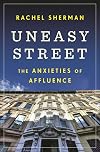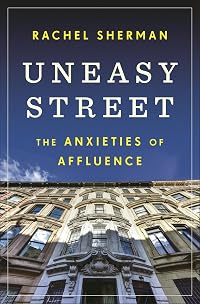
Uneasy Street: The Anxieties of Affluence
by Rachel Sherman
On This Page
Description
A surprising and revealing look at how today's elite view their wealth and place in societyFrom TV's "real housewives" to The Wolf of Wall Street, our popular culture portrays the wealthy as materialistic and entitled. But what do we really know about those who live on "easy street"? In this penetrating book, Rachel Sherman draws on rare in-depth interviews that she conducted with fifty affluent New Yorkers--from hedge fund financiers and artists to stay-at-home mothers--to examine their show more lifestyle choices and understanding of privilege. Sherman upends images of wealthy people as invested only in accruing social advantages for themselves and their children. Instead, these liberal elites, who believe in diversity and meritocracy, feel conflicted about their position in a highly unequal society. As the distance between rich and poor widens, Uneasy Street not only explores the lives of those at the top but also sheds light on how extreme inequality comes to seem ordinary and acceptable to the rest of us. show lessTags
Recommendations











Member Reviews
Sherman interviewed a number of wealthy New Yorkers about how they thought about the getting and spending of money. Many were politically liberal, some conservative (at least when it came to taxes), but they all wanted to avoid being seen as “entitled.” Proper attitudes towards money required respect for hard work, avoiding being a showoff (which meant that you didn’t brag about the second home in the Hamptons, not that you didn’t have it), and an attitude of gratitude for the opportunities one had been afforded, whether through inheritance or otherwise. Many of them didn’t like the language of desert, though they also thought they (or someone to whom they were connected) had earned the money. Sherman seems a bit ideologically show more confused herself; she concludes that these attitudes largely suppress discussion of inequality and make it easier to ignore the ways in which other people work as hard/harder for less, but her big point is that inequality is structural. If all her interviewees gave away all their money, the structures wouldn’t change—though query if the same could be said if they used their money for political donations (they still wouldn’t be able to match the Kochs, though). I also really wonder whether she’d find the same ways of thinking/talking about money among rich people in, say, Oklahoma City—both in terms of what she calls “downward-oriented” people (usually liberal, hyperaware of what they have that others don’t) and “upward-oriented” people (the ones who say they’re not that rich, really, because they still fly first class most of the time, more likely to be conservative). show less
I found out about this book both through an article in the Guardian and from an organization named Resource Generation. It's an ethnographic study of young progressive wealthy New Yorker's.
The subjects of her study find themselves in a paradox. On the one hand, they’re socially progressive, and aware of the ills of wealth inequality. On the other hand, they’re beneficiaries of this inequity, and don’t feel empowered to do anything about it. This leaves them feeling conflicted about having access to financial capital. Instead of the gaudy displays some associate with the rich, this class wants to stay out of the limelight and instead appear as “middle class,” even though they are technically part of the 1%.
Some might find show more Sherman’s text tedious at times. She goes into great detail to describe a variety of aspects of these people’s lives: their home renovations, their children’s lives, their perspectives on morality. I found it fascinating. I too am distraught by the lack of transparency surrounding class in American culture, and share Sherman’s concerns that “class blindness” contributes to inequity rather than alleviating the problem.
Many of the subjects in her interviews feel as though there are “good” rich people and “bad” rich people. They can be “deserving” by being hardworking and respectful of others, or they can be “undeserving” by being lazy or opulent. What’s interesting about this analysis is that the underlying assumption doesn’t challenge the ethics of inequality. Instead, it qualifies inequality, assuming that some people simple deserve to be at the top of the ladders while most others are at the bottom.
Not only this, but many feel they must prove their worth by working hard. There’s an implicit assumption that the injury and sacrifice sustained through hard work builds up some kind of social debt that justifies their wealth, almost like insurance. And yet this worldview is easily dispelled by looking at working-class individuals who regularly work two or three jobs just to buy enough to eat.
As Charles Eisenstein would say, these kinds of comparisons—both to others and to abstract principles—are generally unhealthy and unproductive. They result in either self-doubt or self-righteousness, neither of which are useful.
A topic not even touched upon in this book is the concept of the negative externalities caused by letting their money continue to be held in yielding vehicles. Someone might be hesitant to buy a Ferrari because they’re concerned about the conspicuous consumption. And yet they might simultaneously hold hundreds of thousands of dollars of fossil fuel stocks, which cause magnitudes more emissions and damage (albeit, out of sight of the investor), than the car would.
The book mentions universal healthcare in passing. Many interviewees say they'd be willing to let go of their last $1 million if they knew they would be taken care of in the case of a medical emergency, but as that's not the case, they want to hang onto this money as insurance of sorts. Ironically, if all of these wealth holders put this money into universal healthcare, it would be more than enough to fully fund such a program. So their fears of scarcity of coverage actually bring about such a reality.
I’m reminded of an article in “Current Affairs” that suggests that being rich is unethical. Respondents in the book would counter, “but what can I do about this?” Well, if they were serious about this question, they could give away their wealth to radical causes that further systems change. You might think that no one actually goes this far, but I have friends that give away all of their financial wealth while supporting themselves with a poverty line income. I wouldn’t go too far in idolizing this lifestyle, as poverty-line jobs are the inverse component of an extractive economy. But, as a wealthy person, it’s good to remember that you are not your money, and life and meaning could go on (or vastly improve) even if you lost or gave away your wealth. Many respondents in the book actually said they didn’t fear losing their wealth, or almost wished that it would happen. And yet none of them pro-actively brought such a shift about.
I found myself both feeling more empathetic for people in positions of extreme privilege, and feeling as though I now have a more nuanced view on exactly why financial obscurity and a morality of hard work are damaging. show less
The subjects of her study find themselves in a paradox. On the one hand, they’re socially progressive, and aware of the ills of wealth inequality. On the other hand, they’re beneficiaries of this inequity, and don’t feel empowered to do anything about it. This leaves them feeling conflicted about having access to financial capital. Instead of the gaudy displays some associate with the rich, this class wants to stay out of the limelight and instead appear as “middle class,” even though they are technically part of the 1%.
Some might find show more Sherman’s text tedious at times. She goes into great detail to describe a variety of aspects of these people’s lives: their home renovations, their children’s lives, their perspectives on morality. I found it fascinating. I too am distraught by the lack of transparency surrounding class in American culture, and share Sherman’s concerns that “class blindness” contributes to inequity rather than alleviating the problem.
Many of the subjects in her interviews feel as though there are “good” rich people and “bad” rich people. They can be “deserving” by being hardworking and respectful of others, or they can be “undeserving” by being lazy or opulent. What’s interesting about this analysis is that the underlying assumption doesn’t challenge the ethics of inequality. Instead, it qualifies inequality, assuming that some people simple deserve to be at the top of the ladders while most others are at the bottom.
Not only this, but many feel they must prove their worth by working hard. There’s an implicit assumption that the injury and sacrifice sustained through hard work builds up some kind of social debt that justifies their wealth, almost like insurance. And yet this worldview is easily dispelled by looking at working-class individuals who regularly work two or three jobs just to buy enough to eat.
As Charles Eisenstein would say, these kinds of comparisons—both to others and to abstract principles—are generally unhealthy and unproductive. They result in either self-doubt or self-righteousness, neither of which are useful.
A topic not even touched upon in this book is the concept of the negative externalities caused by letting their money continue to be held in yielding vehicles. Someone might be hesitant to buy a Ferrari because they’re concerned about the conspicuous consumption. And yet they might simultaneously hold hundreds of thousands of dollars of fossil fuel stocks, which cause magnitudes more emissions and damage (albeit, out of sight of the investor), than the car would.
The book mentions universal healthcare in passing. Many interviewees say they'd be willing to let go of their last $1 million if they knew they would be taken care of in the case of a medical emergency, but as that's not the case, they want to hang onto this money as insurance of sorts. Ironically, if all of these wealth holders put this money into universal healthcare, it would be more than enough to fully fund such a program. So their fears of scarcity of coverage actually bring about such a reality.
I’m reminded of an article in “Current Affairs” that suggests that being rich is unethical. Respondents in the book would counter, “but what can I do about this?” Well, if they were serious about this question, they could give away their wealth to radical causes that further systems change. You might think that no one actually goes this far, but I have friends that give away all of their financial wealth while supporting themselves with a poverty line income. I wouldn’t go too far in idolizing this lifestyle, as poverty-line jobs are the inverse component of an extractive economy. But, as a wealthy person, it’s good to remember that you are not your money, and life and meaning could go on (or vastly improve) even if you lost or gave away your wealth. Many respondents in the book actually said they didn’t fear losing their wealth, or almost wished that it would happen. And yet none of them pro-actively brought such a shift about.
I found myself both feeling more empathetic for people in positions of extreme privilege, and feeling as though I now have a more nuanced view on exactly why financial obscurity and a morality of hard work are damaging. show less
I guess reading about rich folks anxieties does not make me feel better about the massive amount of income inequality that exists in the United States. Reading about mostly straight (there were like two token gay couples in the mix) people with kids who live in New York City's anxieties? Ugh.
(Related: I was not thrilled that the author stated: "I also decided to look for people in their thirties and forties who had children, as I believed that such people would be especially likely to be making important lifestyle decisions such as buying homes and choosing schools." I mean, do people without kids leave selfish lives of reckless abandon? Do people without children make unimportant decisions? Are our lives really that trivial? Do we not show more matter?)
I mean, the book was exactly about what it said it was going to be about. And the conclusion does have a little bit of hand-wringing about how these wealthy people are maintaining the system of inequality that exists without looking at mechanisms to help dismantle it. And I did appreciate the insights that the book did offer (upward-looking, downward-looking, etc).... I guess I'm just left with a sour taste in my mouth after reading about people with such privilege who feel OK with how things are because at least they're aware of their wealth and feel bad about it. show less
(Related: I was not thrilled that the author stated: "I also decided to look for people in their thirties and forties who had children, as I believed that such people would be especially likely to be making important lifestyle decisions such as buying homes and choosing schools." I mean, do people without kids leave selfish lives of reckless abandon? Do people without children make unimportant decisions? Are our lives really that trivial? Do we not show more matter?)
I mean, the book was exactly about what it said it was going to be about. And the conclusion does have a little bit of hand-wringing about how these wealthy people are maintaining the system of inequality that exists without looking at mechanisms to help dismantle it. And I did appreciate the insights that the book did offer (upward-looking, downward-looking, etc).... I guess I'm just left with a sour taste in my mouth after reading about people with such privilege who feel OK with how things are because at least they're aware of their wealth and feel bad about it. show less
really insightful and well written, i just wish the conclusion was longer cuz i wish the author spend more time discussing the cultural logics that people use to moralize&justify their privileges. but beyond the actual content of the book it was also pretty eye opening to see exactly the level of professionalism / analysis it takes to do studies like this. only possible cuz the author was very self aware and thorough in her documentation of her own work. overall great book and clear and easy to read. this is how im trying to write and do studies.
Ethnographic study (interviews) with affluent New Yorkers about how they understand and frame their wealth and privilege
Critiques moral judgment of people as "good" or "bad" rich based on how they spend, think, and inhabit their wealth (good = prudent, hardworking, and nice people, bad= ostentation, lazy, and entitled). Sherman shows that a focus on such moral distinction legitimates the income inequality and resource distribution problems that result in these uber wealthy. It doesn't matter how they spend their money, they have more than their fair share of the pie.
Critiques moral judgment of people as "good" or "bad" rich based on how they spend, think, and inhabit their wealth (good = prudent, hardworking, and nice people, bad= ostentation, lazy, and entitled). Sherman shows that a focus on such moral distinction legitimates the income inequality and resource distribution problems that result in these uber wealthy. It doesn't matter how they spend their money, they have more than their fair share of the pie.
Totally fascinating and important
Ratings
Members
- Recently Added By
Lists

University Presses
155 works; 1 member
Author Information

5+ Works 194 Members
Rachel Sherman teaches sociology at the New School for Social Research and Eugene Lang College. She is the author of Class Acts: Service and Inequality in Luxury Hotels.
Classifications
- Genres
- Sociology, Nonfiction, General Nonfiction, Business, Economics
- DDC/MDS
- 305.5 — Society, government, & culture Social sciences, sociology & anthropology Social group - Age, Gender, Ethnicity People by social and economic levels
- LCC
- HC110 .W4 .S54 — Social sciences Economic history and conditions Economic history and conditions By region or country
- BISAC
Statistics
- Members
- 106
- Popularity
- 305,862
- Reviews
- 6
- Rating
- (3.65)
- Languages
- English
- Media
- Paper, Audiobook, Ebook
- ISBNs
- 6
- ASINs
- 3