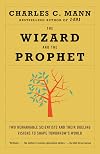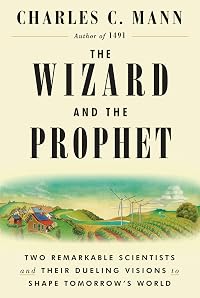
The Wizard and the Prophet: Two Remarkable Scientists and Their Dueling Visions to Shape Tomorrow's World
by Charles C. Mann
On This Page
Description
From the best-selling, award-winning author of 1491 and 1493—an incisive portrait of the two little-known twentieth-century scientists, Norman Borlaug and William Vogt, whose diametrically opposed views shaped our ideas about the environment, laying the groundwork for how people in the twenty-first century will choose to live in tomorrow's world.In forty years, Earth's population will reach ten billion. Can our world support that? What kind of world will it be? Those answering these show more questions generally fall into two deeply divided groups—Wizards and Prophets, as Charles Mann calls them in this balanced, authoritative, nonpolemical new book. The Prophets, he explains, follow William Vogt, a founding environmentalist who believed that in using more than our planet has to give, our prosperity will lead us to ruin. Cut back! was his mantra. Otherwise everyone will lose! The Wizards are the heirs of Norman Borlaug, whose research, in effect, wrangled the world in service to our species to produce modern high-yield crops that then saved millions from starvation. Innovate! was Borlaug's cry. Only in that way can everyone win! Mann delves into these diverging viewpoints to assess the four great challenges humanity faces—food, water, energy, climate change—grounding each in historical context and weighing the options for the future. With our civilization on the line, the author's insightful analysis is an essential addition to the urgent conversation about how our children will fare on an increasingly crowded Earth. show less
Tags
Recommendations

Member Reviews
Both of Mann's previous books, 1491 and 1493, described in great detail how various societies have interacted with local and global ecology, but never before has he offered such a clear framework for thinking about the reasons why humanity can't resist the urge to mold our environment to our activities and not the other way around, and drawn such clear lines between different human approaches to nature. This is a full-length expansion of "The State of the Species", his 2012 essay for Orion magazine, wherein he compared humanity to a rapidly bacteria that is just beginning to reach the edge of its petri dish, and now faces a stark choice between a catastrophic decline in numbers or a gradual accommodation to the limits of future show more possibilities. The first attitude he terms the Prophet mindset, personified by William Vogt, a bird ecologist whose research into guano production led him to warn that unchecked human activity would lead to calamitous resource shortages. The second stance is what he calls the Wizard mentality, represented by Norman Borlaug, a Nobel-winning crop scientist whose experiments with rice and wheat created the Green Revolution that fed billions of additional people. A worthy successor to the fascinating dialogues about environmentalism in John McPhee's superb Encounters With the Archdruid, Mann's work is a detailed and scientifically rigorous look at our efforts to defy what seems like an ecological equivalent to the law of gravity: that every species eventually hits the carrying capacity of its environment, and must choose between a calm acceptance of a ceiling to its ambitions or the grim process of decline due to overreach.
The book itself is, quite cleverly, structured into an analogue of the model of biological expansion it it proposes: an opening section discussing the philosophy of growth; profiles of the early careers of Vogt and Borlaug; four Element sections on the challenges of Earth (attempts to increase the yields of agriculture), Water (ensuring its future potability and availability), Fire (increasing the amount of usable energy), and Air (dealing with the issues of climate change); examinations of the later careers of Vogt and Borlaug as they each attempted to spread their philosophies; and then a brief final section reflecting on the difficulty of actually applying any of this knowledge in a useful way. Mann goes into more detail about the well-known Jevons paradox, where efforts to increase efficiency can actually increase the total amount of resources being used, in the appropriate Fire section, but right from the beginning you can think of the Wizards and Prophets as representing different arguments about the paradox. Efficiency by definition has a numerator and a denominator, and Wizards are arguing that since technological progress will mean that you won't run into absolute Malthusian limits on resources, you can keep population stable or even increase it as long as you also increase the efficiency of resource consumption, whereas Prophets would argue that Malthusian limits are inevitable, and therefore you either need to reduce the amount of people or accept drastically reduced standards of living.
The discovery that nitrogen played a vital role in fertilizer, and that guano's prodigious quantity of nitrogen would make it an excellent aid to crop yields, led to a run on the vast deposits of guano on Peru's Chincha Islands. Vogt helped formalize the ecological cycle of guano production: the fact that the El Niño cycle controlled the temperature of sea currents, hence affecting the quantity of plankton, hence affecting the population of seabirds, hence ultimately determining the amount of guano, placed in his view an upper bound on the rate at which guano could be sustainably harvested from the islands in order to ship off to grow crops. Meanwhile, Norman Borlaug's experiences in agronomy implied that there were not necessarily limits to seemingly immutable biological constraints. His research in Mexico focused on encouraging disease resistance in wheat: while developing a variety of wheat that was nutritious, hardy, high-yielding, good-tasting, and rust-resistant could be incredibly tedious and arduous, if a form of wheat could be developed that was resistant to blights and rusts, then at a stroke the problem of the recurrent famines that struck poor nations could be solved. Vogt's research implied that efforts to surmount an ecosystem's carrying capacity would just lead to catastrophes down the line, as seen in the recurrent booms and busts of the seabird population, but to Borlaug, there seemed to be no humane alternative but to try to provide more food.
Of course, to a Prophet, the Wizard approach seems perverse, as breeding better wheat just ultimately breeds more people, and so the four Element sections chronicle our attempts to kick the population can down the road. For Earth, Borlaug's development of better wheat fit into a grand heroic tradition of improvements to agriculture. Liebig's Law of the Minimum states that growth is limited by the scarcest factor, so past discoveries like the Haber-Bosch process to create artificial fertilizer and avoid the seabird bottleneck, and current projects, such as developing superior forms of photosynthesis like the C4 process in rice, are efforts to disprove the Malthusian maximum that population can increase geometrically while agricultural yields can only increase arithmetically. We are leaving money on the table in the form of inefficient agricultural strategies, but sustainable agriculture is difficult: corporate megafarms have acceptable yields and use little labor but are very wasteful and have a huge ecological footprint, whereas smaller and more energy-efficient farms could improve total yields but would require more labor, which for many people is a historical step backwards. Similarly, we could shift our diets to get more caloric bang for the buck, not just abandoning meat but also replacing fields of wheat, rice, and maize with fields of cassava, potato, and sweet potato and orchards of bananas, apples, and chestnuts. This would give us yields of far more calories per acre, at the cost of a radical transformation of every cuisine on earth.
For Water, similarly vast lifestyle changes might be in order. There's a continual sense that much of the world is running on borrowed time when it comes to water supplies. Marc Reisner's Cadillac Desert painted a grim picture of what the American West might look like once all the groundwater ran out; Southern California is the poster child for water conflicts, famously depicted in the movie Chinatown, but even though it's hard to innovate water supplies in the same way as modified wheat, Mann profiles Israel's National Water Carrier project and drip irrigation systems, which are both "hard path" and "soft path" attempts, respectively, to make every drop go farther. Mann explains that there's a philosophical split between the "hard path" of large centralized water projects, like the large dams and desalinization projects beloved of engineers, and the "soft path" of smaller solutions, like collecting stormwater or reusing wastewater. Water has been treated as a semi-public good in most countries, with cheap consumer prices on top of a vast web of complex political arrangements; privatizing water supplies is anathema to most voters, and yet decisions about how to best maximize remaining groundwater supplies will have to be made, with profound consequences. Mann doesn't cite Karl Wittfogel's infamous "hydraulic despotism" thesis about how many ancient empires used their control over water supplies to maintain power, but a future of dam/canal/aqueduct/desalinization plant megaprojects might be very different politically than one of more distributed and small-scale solutions oriented around conservation and reuse, even without veering into Mad Max/Dune science-fiction territory.
This basic division between proponents of small and large solutions to problems is recapitulated in the Fire section, which concerns energy production. I remember that Peak Oil used to be in the news quite frequently in the mid-to-late 00s, as gas prices spiked, but you don't hear so much about it these days. The worry was that the suburban lifestyle was artificially cheap, due to underpriced oil, and thus doomed to collapse when gas prices made big cars/long commutes/spread-out development unaffordable. That hasn't come true (yet?), but it's interesting that people have been mispricing oil since it was first discovered (there's a funny anecdote about Andrew Carnegie digging a big reservoir of crude oil in anticipation of a big price spike caused by the exhaustion of oil supplies, seeing that there was plenty more where that came from, and then making tons of money anyway). Marion King Hubbert's idea of Peak Oil makes intuitive sense, which is one big reason why even energy corporations devote money to alternative fuels, yet the time has never seemed quite right for inventors like Augustin-Bernard Mouchot or John Ericsson to make money off of their solar power designs. I wish Mann had devoted more space to talking about the vast improvements in solar energy production spurred by Obama's 2009 stimulus, but often a big stumbling block is not so much the specific technology as how it's deployed; he discusses the opposition of many environmentalists to big solar or wind projects. I myself have similar annoyances with climate activists who won't just take the W and accept that replacing large coal plants might require large solar farms, since some of their objections are also disguised NIMBYism (see the opposition to wind farms off of Martha's Vineyard), but even if anti-nuclear sentiment is often overblown, it is incontrovertible that big projects can have big downsides, and that smaller solutions need more visibility as well.
The Air chapter is all about climate change. Mann spends most of the section discussing the history of atmospheric science, from Jean-Baptiste-Joseph Fourier's theories of thermostatic equilibrium, to John Tyndall, Svante Arrhenius, and Guy Callendar's discoveries of how powerful of a warming agent carbon dioxide is. I've always had a deep respect for how difficult it is to build working models of anything, and so I appreciated Mann's explication of the intellectual work it took to go from learning that the composition of the air matters to the IPCC's current efforts to build climate models that will actually tell us something useful and accurate. Of course, the science is meaningless if we ignore it, so there's some discussion of how hard it is for humans to make rational decisions in the present about hypothetical future people. It's not worth saying much about climate change deniers, who at this point aren't going to be convinced by any quantity of graphs and charts. There's simple greed and ignorance, of course, but as efforts to address climate change have shifted from specific problems like sulfuric acid rain destroying forests or CFC's destruction of the ozone layer to more abstract issues like general carbon dioxide levels, it's become harder for even well-intentioned people to decide what to do.
A classic formulation of this dilemma is "if building coal plants is necessary for China to industrialize and therefore reduce poverty, is it moral to tell them to industrialize more slowly by using renewables instead, since the poor people are alive right now but most of the people who will suffer the consequences of climate change haven't been born yet?" If you're pondering the exact relations among economic growth, environmental destruction, and planetary limits, it's not obvious you'd start with limiting China's development as opposed to, say, here in the US. Mann visits China and points out that industrialization brings costs right now via air pollution, but even if you agreed that there's got to be a better way, it's not like even fairly stodgy solutions like carbon capture are uncontroversial, and geoengineering proposals range from wackier options like dumping sulfur dioxide in the stratosphere to more plausible ones like Dune-style tree planting in the Sahara and the Outback. Shifting to renewables would bring vast new costs as well, and he relates a funny example of how difficult it would be to completely replace fossil fuels in the US:
"Altogether, the Jacobson-Delucchi team estimated, the United States would need to build:
- 328,000 new onshore 5-megawatt (MW) wind turbines (providing 30.9 percent of U.S. energy for all purposes)
- 156,200 offshore 5-MW wind turbines (19.1 percent)
- 46,480 50-MW new utility-scale solar photovoltaic power plants (30.7 percent)
- 2,273 100-MW utility-scale concentrated solar power (i.e., Mouchot-style solar mirror) power plants (7.3 percent)
- 75.2 million 5-kilowatt (kW) home rooftop photovoltaic systems (3.98 percent)
- 2.75 million 100-kW commercial/government rooftop systems (3.2 percent)
- 208,100 1-MW geothermal plants (1.23 percent)
- 36,050 0.75-MW devices that harness wave power (0.37 percent)
- 8,800 1-MW tidal turbines (0.14 percent)
- 3 new hydroelectric power plants (all in Alaska, 3.01 percent)
As lagniappe, the nation also would convert all cars and trucks to run on electricity and all planes to run on supercooled hydrogen - all the while building underground systems that store energy by heating up rock under most of the buildings in the United States."
Mann returns to the fates of Vogt and Borlaug, after World War 2 when the new international order was being determined. Vogt attempted to raise environmentalism's profile by organizing events like the International Technical Conference on the Protection of Nature and working for Margaret Sanger's Planned parenthood, eventually alienating everyone but also inspiring influential works like MIT's The Limits to Growth and Paul Ehrlich's The Population Bomb. Much like Gifford Pinchot's hopeful vision of stewardship over nature won out over John Muir's anti-civilization wilderness promotion, people wouldn't have liked to hear Vogt's jeremiads even if he'd been more personable. Meanwhile, Borlaug tried to spread his hard-won knowledge to collaborators in other countries, like Mankombu Sambasivan Swaminathan in India. There's a really fascinating story of how Borlaug tried to ship some precious seeds of new wheat to Swaminathan from Mexico to India via Los Angeles during the Watts riots and the Kashmir War between India and Pakistan. There's also further thoughts on how even miracles like this wheat can struggle if they aren't adapted to the local palate. The wheat Borlaug had sent was western-style, which required further crossbreeding and irradiation to turn it into the Sharbati Sonora wheat that made acceptable roti to the Indians, which brought to mind current innovations like the non-meat Impossible Burger, which people are happy to eat, just as long as it looks and tastes exactly like a regular burger and fits exactly into current foodways and avoids "GMO" technologies that people don't understand. Science is always working uphill.
Mann closes the book with an account of an 1860 Samuel Wilberforce-Thomas Huxley debate about evolution. One of the key jabs that Wilberforce, who was arguing against evolution, tried to land was asking Huxley if he was descended from apes on his grandmother's or his grandfather's side. Hidden in there is a serious question about if humanity is subject to the same laws that seem to govern every other species. Earlier in the book Mann ruminated on a memorably depressing conversation with infamous biologist Lynn Margulis. "Was Margulis correct that we are fated by natural law to wreck our own future? History provides two ways of approaching this question. The first draws on the inspiring manner in which a group of scientific eccentrics and outsiders slowly built up today’s picture of climate change just in time to use that knowledge to halt its worst effects. The second focuses on the discouraging way that political institutions have been unable to grapple with the challenge and climate change became the subject of a cultural battle over symbols and values. The second approach leads to the conclusion that Margulis was correct: indecision and political tensions will give the opportunity for our wastes to destroy us. Only the first approach leads us to do something about climate change, following the path either of Wizards or of Prophets." While Mann is hopeful that we can come to an accord with the world around us, even seemingly dramatic precedents in our history that imply that humanity can change, like women's suffrage or the abolition of slavery, come with plenty of caveats, most notably that they take time. All around us, there are warning signs of a world that is being profoundly shaped by human behavior, the "edge of the petri dish" is in sight, and it's quite uncertain that we will ever be able to work harmoniously within Earth's limits (sci-fi schemes of extraterrestrial colonies, à la Elon Musk, are a tacit acceptance of this). All we can do is try. show less
The book itself is, quite cleverly, structured into an analogue of the model of biological expansion it it proposes: an opening section discussing the philosophy of growth; profiles of the early careers of Vogt and Borlaug; four Element sections on the challenges of Earth (attempts to increase the yields of agriculture), Water (ensuring its future potability and availability), Fire (increasing the amount of usable energy), and Air (dealing with the issues of climate change); examinations of the later careers of Vogt and Borlaug as they each attempted to spread their philosophies; and then a brief final section reflecting on the difficulty of actually applying any of this knowledge in a useful way. Mann goes into more detail about the well-known Jevons paradox, where efforts to increase efficiency can actually increase the total amount of resources being used, in the appropriate Fire section, but right from the beginning you can think of the Wizards and Prophets as representing different arguments about the paradox. Efficiency by definition has a numerator and a denominator, and Wizards are arguing that since technological progress will mean that you won't run into absolute Malthusian limits on resources, you can keep population stable or even increase it as long as you also increase the efficiency of resource consumption, whereas Prophets would argue that Malthusian limits are inevitable, and therefore you either need to reduce the amount of people or accept drastically reduced standards of living.
The discovery that nitrogen played a vital role in fertilizer, and that guano's prodigious quantity of nitrogen would make it an excellent aid to crop yields, led to a run on the vast deposits of guano on Peru's Chincha Islands. Vogt helped formalize the ecological cycle of guano production: the fact that the El Niño cycle controlled the temperature of sea currents, hence affecting the quantity of plankton, hence affecting the population of seabirds, hence ultimately determining the amount of guano, placed in his view an upper bound on the rate at which guano could be sustainably harvested from the islands in order to ship off to grow crops. Meanwhile, Norman Borlaug's experiences in agronomy implied that there were not necessarily limits to seemingly immutable biological constraints. His research in Mexico focused on encouraging disease resistance in wheat: while developing a variety of wheat that was nutritious, hardy, high-yielding, good-tasting, and rust-resistant could be incredibly tedious and arduous, if a form of wheat could be developed that was resistant to blights and rusts, then at a stroke the problem of the recurrent famines that struck poor nations could be solved. Vogt's research implied that efforts to surmount an ecosystem's carrying capacity would just lead to catastrophes down the line, as seen in the recurrent booms and busts of the seabird population, but to Borlaug, there seemed to be no humane alternative but to try to provide more food.
Of course, to a Prophet, the Wizard approach seems perverse, as breeding better wheat just ultimately breeds more people, and so the four Element sections chronicle our attempts to kick the population can down the road. For Earth, Borlaug's development of better wheat fit into a grand heroic tradition of improvements to agriculture. Liebig's Law of the Minimum states that growth is limited by the scarcest factor, so past discoveries like the Haber-Bosch process to create artificial fertilizer and avoid the seabird bottleneck, and current projects, such as developing superior forms of photosynthesis like the C4 process in rice, are efforts to disprove the Malthusian maximum that population can increase geometrically while agricultural yields can only increase arithmetically. We are leaving money on the table in the form of inefficient agricultural strategies, but sustainable agriculture is difficult: corporate megafarms have acceptable yields and use little labor but are very wasteful and have a huge ecological footprint, whereas smaller and more energy-efficient farms could improve total yields but would require more labor, which for many people is a historical step backwards. Similarly, we could shift our diets to get more caloric bang for the buck, not just abandoning meat but also replacing fields of wheat, rice, and maize with fields of cassava, potato, and sweet potato and orchards of bananas, apples, and chestnuts. This would give us yields of far more calories per acre, at the cost of a radical transformation of every cuisine on earth.
For Water, similarly vast lifestyle changes might be in order. There's a continual sense that much of the world is running on borrowed time when it comes to water supplies. Marc Reisner's Cadillac Desert painted a grim picture of what the American West might look like once all the groundwater ran out; Southern California is the poster child for water conflicts, famously depicted in the movie Chinatown, but even though it's hard to innovate water supplies in the same way as modified wheat, Mann profiles Israel's National Water Carrier project and drip irrigation systems, which are both "hard path" and "soft path" attempts, respectively, to make every drop go farther. Mann explains that there's a philosophical split between the "hard path" of large centralized water projects, like the large dams and desalinization projects beloved of engineers, and the "soft path" of smaller solutions, like collecting stormwater or reusing wastewater. Water has been treated as a semi-public good in most countries, with cheap consumer prices on top of a vast web of complex political arrangements; privatizing water supplies is anathema to most voters, and yet decisions about how to best maximize remaining groundwater supplies will have to be made, with profound consequences. Mann doesn't cite Karl Wittfogel's infamous "hydraulic despotism" thesis about how many ancient empires used their control over water supplies to maintain power, but a future of dam/canal/aqueduct/desalinization plant megaprojects might be very different politically than one of more distributed and small-scale solutions oriented around conservation and reuse, even without veering into Mad Max/Dune science-fiction territory.
This basic division between proponents of small and large solutions to problems is recapitulated in the Fire section, which concerns energy production. I remember that Peak Oil used to be in the news quite frequently in the mid-to-late 00s, as gas prices spiked, but you don't hear so much about it these days. The worry was that the suburban lifestyle was artificially cheap, due to underpriced oil, and thus doomed to collapse when gas prices made big cars/long commutes/spread-out development unaffordable. That hasn't come true (yet?), but it's interesting that people have been mispricing oil since it was first discovered (there's a funny anecdote about Andrew Carnegie digging a big reservoir of crude oil in anticipation of a big price spike caused by the exhaustion of oil supplies, seeing that there was plenty more where that came from, and then making tons of money anyway). Marion King Hubbert's idea of Peak Oil makes intuitive sense, which is one big reason why even energy corporations devote money to alternative fuels, yet the time has never seemed quite right for inventors like Augustin-Bernard Mouchot or John Ericsson to make money off of their solar power designs. I wish Mann had devoted more space to talking about the vast improvements in solar energy production spurred by Obama's 2009 stimulus, but often a big stumbling block is not so much the specific technology as how it's deployed; he discusses the opposition of many environmentalists to big solar or wind projects. I myself have similar annoyances with climate activists who won't just take the W and accept that replacing large coal plants might require large solar farms, since some of their objections are also disguised NIMBYism (see the opposition to wind farms off of Martha's Vineyard), but even if anti-nuclear sentiment is often overblown, it is incontrovertible that big projects can have big downsides, and that smaller solutions need more visibility as well.
The Air chapter is all about climate change. Mann spends most of the section discussing the history of atmospheric science, from Jean-Baptiste-Joseph Fourier's theories of thermostatic equilibrium, to John Tyndall, Svante Arrhenius, and Guy Callendar's discoveries of how powerful of a warming agent carbon dioxide is. I've always had a deep respect for how difficult it is to build working models of anything, and so I appreciated Mann's explication of the intellectual work it took to go from learning that the composition of the air matters to the IPCC's current efforts to build climate models that will actually tell us something useful and accurate. Of course, the science is meaningless if we ignore it, so there's some discussion of how hard it is for humans to make rational decisions in the present about hypothetical future people. It's not worth saying much about climate change deniers, who at this point aren't going to be convinced by any quantity of graphs and charts. There's simple greed and ignorance, of course, but as efforts to address climate change have shifted from specific problems like sulfuric acid rain destroying forests or CFC's destruction of the ozone layer to more abstract issues like general carbon dioxide levels, it's become harder for even well-intentioned people to decide what to do.
A classic formulation of this dilemma is "if building coal plants is necessary for China to industrialize and therefore reduce poverty, is it moral to tell them to industrialize more slowly by using renewables instead, since the poor people are alive right now but most of the people who will suffer the consequences of climate change haven't been born yet?" If you're pondering the exact relations among economic growth, environmental destruction, and planetary limits, it's not obvious you'd start with limiting China's development as opposed to, say, here in the US. Mann visits China and points out that industrialization brings costs right now via air pollution, but even if you agreed that there's got to be a better way, it's not like even fairly stodgy solutions like carbon capture are uncontroversial, and geoengineering proposals range from wackier options like dumping sulfur dioxide in the stratosphere to more plausible ones like Dune-style tree planting in the Sahara and the Outback. Shifting to renewables would bring vast new costs as well, and he relates a funny example of how difficult it would be to completely replace fossil fuels in the US:
"Altogether, the Jacobson-Delucchi team estimated, the United States would need to build:
- 328,000 new onshore 5-megawatt (MW) wind turbines (providing 30.9 percent of U.S. energy for all purposes)
- 156,200 offshore 5-MW wind turbines (19.1 percent)
- 46,480 50-MW new utility-scale solar photovoltaic power plants (30.7 percent)
- 2,273 100-MW utility-scale concentrated solar power (i.e., Mouchot-style solar mirror) power plants (7.3 percent)
- 75.2 million 5-kilowatt (kW) home rooftop photovoltaic systems (3.98 percent)
- 2.75 million 100-kW commercial/government rooftop systems (3.2 percent)
- 208,100 1-MW geothermal plants (1.23 percent)
- 36,050 0.75-MW devices that harness wave power (0.37 percent)
- 8,800 1-MW tidal turbines (0.14 percent)
- 3 new hydroelectric power plants (all in Alaska, 3.01 percent)
As lagniappe, the nation also would convert all cars and trucks to run on electricity and all planes to run on supercooled hydrogen - all the while building underground systems that store energy by heating up rock under most of the buildings in the United States."
Mann returns to the fates of Vogt and Borlaug, after World War 2 when the new international order was being determined. Vogt attempted to raise environmentalism's profile by organizing events like the International Technical Conference on the Protection of Nature and working for Margaret Sanger's Planned parenthood, eventually alienating everyone but also inspiring influential works like MIT's The Limits to Growth and Paul Ehrlich's The Population Bomb. Much like Gifford Pinchot's hopeful vision of stewardship over nature won out over John Muir's anti-civilization wilderness promotion, people wouldn't have liked to hear Vogt's jeremiads even if he'd been more personable. Meanwhile, Borlaug tried to spread his hard-won knowledge to collaborators in other countries, like Mankombu Sambasivan Swaminathan in India. There's a really fascinating story of how Borlaug tried to ship some precious seeds of new wheat to Swaminathan from Mexico to India via Los Angeles during the Watts riots and the Kashmir War between India and Pakistan. There's also further thoughts on how even miracles like this wheat can struggle if they aren't adapted to the local palate. The wheat Borlaug had sent was western-style, which required further crossbreeding and irradiation to turn it into the Sharbati Sonora wheat that made acceptable roti to the Indians, which brought to mind current innovations like the non-meat Impossible Burger, which people are happy to eat, just as long as it looks and tastes exactly like a regular burger and fits exactly into current foodways and avoids "GMO" technologies that people don't understand. Science is always working uphill.
Mann closes the book with an account of an 1860 Samuel Wilberforce-Thomas Huxley debate about evolution. One of the key jabs that Wilberforce, who was arguing against evolution, tried to land was asking Huxley if he was descended from apes on his grandmother's or his grandfather's side. Hidden in there is a serious question about if humanity is subject to the same laws that seem to govern every other species. Earlier in the book Mann ruminated on a memorably depressing conversation with infamous biologist Lynn Margulis. "Was Margulis correct that we are fated by natural law to wreck our own future? History provides two ways of approaching this question. The first draws on the inspiring manner in which a group of scientific eccentrics and outsiders slowly built up today’s picture of climate change just in time to use that knowledge to halt its worst effects. The second focuses on the discouraging way that political institutions have been unable to grapple with the challenge and climate change became the subject of a cultural battle over symbols and values. The second approach leads to the conclusion that Margulis was correct: indecision and political tensions will give the opportunity for our wastes to destroy us. Only the first approach leads us to do something about climate change, following the path either of Wizards or of Prophets." While Mann is hopeful that we can come to an accord with the world around us, even seemingly dramatic precedents in our history that imply that humanity can change, like women's suffrage or the abolition of slavery, come with plenty of caveats, most notably that they take time. All around us, there are warning signs of a world that is being profoundly shaped by human behavior, the "edge of the petri dish" is in sight, and it's quite uncertain that we will ever be able to work harmoniously within Earth's limits (sci-fi schemes of extraterrestrial colonies, à la Elon Musk, are a tacit acceptance of this). All we can do is try. show less
This book wound up on my TBR list because while I can remember when the agronomist Norman Borlaug was something of a celebrity (winning a Nobel Prize will do that for you), the pioneering environmentalist William Vogt didn't ring any bells with me (committing suicide just before your ideas reach critical mass with the public doesn't help). Besides being a dual life of these two men, Charles Mann is using the positions that they came to be avatars of, "techno-optimism" (Borlaug) versus that the Earth is a closed system that imposes a hard cap on human society (Vogt), as the place markers to consider what the real options for human society are in terms of staving off the "long emergency" of climate change. As a father Mann is very show more interested in this question.
Early on in this book Mann admits that his position has changed over the years, from being something of a true believer in the "limits to growth," to being a restrained techno-optimist. He's been influenced on this journey by two thinkers that are probably more important than Borlaug and Vogt. The late biologist Lynn Margulis on one hand, and the analyst and historian of technology Vaclav Smil on the other, both holders of rather bracing personal outlooks; Margulis saw no reason to assume that human evolutionary fitness was any better than any other species (and that our time would come like it does for all living things), and Smil holding that the practical realities of technological innovation means that there are no guarantees a "silver bullet" will arrive in time to deal with moving away from powering society on fossil fuels (in the meantime try practicing a little personal restraint).
Working through the lives of Borlaug & Vogt, and examining the basic elements of the grand processes of the system (broadly food, freshwater, energy, and climate), Mann does convince himself that there are some grounds for optimism, but with a lot of caveats. Perhaps the most striking conclusion that he comes to is that the over-enthusiastic implementation of Vogt's concepts have lead to demographic disasters. At a certain point Vogt became captured by the sort of eugenic thinking that turned "eliminationist" towards those people who upper-class bigots saw as expendable, and led to millions of people being unnecessarily sterilized, and the demographic bind (to use the most salient example) that Chinese society now finds itself facing. Mann concluding that there is little direct link between pollution and/or economic growth and population growth.
Going forward, and having become more acutely aware of social and cultural issues in terms of promoting economic and social change, Mann admits that there's just the patient work of education, of which this book is his contribution. show less
Early on in this book Mann admits that his position has changed over the years, from being something of a true believer in the "limits to growth," to being a restrained techno-optimist. He's been influenced on this journey by two thinkers that are probably more important than Borlaug and Vogt. The late biologist Lynn Margulis on one hand, and the analyst and historian of technology Vaclav Smil on the other, both holders of rather bracing personal outlooks; Margulis saw no reason to assume that human evolutionary fitness was any better than any other species (and that our time would come like it does for all living things), and Smil holding that the practical realities of technological innovation means that there are no guarantees a "silver bullet" will arrive in time to deal with moving away from powering society on fossil fuels (in the meantime try practicing a little personal restraint).
Working through the lives of Borlaug & Vogt, and examining the basic elements of the grand processes of the system (broadly food, freshwater, energy, and climate), Mann does convince himself that there are some grounds for optimism, but with a lot of caveats. Perhaps the most striking conclusion that he comes to is that the over-enthusiastic implementation of Vogt's concepts have lead to demographic disasters. At a certain point Vogt became captured by the sort of eugenic thinking that turned "eliminationist" towards those people who upper-class bigots saw as expendable, and led to millions of people being unnecessarily sterilized, and the demographic bind (to use the most salient example) that Chinese society now finds itself facing. Mann concluding that there is little direct link between pollution and/or economic growth and population growth.
Going forward, and having become more acutely aware of social and cultural issues in terms of promoting economic and social change, Mann admits that there's just the patient work of education, of which this book is his contribution. show less
Charles Mann seeks to examine the solutions offered by two opposing scientists, William Vogt and Norman Borlaug,
on how to provide food, water, and shelter for the projected 10 billion people on earth in the year 2050
without wrecking the earth. Or is it too late?
His approach is enlightening, challenging, and very influential as he explores the controversies facing
the fallout from the Wizard's Green Revolution and the Prophet's Organic no over fertilization,
no toxic lingering pesticides, no dangerous dams or detrimental irrigation systems, and, for sure, no GMOs.
Extensive background history provides information on how the Wizard's tech strategies definitely worked
to save lives, but did nothing toward preventing increasing and deadly show more overpopulation.
Had this been addressed, involving both religions and extensive free and routine birth control efforts,
all the Green Revolution soil, water, and air destruction could have been avoided.
Worldwide government reliance on quick and easy, though costly in many directions, tech solutions
has created disastrous environmental problems. Many of these could and still can be avoided
by following the Prophet.
Given the current state of the climate, rising sea levels, increasing carbon dioxide, wars, starvation,
the stupidity of our leaders, border disputes, and lack of compassion for other people,
the Wizard, and now Charles C. Mann would likely agree.
His balanced approach, while once welcomed,
can no longer defend or support The Green Revolution.
"...consumption driven by capitalism and rising human numbers is the ultimate cause of most
of the world's ecological problems, and only dramatic reductions in human fertility and economic activity
will prevent a worldwide clarity." Page 87. show less
on how to provide food, water, and shelter for the projected 10 billion people on earth in the year 2050
without wrecking the earth. Or is it too late?
His approach is enlightening, challenging, and very influential as he explores the controversies facing
the fallout from the Wizard's Green Revolution and the Prophet's Organic no over fertilization,
no toxic lingering pesticides, no dangerous dams or detrimental irrigation systems, and, for sure, no GMOs.
Extensive background history provides information on how the Wizard's tech strategies definitely worked
to save lives, but did nothing toward preventing increasing and deadly show more overpopulation.
Had this been addressed, involving both religions and extensive free and routine birth control efforts,
all the Green Revolution soil, water, and air destruction could have been avoided.
Worldwide government reliance on quick and easy, though costly in many directions, tech solutions
has created disastrous environmental problems. Many of these could and still can be avoided
by following the Prophet.
Given the current state of the climate, rising sea levels, increasing carbon dioxide, wars, starvation,
the stupidity of our leaders, border disputes, and lack of compassion for other people,
the Wizard, and now Charles C. Mann would likely agree.
His balanced approach, while once welcomed,
can no longer defend or support The Green Revolution.
"...consumption driven by capitalism and rising human numbers is the ultimate cause of most
of the world's ecological problems, and only dramatic reductions in human fertility and economic activity
will prevent a worldwide clarity." Page 87. show less
The Wizard and the Prophet is about two men with competing visions for the future. The first is a Wizard. He sees the solution in ever more technology (think GMOs and nuclear power). The other is a Prophet. He sees the problems of humanity arising from too much technology with the solution to work closer with nature (think organic farming and wind farms). These two visions define our world with real consequences of decisions made by people, companies and states.
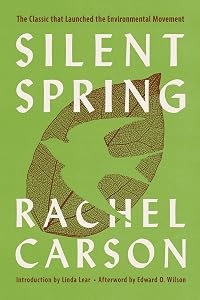
The division began to emerge in the late 1940s with the publication of William Vought's Road to Survival. It is credited as the first modern environmental book and, prior to Silent Spring which it heavily influenced, was the most important book of its type. The Wizard in Mann's show more book is the father of the Green Revolution, Nobel Prize winner Norman Borlaug. He was chosen by Mann as an archetypal Wizard and there are some connections with Vought.
The book is a history of these two men and their work, and seeks to answer the question: which vision is right? Mann says he has long been a Wizard but with global warming and other natural limits looming he isn't so sure anymore. He wrote the book to work it out. There is a lot of thinking and consideration though he never comes firmly down on either side. The lasting value is the concept of Wizard and Prophet, but also a worthwhile history of Vought and Borlaugh. They are not household names but maybe should be better known. As a former Wizard myself, who later became a Prophet, the book questions assumptions and left me adrift. As someone who reads the Reddit forums Futurism and Environmentalism on occasion, it couldn't be a more perfect "Ah hah!" on the fundamental division over competing (and seemingly contradictory) views of the path forward. show less
The division began to emerge in the late 1940s with the publication of William Vought's Road to Survival. It is credited as the first modern environmental book and, prior to Silent Spring which it heavily influenced, was the most important book of its type. The Wizard in Mann's show more book is the father of the Green Revolution, Nobel Prize winner Norman Borlaug. He was chosen by Mann as an archetypal Wizard and there are some connections with Vought.
The book is a history of these two men and their work, and seeks to answer the question: which vision is right? Mann says he has long been a Wizard but with global warming and other natural limits looming he isn't so sure anymore. He wrote the book to work it out. There is a lot of thinking and consideration though he never comes firmly down on either side. The lasting value is the concept of Wizard and Prophet, but also a worthwhile history of Vought and Borlaugh. They are not household names but maybe should be better known. As a former Wizard myself, who later became a Prophet, the book questions assumptions and left me adrift. As someone who reads the Reddit forums Futurism and Environmentalism on occasion, it couldn't be a more perfect "Ah hah!" on the fundamental division over competing (and seemingly contradictory) views of the path forward. show less
This is largely parallel biographies of William Vogt and Norman Borlaug. Vogt is the prophet, warning us of looming catastrophe from a growing human population hitting planetary limits. Borlaug is the wizard, finding ways to make better use of planetary resources to feed a growing human population. These are leaders of two factions, often called doomers and cornucopians. Mann tells in this book many stories from the lives of the prophet and the wizard, and also of several other people involved with their work.
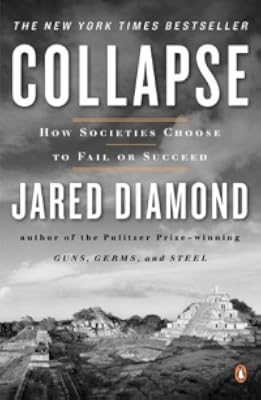
Use more or use less? This is probably the crucial issue of our time. I don't think Mann ever discusses e.g. Jared Diamond's book Collapse. He does mention in the introduction, as I recall, that other societies have crashed in the show more past from hitting resource limits. But this book doesn't look at historical cycles. It's just focused on the present predicament.
I am an old peak oil head - I worked with Ken Deffeyes in the 1970s. I was quite disappointed in the chapter on energy in this book. Certainly the notion that we will someday run out of petroleum, that is a problematic notion. Surely we will stop pumping petroleum out of the ground while there is still some left down there. There's conventional oil, there's tight oil, there are tar sands, gas condensates, ethanol, gas to liquid, coal to liquid, algae... modeling and forecasting require being somewhat precise about what is being modeled and forecast. Mann falls a bit short here. Similarly, looking at the book Limits to Growth... Mann tells how Ehrlich's Population Bomb was thrown together rather hastily. Limits to Growth doesn't look so hasty. If you look at the timelines of their forecasts, it's not clear that we have departed significantly from their trajectories. Mann dances around these details a bit too quickly.
Mann does touch on some of the deeper layers of the puzzle we're confronting. Sure, humans are just animals. But how many animals have figured out evolution by natural selection, for example? Are humans smarter than yeast? That's a classic doomer koan.
Mann points out that e.g. politics is really more the problem than technology. Even if we are smart enough to figure out how to manage the global situation, we don't really have the political organization needed to make it happen. It's not just that we have not implemented some necessary political strategy... really we have no idea what kind of political organization could possibly work. We seem to be collapsing into a political idiocracy as a first step into technical insufficiency.
There are lots of good stories here which very nicely sketch out the dilemma we're facing. Everybody should read this book. It doesn't even try to provide answers. It does a very good job of posing a key question: use more or use less? show less
Use more or use less? This is probably the crucial issue of our time. I don't think Mann ever discusses e.g. Jared Diamond's book Collapse. He does mention in the introduction, as I recall, that other societies have crashed in the show more past from hitting resource limits. But this book doesn't look at historical cycles. It's just focused on the present predicament.
I am an old peak oil head - I worked with Ken Deffeyes in the 1970s. I was quite disappointed in the chapter on energy in this book. Certainly the notion that we will someday run out of petroleum, that is a problematic notion. Surely we will stop pumping petroleum out of the ground while there is still some left down there. There's conventional oil, there's tight oil, there are tar sands, gas condensates, ethanol, gas to liquid, coal to liquid, algae... modeling and forecasting require being somewhat precise about what is being modeled and forecast. Mann falls a bit short here. Similarly, looking at the book Limits to Growth... Mann tells how Ehrlich's Population Bomb was thrown together rather hastily. Limits to Growth doesn't look so hasty. If you look at the timelines of their forecasts, it's not clear that we have departed significantly from their trajectories. Mann dances around these details a bit too quickly.
Mann does touch on some of the deeper layers of the puzzle we're confronting. Sure, humans are just animals. But how many animals have figured out evolution by natural selection, for example? Are humans smarter than yeast? That's a classic doomer koan.
Mann points out that e.g. politics is really more the problem than technology. Even if we are smart enough to figure out how to manage the global situation, we don't really have the political organization needed to make it happen. It's not just that we have not implemented some necessary political strategy... really we have no idea what kind of political organization could possibly work. We seem to be collapsing into a political idiocracy as a first step into technical insufficiency.
There are lots of good stories here which very nicely sketch out the dilemma we're facing. Everybody should read this book. It doesn't even try to provide answers. It does a very good job of posing a key question: use more or use less? show less
This is a book about the "fathers" of the environmental movement and the Green Revolution—respectively William Vogt and Norman Borlaug. It is written by Charles Mann, also the author of "1491" and "1493," about the pre- and post-Colonial Americas.
Some of you may already find the premise questionable: a book written by a white man about two white men that "shaped" the 20th century relationship regarding human relationship with land. Yes, the book does fall into this common category of patriarchal history.
Mann is an entertaining writer. He often goes off on tangents leaving the reader wondering, "and how will this relate?" And, inevitably, it does (especially with a book so broad is scope).
In some ways, I was born into the debate for show more which Mann has created archetypes. The archetypes are pretty catchy—if you have to choose between "wizard," or "prophet," well, they both sound pretty cool!
I'm now in the middle of David Graeber and David Wengrow's "The Dawn of Everything," a sweeping history that took more than ten years to write.They ask a lot of questions about the assumptions behind the way that we speak about the role of agriculture in the arc of human history (and pre-history). I can't help but wonder if "The Wizard and the Prophet" will be disrupted by this new line of inquiry. In some ways, they are only tangentially related, in that Mann is mostly concerned with the 20th century, when Graeber and Wengrow are righting about ten millennia back. That said, Mann's background is in pre-history, and there are a number of hints to that domain within the text.
Another way that "The Dawn of Everything" pokes holes in the premise of "The Wizard and the Prophet" is by making fun of the Great Man archetype of historiography. It may be entertaining to write as though we can pinpoint an individual person that shaped history, but is this how things actually work? Well, not really. "Influential" could be said to be more a product of their contexts than nodal agents.
Meta-analysis aside, if you're interested in one origin story between the face-off between techno-utopians and deep greens, this is one way to sum things up. Increasingly though, it seems to me that this dichotomy is falling away. For example, people such as sci-fi author Kim Stanley Robinson have pointed out that we're already in the midst geo-engineering the planet, so it's not as though geo-engineering is off the table anymore (by definition, anthropogenic climate change is a form of geo-engineering). show less
Some of you may already find the premise questionable: a book written by a white man about two white men that "shaped" the 20th century relationship regarding human relationship with land. Yes, the book does fall into this common category of patriarchal history.
Mann is an entertaining writer. He often goes off on tangents leaving the reader wondering, "and how will this relate?" And, inevitably, it does (especially with a book so broad is scope).
In some ways, I was born into the debate for show more which Mann has created archetypes. The archetypes are pretty catchy—if you have to choose between "wizard," or "prophet," well, they both sound pretty cool!
I'm now in the middle of David Graeber and David Wengrow's "The Dawn of Everything," a sweeping history that took more than ten years to write.They ask a lot of questions about the assumptions behind the way that we speak about the role of agriculture in the arc of human history (and pre-history). I can't help but wonder if "The Wizard and the Prophet" will be disrupted by this new line of inquiry. In some ways, they are only tangentially related, in that Mann is mostly concerned with the 20th century, when Graeber and Wengrow are righting about ten millennia back. That said, Mann's background is in pre-history, and there are a number of hints to that domain within the text.
Another way that "The Dawn of Everything" pokes holes in the premise of "The Wizard and the Prophet" is by making fun of the Great Man archetype of historiography. It may be entertaining to write as though we can pinpoint an individual person that shaped history, but is this how things actually work? Well, not really. "Influential" could be said to be more a product of their contexts than nodal agents.
Meta-analysis aside, if you're interested in one origin story between the face-off between techno-utopians and deep greens, this is one way to sum things up. Increasingly though, it seems to me that this dichotomy is falling away. For example, people such as sci-fi author Kim Stanley Robinson have pointed out that we're already in the midst geo-engineering the planet, so it's not as though geo-engineering is off the table anymore (by definition, anthropogenic climate change is a form of geo-engineering). show less
The best book I have read for a long time. Packed full of deeply interesting ideas and beautifully written. One the one hand, examines the ecological and conservation ideas championed and even originated by William Vogt, that we must live in harmony with the national world and respect the limits to carrying capacity of our environment. On the other, traces the history of the green revolution led by Norman Borlaug in the face of great difficulty, and the driving belief that science can enable us to live in a world with 10 billion people. Fascinating in particular about food, water, and our climate, and the possibility that we can address climate change before it wipes us out. Must re-read.
Members
- Recently Added By
Lists

Habitat Hero books
37 works; 1 member
Author Information

21+ Works 13,242 Members
Charles C. Mann is a correspondent for The Atlantic Monthly, Science, and Wired. He has also written for Fortune, The New York Times, Smithsonian, Technology Review, Vanity Fair, The Washington Post, the television network HBO, and the television series Law and Order. He has received writing awards from the American Bar Association, the American show more Institute of Physics, the Alfred P. Sloan Foundation, and the Lannan Foundation. He has written or co-written several books including The Second Creation: Makers of the Revolution in 20th-Century Physics, The Aspirin Wars: Money, Medicine, and 100 Years of Rampant Competition, Noah's Choice: The Future of Endangered Species, At Large: The Strange Case of the Internet's Biggest Invasion, and 1493: Uncovering the New World Columbus Created which made The New York Times Best Seller List for 2012. His book, 1491, won the National Academies Communication Award for the best book of the year. (Bowker Author Biography) show less
Awards and Honors
Awards
Common Knowledge
- Original publication date
- 2018
- People/Characters
- William Vought; Norman Borlaug
- Important events
- Green Revolution; Environmental destruction
Classifications
- Genres
- Science & Nature, General Nonfiction, Nonfiction, Biography & Memoir, History
- DDC/MDS
- 363.70092 — Society, government, & culture Social problems and social services Public Safety - Police, Crime Investigation Environmental Issues - Pollution, Recycling, Global Warming Biography; History by Place Biography
- LCC
- GE56 .V64 .M36 — Geography, Anthropology and Recreation Environmental Sciences Environmental sciences
- BISAC
Statistics
- Members
- 611
- Popularity
- 47,895
- Reviews
- 23
- Rating
- (4.21)
- Languages
- Chinese, Dutch, English
- Media
- Paper, Audiobook, Ebook
- ISBNs
- 15
- ASINs
- 4