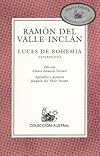
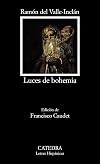
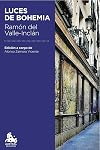
Bohemian Lights
by Ramón del Valle-Inclán
On This Page
Description
A tragic spook of the literary life of the time, Luces de bohemia reveals to us the magical universe of the great writer who was Valle-Inclán: exaggerated characters and grotesque situations take place throughout the two days in which the blind poet Max Estrella, Along with his Latino friend and the rest of the nocturnal characters swarm through the most sordid streets of Madrid. When reality degrades, the farce appears and, already in a second level, the grotesque.Tags
Recommendations




















Member Reviews
Ramón del Valle Inclán lost an arm after injuring it in a fight. I read one account of this incident that blamed it all on an infection caused by his cuff link piercing his wrist skin, and another that denied the cuff link story and cited medical evidence (or was it just medical hearsay) that proved that the fight was more serious than a mere scratch on the wrist. Whatever the cause of the demise of his left arm, for some reason I've had trouble separating him in my mind from the one armed man from The Fugitive. I think I remember the one armed man having a beard, as did Valle-Inclán. Maybe that was it. Although now that I look at his picture again, he looks more like a wizard...anyway, losing an arm probably helps your bohemian show more credibility, and maybe it helped him get some free drinks and some extra inspiration for this story.
Luces de bohemia is an esperpento, a term coined by the author for this book of bohemian grotesques. The story behind the name is told near the end of the book when Max Estrella, the tragic protagonist, starts talking about the concave mirrors down at the Callejón del Gato and how the heroes of antiquity reflected in the mirror create the esperpento, with the tragic sentiment of Spanish existence effectively conveyed through a systematically deformed aesthetic. As he puts it, the most beautiful images become absurd when seen through a concave mirror. In his rather sophisticated depiction of the grotesque side of Madrid bohemian life, Valle-Inclán follows in the footsteps of men like Quevedo (who used the picaresque genre as a vehicle to play with language in some remarkable ways in El buscón) and Francisco Goya (who painted some truly jarring images of the horrors of war and the general vileness of human interaction). The esperpento is written in dialogue, but with fourteen acts originally published in serial form, it's not a play in the traditional sense of the word. I think more than anything the dialogue form gives the author the opportunity to fully immerse the reader in the language of the bars, jails, back rooms and streets where Max Estrella lives and dies, often accompanied by his drinking buddy Don Latino de Hispalis.
Max himself (full name Máximo Estrella) is based on a real person, the poet Alejandro Sawa, who was a friend of both Valle-Inclán and Rubén Darío. The esperpento begins at home, with Max suggesting to his French wife that they commit suicide after he receives word that he's lost his job as a writer for a newspaper and sees no reason to go on living. His wife wants him to stay alive for the sake of their daughter, and as they're talking about this Latino shows up smelling of booze. He wants Max to go with him down to the bookstore where a man named Zaratustra has sold a handful of copies of Max's book of poems for a pittance. After unsuccessfully angling for more money, Max and Latino move on to the bar, have some drinks, wander the streets, run into some young modernist grotesques who idolize a certain Nicaraguan poet, and end up in jail (well, Latino doesn't, but Max does). In jail Max meets a Catalan proletarian who's in jail for refusing to go to war. Eventually Max is released and he talks to the minister whom he knows from his younger days and who offers him some dirty government money, money that Max pathetically accepts. Then they go hang out with Rubén Darío himself, and then they meet some prostitutes...well, they basically spend the whole esperpento going from place to place, meeting a variety of grotesques against a backdrop of Madrid where social issues are tearing the city apart. The military and the republican guard are patrolling the streets and people are getting shot and killed as Max presses on toward his final fate. In the end, the great star of Madrid literature lies dead in the entryway to his tenement, and Rubén Darío reappears to have a final discussion with the author himself, who appears in the form of the Marqués de Bradomín, a pseudo-autobiographical character from another one of Valle-Inclán's books.
The language was really difficult throughout the play, and I sometimes felt like I was looking at the glossary so often that I was missing the essential pleasure of the dialogues. I'm just not that up on early 20th century Madrid slang. I did, however, truly enjoy the way reality was distorted in a way that spared no one. It was fun to see a Rubén Darío grotesque, for example, and his character still retained a certain beauty and dignity even after getting the concave mirror treatment. Max too was a remarkable character, and I was inspired to go and track down Alejandro Sawa's last book, the one published after his death and the one Max's friends want to publish after his death. The distorted depiction of real people from Valle-Inclán's Madrid really appealed to me, and I'd have to say that I entirely approve of the esperpento genre.
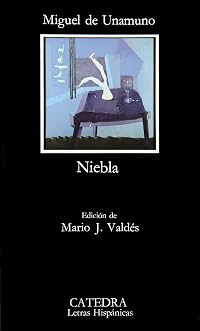
I read this right after re-readin Unamuno's Niebla, and I was struck by how similar the two books were in terms of their structure: in both cases, a man leaves his house at the beginning of the book and wanders around having dialogues with people. Then at the end the author steps in and discusses his fictional creation with one of the characters. Also, both Augusto Pérez and Max Estrella die deaths that can easily be interpreted as self-inflicted. Maybe if the characters in Niebla went down to the Callejón del Gato and spent some time in the mirror gallery, the casual observer would see them as Max, Latino and company.
I also started thinking about another book of grotesques written around the same time as this first esperpento: Sherwood Anderson's Winesburg, Ohio. At the beginning of that book one of his characters gives his own definition of the grotesque:
"...in the beginning when the world was young there were a great many thoughts but no such thing as a truth. Man made the truths himself and each truth was a composite of a great many vague thoughts. All about in the world were the truths and they were all beautiful.
The old man had listed hundreds of the truths in his book. I will not try to tell you of all of them. There was the truth of virginity and the truth of passion, the truth of wealth and of poverty, of thrift and of profligacy, of carelessness and abandon. Hundreds and hundreds were the truths and they were all beautiful.
And then the people came along. Each as he appeared snatched up one of the truths and some who were quite strong snatched up a dozen of them.
It was the truths that made the people grotesques. The old man had quite an elaborate theory concerning the matter. It was his notion that the moment one of the people took one of the truths to himself, called it his truth, and tried to live his life by it, he became a grotesque and the truth he embraced became a falsehood."
The more I thought about it, the more I became intrigued as to whether it would be possible to apply the Anderson definition of the grotesque to the characters of Valle-Inclán's esperpento. In some cases it was almost too easy: the gaggle of modernists converted into grotesques by their passionate embrace of the truth of the Darío Parnassus, Latino made grotesque by snatching up as many truths as he could, the truth of capital and the truth of greed...even Max Estrella, clinging on to the truth of Paris and the bohemian existence. It wasn't a bad fit, and that made me happy. Why did these two men become inspired by the idea of a book of grotesques in the early 20s, one in middle America and one in Spain? Whatever the reason, they both produced works of literature that I greatly enjoyed. show less
Luces de bohemia is an esperpento, a term coined by the author for this book of bohemian grotesques. The story behind the name is told near the end of the book when Max Estrella, the tragic protagonist, starts talking about the concave mirrors down at the Callejón del Gato and how the heroes of antiquity reflected in the mirror create the esperpento, with the tragic sentiment of Spanish existence effectively conveyed through a systematically deformed aesthetic. As he puts it, the most beautiful images become absurd when seen through a concave mirror. In his rather sophisticated depiction of the grotesque side of Madrid bohemian life, Valle-Inclán follows in the footsteps of men like Quevedo (who used the picaresque genre as a vehicle to play with language in some remarkable ways in El buscón) and Francisco Goya (who painted some truly jarring images of the horrors of war and the general vileness of human interaction). The esperpento is written in dialogue, but with fourteen acts originally published in serial form, it's not a play in the traditional sense of the word. I think more than anything the dialogue form gives the author the opportunity to fully immerse the reader in the language of the bars, jails, back rooms and streets where Max Estrella lives and dies, often accompanied by his drinking buddy Don Latino de Hispalis.
Max himself (full name Máximo Estrella) is based on a real person, the poet Alejandro Sawa, who was a friend of both Valle-Inclán and Rubén Darío. The esperpento begins at home, with Max suggesting to his French wife that they commit suicide after he receives word that he's lost his job as a writer for a newspaper and sees no reason to go on living. His wife wants him to stay alive for the sake of their daughter, and as they're talking about this Latino shows up smelling of booze. He wants Max to go with him down to the bookstore where a man named Zaratustra has sold a handful of copies of Max's book of poems for a pittance. After unsuccessfully angling for more money, Max and Latino move on to the bar, have some drinks, wander the streets, run into some young modernist grotesques who idolize a certain Nicaraguan poet, and end up in jail (well, Latino doesn't, but Max does). In jail Max meets a Catalan proletarian who's in jail for refusing to go to war. Eventually Max is released and he talks to the minister whom he knows from his younger days and who offers him some dirty government money, money that Max pathetically accepts. Then they go hang out with Rubén Darío himself, and then they meet some prostitutes...well, they basically spend the whole esperpento going from place to place, meeting a variety of grotesques against a backdrop of Madrid where social issues are tearing the city apart. The military and the republican guard are patrolling the streets and people are getting shot and killed as Max presses on toward his final fate. In the end, the great star of Madrid literature lies dead in the entryway to his tenement, and Rubén Darío reappears to have a final discussion with the author himself, who appears in the form of the Marqués de Bradomín, a pseudo-autobiographical character from another one of Valle-Inclán's books.
The language was really difficult throughout the play, and I sometimes felt like I was looking at the glossary so often that I was missing the essential pleasure of the dialogues. I'm just not that up on early 20th century Madrid slang. I did, however, truly enjoy the way reality was distorted in a way that spared no one. It was fun to see a Rubén Darío grotesque, for example, and his character still retained a certain beauty and dignity even after getting the concave mirror treatment. Max too was a remarkable character, and I was inspired to go and track down Alejandro Sawa's last book, the one published after his death and the one Max's friends want to publish after his death. The distorted depiction of real people from Valle-Inclán's Madrid really appealed to me, and I'd have to say that I entirely approve of the esperpento genre.
I read this right after re-readin Unamuno's Niebla, and I was struck by how similar the two books were in terms of their structure: in both cases, a man leaves his house at the beginning of the book and wanders around having dialogues with people. Then at the end the author steps in and discusses his fictional creation with one of the characters. Also, both Augusto Pérez and Max Estrella die deaths that can easily be interpreted as self-inflicted. Maybe if the characters in Niebla went down to the Callejón del Gato and spent some time in the mirror gallery, the casual observer would see them as Max, Latino and company.
I also started thinking about another book of grotesques written around the same time as this first esperpento: Sherwood Anderson's Winesburg, Ohio. At the beginning of that book one of his characters gives his own definition of the grotesque:
"...in the beginning when the world was young there were a great many thoughts but no such thing as a truth. Man made the truths himself and each truth was a composite of a great many vague thoughts. All about in the world were the truths and they were all beautiful.
The old man had listed hundreds of the truths in his book. I will not try to tell you of all of them. There was the truth of virginity and the truth of passion, the truth of wealth and of poverty, of thrift and of profligacy, of carelessness and abandon. Hundreds and hundreds were the truths and they were all beautiful.
And then the people came along. Each as he appeared snatched up one of the truths and some who were quite strong snatched up a dozen of them.
It was the truths that made the people grotesques. The old man had quite an elaborate theory concerning the matter. It was his notion that the moment one of the people took one of the truths to himself, called it his truth, and tried to live his life by it, he became a grotesque and the truth he embraced became a falsehood."
The more I thought about it, the more I became intrigued as to whether it would be possible to apply the Anderson definition of the grotesque to the characters of Valle-Inclán's esperpento. In some cases it was almost too easy: the gaggle of modernists converted into grotesques by their passionate embrace of the truth of the Darío Parnassus, Latino made grotesque by snatching up as many truths as he could, the truth of capital and the truth of greed...even Max Estrella, clinging on to the truth of Paris and the bohemian existence. It wasn't a bad fit, and that made me happy. Why did these two men become inspired by the idea of a book of grotesques in the early 20s, one in middle America and one in Spain? Whatever the reason, they both produced works of literature that I greatly enjoyed. show less
Publicada en el año 1920, no se estrenaría su representación hasta el año 1970 en España. Se trata de una de las obras teatrales más importantes de la literatura de nuestro país, y de las más destacas del escritor y dramaturgo Ramón del Valle-Inclán. Con ella, inaugura un nuevo género teatral que él mismo denomina 'El Esperpento', esto es, una visión exagerada y distorsionada de la realidad.
Como era frecuente en los autores del momento, la crítica social y el compromiso está arraigada en cada una de las palabras e ideas plasmadas en esta compleja sátira sobre la división de clases, los poetas, la política y el abuso del poder. Las escenas son numerosas, y los lugares donde se desarrollan la trama varían show more continuamente. Además, la gran cantidad de personajes que interactúan entre sí en un mismo momento supone un guion de difícil interpretación.
Max Estrella, es el protagonista de la obra. Se narran las últimas horas de su vida, ya anciano, miserable y ciego, cuyo reconocimiento forma parte de un pasado remoto. Max se pierde por las calles de un Madrid oscuro, hambriento y sórdido, y se encuentra con diferentes personajes de la bohemia madrileña de aquel momento.
La figura de Max refleja la parábola trágica y grotesca de la imposibilidad de vivir en un país deforme, injusto y opresivo como era la España de la Restauración. show less
Castizo, cómico y trágico. Se lee en un soplo y queda para siempre.
Genial.
Genial.
8423995879
Desde luego, Valle no pretendía hacer reir. La deformación que es característica esencial del "esperpento" no está al servicio de la comicidad, como pudiera parecer en un primer acercamiento ingenuo, sino al contrario, de la tragedia. Como acertadamente indican el editor y el adaptador de la edición didáctica, Valle nos pone ante la tragedia de una España que no es capaz de levantarse ni siquiera cuando las cosas se le ponen bien. En efecto, Max Estrella, detenido arbitrariamente y borracho por completo, consigue (de forma absurda) ver al Ministro de la Gobernación, que resulta ser un viejo amigo y que le señala un sueldo, además de darle directamente algún dinero. Es su salvación; con esto podría dar de comer a su mujer y show more su hija, e incluso publicar sus poemas, al parecer muy buenos. Pero el dinero se lo gasta inmediatamente convidando a cenar a Rubén Darío (que no lo necesita) y él mismo muere víctima de sus propios excesos esa misma noche. Desde que Max, acompañado por el ambivalente Latino de Híspalis (traidor, pero leal), sale de su buhardilla hasta que viene a morir al mismo portal de su casa tiene ocasión de toparse desde el mentado Ministro hasta la más tirada putilla, pasando por guardias, funcionarios, periodistas, bohemios, grandes señores, obreros, activistas, pobres y toda una fauna. Me ha estremecido, en particular, la madre a la que, en una carga policial, le han matado a su hijo pequeño y sólo grita "¡Maricas, cabrones!" mientras sus vecinos, tan pobres como ella, reflexionan sobre el caso con un cinismo repugnante. Es una obra de calado lento, con muchos recovecos, construida con todo detalle, y que deja un poso amargo y triste.
Lo compré para el día del libro y lo leí de dos tirones. Por cierto, muy buena la introducción y casi mejor el taller de lectura del final, incluyendo un útil glosario. show less
Lo compré para el día del libro y lo leí de dos tirones. Por cierto, muy buena la introducción y casi mejor el taller de lectura del final, incluyendo un útil glosario. show less
Jul 8, 2011 (Edited)Spanish
Ramón María del Valle-Inclán (Villanueva de Arosa, Pontevedra, 1866-Santiago de Compostela, 1936), presidente del Ateneo de Madrid y director de la Academia de Bellas Artes de Roma, fue una de las personalidades más interesantes de la generación del 98. Gran poeta, forjador del idioma, creador del esperpento y autor de novelas históricas, Valle-Inclán hizo el mejor teatro de su tiempo.
Aquí el espejo cóncavo es una conciencia dolorida, una conciencia moral que escandaliza o aterra. Resulta patetico que quien vea la verdad sea un ciego, Max Estrella, soñador perdido en un Madrid absurdo y hambriento.
Aquí el espejo cóncavo es una conciencia dolorida, una conciencia moral que escandaliza o aterra. Resulta patetico que quien vea la verdad sea un ciego, Max Estrella, soñador perdido en un Madrid absurdo y hambriento.
Oct 31, 2021Spanish
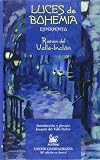
Facsímil.
Edición conmemorativa de la XLVI Feria del libro antiguo y de ocasión de Madrid
Edición conmemorativa de la XLVI Feria del libro antiguo y de ocasión de Madrid
Jan 6, 2025Spanish
Members
- Recently Added By
Lists

España en cien libros
100 works; 1 member
Author Information

238+ Works 3,248 Members
Galician by birth, Madrilenian by adoption, Ramon del Valle-Inclan was Spain's foremost prose stylist of the twentieth century. He is remembered in Spain almost as much for the colorful Bohemian persona he adopted and made famous as for his writings. Valle-Inclan began his career as a decadent aesthete, much influenced by the fin-de-siecle French show more symbolists. The four novels he entitled Sonatas (1902--05)---one for each season of the year---recount four erotic episodes in the life of the Marques de Bradomin, an "ugly, Catholic, sentimental Don Juan." His dramatic trilogy of "barbaric comedies"---Heraldic Eagle (1907), Romance of Wolves (1908), and Silver Face (1922)---powerfully evokes the primitive grandeur of his native Galicia. Long considered unperformable on account of their violence and obscenity, these plays have enjoyed great critical and popular success since Franco's death. The Lamp of Marvels (1916) contains Valle's aesthetic philosophy. The last stage of Valle's career was marked by the creation of a new type of novel he christened the esperpento: a stylized, dehumanized, highly objective satiric form well suited to express the crisis in values occurring all over Europe immediately after World War I. (Bowker Author Biography) show less
Awards and Honors
Notable Lists
Series
Belongs to Publisher Series
Common Knowledge
- Canonical title
- Bohemian Lights
- Original title
- Luces de bohemia
- Original publication date
- 1920
- Original language
- Spanish
Classifications
Statistics
- Members
- 717
- Popularity
- 39,619
- Reviews
- 13
- Rating
- (4.07)
- Languages
- English, Portuguese, Spanish
- Media
- Paper, Ebook
- ISBNs
- 50
- ASINs
- 10