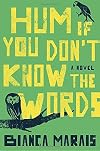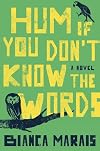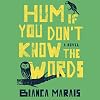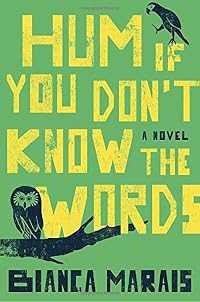
Hum If You Don't Know the Words
by Bianca Marais
On This Page
Description
"Perfect for readers of The Secret Life of Bees and The Help, a perceptive and searing look at Apartheid-era South Africa, told through one unique family brought together by tragedy. Life under Apartheid has created a secure future for Robin Conrad, a ten-year-old white girl living with her parents in 1970s Johannesburg. In the same nation but worlds apart, Beauty Mbali, a Xhosa woman in a rural village in the Bantu homeland of the Transkei, struggles to raise her children alone after her show more husband's death. Both lives have been built upon the division of race, and their meeting should never have occurred. Until the Soweto Uprising, in which a protest by black students ignites racial conflict, alters the fault lines on which their society is built, and shatters their worlds when Robin's parents are left dead and Beauty's daughter goes missing. After Robin is sent to live with her loving but irresponsible aunt, Beauty is hired to care for Robin while continuing the search for her daughter. In Beauty, Robin finds the security and family that she craves, and the two forge an inextricable bond through their deep personal losses. But Robin knows that if Beauty finds her daughter, Robin could lose her new caretaker forever, so she makes a desperate decision with devastating consequences. Her quest to make amends and find redemption is a journey of self-discovery in which she learns the harsh truths of the society that once promised her protection. Told through Beauty and Robin's alternating perspectives, the interwoven narratives create a rich and complex tapestry of the emotions and tensions at the heart of Apartheid-era South Africa. Hum if You Don't Know the Words is a beautifully rendered look at loss, racism, and the creation of family"-- show lessTags
Recommendations




Member Reviews
"If people didn’t come in the right colors, how would we know who to be scared of?"
Hum If You Don’t Know the Words took place in 1970s Johannesburg, South Africa, during Apartheid rule. When nine-year-old Robin Conrad’s parents are tragically killed, she is sent to live with her aunt who, though loves her niece dearly, chooses to keep her job as a flight attendant. In her absence, Beauty Mbali, a Xhosa woman from a rural village, cares for Robin as she searches for her own daughter after the Soweto Uprising. Told through alternating perspectives, both Robin and Beauty find in the other what they desperately craved – love, acceptance, security, and family.
It’s very hard to put into words exactly how beautiful this book was show more (which is probably why I’ve been sitting on this review for the past few weeks). I loved both character’s perspectives about their lives and commentaries on race, family, and their desire to be happy.
Young Robin was so innocent and naïve, yet so willing to help others. She was curious about the world and didn’t always realize the privilege she was born with. It was interesting to see the forces of nature versus nurture when it came to her views on racism: namely, her parents had always hinted at the differences between the two races – whites and blacks – so, as a young and impressionable girl, those thoughts became ingrained in her subconsciousness. However, when under the care of her Aunt Edith and Beauty, she began to see the world a little differently:
"Besides, no matter how much I studied the bathroom and the cups and plates, I couldn’t see anything different about them after Beauty had used them. It seemed they were in no way tarnished or tainted by her touch. It was confusing because my mother had been so adamant about Mabel never using our things that I was sure she dirtied them in a way that could never be cleaned."
Beauty, on the other hand, was both strong and determined in her quest to find her daughter who went missing after the Soweto Uprising. Although she did not agree with her daughter’s view that a violent overthrow of the government was the way to take power away from the white minority, she loved her daughter and only wanted to see her safely home. On the way, she meets Robin and forms a relationship with the girl filled with curiosity and grows to love and care for her.
“Fear is not a weakness, you know.”
“What?”
“You do not need to shout at your sister because she is afraid. Fear is what makes us human and it is in overcoming fear that we show our strength.”
“Brave people don’t get scared.”
“I do not agree with you. I think that brave people do get scared and what makes them strong is admitting their weakness and learning to accept it while still carrying on regardless.”
Hum If You Don’t Know the Words was a powerful story about hope and redemption, about triumph and overcoming fear, and about two people from seemingly different walks of life learning to love each other like family.
Thank you to NetGalley and PENGUIN GROUP (Putnam) for a copy of this eBook in exchange for an honest review.
Check out this review on my blog!
https://allisonsadventuresintowonderlands.wordpress.com/2017/11/16/bianca-marais... show less
Hum If You Don’t Know the Words took place in 1970s Johannesburg, South Africa, during Apartheid rule. When nine-year-old Robin Conrad’s parents are tragically killed, she is sent to live with her aunt who, though loves her niece dearly, chooses to keep her job as a flight attendant. In her absence, Beauty Mbali, a Xhosa woman from a rural village, cares for Robin as she searches for her own daughter after the Soweto Uprising. Told through alternating perspectives, both Robin and Beauty find in the other what they desperately craved – love, acceptance, security, and family.
It’s very hard to put into words exactly how beautiful this book was show more (which is probably why I’ve been sitting on this review for the past few weeks). I loved both character’s perspectives about their lives and commentaries on race, family, and their desire to be happy.
Young Robin was so innocent and naïve, yet so willing to help others. She was curious about the world and didn’t always realize the privilege she was born with. It was interesting to see the forces of nature versus nurture when it came to her views on racism: namely, her parents had always hinted at the differences between the two races – whites and blacks – so, as a young and impressionable girl, those thoughts became ingrained in her subconsciousness. However, when under the care of her Aunt Edith and Beauty, she began to see the world a little differently:
"Besides, no matter how much I studied the bathroom and the cups and plates, I couldn’t see anything different about them after Beauty had used them. It seemed they were in no way tarnished or tainted by her touch. It was confusing because my mother had been so adamant about Mabel never using our things that I was sure she dirtied them in a way that could never be cleaned."
Beauty, on the other hand, was both strong and determined in her quest to find her daughter who went missing after the Soweto Uprising. Although she did not agree with her daughter’s view that a violent overthrow of the government was the way to take power away from the white minority, she loved her daughter and only wanted to see her safely home. On the way, she meets Robin and forms a relationship with the girl filled with curiosity and grows to love and care for her.
“Fear is not a weakness, you know.”
“What?”
“You do not need to shout at your sister because she is afraid. Fear is what makes us human and it is in overcoming fear that we show our strength.”
“Brave people don’t get scared.”
“I do not agree with you. I think that brave people do get scared and what makes them strong is admitting their weakness and learning to accept it while still carrying on regardless.”
Hum If You Don’t Know the Words was a powerful story about hope and redemption, about triumph and overcoming fear, and about two people from seemingly different walks of life learning to love each other like family.
Thank you to NetGalley and PENGUIN GROUP (Putnam) for a copy of this eBook in exchange for an honest review.
Check out this review on my blog!
https://allisonsadventuresintowonderlands.wordpress.com/2017/11/16/bianca-marais... show less
Apartheid. It's a word we here in the US have heard (if we're old enough or perhaps through history in school) but we don't actually know much about the reality of it. We know that it means systemic racism, segregation, inequality, and racial violence. It means white-minority rule enforced by brutality and limited suffrage. It means the imprisonment of Nelson Mandela. It means the murder of Stephen Biko. But of the major and minor clashes and the fight for equality and representation over the almost 50 years that it was enshrined in South African politics and law, most of us know very little. Until I read Bianca Marais' Hum If You Don't Know the Words, I didn't remember anything about the 1976 Soweto Uprising, a peaceful, 20,000 strong show more student-led demonstration that the government suppressed by firing on school children, killing and injuring many (official accounts and the presumed actual count vary wildly). This important and horrific event forms the backbone of Marais' well written debut novel.
Nine, almost ten, year old Robin lives with her parents in a mining town outside of Johannesburg. Her life is one of privilege and whiteness and the biggest divide in her world is that between the Dutch Afrikaner children and herself. She rides her bike, schemes about how she can join the boys-only gang in the neighborhood, and plays hopscotch. In short, she's living a normal, untroubled childhood. Until the night that her parents go to an event and don't come home, leaving Robin an orphan in the care of her glamorous, single, flight attendant Aunt Edith.
Beauty Mbali is a single mother who has struggled to raise her children after her husband's death. She is a teacher in the Transkei, where she grew up a member of the Xhosa people. Beauty is strong and smart but she is not spared from the unrest of the nation even in her rural home. She receives a letter from her brother, who has taken in Beauty's 17 year old daughter Nomsa so that she can get a better education than is offered her in the rural Transkei. The letter alarms Beauty, who leaves her sons behind and illegally undertakes the arduous journey to Johannesburg to save her daughter, only to arrive in the middle of the Soweto Uprising. In the aftermath of the uprising, Nomsa, who was one of the student leaders and organizers, is missing and Beauty will do anything to find her. This is how she comes to be Robin's caretaker whenever Aunt Edith is flying elsewhere in the world. Caring for Robin gives her the papers to stay in the city and search for her daughter.
The novel alternates between Robin and Beauty narrating their own chapters. With the first person narration, the reader can see and understand the deep sorrow and fear that both Robin and Beauty feel for their respective situations. Robin's narration is often immature, just as she herself is but it also shows how she is developing opinions and beliefs, ones that are formed by the love and care of the people who surround her, all of whom are "others" of some sort, Aunt Edith's gay friends, the Jewish family in the building whose young son is her only friend, and, of course, Beauty. Her lack of understanding of the outside forces of Apartheid, her refusal to embrace the racism of the time, and her growing humanity are hopeful, shining pieces of her character. And her delightful malapropisms give the novel some much needed levity. Beauty's narration is gorgeously wrought, a mother desperate for her daughter no matter the consequences. Her own growing understanding of what drove Nomsa and her pride in that fight, even if she wished that her daughter had just put her head down and avoided such attention, was beautifully rendered. Despite the hardship and tragedy and uncertainty she has faced, Beauty remains a woman full of love, for her children, for her people, and even for orphaned little Robin.
This is a story of injustice, intolerance, and prejudice. But it's also a story of grief, love, and resilience. The violence shown towards homosexuals and Jews provides additional evidence of the bigotry and racism of the time but it might also serve to dilute the bigger issue of the world of Apartheid and the story didn't really need additional evidence. Robin's inquisitive nature makes it a guarantee that she would initially want to help Beauty find Nomsa but the caper-like events at the end were completely unrealistic and felt a little like Harriet the Spy with far bigger stakes. Over all though, this was a wonderful read, one that sucked me in and kept me turning the pages and if it was a little hard to suspend disbelief at the end, what came before made it forgivable. show less
Nine, almost ten, year old Robin lives with her parents in a mining town outside of Johannesburg. Her life is one of privilege and whiteness and the biggest divide in her world is that between the Dutch Afrikaner children and herself. She rides her bike, schemes about how she can join the boys-only gang in the neighborhood, and plays hopscotch. In short, she's living a normal, untroubled childhood. Until the night that her parents go to an event and don't come home, leaving Robin an orphan in the care of her glamorous, single, flight attendant Aunt Edith.
Beauty Mbali is a single mother who has struggled to raise her children after her husband's death. She is a teacher in the Transkei, where she grew up a member of the Xhosa people. Beauty is strong and smart but she is not spared from the unrest of the nation even in her rural home. She receives a letter from her brother, who has taken in Beauty's 17 year old daughter Nomsa so that she can get a better education than is offered her in the rural Transkei. The letter alarms Beauty, who leaves her sons behind and illegally undertakes the arduous journey to Johannesburg to save her daughter, only to arrive in the middle of the Soweto Uprising. In the aftermath of the uprising, Nomsa, who was one of the student leaders and organizers, is missing and Beauty will do anything to find her. This is how she comes to be Robin's caretaker whenever Aunt Edith is flying elsewhere in the world. Caring for Robin gives her the papers to stay in the city and search for her daughter.
The novel alternates between Robin and Beauty narrating their own chapters. With the first person narration, the reader can see and understand the deep sorrow and fear that both Robin and Beauty feel for their respective situations. Robin's narration is often immature, just as she herself is but it also shows how she is developing opinions and beliefs, ones that are formed by the love and care of the people who surround her, all of whom are "others" of some sort, Aunt Edith's gay friends, the Jewish family in the building whose young son is her only friend, and, of course, Beauty. Her lack of understanding of the outside forces of Apartheid, her refusal to embrace the racism of the time, and her growing humanity are hopeful, shining pieces of her character. And her delightful malapropisms give the novel some much needed levity. Beauty's narration is gorgeously wrought, a mother desperate for her daughter no matter the consequences. Her own growing understanding of what drove Nomsa and her pride in that fight, even if she wished that her daughter had just put her head down and avoided such attention, was beautifully rendered. Despite the hardship and tragedy and uncertainty she has faced, Beauty remains a woman full of love, for her children, for her people, and even for orphaned little Robin.
This is a story of injustice, intolerance, and prejudice. But it's also a story of grief, love, and resilience. The violence shown towards homosexuals and Jews provides additional evidence of the bigotry and racism of the time but it might also serve to dilute the bigger issue of the world of Apartheid and the story didn't really need additional evidence. Robin's inquisitive nature makes it a guarantee that she would initially want to help Beauty find Nomsa but the caper-like events at the end were completely unrealistic and felt a little like Harriet the Spy with far bigger stakes. Over all though, this was a wonderful read, one that sucked me in and kept me turning the pages and if it was a little hard to suspend disbelief at the end, what came before made it forgivable. show less
"…here I am, sitting in one of the pews of the Regina Mundi church in Rockville--the largest Roman Catholic Church in South Africa--and all around me is proof of the attack that took place here three days ago… How is that the apartheid government claims to be such a religious government? How can they assert that South Africa is a Christian state when its police officers attempt murder in a church? What kind of men fire bullets at terrified children in a house of God?" (97)
Those are the words of Beauty in 1976 when she learns that her teen-age daughter, who went to Johannesburg for an education, is one of the missing after the Soweto Uprising where many young people were injured and several dozen lost their lives. She leaves her sons show more behind and makes the arduous journey to the city where Nomsa disappeared. The same night of the Uprising 9-year-old Robin loses both of her parents in a senseless act of violent retribution. The book alternates between the stories of Robin and Beauty in a very personal story of what it was like to live in an atmosphere of distrust and hate for people of different races. To complicate matters, I learned that eleven different languages were in common use in South Africa which influenced the title.
I expected to love this book but was ultimately disappointed when Robin's story took over the book and became a girl-detective Nancy Drew type of book. I kept looking to make sure I wasn't reading a story written for young adults. Her thoughts and actions were quite advanced for her age and would probably be enjoyed by a middle school reader. The ending became a series of coincidences that had me shaking my head. It was a quick read and I did like the idea and Beauty's story, but I wish I had done more due diligence before I read it as it wasn't really my kind of book after all.
Edit | More show less
Those are the words of Beauty in 1976 when she learns that her teen-age daughter, who went to Johannesburg for an education, is one of the missing after the Soweto Uprising where many young people were injured and several dozen lost their lives. She leaves her sons show more behind and makes the arduous journey to the city where Nomsa disappeared. The same night of the Uprising 9-year-old Robin loses both of her parents in a senseless act of violent retribution. The book alternates between the stories of Robin and Beauty in a very personal story of what it was like to live in an atmosphere of distrust and hate for people of different races. To complicate matters, I learned that eleven different languages were in common use in South Africa which influenced the title.
I expected to love this book but was ultimately disappointed when Robin's story took over the book and became a girl-detective Nancy Drew type of book. I kept looking to make sure I wasn't reading a story written for young adults. Her thoughts and actions were quite advanced for her age and would probably be enjoyed by a middle school reader. The ending became a series of coincidences that had me shaking my head. It was a quick read and I did like the idea and Beauty's story, but I wish I had done more due diligence before I read it as it wasn't really my kind of book after all.
Edit | More show less
Actual rating: 4.5 Stars
"I didn't know what to say in a world where people were hated and attacked for not being the right color, not speaking the right language, not worshipping the right god or not loving the right people; a world where hatred was the common language, and bricks, the only words."
Bianca Marais, Hum If You Don't Know the Words
Hum If You Don't Know the Words is beautifully written and will stay with me for a long time. In this debut novel, Marais addresses race, class, and loss in apartheid-era South Africa in the 70s. The novel took me on an emotional and (at times) heartbreaking journey. However, it also made me smile along the way. Nine-year-old Robin is not your typical kid. She is articulate, perceptive and also show more quite the snoop. Growing up, Robin has been taught blacks are inferior and “bad” people. She knows bad black men were responsible for the brutal murder of her parents. Thankfully, Beauty shows up and proves otherwise. Beauty provides the love, patience, and attention Robin has been seeking all of her young life. Although the book’s main point is mostly about Beauty and Robin’s lives, don’t get it twisted, it also shows how life in apartheid South Africa created a destructive and extremely harsh life for black Africans. This is the first novel I have read about South Africa and apartheid, but it will definitely not be my last. If you would like to get an inkling about life in South Africa in the 70s, I highly recommend this impressive and well-written novel. Oh, and once you read it, you'll understand the meaning of the owl and parrot on the cover. :-)
Thank you to Edelweiss and G.P. Putnam's Sons for an arc of the book in exchange for an honest review. It was an honor! show less
"I didn't know what to say in a world where people were hated and attacked for not being the right color, not speaking the right language, not worshipping the right god or not loving the right people; a world where hatred was the common language, and bricks, the only words."
Bianca Marais, Hum If You Don't Know the Words
Hum If You Don't Know the Words is beautifully written and will stay with me for a long time. In this debut novel, Marais addresses race, class, and loss in apartheid-era South Africa in the 70s. The novel took me on an emotional and (at times) heartbreaking journey. However, it also made me smile along the way. Nine-year-old Robin is not your typical kid. She is articulate, perceptive and also show more quite the snoop. Growing up, Robin has been taught blacks are inferior and “bad” people. She knows bad black men were responsible for the brutal murder of her parents. Thankfully, Beauty shows up and proves otherwise. Beauty provides the love, patience, and attention Robin has been seeking all of her young life. Although the book’s main point is mostly about Beauty and Robin’s lives, don’t get it twisted, it also shows how life in apartheid South Africa created a destructive and extremely harsh life for black Africans. This is the first novel I have read about South Africa and apartheid, but it will definitely not be my last. If you would like to get an inkling about life in South Africa in the 70s, I highly recommend this impressive and well-written novel. Oh, and once you read it, you'll understand the meaning of the owl and parrot on the cover. :-)
Thank you to Edelweiss and G.P. Putnam's Sons for an arc of the book in exchange for an honest review. It was an honor! show less
Another book that I missed in 2017. Thank goodness for book reviews, friends, Librarything, Goodreads, etc that keep my reading lists long and my TBR piles teetering! I'm certainly old enough to know some things about apartheid in South Africa, but I knew nothing about the Soweto Uprising in 1970s Johannesburg. Robin is a nine year old white girl whose parents are murdered, leaving her to live with her aunt who loves her but doesn't want to be tied down. Beauty Mbali, a Xhosa woman living in a rural village raising her children after the death of her husband gets a letter saying that her daughter is in danger. Beauty needs to stay in Johannesburg to continue searching for her daughter who is now missing. Robin needs a caregiver when her show more aunt is traveling, which is how Robin and Beauty start forming a deep bond through both their personal losses. show less
I did enjoy the book, but it wasn't a great book. Some of the scenarios and dialogue were pretty forced, and it felt at times as if scenes or conversations labeled, e.g., "cute conversation between children who misunderstand the things they're talking about" were inserted but weren't really all that well done. The book had just a few too many stumbles of this sort to feel like a really polished book.
I also felt really conflicted about the perspective and the authorship here. I'm all for an author working to inhabit the perspectives of different people, but I felt a little icky about the white privileged author slipping into some of the characters she slips into, even if it's done with (as far as I can tell) generosity and kindness and show more positive intent. I don't think I'm suggesting that she shouldn't have done it or that she didn't do it reasonably well, but just that it made me a little uncomfortable and influenced my reception of the book.
And finally, I would like to've learned more of the history of apartheid and the Soweto uprising. I suppose that's just a disconnect between the author's intent and (part of) my aim here and the author's not really to blame for my mistaken expectations.
I certainly don't regret reading the book. It was a perfectly nice book and I did enjoy parts of it and learn some things I hadn't known from it (or, from Googling them), but it wasn't a book I'll remember especially fondly or that really appealed to me a lot. show less
I also felt really conflicted about the perspective and the authorship here. I'm all for an author working to inhabit the perspectives of different people, but I felt a little icky about the white privileged author slipping into some of the characters she slips into, even if it's done with (as far as I can tell) generosity and kindness and show more positive intent. I don't think I'm suggesting that she shouldn't have done it or that she didn't do it reasonably well, but just that it made me a little uncomfortable and influenced my reception of the book.
And finally, I would like to've learned more of the history of apartheid and the Soweto uprising. I suppose that's just a disconnect between the author's intent and (part of) my aim here and the author's not really to blame for my mistaken expectations.
I certainly don't regret reading the book. It was a perfectly nice book and I did enjoy parts of it and learn some things I hadn't known from it (or, from Googling them), but it wasn't a book I'll remember especially fondly or that really appealed to me a lot. show less
Beautifully written story set in S. Africa during apartheid. Beauty is a black woman searching for her daughter who has gone missing. Robin is a 10-year old white girl who is now living with her aunt after the death of her parents. Her irresponsible and usually drunk aunt leaves Robin for weeks at a time, and hires Beauty to care for her.
Robin initially looks down on Beauty, as this is how she has been taught. But, through the caring of others, and how they treat Beauty, as well as the love and care Beauty shows to Robin changes their lives, and brings out the true meaning of family. Lyrical and touching.
Robin initially looks down on Beauty, as this is how she has been taught. But, through the caring of others, and how they treat Beauty, as well as the love and care Beauty shows to Robin changes their lives, and brings out the true meaning of family. Lyrical and touching.
Members
- Recently Added By
Lists

Fiction: Historical
288 works; 3 members

Allie's List of Books I Want To Read
93 works; 1 member
Author Information
5 Works 965 Members
Common Knowledge
- Important places
- South Africa; Johannesburg, South Africa
- Important events
- Apartheid; Soweto Uprising (1976-06-16)
Classifications
Statistics
- Members
- 363
- Popularity
- 86,614
- Reviews
- 30
- Rating
- (4.07)
- Languages
- Dutch, English, German, Spanish
- Media
- Paper, Audiobook, Ebook
- ISBNs
- 14
- ASINs
- 5