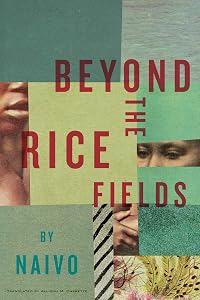
Beyond the Rice Fields
by Naivo
On This Page
Description
Fara and her father's slave, Tsito, have been close since her father bought the boy after his forest village was destroyed. Now in Sahasoa, amongst the cattle and rice fields, everything is new for Tsito, and Fara at last has a companion. But as Tsito looks forward to the bright promise of freedom and Fara, backward to a dark, long-denied family history, a rift opens between them just as British Christian missionaries and French industrialists arrive and violence erupts across the country. show more Love and innocence fall away, and Tsito and Fara's world becomes enveloped by tyranny, superstition, and fear. -- amazon.com show lessTags
Recommendations









Member Reviews
#ReadAroundTheWorld. #Madagascar
"Love is like rice, when you transplant it, it grows, but never in the same way. It retains a bittersweet memory of its first soils. Every time it’s uprooted it dies a little; every time it’s replanted, it loses a piece of its soil. But it also bears fruit"
Beyond the Rice Fields is the first book from Madagascar to be translated into English, although this is from French, not the native Malagasy, so I’m not sure why this took so long. The story is set in the village of Sahasoa and the City of Thousands (Antananarivo), in Madagascar, in the early to mid 19th century before French colonization, during the reign of Queen Ranavalona I (1828-1861). The Queen defended her empire against foreign influence show more and protected the traditional ways. She also persecuted those of the Malagasy that had converted to Christianity with widespread trials by poisoning, the “tangena ordeal,” in which the accused had to swallow three pieces of bird skin and the tangena poison, if they did not vomit up the three pieces or died, they were considered guilty. During her reign, due to the mass purges and killings, warfare and disease, the population of Madagascar was reduced from 5 million in 1833 to 2.5 million in 1839.
The story is about Tsito whose village is destroyed and becomes a slave to a zebu hunter Rama. Tsito falls in love with Fara, Rama’s only daughter, but she believes she is above him as he is a slave. The story takes us through tales of colonialism, the battles between Christianity and the old religion, witchcraft, drama and romance. My favourite character was Fara’s feisty grandmother Bebe.
Despite the interesting cultural and historical background, it was not an easy read. Much of the first two thirds of the book seem to drag along and lack direction. The last third became much more gripping and intense. 3 stars for me. show less
"Love is like rice, when you transplant it, it grows, but never in the same way. It retains a bittersweet memory of its first soils. Every time it’s uprooted it dies a little; every time it’s replanted, it loses a piece of its soil. But it also bears fruit"
Beyond the Rice Fields is the first book from Madagascar to be translated into English, although this is from French, not the native Malagasy, so I’m not sure why this took so long. The story is set in the village of Sahasoa and the City of Thousands (Antananarivo), in Madagascar, in the early to mid 19th century before French colonization, during the reign of Queen Ranavalona I (1828-1861). The Queen defended her empire against foreign influence show more and protected the traditional ways. She also persecuted those of the Malagasy that had converted to Christianity with widespread trials by poisoning, the “tangena ordeal,” in which the accused had to swallow three pieces of bird skin and the tangena poison, if they did not vomit up the three pieces or died, they were considered guilty. During her reign, due to the mass purges and killings, warfare and disease, the population of Madagascar was reduced from 5 million in 1833 to 2.5 million in 1839.
The story is about Tsito whose village is destroyed and becomes a slave to a zebu hunter Rama. Tsito falls in love with Fara, Rama’s only daughter, but she believes she is above him as he is a slave. The story takes us through tales of colonialism, the battles between Christianity and the old religion, witchcraft, drama and romance. My favourite character was Fara’s feisty grandmother Bebe.
Despite the interesting cultural and historical background, it was not an easy read. Much of the first two thirds of the book seem to drag along and lack direction. The last third became much more gripping and intense. 3 stars for me. show less
I discovered this novel in a rather roundabout way. Beyond the Rice Fields is said to be the first novel from Madagascar to be translated into English (and it isn’t even written in Malagasy, it’s written in French), and it comes from a small American publisher called Restless Books. (It had 60-odd books to its name on the day I looked). I’d been reading an article entitled ‘There’s more to homegrown African literature than what Western publishers favour’ at a site called Quartz Africa, which was on about ‘Afropolitan’ authors writing ‘African Books for Western Eyes’:
(All of which I’ve bought for the TBR, except for the last one, which I hadn’t heard of). But there’s criticism of these highly successful authors:
Well, I’m in no position to have an opinion about that, except to say that I’ve tended to enjoy books more when they were written by African authors living in any of the 54 countries in Africa rather than from a university in the US or UK. But (as my reviews show) there are exceptions. A good book is a good book whatever its derivation IMO. But I was very interested to see the books that were named as part of an entire new body of African writing that escapes this closed circuit of damning truisms. And I’d read or read reviews of, or had on the TBR some of the suggested young and adventurous African writers.
*Jennifer Nansubuga Makumbi’s Kintu (Uganda), on the TBR
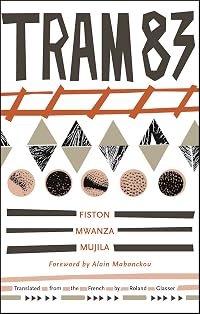
*Fiston Mwanza Mujila’s Tram 83 (Congo), see my review
the first ever Burundian novel in English,
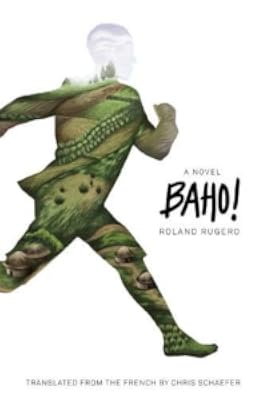
*Roland Rugero’s Baho! on the TBR
the translation from the Portuguese,
*Jose Eduardo Agualusa’s A General Theory of Oblivion, (Angola) (See Stu’s review at Winston’s Dad) and
*(newly purchased as a result of reading this article) Beyond the Rice Fields by Naivo (Naivoharisoa Patrick Ramamonjisoa) from Madagascar.
So, I set about reading Beyond the Rice Fields expecting great things from its young and adventurous writer…
To read the rest of my review please visit https://anzlitlovers.com/2018/04/03/beyond-the-rice-fields-by-naivo-translated-b... show less
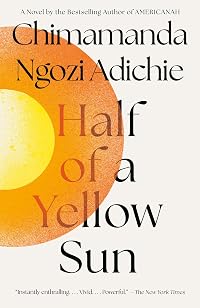
Books like Chimamanda Adichie’s Americanah and Half of a Yellow Sun, Teju Cole’s Open City, Taiye Selasi’s Ghana Must Go and Yaa Gyasi’sshow more
Homegoing have confounded neat divisions between Western and African literary traditions. The Cameroonian novelist Imbolo Mbue captured a million-dollar contract for her first book, Behold the Dreamers. That’s even before it joined the Oprah’s Book Club pantheon this year.
(All of which I’ve bought for the TBR, except for the last one, which I hadn’t heard of). But there’s criticism of these highly successful authors:
Far from advancing narratives with deep roots in local African realities […] many of Africa’s most “successful” writers hawk a superficial, overly diasporic, or even Western-focused vision of the continent.
Well, I’m in no position to have an opinion about that, except to say that I’ve tended to enjoy books more when they were written by African authors living in any of the 54 countries in Africa rather than from a university in the US or UK. But (as my reviews show) there are exceptions. A good book is a good book whatever its derivation IMO. But I was very interested to see the books that were named as part of an entire new body of African writing that escapes this closed circuit of damning truisms. And I’d read or read reviews of, or had on the TBR some of the suggested young and adventurous African writers.
*Jennifer Nansubuga Makumbi’s Kintu (Uganda), on the TBR
*Fiston Mwanza Mujila’s Tram 83 (Congo), see my review
the first ever Burundian novel in English,
*Roland Rugero’s Baho! on the TBR
the translation from the Portuguese,
*Jose Eduardo Agualusa’s A General Theory of Oblivion, (Angola) (See Stu’s review at Winston’s Dad) and
*(newly purchased as a result of reading this article) Beyond the Rice Fields by Naivo (Naivoharisoa Patrick Ramamonjisoa) from Madagascar.
So, I set about reading Beyond the Rice Fields expecting great things from its young and adventurous writer…
To read the rest of my review please visit https://anzlitlovers.com/2018/04/03/beyond-the-rice-fields-by-naivo-translated-b... show less
Ratings
Members
- Recently Added By
Lists

Madagascar
21 works; 2 members
Author Information
2+ Works 87 Members
Some Editions
Awards and Honors
Common Knowledge
- Original title
- Au-delà des rizières
- Original publication date
- 2016
- Important places
- Madagascar
- First words
- Every time I watch the fampitaha, my heart aches, and I can see Sahasoa again, where I spent the first years of my life with the people under the sky.
- Quotations
- Ranaka was not so unscrupulous as to deviate from the ancestors' principles: 'You must not judge the stranger with his yellowish face, but think of his family on the other side of the earth.' Remember that, children: every pe... (show all)rson from far away carries in him the sacred virtues of his own kind, and thus deserves respect.
White men's beliefs were reshaping our lives and communities, down to the deepest bedrock.
I was and was not a slave. I'd paid an undivided piaster, but it wasn't a symbolic amount, it was hard-won money that I'd earned and deserved. And I never would have been able to "prove my worth" to Andriantsitoha if he hadn'... (show all)t already decided, long before, deep in his soul, that I could be admitted within the community one day. - Last words
- (Click to show. Warning: May contain spoilers.)This occurred during the Alakarabo moon, in the twenty-first year of the Sovereign Queen's reign.
- Original language
- French
Classifications
- Genres
- General Fiction, Fiction and Literature, Historical Fiction
- DDC/MDS
- 843.92 — Literature & rhetoric French Literature French fiction 1900- 2000-
- LCC
- PQ3989.3 .N245 .A9313 — Language and Literature French, Italian, Spanish and Portuguese literatures French literature Provincial, local, colonial, etc.
- BISAC
Statistics
- Members
- 86
- Popularity
- 371,462
- Reviews
- 2
- Rating
- (3.33)
- Languages
- English
- Media
- Paper, Audiobook, Ebook
- ISBNs
- 3
- ASINs
- 2