Improvement
by Joan Silber
On This Page
Description
"One of our most gifted writers of fiction returns with a bold and piercing novel about a young single mother living in Harlem, her eccentric aunt, and the decisions they make that have unexpected implications for the world around them. Reyna knows her relationship with Boyd isn't perfect, yet she sees him through a three-month stint at Riker's Island, their bond growing tighter. Kiki, now settled in the East Village after a youth that took her to Turkey and other far- off places--and show more loves--around the world, admires her niece's spirit but worries that motherhood to four-year-old Oliver might complicate a difficult situation. Little does she know that Boyd is pulling Reyna into a smuggling scheme, across state lines, violating his probation. When Reyna takes a step back, her small act of resistance sets into motion a tapestry of events that affect the lives of loved ones and strangers around them. A novel that examines conviction, connection, repayment, and the possibility of generosity in the face of loss, Improvement is as intricately woven together as Kiki's beloved Turkish rugs, as colorful as the tattoos decorating Reyna's body, with narrative twists and turns as surprising and unexpected as the lives all around us. The Boston Globe said "No other writer can make a few small decisions ripple across the globe, and across time, with more subtlety and power," and Improvement is Silber's most shining achievement"-- show lessTags
Recommendations



Member Reviews
I loved this—delightful, a little profound but not obsessively so. Actually it made me think of Prezi—remember that, the presentation software that everybody wanted to play with a few years back because they were so sick of Powerpoint, how you could make it swoop in and out and go from macro to micro and back again? I hated Prezi, it made me dizzy. But this book is what Prezi wished it could be. Silber uses these beautiful little declarative sentences to paint a whole mural, and it's just neat how she does it—plus entertaining and very sweet. This is a morally decent novel and god knows we need more of those right now.
Reyna is aware that her relationship with Boyd isn’t ideal, but she loves him and is prepared to visit him weekly whilst he is serving a three-month prison sentence for a minor drug-offence. She is a working single-mother and her four-year-old son Oliver adores her new boyfriend. Life is often a struggle, but she wants to be strong, to take control over her life and to create a good future for herself and her son. She has a strong bond with her aunt Kiki, whom she admires and who can always be relied on to offer support. Kiki had spent several years living in Turkey during the 1970s; she had married a local man but when, after eight years, their relationship ended, she returned to settle in New York.
Kiki admires her niece’s spirit show more but worries that she always seems to pick the wrong type of man. When Boyd is released from prison he initially goes straight but, after a few months, becomes involved with a few friends in a scheme to smuggle cigarettes in bulk from Virginia back to New York, using the different taxation regulations to make a profit. They both know that he is violating his probation and could be returned to prison but, enjoying the benefits the extra money brings, they put these concerns to one side. It is only when Boyd eventually attempts to involve Reyna more directly, by asking her to be the driver on one trip, that she starts to reflect on the implications. Having initially agreed, she then makes the decision, for the sake of her son, to refuse. This apparently simple act of resistance will set in motion a chain of events which will have long-lived ripple-effects, not only on the lives of loved-ones, but also on total strangers.
There are three distinct parts to this novel. The first two chapters are told in the first person by Reyna, providing the reader not only with what is happening currently in her life and the lives of Oliver, Kiki and Boyd, but also with what leads up to the catastrophic event which will change so many lives. There is then a sudden, initially disconcerting, shift to a selection of interrelated stories told in the third-person. These stories at first seem to be travelling a long way from New York and Reyna’s life, with an incidental character in one story becoming a central one in another. However, each of the numerous characters introduced, from different countries and different time-scales, are shown, in one way or another, to intersect with her. By the time the narrative returns to her in the final part of the novel, the reader has a much richer understanding of her and the world she inhabits.
A central premise in this novel is based on chaos theory, the idea that a small, apparently insignificant event or action can trigger ripple-effects which have unforeseen effects, in both the short and the long-term. I loved the way in which the author used her characters to explore that their actions had consequences, that they needed to recognise and take responsibility for their decisions and, by doing so, to live as good and ethical a life as possible. Her perceptive insights convey a deep understanding of both the frailties and the strengths of human beings as they face the various challenges of life. The gentle humour which runs through her writing left me with the impression that she is not only deeply-respectful of people, but also believes in the power of redemption and of love. Throughout the story I felt that she cared about each one of her characters, wanting to show the reader what led them to make the decisions they did and to feel compassion for them as they struggled to do the right thing.
I really enjoyed the part that Kiki’s love of Turkish carpets, and the significance of their intricate design, played in this book. The ways in which Joan Silber skilfully draws together the various “loose threads” in this story felt as intricate and beautiful as the carpets her character so admired. I felt a particular affinity with this because I have two very old Bukhara carpets and, in addition to loving their now rather faded, but still beautiful colours and design, I enjoy reflecting on the lives of the people who created something which, generations later, and on a different continent, remains both beautiful and functional.
I also enjoyed Reyna’s description of her tattoos, how each one represented a significant event in her life – “Some people designed their body art so it all fit together, but I did mine piecemeal, like my life, and it looks fine.” Her attempt to convince her aunt, who saw them as a form of mutilation, that they were really no different to the patterns on the rugs was not successful. Kiki’s response of “Are you a floor?” offers a hint of some of the incisive, but gentle, humour which run through the novel! However, both the rugs and the tattoos carried the theme of design and pattern in life, of how much is planned, how much is random.
This is such a wise, insightful, poignant and beautiful story; it is written with an unhurried elegance and eloquence which is both remarkable and enviable. There is a reference to the fact that a couple of the chapters (the first and the fourth) had appeared previously in magazines. However, because all the sections, chapters and individual stories came together to create a seamless “whole”, I felt no awareness of this when I was reading.
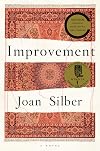
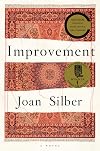
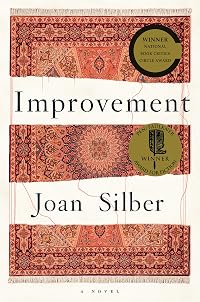
I can’t finish this review without mentioning how much I loved the symbolism incorporated into the dust-jacket design – two sections of a carpet, separated by several loose threads, loose threads which the author wove together so skilfully to create an unforgettable and beautiful story.
I had never come across any of Joan Silber’s books before but will now enthusiastically seek out her backlist. The fact that this novel has received a couple of awards, including the 2018 PEN/Faulkner Award for Fiction will, I hope, mean that her name will become known to a much wider readership.
With thanks to Readers First and Allen and Unwin for a copy of this book in exchange for an honest review. show less
Kiki admires her niece’s spirit show more but worries that she always seems to pick the wrong type of man. When Boyd is released from prison he initially goes straight but, after a few months, becomes involved with a few friends in a scheme to smuggle cigarettes in bulk from Virginia back to New York, using the different taxation regulations to make a profit. They both know that he is violating his probation and could be returned to prison but, enjoying the benefits the extra money brings, they put these concerns to one side. It is only when Boyd eventually attempts to involve Reyna more directly, by asking her to be the driver on one trip, that she starts to reflect on the implications. Having initially agreed, she then makes the decision, for the sake of her son, to refuse. This apparently simple act of resistance will set in motion a chain of events which will have long-lived ripple-effects, not only on the lives of loved-ones, but also on total strangers.
There are three distinct parts to this novel. The first two chapters are told in the first person by Reyna, providing the reader not only with what is happening currently in her life and the lives of Oliver, Kiki and Boyd, but also with what leads up to the catastrophic event which will change so many lives. There is then a sudden, initially disconcerting, shift to a selection of interrelated stories told in the third-person. These stories at first seem to be travelling a long way from New York and Reyna’s life, with an incidental character in one story becoming a central one in another. However, each of the numerous characters introduced, from different countries and different time-scales, are shown, in one way or another, to intersect with her. By the time the narrative returns to her in the final part of the novel, the reader has a much richer understanding of her and the world she inhabits.
A central premise in this novel is based on chaos theory, the idea that a small, apparently insignificant event or action can trigger ripple-effects which have unforeseen effects, in both the short and the long-term. I loved the way in which the author used her characters to explore that their actions had consequences, that they needed to recognise and take responsibility for their decisions and, by doing so, to live as good and ethical a life as possible. Her perceptive insights convey a deep understanding of both the frailties and the strengths of human beings as they face the various challenges of life. The gentle humour which runs through her writing left me with the impression that she is not only deeply-respectful of people, but also believes in the power of redemption and of love. Throughout the story I felt that she cared about each one of her characters, wanting to show the reader what led them to make the decisions they did and to feel compassion for them as they struggled to do the right thing.
I really enjoyed the part that Kiki’s love of Turkish carpets, and the significance of their intricate design, played in this book. The ways in which Joan Silber skilfully draws together the various “loose threads” in this story felt as intricate and beautiful as the carpets her character so admired. I felt a particular affinity with this because I have two very old Bukhara carpets and, in addition to loving their now rather faded, but still beautiful colours and design, I enjoy reflecting on the lives of the people who created something which, generations later, and on a different continent, remains both beautiful and functional.
I also enjoyed Reyna’s description of her tattoos, how each one represented a significant event in her life – “Some people designed their body art so it all fit together, but I did mine piecemeal, like my life, and it looks fine.” Her attempt to convince her aunt, who saw them as a form of mutilation, that they were really no different to the patterns on the rugs was not successful. Kiki’s response of “Are you a floor?” offers a hint of some of the incisive, but gentle, humour which run through the novel! However, both the rugs and the tattoos carried the theme of design and pattern in life, of how much is planned, how much is random.
This is such a wise, insightful, poignant and beautiful story; it is written with an unhurried elegance and eloquence which is both remarkable and enviable. There is a reference to the fact that a couple of the chapters (the first and the fourth) had appeared previously in magazines. However, because all the sections, chapters and individual stories came together to create a seamless “whole”, I felt no awareness of this when I was reading.
I can’t finish this review without mentioning how much I loved the symbolism incorporated into the dust-jacket design – two sections of a carpet, separated by several loose threads, loose threads which the author wove together so skilfully to create an unforgettable and beautiful story.
I had never come across any of Joan Silber’s books before but will now enthusiastically seek out her backlist. The fact that this novel has received a couple of awards, including the 2018 PEN/Faulkner Award for Fiction will, I hope, mean that her name will become known to a much wider readership.
With thanks to Readers First and Allen and Unwin for a copy of this book in exchange for an honest review. show less
After finishing this I skimmed some reviews and found that it was frequently compared to the Islamic carpets that have a recurring place in the novel. Intricate interwoven themes, just as in the carpet patterns. Tapestry was another descriptor.
Both of those analogies seem too heavy to me. There is a certain light, shimmery quality to the prose. Gossamer is too fine, though. Think of braided strands of silver and gold.
In structure the book is like a series of interconnected stories, but the central core is actually more solid than that. Events radiate forward and backward in time from a decision made by a young woman to stop short of participating in her boyfriend’s harebrained get-rich (or at least less poor) scheme.
I was captivated show more by the first sentences, and I remained entranced until the end. Silber is a gifted author, and it’s easy to understand why the book won the National Book Critics Circle award and the Pen/Faulkner.
(P.S. I can’t seem to escape from references to Richmond VA in my reading. I expected it with Razorblade Tears, but who would have thought that a book set in Nova Scotia would have a Richmond connection? Then this book, which is set primarily in NYC and Turkey, with scenes in Germany and upstate NY, also features a lengthy segment in Richmond. Go figure.)
(P.P.S. Judith, I determined that I added this to my TBR the day after you posted your review - so thanks!) show less
Both of those analogies seem too heavy to me. There is a certain light, shimmery quality to the prose. Gossamer is too fine, though. Think of braided strands of silver and gold.
In structure the book is like a series of interconnected stories, but the central core is actually more solid than that. Events radiate forward and backward in time from a decision made by a young woman to stop short of participating in her boyfriend’s harebrained get-rich (or at least less poor) scheme.
I was captivated show more by the first sentences, and I remained entranced until the end. Silber is a gifted author, and it’s easy to understand why the book won the National Book Critics Circle award and the Pen/Faulkner.
(P.S. I can’t seem to escape from references to Richmond VA in my reading. I expected it with Razorblade Tears, but who would have thought that a book set in Nova Scotia would have a Richmond connection? Then this book, which is set primarily in NYC and Turkey, with scenes in Germany and upstate NY, also features a lengthy segment in Richmond. Go figure.)
(P.P.S. Judith, I determined that I added this to my TBR the day after you posted your review - so thanks!) show less
I am the kind of person that wonders about many of the side characters in the books I read. If I am reading nonfiction it is the worst because I will start researching actual people not central to the story, tumbling down Google wormholes, realizing hours in that it is 2:00 am and that I have to work in a few hours. So this book's structure worked for me. There is a central event which impacts many people followed by vignettes featuring many of those minor characters who wee affected. We seeing how their lived were changed by two decisions, each made in an instant, one fateful night. I thought that was very well done, and I found the featured side characters mostly fascinating. In fact the only character I did not find fascinating at show more all was the main character, Reyna, whose actions set off everything else. I don't think she was a badly drawn character. The character development throughout is excellent. I was impressed with how Silber could give me only tiny slivers of people's lives and yet I as a reader felt I really got to know them. Reyna was well drawn. I see women like her all the time. Reyna is basic. I lost a bit of interest when she was front and center, but she was so interconnected with everyone else that invariably she would start talking or thinking about other characters like Kiki, Lynette, or Boyd, and I would get interested again. In the end reading this was a great pleasure. I will definitely move on to read other Joan Silber. . show less
A series of interconnected stories hold this narrative together, I want to say they flow into one another and off in different directions, not really touching, but branching. A question one might ask is does taking the generous route encourage more generosity of spirit? By generosity I mean everything from forgiveness to giving away money to someone who needs it. Does it keep the universe more in balance? Maybe, maybe not. Reyna with her son Oliver and Reyna's aunt Kiki form the core of the book, which moves around from New York, to Turkey, to Germany and back to New York. I also like the idea of pursuing the thought that people who are not part of your closest friend or family group, people you have met only briefly, can also have a show more life-altering (or ending) effect. There are two time frames, one is the '80's the other more or less the present. Love the theme of the rugs and their intricate patterns. Recommended! **** show less
I really liked the gentleness of the narrative--I'm so tired of muscular prose and feeling jerked here and there by the weird combination currently favored in American fiction of brutal realism and rigorous hitting of plot points. I wasn't entirely convinced of the characters but I appreciated the truths they collectively conveyed about love and conflict.
This "novel" is really more a set of short stories loosely tied together by a minor character in one appearing as the main character in the next. They are also thematically related as the characters are essentially making improvements to their lives by making rational decision about relationships.
I enjoyed each story and found the writing to be outstanding and characters to be very authentic and well developed. I could see the attempt in the last story to wrap things up and weave the stories together. It didn't really work. Instead I found the ending wanting something more that was just missing. Still a very worthwhile read.
I enjoyed each story and found the writing to be outstanding and characters to be very authentic and well developed. I could see the attempt in the last story to wrap things up and weave the stories together. It didn't really work. Instead I found the ending wanting something more that was just missing. Still a very worthwhile read.
Members
- Recently Added By
Lists

Kirkus Starred Fiction Reviews of Books Published in 2017
412 works; 7 members

Books Read in 2022
5,168 works; 114 members

Books Read in 2018
4,360 works; 110 members

Books Read in 2019
4,052 works; 110 members
Author Information

Awards and Honors
Common Knowledge
- Canonical title
- Improvement
- Original publication date
- 2017
- Dedication
- For Myra,
with great thanks - First words
- Everyone knows this can happen.
Classifications
Statistics
- Members
- 418
- Popularity
- 74,029
- Reviews
- 23
- Rating
- (3.72)
- Languages
- English
- Media
- Paper, Audiobook, Ebook
- ISBNs
- 16
- ASINs
- 3