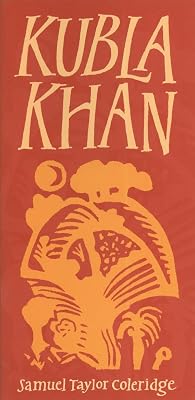
Kubla Khan
by Samuel Taylor Coleridge
On This Page
Description
Though left uncompleted, "Kubla Khan" is one of the most famous examples of Romantic era poetry. In it, Samuel Coleridge provides a stunning and detailed example of the power of the poet's imagination through his whimsical description of Xanadu, the capital city of Kublai Khan's empire. Samuel Coleridge penned "Kubla Khan" after waking up from an opium-induced dream in which he experienced and imagined the realities of the great Mongol ruler's capital city. Coleridge began writing what he show more remembered of his dream immediately upon waking from it, and intended to write two to three hundred lines. However, Coleridge was interrupted soon after and, his memory of the dream dimming, was ultimately unable to complete the poem. HarperPerennial Classics brings great works of literature to life in digital format, upholding the highest standards in ebook production and celebrating reading in all its forms. Look for more titles in the HarperPerennial Classics collection to build your digital library. show lessTags
Recommendations




















Member Reviews
Members
- Recently Added By
Lists

A Reading List
100 works; 3 members

Recommended Reading : 600 Classics Reviewed, Editors of Salem Press, 2015
634 works; 6 members
Author Information

513+ Works 14,154 Members
Born in Ottery St. Mary, England, in 1772, Samuel Taylor Coleridge studied revolutionary ideas at Cambridge before leaving to enlist in the Dragoons. After his plans to start a communist society in the United States with his friend Robert Southey, later named poet laureate of England, were botched, Coleridge instead turned his attention to show more teaching and journalism in Bristol. Coleridge married Southey's sister-in-law Sara Fricker, and they moved to Nether Stowey, where they became close friends with William and Dorothy Wordsworth. From this friendship a new poetry emerged, one that focused on Neoclassic artificiality. In later years, their relationship became strained, partly due to Coleridge's moral collapse brought on by opium use, but more importantly because of his rejection of Wordworth's animistic views of nature. In 1809, Coleridge began a weekly paper, The Friend, and settled in London, writing and lecturing. In 1816, he published Kubla Kahn. Coleridge reported that he composed this brief fragment, considered by many to be one of the best poems ever written lyrically and metrically, while under the influence of opium, and that he mentally lost the remainder of the poem when he roused himself to answer an ill-timed knock at his door. Coleridge's The Rime of the Ancient Mariner, Christabel, and his sonnet Ozymandias are all respected as inventive and widely influential Romantic pieces. Coleridge's prose works, especially Biographia Literaria, were also broadly read in his day. Coleridge died in 1834. (Bowker Author Biography) show less
Some Editions
Awards and Honors
Notable Lists
Work Relationships
Is contained in
Has the adaptation
Common Knowledge
- Canonical title
- Kubla Khan
- Original title
- Kubla Khan: or A Vision in a Dream
- Original publication date
- 1816
- People/Characters
- Kublai Khan
- Important places
- Xanadu
- Important events
- Mongol Empire
Classifications
Statistics
- Members
- 128
- Popularity
- 256,258
- Rating
- (3.87)
- Languages
- English
- Media
- Paper, Ebook
- ISBNs
- 6
- ASINs
- 4