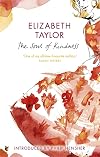
The Soul of Kindness
by Elizabeth Taylor
On This Page
Description
The Soul of Kindness, like many of Elizabeth Taylor's novels, is so expert that it seems effortless. As it progresses, it seems as if the cast are so fully rounded that all the novelist had to do was place them, successively, in one setting after another and observe how they reacted to each other ... Taylor is one of the hidden treasures of the English novelTags
Recommendations






















Member Reviews
(1989?)
My customary sticky backed plastic and bookplate with ‘Elizabeth’ written on it date this to pre-1989. A portrait of a self-deluding monster, but a more subtle portrait of a monster than “Angel”, maybe because Flora here doesn’t have a ‘talent’ to share with the world, just an unwavering self-belief and a need to bestow herself on people. In this melancholic novel, there are unlikely pairings that will never work, and unlikely alliances that do, such as the invisible lines that put the marvellous painter, Liz, in secret cahoots with downtrodden Meg, and Flora’s husband helping her mother to escape her self- and Flora-created prison.
A novel with an empty heart and marvellous, rich minor characters – Richard’s show more father, Percy and his mistress, Ba, and Liz especially. I loved the housekeeper, Mrs Lodge, with her yearning for birds and the countryside (in fact, birds occur throughout). In the lost London souls and unrequited love, a bit reminiscent of Anita Brookner, with the piercing skewering of tiny moments of human interaction – especially the excruciating scenes between Mrs Secretan and her companion, Miss Folley – all Taylor’s own. show less
My customary sticky backed plastic and bookplate with ‘Elizabeth’ written on it date this to pre-1989. A portrait of a self-deluding monster, but a more subtle portrait of a monster than “Angel”, maybe because Flora here doesn’t have a ‘talent’ to share with the world, just an unwavering self-belief and a need to bestow herself on people. In this melancholic novel, there are unlikely pairings that will never work, and unlikely alliances that do, such as the invisible lines that put the marvellous painter, Liz, in secret cahoots with downtrodden Meg, and Flora’s husband helping her mother to escape her self- and Flora-created prison.
A novel with an empty heart and marvellous, rich minor characters – Richard’s show more father, Percy and his mistress, Ba, and Liz especially. I loved the housekeeper, Mrs Lodge, with her yearning for birds and the countryside (in fact, birds occur throughout). In the lost London souls and unrequited love, a bit reminiscent of Anita Brookner, with the piercing skewering of tiny moments of human interaction – especially the excruciating scenes between Mrs Secretan and her companion, Miss Folley – all Taylor’s own. show less
”she had always meant well. That intention had been seen clearly, lying behind some of her biggest mistakes.”
“I’ve never done anything to harm anyone in all my life.”
“No; of course not, darling. No one is kinder.”
“Other people have to live with the truth about themselves.”
Kindness is a virtue. Generally speaking, to be called “the soul of kindness” is high praise. However, Elizabeth Taylor isn’t dealing in generalities in her ninth novel, The Soul of Kindness. Here she explores kindness as blindness, presenting us with a young, newly married protagonist, Flora Quartermaine (nee Secretan), whose compassion and seeming goodwill cause all sorts of trouble. In the early pages of the book, Flora is a character show more straight out of Disney: a beautiful and saccharine young woman, on whose fingers doves gently alight. Before long, she’s setting up her orphaned and unlucky friend, Meg, with a gay writer, Patrick Barlow. Flora is apparently oblivious of his sexual orientation, in spite of the innuendo of others and his evident preoccupation with his “friend” Frankie. Equally unaware that Meg’s brother, Kit, is hopelessly untalented, Flora encourages and “inspires” him to pursue a stillborn acting career, when his sister is clearly in need of his financial contribution to the household. Meanwhile, Flora’s father-in-law, Percy, is given a cat as a companion he doesn’t want, and he is urged to marry his long-time mistress, when the two clearly prefer living apart.
Why does Flora meddle in this way? The author writes: “Flora’s worries were other people’s worries. With these she tirelessly concerned herself.” She believes herself kind and desirous of the best for her friends and relations, while everyone else finds her naïve, obtuse, and even stupid. “Someone always has to look after Flora and let her think she’s looking after them,” observes one character. She is certainly “high maintenance”. Mrs. Secretan, Flora’s mother, regards her daughter’s wedding day as a sort of ritualistic handing over—from mother to husband—of a “precious burden”. Best friend Meg is a “nannie” to her. While Meg disapproves of cosseting, she recognizes “that it would be dangerous for it to be discontinued—like putting an orchid out into the frosty air.” As for Flora’s husband, Richard: he has the responsibility of preserving her face from any signs of stress—due to the loss of innocence: “it would surely be his fault if it were altered, if the Botticelli calm were broken, or the appealing gaze veiled.” In short, everyone around Flora is more or less complicit in ensuring that she not be presented with “a glimpse of herself as someone she could never bear to live with.”
In all the novels I’ve read by Taylor, she shows herself to be keenly interested in the matter of self-deception. Her characters often tell themselves comforting stories about their own motivations, actions, and lives. They work to hide unpleasant truths from themselves as much as from others. In her seventh and ninth novels, Angel and The Soul of Kindness, Taylor appears to be interested in the role nurture plays in the development of unusually imperceptive, egotistical personalities. At the heart of both narratives, there is an indulgent, overprotective mother and a willful, pathologically oblivious daughter. The daughters, Angel and Flora, are extreme cases—even for Taylor; bordering on untenable and unconvincing, they are almost caricatures. Angel, a writer of third-rate potboilers, fancies herself a literary giant. (Fate strangely treats her kindly, and for a time she becomes enormously wealthy from her novel writing.) Flora, on the other hand, is blind to “otherness”. Though reasonably capable socially, she is self-centred and incapable of perceiving that the needs, wants, and goals of other people differ from her own.
Taylor’s novel, published in 1964, has an interesting resonance over fifty years later in this age of “helicopter parents”, who would spare their children every discomfort and distress. The sheltering and coddling we see from Mrs Secretan (and from modern parents) ensure that young people remain childlike and emotionally immature into adulthood. The untalented Kit’s unrealistic aspirations are in part due to the excessive praise he received as a child for roles in school plays. Such praise, Taylor intimates, is a “disservice” to the young. Meg speculates about the damage of parental indulgence, wondering “what, if anything at all, Flora knew about people. Her mother had encouraged only the prettiest view of human nature and no later aspects she may have come across seemed to have made an impression.” Taylor also makes clear that too much investment in a child’s life leaves a mother without an identity when the child leaves. Mrs. Secretan, we are told, planned everything down to the last detail. “But,” in doing so, she realizes, “I forgot myself and the future.”
Taylor often likes to provide foils to her protagonists. In this book, we have Flora—happy in domesticity, young motherhood, and innocence or obliviousness—and Elinor Pringle, who lives just down from Flora’s crescent in affluent St. John’s Wood. About the same age as Flora, Elinor is the lonely wife of an MP, who “doesn’t give a damn” what she does and would prefer to spend his limited spare time writing dull plays peopled with male characters. Lonely, childless, and bitter about her marriage, Elinor spends many of her days tracking down rare and costly pieces of furniture and objets d’art. She goes on solo trips, eats alone in guest-house dining rooms with a book as her only companion, and walks deserted esplanades during the off-season. Having run into her several times in Mayfair, Flora’s husband, Richard, becomes quite friendly with Elinor, keeping the relationship from his wife. His suppers with his new female friend, especially those that occur when Flora is in the nursing home after the birth of their daughter, lead him to compare the two women. On one occasion he thinks that Flora, unlike Elinor, would be a loyal political wife, but after another visit with the intelligent, opinionated Elinor, he is troubled to have disloyal thoughts about Flora. When Flora rushes to the door to greet him, he uncharacteristically observes that she’s “far too tall” to be speaking in “such a little girl voice.”
Taylor provides an even more dramatic contrast to Flora in the person of Liz Corbett, “a fattish young woman with untidy hair”. Slatternly Liz is Patrick Barlow’s friend and an artist. She lives in a squalid flat with all of her painting materials in disarray about her, but in spite of the mess, even filth, of her surroundings, she paints works of great delicacy and increasing originality. Unlike the other female characters in the novel, and in spite of Taylor’s unappealing portrait of her, Liz is the only one to have independent purpose, a vision of what she wants to accomplish. “I don’t want to enchant people. I want to shake them up. . . . People under spells are half dead,” she tells Patrick. “I’ve a lifetime’s work in my head. . . . Some explorations to be made.” Liz also happens to be the only character in the novel with the guts, the toughness, to confront Flora.
I found Taylor’s The Soul of Kindness, a far more unified, mature, and accomplished piece than the many other novels by her I’ve recently read. Characters and plot are better controlled by the author, and all work well to develop, serve, and amplify a central theme. Reading this book was a rewarding experience. show less
“I’ve never done anything to harm anyone in all my life.”
“No; of course not, darling. No one is kinder.”
“Other people have to live with the truth about themselves.”
Kindness is a virtue. Generally speaking, to be called “the soul of kindness” is high praise. However, Elizabeth Taylor isn’t dealing in generalities in her ninth novel, The Soul of Kindness. Here she explores kindness as blindness, presenting us with a young, newly married protagonist, Flora Quartermaine (nee Secretan), whose compassion and seeming goodwill cause all sorts of trouble. In the early pages of the book, Flora is a character show more straight out of Disney: a beautiful and saccharine young woman, on whose fingers doves gently alight. Before long, she’s setting up her orphaned and unlucky friend, Meg, with a gay writer, Patrick Barlow. Flora is apparently oblivious of his sexual orientation, in spite of the innuendo of others and his evident preoccupation with his “friend” Frankie. Equally unaware that Meg’s brother, Kit, is hopelessly untalented, Flora encourages and “inspires” him to pursue a stillborn acting career, when his sister is clearly in need of his financial contribution to the household. Meanwhile, Flora’s father-in-law, Percy, is given a cat as a companion he doesn’t want, and he is urged to marry his long-time mistress, when the two clearly prefer living apart.
Why does Flora meddle in this way? The author writes: “Flora’s worries were other people’s worries. With these she tirelessly concerned herself.” She believes herself kind and desirous of the best for her friends and relations, while everyone else finds her naïve, obtuse, and even stupid. “Someone always has to look after Flora and let her think she’s looking after them,” observes one character. She is certainly “high maintenance”. Mrs. Secretan, Flora’s mother, regards her daughter’s wedding day as a sort of ritualistic handing over—from mother to husband—of a “precious burden”. Best friend Meg is a “nannie” to her. While Meg disapproves of cosseting, she recognizes “that it would be dangerous for it to be discontinued—like putting an orchid out into the frosty air.” As for Flora’s husband, Richard: he has the responsibility of preserving her face from any signs of stress—due to the loss of innocence: “it would surely be his fault if it were altered, if the Botticelli calm were broken, or the appealing gaze veiled.” In short, everyone around Flora is more or less complicit in ensuring that she not be presented with “a glimpse of herself as someone she could never bear to live with.”
In all the novels I’ve read by Taylor, she shows herself to be keenly interested in the matter of self-deception. Her characters often tell themselves comforting stories about their own motivations, actions, and lives. They work to hide unpleasant truths from themselves as much as from others. In her seventh and ninth novels, Angel and The Soul of Kindness, Taylor appears to be interested in the role nurture plays in the development of unusually imperceptive, egotistical personalities. At the heart of both narratives, there is an indulgent, overprotective mother and a willful, pathologically oblivious daughter. The daughters, Angel and Flora, are extreme cases—even for Taylor; bordering on untenable and unconvincing, they are almost caricatures. Angel, a writer of third-rate potboilers, fancies herself a literary giant. (Fate strangely treats her kindly, and for a time she becomes enormously wealthy from her novel writing.) Flora, on the other hand, is blind to “otherness”. Though reasonably capable socially, she is self-centred and incapable of perceiving that the needs, wants, and goals of other people differ from her own.
Taylor’s novel, published in 1964, has an interesting resonance over fifty years later in this age of “helicopter parents”, who would spare their children every discomfort and distress. The sheltering and coddling we see from Mrs Secretan (and from modern parents) ensure that young people remain childlike and emotionally immature into adulthood. The untalented Kit’s unrealistic aspirations are in part due to the excessive praise he received as a child for roles in school plays. Such praise, Taylor intimates, is a “disservice” to the young. Meg speculates about the damage of parental indulgence, wondering “what, if anything at all, Flora knew about people. Her mother had encouraged only the prettiest view of human nature and no later aspects she may have come across seemed to have made an impression.” Taylor also makes clear that too much investment in a child’s life leaves a mother without an identity when the child leaves. Mrs. Secretan, we are told, planned everything down to the last detail. “But,” in doing so, she realizes, “I forgot myself and the future.”
Taylor often likes to provide foils to her protagonists. In this book, we have Flora—happy in domesticity, young motherhood, and innocence or obliviousness—and Elinor Pringle, who lives just down from Flora’s crescent in affluent St. John’s Wood. About the same age as Flora, Elinor is the lonely wife of an MP, who “doesn’t give a damn” what she does and would prefer to spend his limited spare time writing dull plays peopled with male characters. Lonely, childless, and bitter about her marriage, Elinor spends many of her days tracking down rare and costly pieces of furniture and objets d’art. She goes on solo trips, eats alone in guest-house dining rooms with a book as her only companion, and walks deserted esplanades during the off-season. Having run into her several times in Mayfair, Flora’s husband, Richard, becomes quite friendly with Elinor, keeping the relationship from his wife. His suppers with his new female friend, especially those that occur when Flora is in the nursing home after the birth of their daughter, lead him to compare the two women. On one occasion he thinks that Flora, unlike Elinor, would be a loyal political wife, but after another visit with the intelligent, opinionated Elinor, he is troubled to have disloyal thoughts about Flora. When Flora rushes to the door to greet him, he uncharacteristically observes that she’s “far too tall” to be speaking in “such a little girl voice.”
Taylor provides an even more dramatic contrast to Flora in the person of Liz Corbett, “a fattish young woman with untidy hair”. Slatternly Liz is Patrick Barlow’s friend and an artist. She lives in a squalid flat with all of her painting materials in disarray about her, but in spite of the mess, even filth, of her surroundings, she paints works of great delicacy and increasing originality. Unlike the other female characters in the novel, and in spite of Taylor’s unappealing portrait of her, Liz is the only one to have independent purpose, a vision of what she wants to accomplish. “I don’t want to enchant people. I want to shake them up. . . . People under spells are half dead,” she tells Patrick. “I’ve a lifetime’s work in my head. . . . Some explorations to be made.” Liz also happens to be the only character in the novel with the guts, the toughness, to confront Flora.
I found Taylor’s The Soul of Kindness, a far more unified, mature, and accomplished piece than the many other novels by her I’ve recently read. Characters and plot are better controlled by the author, and all work well to develop, serve, and amplify a central theme. Reading this book was a rewarding experience. show less
A comedy of manners and sort of field study of the various ways an utter lack of self-awareness can trickle through relationships—in this case, among the mid-1960s British middle class. Taylor has very little sentiment—but is not without compassion—for her misguided, smug, and often lonely cast of characters. She paints them wonderfully with a few brushstrokes, and you get a strong feeling of them going on to live their lives busily off the page, leaving the reader to sit and think about them while they move on.
Flora Quatermaine, beautiful and oblivious, is the central character of [The Soul of Kindness] around which the 'story' such as it is, is organized. We see her on her wedding day to Richard, and learn all we need to know about her by her behaviour towards those around her, her best friend and his adoring younger brother Kit, her mother, and her new husband, Richard. She isn't a mean person,, but very much like Austen's Emma, she's been so indulged and adored that she is blithely ignorant of the hardships of others. She never stops to question her judgements or to listen and it certainly never occurs to her that she could hurt someone through good intentions. You cannot really like Flora, but you can't dismiss her either. Her sunny show more attitude is catching and her friends and husband, for the most part, value her naivete exactly for what it is and are willing to indulge it. Except for one woman, the painter, Liz Corbett. Liz is the 'real thing' -an uncompromising and unblinded artist, single-minded and driven. She is also very plain. While the beautiful Flora floats on the surface, plain old Liz digs and digs. She never meets Flora face-to-face but they share many friends, including the young man Kit. There is plenty of irony here, the pleasant appeal of superficiality versus the often 'difficult' and even ugly and certainly unromantic aspect of 'the truth'. And Liz, of course, is right on, but too harsh just as Flora is off the mark but too seductive. At the same time, Taylor is kind, demonstrating by the novel's resolution the idea that plenty of people simply are not equipped to deal with too much truth; it will break them. Except for marriage and children, the landscape for most of these middling to upper class women who don't need to work is a bleak one, filling days with 'something' - anything being the challenge. For Meg, Flora's friend who does have to work, for Mrs. Secretan's personal secretary, companion and for Mrs. Lodge, work is drudgery, keeping them from enjoying what they long for, from rural life, from love, from rest. Only Ba, mistress of Percy, Richard's father, seems to bridge the real and the superficial - although even she allows herself to be manipulated by Flora. The men are as interesting as the women, and as trapped. All but Richard who, like Ba, comes off as self-aware and down-to-earth and not easily fooled either way.
Here's the thing, the more I write now about the book, the more I see there is in it. So I am bumping it up to ****1/2. show less
Here's the thing, the more I write now about the book, the more I see there is in it. So I am bumping it up to ****1/2. show less
Dear Lord, what a bunch of bored and agonized people!
I have only ever read [b:Mrs. Palfrey at the Claremont|643062|Mrs. Palfrey at the Claremont|Elizabeth Taylor|https://i.gr-assets.com/images/S/compressed.photo.goodreads.com/books/1328729203l/643062._SY75_.jpg|629233] and this book really cannot be directly compared to that. They are too different. For one thing, while Mrs. Palfrey certainly had its share of desperation, it was nothing compared to the frequency and depth of despair felt so often by nearly all of these hopeless characters who circle around Flora, the so-called soul of kindness. All of these people (for the most part) know each other, and yet they were all, in one way or another, so isolated and alone and lonely. None of show more them seemed to know what to do with their time.
Most irritating to me of all was the subplot of Percy and Ba, whoactually got married, against their own preferences, because Flora so often nagged them about it. What?????
Insidiously depressing despite the light tone. I am glad I am a relatively cheerful human being because otherwise I might be staring out the window right now, bleakly, wondering when the rain will stop. And it's not even raining. show less
I have only ever read [b:Mrs. Palfrey at the Claremont|643062|Mrs. Palfrey at the Claremont|Elizabeth Taylor|https://i.gr-assets.com/images/S/compressed.photo.goodreads.com/books/1328729203l/643062._SY75_.jpg|629233] and this book really cannot be directly compared to that. They are too different. For one thing, while Mrs. Palfrey certainly had its share of desperation, it was nothing compared to the frequency and depth of despair felt so often by nearly all of these hopeless characters who circle around Flora, the so-called soul of kindness. All of these people (for the most part) know each other, and yet they were all, in one way or another, so isolated and alone and lonely. None of show more them seemed to know what to do with their time.
Most irritating to me of all was the subplot of Percy and Ba, who
Insidiously depressing despite the light tone. I am glad I am a relatively cheerful human being because otherwise I might be staring out the window right now, bleakly, wondering when the rain will stop. And it's not even raining. show less
The Soul of Kindness is ostensibly the story of Flora Quartermaine, a beautiful but selfish woman who manipulates everyone around her while managing to leave them thinking she is working only in their best interests. I say ostensibly, because while the storyline unfolds that way, I thought the plot was secondary to this book's real strength: character development.
Elizabeth Taylor combines her unique powers of observation, attention to detail, and irony to infuse life into even the most minor players. On the main stage, we have Flora and her husband Richard. When the book opens they are newly married, but the next chapter takes place four years later and Flora is pregnant. Flora has Richard, and pretty much everyone else, wrapped around show more her finger. One pouty look from Flora, and he'll drop everything to make amends. He's a devoted husband, but some of his behavior could be interpreted otherwise, and he's completely oblivious to the danger until it's almost too late. She's also had a profound impact on Kit, the younger brother of her friend Meg, and an aspiring but not very talented actor. Flora is the only one who believes in Kit, and he fawns after her because of it. And then there's Patrick, whom Flora tries desperately to pair with Meg, refusing to acknowledge his homosexuality.
While these main characters advanced the plot, I found the parallel stories of peripheral characters even more interesting. There's a rather pathetic woman, Liz Corbett, who initially struck me funny but whose jealousy turned her into a tragic figure. And Flora's mother, Mrs Secretan, who has been in service to Flora all her life. When the baby began to take priority in Flora's life, Mrs Secretan lost her sense of self-worth and became increasingly concerned about mortality. Flora was oblivious and insensitive, but Richard proved himself yet again by quietly taking command of the situation. Taylor's magic as a writer is being able to tell these stories in a way that made me laugh, while also tugging at my heart.
While I would have preferred a deeper storyline to go with the characterizations, this book is still a strong example of Taylor's talent as a writer and on that basis I can heartily recommend this novel. show less
Elizabeth Taylor combines her unique powers of observation, attention to detail, and irony to infuse life into even the most minor players. On the main stage, we have Flora and her husband Richard. When the book opens they are newly married, but the next chapter takes place four years later and Flora is pregnant. Flora has Richard, and pretty much everyone else, wrapped around show more her finger. One pouty look from Flora, and he'll drop everything to make amends. He's a devoted husband, but some of his behavior could be interpreted otherwise, and he's completely oblivious to the danger until it's almost too late. She's also had a profound impact on Kit, the younger brother of her friend Meg, and an aspiring but not very talented actor. Flora is the only one who believes in Kit, and he fawns after her because of it. And then there's Patrick, whom Flora tries desperately to pair with Meg, refusing to acknowledge his homosexuality.
While these main characters advanced the plot, I found the parallel stories of peripheral characters even more interesting. There's a rather pathetic woman, Liz Corbett, who initially struck me funny but whose jealousy turned her into a tragic figure. And Flora's mother, Mrs Secretan, who has been in service to Flora all her life. When the baby began to take priority in Flora's life, Mrs Secretan lost her sense of self-worth and became increasingly concerned about mortality. Flora was oblivious and insensitive, but Richard proved himself yet again by quietly taking command of the situation. Taylor's magic as a writer is being able to tell these stories in a way that made me laugh, while also tugging at my heart.
While I would have preferred a deeper storyline to go with the characterizations, this book is still a strong example of Taylor's talent as a writer and on that basis I can heartily recommend this novel. show less
The novelist Elizabeth Taylor is quietly cunning, devastatingly precise in her anatomy of the human mind The smallest sentences 'Sometimes, optimism briefly unsettled Mrs. Secretan" - provide so much. I will say that the modern re-releases of these books have the most atrocious covers: a glamorous woman's face in artful black-and-white, as if this were an advertisement for Chanel. I know "novels about slightly weary, deluded mid-20th century British people" is a tough sell, but making them look like upscale romance novels aimed at young urban types who work in marketing...well, that just seems irresponsible!
Other reviewers have said everything required about this novel, so I will just leave you with a longer quote below.
“A quiz show more programme. Two rows of people facing one another. A pompous, school-masterly man asking the questions. Those answers that Percy knew he spoke out loudly and promptly; when he was at a loss he pretended (as if he were not alone) that he had not quite caught the question, or he was busy blowing his nose to make a reply, or had to go to help himself to whiskey.” show less
Other reviewers have said everything required about this novel, so I will just leave you with a longer quote below.
“A quiz show more programme. Two rows of people facing one another. A pompous, school-masterly man asking the questions. Those answers that Percy knew he spoke out loudly and promptly; when he was at a loss he pretended (as if he were not alone) that he had not quite caught the question, or he was busy blowing his nose to make a reply, or had to go to help himself to whiskey.” show less
Members
- Recently Added By
Lists

Backlisted
109 works; 9 members

Books Read in 2020
4,379 works; 124 members

Books Read in 2019
4,052 works; 108 members
Backlisted Podcast
65 works; 3 members

Top Five Books of 2024
795 works; 264 members

Recommend the 20 best books you've read in the last five years
2,168 works; 602 members
Top Five Books of 2025
954 works; 303 members
Talk Discussions
Past Discussions
Elizabeth Taylor Centenary: The Soul of Kindness in Virago Modern Classics (October 2012)
Author Information

30+ Works 7,829 Members
Some Editions
Series
Belongs to Publisher Series
Virago Modern Classics (113)
Common Knowledge
- Canonical title*
- La bonté meme
- Original title
- The Soul of Kindness
- Original publication date
- 1964
- People/Characters
- Flora Quartermaine; Richard Quartermaine; Mrs Secretan; Meg Driscoll; Liz Corbett; Patrick Barlow
- Important places
- London, England, UK; St. John's Wood, London, England, UK
- Dedication
- To Elizabeth Cameron
- First words
- Towards the end of the bridegroom's speech, the bride turned aside and began to throw crumbs of wedding cake through an opening in the marquee to the doves outside.
The Soul of Kindness: the title suggests a comfy, determinedly life-enchanting novel with Good Works as its theme. (Introduction) - Quotations
- She placed the Bible on the [hotel] bedside table where it would be ready for the next desperate traveller. It had a special index -- for those in hospital wards, prison cells and hotel bedrooms -- to guide one to helpful pa... (show all)ssages, when Backsliding, Leaving Home, Needing Peace or in the Failure of Friends. Nothing for her. Nothing for those needing a new home, in love with the wrong person, or sick of responsibility. Nothing in the index, rather. In the Bible itself everything can be found, she remembered having been told.
She hoisted him up against the pillows ... and fetched the tray. It was very prettily arranged: he looked down at the smallest piece of fish he had ever seen in his life, palely golden, flecked with parsley and decorated by b... (show all)utterflies of lemon. He had not seen anything like it since his mother died. - Last words
- (Click to show. Warning: May contain spoilers.)It seemed to have been quite forgotten that she was ever leaving.
(Click to show. Warning: May contain spoilers.)It is for such insights that I remain loyal to the subtle and luminant artistry of Elizabeth Taylor. (Introduction)
*Some information comes from Common Knowledge in other languages. Click "Edit" for more information.
Classifications
Statistics
- Members
- 430
- Popularity
- 71,514
- Reviews
- 16
- Rating
- (3.97)
- Languages
- English, French, Italian, Spanish
- Media
- Paper, Ebook
- ISBNs
- 12
- ASINs
- 10