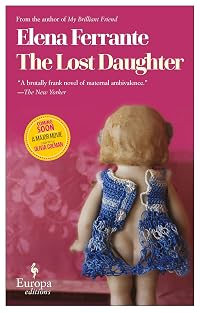
The Lost Daughter
by Elena Ferrante
On This Page
Description
An edgy tale of mixed feelings and motherhood by the New York Times bestselling author of My Brilliant FriendLeda, a middle-aged divorcée, is alone for the first time in years after her two adult daughters leave home to live with their father in Toronto. Enjoying an unexpected sense of liberty, she heads to the Ionian coast for a vacation. But she soon finds herself intrigued by Nina, a young mother on the beach, eventually striking up a conversation with her.
After Nina confides a dark show more secret, one seemingly trivial occurrence leads to events that could destroy Nina's family in this "arresting" (Publishers Weekly) novel by the author of the New York Times bestselling Neapolitan Novels, which have sold millions of copies and been adapted into an HBO series.
. show less
Tags
Recommendations





















Member Reviews
Leda is an academic who travels to the beach to find relaxation. There, she is drawn to a young mother and her daughter while she's reading and writing under the sun, and past and present begin to collide as the story unravels.
Mothers and daughters is perhaps the subject that stands out the most.
"How foolish to think you can tell your children about yourself before they’re at least fifty. To ask to be seen by them as a person and not as a function. To say: I am your history, you begin from me, listen to me, it could be useful to you."
Seeing that I have no experience with parenting or parenthood I was puzzled by these words and had to think about them for a moment. I have been a child to parents for twenty seven years now and I am show more still uncertain if I haven't seen my parents more for their functions than their humanness. The more I thought about it, the more it seemed to me that I had at some point, and it wasn't until relatively recently that I began seeing past hurts and disappointments as parents being very human and capable of mistakes and misunderstandings as much as any other person is, and so I agree.
It's observations like this that make me stop and think that make me love art and therefore also love Ferrante's works. Leda struggled to be a parent to her two young daughters while pursuing her self-discovery at the same time, and the actions she took to free herself of the responsibilities left her with guilt decades afterwards.
Speaking of quotes, another that made me stop in my tracks:
"My daughters make a constant effort to be the reverse of me."
Reading that felt like a blow and again made me marvel at Ferrante's social observations. Only this happened with me and my father and not like Leda and her mother and later Leda's daughters and Leda.
And the other quote that perfectly captures what I have thought about before reading this book:
"Even that way of complaining about the present and the recent past, and idealizing the distant past, didn’t annoy me as it usually does. It seemed, rather, a way, like many, to convince oneself that there is always a slender branch of one’s life to hang on to, and, by being suspended there, get used to the inevitability of falling."
All of these wonderful observations as well as Ferrante's brilliant way of portraying inner chaos made this a good read. Ferrante's protagonists aren't pleasant, they are messy and some of their actions leave the reader struggling to understand intent.
Also it's just become apparent how Ferrante relays such intense inner chaos to the reader perfectly. Storms brewing, large crowds, the heat, insects. External factors that the reader has experienced and which the protagonist experiences while in an anxious state as well, heightens a feeling of wanting to flee. I am unaware if this is an intentional technique that writers use, but this is my first time observing it. With that incredible way she lets you slip into the protagonist's mind as she slips into yours.
I must agree with those that have spoken about the similarities between this book and the Neapolitan novels. Certainly most of the themes are similar and it seems like Ferrante expanded some of them later but I believe that this is still a fantastic read by itself. show less
Mothers and daughters is perhaps the subject that stands out the most.
"How foolish to think you can tell your children about yourself before they’re at least fifty. To ask to be seen by them as a person and not as a function. To say: I am your history, you begin from me, listen to me, it could be useful to you."
Seeing that I have no experience with parenting or parenthood I was puzzled by these words and had to think about them for a moment. I have been a child to parents for twenty seven years now and I am show more still uncertain if I haven't seen my parents more for their functions than their humanness. The more I thought about it, the more it seemed to me that I had at some point, and it wasn't until relatively recently that I began seeing past hurts and disappointments as parents being very human and capable of mistakes and misunderstandings as much as any other person is, and so I agree.
It's observations like this that make me stop and think that make me love art and therefore also love Ferrante's works. Leda struggled to be a parent to her two young daughters while pursuing her self-discovery at the same time, and the actions she took to free herself of the responsibilities left her with guilt decades afterwards.
Speaking of quotes, another that made me stop in my tracks:
"My daughters make a constant effort to be the reverse of me."
Reading that felt like a blow and again made me marvel at Ferrante's social observations. Only this happened with me and my father and not like Leda and her mother and later Leda's daughters and Leda.
And the other quote that perfectly captures what I have thought about before reading this book:
"Even that way of complaining about the present and the recent past, and idealizing the distant past, didn’t annoy me as it usually does. It seemed, rather, a way, like many, to convince oneself that there is always a slender branch of one’s life to hang on to, and, by being suspended there, get used to the inevitability of falling."
All of these wonderful observations as well as Ferrante's brilliant way of portraying inner chaos made this a good read. Ferrante's protagonists aren't pleasant, they are messy and some of their actions leave the reader struggling to understand intent.
Also it's just become apparent how Ferrante relays such intense inner chaos to the reader perfectly. Storms brewing, large crowds, the heat, insects. External factors that the reader has experienced and which the protagonist experiences while in an anxious state as well, heightens a feeling of wanting to flee. I am unaware if this is an intentional technique that writers use, but this is my first time observing it. With that incredible way she lets you slip into the protagonist's mind as she slips into yours.
I must agree with those that have spoken about the similarities between this book and the Neapolitan novels. Certainly most of the themes are similar and it seems like Ferrante expanded some of them later but I believe that this is still a fantastic read by itself. show less
Leda, 47 Jahre alt, hat offenbar jeden Grund, glücklich zu sein: Professorin an der Uni mit zwei wohlgeratenen Töchtern, die gerade ausgezogen und zu ihrem Vater nach Kanada gegangen sind. Sie gönnt sich einen langen Urlaub am Meer, wo sie ihre Tage am Strand verbringt. Dort beobachtet sie eine neapolitanische Großfamilie, wobei sie von einer jungen Frau und deren kleiner Tochter fasziniert ist und dabei Erinnerungen an ihre eigene Vergangenheit als junge Mutter wieder lebendig werden. Trotz ihrer anfänglichen Sympathie für die Beiden lässt sie sich zu einer Tat verleiten, die insbesondere für das Kind schwer zu verkraften ist.
Nein nein, keine Sorge, hier geht es nicht um Gewalt und Brutalität, die Dinge geschehen wesentlich show more subtiler. Leda ist eine Frau, die wohl ebenso viel Sympathisches wie Unsympathisches in sich birgt und deren Innenleben hier schonungslos dargestellt wird. Vieles von dem, was hier beschrieben wird, trauen sich vermutlich die Meisten nicht zuzugeben. Neben all der Liebe gibt es da auch die Wut auf die eigenen Kinder, denen man sein Leben opfert; der Neid auf die Töchter, die immer mehr die Blicke der Männer auf sich ziehen, während man selbst zu verschwinden scheint; der Verzicht auf eine eigene Karriere. Über so etwas spricht man nicht, aber diese Gedanken und Gefühle sind dennoch vorhanden, sofern man nicht zu 100% mit sich im Reinen ist. Doch wer ist das schon? Und wer kennt nicht das Gefühl, aus einem Anfall von Neid heraus etwas Glückliches zerstören zu wollen, nur weil man es selbst nicht hat? So schändlich Ledas Tat ist (und das klingt jetzt schlimmer, als es tatsächlich ist), wirkliche Abneigung gegen sie konnte ich nicht entwickeln, zu verständlich fand ich ihr Verhalten, auch wenn ich es nicht gut finde.
Elena Ferrante versteht es meisterhaft, eine Protagonistin so erzählen zu lassen, als säße sie einem als leibhaftige Person gegenüber. Dies war schon in ihrer Neapolitanischen Saga so und auch hier gelingt es ihr wieder. So folgt man Leda in ihren Gedanken und Handlungen und fühlt sich ihr nahe, bis plötzlich wieder ein Satz oder Gedanke der Sympathie zu ihr einen Dämpfer versetzt. Als wäre das nicht schon genug des Guten ;-) kommt eine sich unmerklich entwickelnde Spannung hinzu, fast schon wie in einem Krimi, da sich Alles auf den Moment zubewegt, der erklärt, wieso das Buch mit diesem Anfang beginnt.
Toll gemacht und klasse erzählt! show less
Nein nein, keine Sorge, hier geht es nicht um Gewalt und Brutalität, die Dinge geschehen wesentlich show more subtiler. Leda ist eine Frau, die wohl ebenso viel Sympathisches wie Unsympathisches in sich birgt und deren Innenleben hier schonungslos dargestellt wird. Vieles von dem, was hier beschrieben wird, trauen sich vermutlich die Meisten nicht zuzugeben. Neben all der Liebe gibt es da auch die Wut auf die eigenen Kinder, denen man sein Leben opfert; der Neid auf die Töchter, die immer mehr die Blicke der Männer auf sich ziehen, während man selbst zu verschwinden scheint; der Verzicht auf eine eigene Karriere. Über so etwas spricht man nicht, aber diese Gedanken und Gefühle sind dennoch vorhanden, sofern man nicht zu 100% mit sich im Reinen ist. Doch wer ist das schon? Und wer kennt nicht das Gefühl, aus einem Anfall von Neid heraus etwas Glückliches zerstören zu wollen, nur weil man es selbst nicht hat? So schändlich Ledas Tat ist (und das klingt jetzt schlimmer, als es tatsächlich ist), wirkliche Abneigung gegen sie konnte ich nicht entwickeln, zu verständlich fand ich ihr Verhalten, auch wenn ich es nicht gut finde.
Elena Ferrante versteht es meisterhaft, eine Protagonistin so erzählen zu lassen, als säße sie einem als leibhaftige Person gegenüber. Dies war schon in ihrer Neapolitanischen Saga so und auch hier gelingt es ihr wieder. So folgt man Leda in ihren Gedanken und Handlungen und fühlt sich ihr nahe, bis plötzlich wieder ein Satz oder Gedanke der Sympathie zu ihr einen Dämpfer versetzt. Als wäre das nicht schon genug des Guten ;-) kommt eine sich unmerklich entwickelnde Spannung hinzu, fast schon wie in einem Krimi, da sich Alles auf den Moment zubewegt, der erklärt, wieso das Buch mit diesem Anfang beginnt.
Toll gemacht und klasse erzählt! show less
I picked this book up at BEA10 at the Europa booth. If you've read [b:The Elegance of the Hedgehog|2967752|The Elegance of the Hedgehog|Muriel Barbery|https://i.gr-assets.com/images/S/compressed.photo.goodreads.com/books/1347755370l/2967752._SY75_.jpg|1531887], I'm sure you noticed the beautiful, velvety, sumptuous cover. Well, all the Europa books have the same type of cover (with different artwork, of course) and I was immediately drawn in by their eye-appeal. [b:Lost Daughter|1058564|The Lost Daughter|Elena Ferrante|https://i.gr-assets.com/images/S/compressed.photo.goodreads.com/books/1412529680l/1058564._SY75_.jpg|55591046] caught my eye, and although you aren't supposed to judge a book by its cover, well... obviously I did. And I show more am SO glad I did!
This is a very short book; I might call it a novella. The main character is Leda, a divorced mother of two grown daughters. When the book opens, she is off to spend the summer at the sea with the hopes of getting away from life, so to speak, and studying and writing (she is a university professor). On her first day in the small Italian village where she rents an apartment, she encounters a large, boisterous, and we eventually learn, dangerous family who frequents the same stretch of beach that she visits every day. What follows is an odd, disturbing, and somewhat complicated summer that will change Leda forever.
It isn't very often that I read a book, and love it thoroughly, and yet still feel unresolved as to whether I even like the main character. Leda suffers from what I would call maternal ambivalence, and frequently behaves in ways that I found unsettling, perplexing, and even disturbing. Her actions are unpredictable, from the bizarre situation she gets herself into at the beach, to her complicated past as the mother of younger daughters. It's a brutally honest and intimate look into a troubled and unstable mind.
As soon as I finished, I went online, anxious to see how the reviews compared to my own feelings about the story. It's interesting that almost all the reviews I read were in fact quite similar to mine; loved it, hated it, was disturbed by it, couldn't put it down... all at the same time. I only wish I had read this as part of a book club, as I think it would be fabulous for discussion! I will be recommending it at work, to be certain. If you've read it, I'd love to hear your reaction! And if you're local, and you'd like to borrow my copy, I'd be willing to loan it. show less
This is a very short book; I might call it a novella. The main character is Leda, a divorced mother of two grown daughters. When the book opens, she is off to spend the summer at the sea with the hopes of getting away from life, so to speak, and studying and writing (she is a university professor). On her first day in the small Italian village where she rents an apartment, she encounters a large, boisterous, and we eventually learn, dangerous family who frequents the same stretch of beach that she visits every day. What follows is an odd, disturbing, and somewhat complicated summer that will change Leda forever.
It isn't very often that I read a book, and love it thoroughly, and yet still feel unresolved as to whether I even like the main character. Leda suffers from what I would call maternal ambivalence, and frequently behaves in ways that I found unsettling, perplexing, and even disturbing. Her actions are unpredictable, from the bizarre situation she gets herself into at the beach, to her complicated past as the mother of younger daughters. It's a brutally honest and intimate look into a troubled and unstable mind.
As soon as I finished, I went online, anxious to see how the reviews compared to my own feelings about the story. It's interesting that almost all the reviews I read were in fact quite similar to mine; loved it, hated it, was disturbed by it, couldn't put it down... all at the same time. I only wish I had read this as part of a book club, as I think it would be fabulous for discussion! I will be recommending it at work, to be certain. If you've read it, I'd love to hear your reaction! And if you're local, and you'd like to borrow my copy, I'd be willing to loan it. show less
Narratives on motherhood can easily fashioned as a sort of trope: devotion, self-sacrifice, unflagging commitment to the role of care and nurturing. Ferrante's character, Leda, presents a more complex picture of the conflicts of maternity with other dimensions of a mother's life. Leda comes from a lower class Neopolitan childhood that she yearns to and does escape. Her mother had constantly threatened to abandon the family. Leda wishes to have a different place in society: cultured, educated and professional. She obtains a university degree and marries a highly educated and professional man from the social class to which she aspires. After giving birth to two daughters she feels blocked and isolated from being able to achieve her own show more ambitions as an academic in a university.
She abandons her children and father for three years. After she returns, she divorces her husband and he and the children move to Toronto for his work. She maintains contact with them and seems to show a parent's concern for their well-being through frequent telephone contact.
Leda rents a flat near the ocean for a month-long vacation from the university where she teaches. While at the beach she encounters a rowdy Neopolitan family who evokes in her memories of her own childhood family. The family's daughter-in-law is a young woman with a three-year-old daughter who is devoted to a baby doll. During some confusion when the young child is temporarily missing, the doll gets misplaced. Leda picks it up and takes it to her apartment, thinking that she'll return it the next day as the toddler is highly distraught over the missing doll. Despite this intention, Leda is ambivalent about doing this, never quite bringing herself to do it. She even in a maternal impulse buys new doll clothes. The abandonment has experienced in her life, along with her own mother's repeated threats to leave her, seems to stop her from returning the doll.
The young mother ultimately spots the baby doll in Leda's flat in a chance manner. There is a heated confrontation, but Leda takes no steps to explain or resolve the matter. Certainly, her keeping the baby doll and her ambivelence over its return is linked to her own guilt about the abandonment she once did herself. We are left with awareness that the cloud of abandonment is a part of Leda's life that will never leave her.
One marvels of the depth and complexity of Ferrante's female characters (the six books I have read are all first person stories of females). It is evident that she draws on her life experiences, particularly in Naples. Ferrante's work is literature at its absolute highest. show less
She abandons her children and father for three years. After she returns, she divorces her husband and he and the children move to Toronto for his work. She maintains contact with them and seems to show a parent's concern for their well-being through frequent telephone contact.
Leda rents a flat near the ocean for a month-long vacation from the university where she teaches. While at the beach she encounters a rowdy Neopolitan family who evokes in her memories of her own childhood family. The family's daughter-in-law is a young woman with a three-year-old daughter who is devoted to a baby doll. During some confusion when the young child is temporarily missing, the doll gets misplaced. Leda picks it up and takes it to her apartment, thinking that she'll return it the next day as the toddler is highly distraught over the missing doll. Despite this intention, Leda is ambivalent about doing this, never quite bringing herself to do it. She even in a maternal impulse buys new doll clothes. The abandonment has experienced in her life, along with her own mother's repeated threats to leave her, seems to stop her from returning the doll.
The young mother ultimately spots the baby doll in Leda's flat in a chance manner. There is a heated confrontation, but Leda takes no steps to explain or resolve the matter. Certainly, her keeping the baby doll and her ambivelence over its return is linked to her own guilt about the abandonment she once did herself. We are left with awareness that the cloud of abandonment is a part of Leda's life that will never leave her.
One marvels of the depth and complexity of Ferrante's female characters (the six books I have read are all first person stories of females). It is evident that she draws on her life experiences, particularly in Naples. Ferrante's work is literature at its absolute highest. show less
Motherhood comes as naturally as air to some. To others, not so much. Leda is one of those others. Whether the fault lies in the tensions of her upbringing (it is possible that Leda’s mother also felt the unnaturalness of her state) or in some peculiar admixture of traits unique to Leda, or, a further possibility, whether the so-called naturalness of motherhood has never been more than a fiction foisted on women — whatever the case, Leda’s actions both in the past and in the present make her the subject of censure. Both public censure and private, since Leda frets upon her own unnaturalness ceaselessly but ineffectually.
Leda is at a seaside holiday taking a break from her work as an English professor in Florence. Over the course show more of the next few weeks she will have cause to reconsider, though not reconcile, her decisions and actions as a mother. Early in her marriage and with two young daughters, Leda determined to reclaim her personal space, even her personal destiny, and abandoned both daughters and her husband. For just over three years she had no contact with them, only to return and reclaim them. Her current solitude is due to her, now adult, daughters having left to spend time in Canada with her ex-husband. But the physical lacerations we inflict on others and ourselves are as nothing to the psychic self-punishment we mete out unknowingly. And certainly Leda’s perceptions and eventual actions on the crowded sandy shore suggest that she has not yet reconciled herself to her earlier abandonment.
This is a closely narrated study of obsession and anxious self-regard, much in keeping with Ferrante’s other early novellas. And equally stunning in its impressive control, delicate balance of public and private anxieties, and barely contained violence. Ferocious. And as always with Ferrante, highly recommended. show less
Leda is at a seaside holiday taking a break from her work as an English professor in Florence. Over the course show more of the next few weeks she will have cause to reconsider, though not reconcile, her decisions and actions as a mother. Early in her marriage and with two young daughters, Leda determined to reclaim her personal space, even her personal destiny, and abandoned both daughters and her husband. For just over three years she had no contact with them, only to return and reclaim them. Her current solitude is due to her, now adult, daughters having left to spend time in Canada with her ex-husband. But the physical lacerations we inflict on others and ourselves are as nothing to the psychic self-punishment we mete out unknowingly. And certainly Leda’s perceptions and eventual actions on the crowded sandy shore suggest that she has not yet reconciled herself to her earlier abandonment.
This is a closely narrated study of obsession and anxious self-regard, much in keeping with Ferrante’s other early novellas. And equally stunning in its impressive control, delicate balance of public and private anxieties, and barely contained violence. Ferocious. And as always with Ferrante, highly recommended. show less
Most of the time I was reading this, I was wondering how it could be interpreted on film. I'm looking forward to seeing the movie version, but Elena Ferrante's work is so much in the heart and the mind, a lot happens in these stories without much actual action. In this case, Leda takes herself on a vacation from her academic career, and ends up getting entwined with a Neapolitan family who she meets on the beach. Mother Nina and daughter Elena, and Elena's doll (who has many names), along with Nina's sister-in-law Rosaria and Rosaria's husband. There are also some locals who work at establishments along the beach, and the man who rents Leda her vacation apartment. All of them play a part in an accidental deception that grows into a deep show more reflection on Leda's life, and particularly her relationship with her grown daughters (who she had abandoned for a time, when they were young). Ferrante's protagonists are complicated women, neither completely likeable nor totally abhorrent -- pretty much like almost any person you'd meet in real life. I'm always astounded by her ability to delve so deeply into people's psyches, to take apart the smallest impulses, to reveal every flaw and strength, and this slim volume is no exception. I thought I'd get through it quickly, but her prose demands you read every word, and there's no skimming over anything. And it all stays with me. show less
Leda, a 47 year old Italian academic of English literature, decides to take a beach-based holiday. There she becomes enthralled by a striking young woman, Nina, and her close, easy relationship with her young daughter, Elena. In a bizarre, callous decision, Leda decides to steal Elena's beloved doll. The young girl is devastated and her relationship with her mother becomes fractious. Leda considers giving the doll back, but delays and delays, until, when she has Nina's greatest trust, she betrays it by returning the doll. There really isn't much more plot than this, in this novel, slight in words, but very weighty in layers.
The main content of this novel has little to do with the above, and everything to do with trying to be both a show more mother and a successful career woman in Italian society. Perhaps this novel is more relevant in someone of Leda's generation compared to now, but I would imagine that parts of the novel will heavily resonate with every mother who also strives for a career. Leda had a very difficult relationship with her own mother, and the scars from the reverberate to her own two daughters. Eventually, about 6 years into motherhood, she gives up for a few years, leaves them entirely with their father, and concentrates on her career instead. This creates a period of strained happiness - her career is going well, she is in love with a new man, but there is a hollowness inside where he daughters used to be.
Now, in this backward little seaside town, free of her daughters, free of everything from her past, in some sense, she can explore the conflicts that strained her so keenly in earlier years. Nina and Elena become distorted mirrors to her own lives. And, perhaps, she takes the doll as a cold experiment to test how mothers generally can cope with the bad as well as the good. Or maybe she just wants to show this mother she secretly envies how bad motherhood can be? Or instead is the doll her way of reconnecting with when she started being a mother, of trying to resurrect the tender, loving feelings she had? There are so many ways to interpret this novel, so many layers and ambiguities that its richness is almost dizzying.
What's also clear through all the writing is the bravery of the psychological dissections - Ferrante never shies away from fully airing what many mothers secretly think and feel, but would never admit even to their husbands or mothers - that, on occasion, they hate their children, and wish they weren't around, that the life such children suck out of them is unbelievably draining and robs them of their own dreams.
In this way it is a relentless, brutal novel, and psychologically so intense, almost written by a female Dostoyevsky. It is compelling reading and fascinating for its stark honesty. show less
The main content of this novel has little to do with the above, and everything to do with trying to be both a show more mother and a successful career woman in Italian society. Perhaps this novel is more relevant in someone of Leda's generation compared to now, but I would imagine that parts of the novel will heavily resonate with every mother who also strives for a career. Leda had a very difficult relationship with her own mother, and the scars from the reverberate to her own two daughters. Eventually, about 6 years into motherhood, she gives up for a few years, leaves them entirely with their father, and concentrates on her career instead. This creates a period of strained happiness - her career is going well, she is in love with a new man, but there is a hollowness inside where he daughters used to be.
Now, in this backward little seaside town, free of her daughters, free of everything from her past, in some sense, she can explore the conflicts that strained her so keenly in earlier years. Nina and Elena become distorted mirrors to her own lives. And, perhaps, she takes the doll as a cold experiment to test how mothers generally can cope with the bad as well as the good. Or maybe she just wants to show this mother she secretly envies how bad motherhood can be? Or instead is the doll her way of reconnecting with when she started being a mother, of trying to resurrect the tender, loving feelings she had? There are so many ways to interpret this novel, so many layers and ambiguities that its richness is almost dizzying.
What's also clear through all the writing is the bravery of the psychological dissections - Ferrante never shies away from fully airing what many mothers secretly think and feel, but would never admit even to their husbands or mothers - that, on occasion, they hate their children, and wish they weren't around, that the life such children suck out of them is unbelievably draining and robs them of their own dreams.
In this way it is a relentless, brutal novel, and psychologically so intense, almost written by a female Dostoyevsky. It is compelling reading and fascinating for its stark honesty. show less
Members
- Recently Added By
Published Reviews
ThingScore 65
added by ozzer
Freedom versus responsibility: This tension underlies Leda’s behavior and ambivalence toward her daughters, which continues to the present. The young mother Nina is Leda’s sounding-board, but Ferrante fails to integrate Leda’s soul-searching with the problems of the fractious Neapolitan family on the beach.
added by ScattershotSteph
Although much of the drama takes place in her head, Ferrante’s gift for psychological horror renders it immediate and visceral, as when the narrator recalls the “animal opacity” with which she first longed for a child, before she was devoured by pregnancy.
added by ScattershotSteph
Lists

Italian Literature
556 works; 41 members

To borrow next
38 works; 1 member

Great Short Books: A Year of Reading-Briefly
59 works; 4 members
Author Information
43+ Works 27,936 Members
Elena Ferrante was born in Naples, Italy. Her work includes Those Who Leave and Those Who Stay, The Story of the Lost Child, The Story of a New Name, The Lost Daughter, Fragments, and My Brilliant Friend. She is the author of My Brilliant Friend which made The New York Times Bestsellers List and The New Zealand Best Seller List 2015. She was show more included on Time magazine's annual list of the 100 most influential people in the world. (Bowker Author Biography) show less
Some Editions
Awards and Honors
Series
Belongs to Publisher Series
Gallimard, Folio (6351)
Work Relationships
Common Knowledge
- Canonical title
- The Lost Daughter
- Original title
- La figlia oscura
- Original publication date
- 2006
- People/Characters*
- Leda, vrouw 48 jaar; dochter Bianca; dochter Marta; strandgaste Nina en haar Napolitaanse familie; dochtertje Lenu; pop Nani (show all 7); strandwachter Gino
- Important places
- Naples, Campania, Italy
- Related movies
- The Lost Daughter (2021 | IMDb)
- First words
- I had been driving for less than an hour when I began to feel ill.
- Last words
- (Click to show. Warning: May contain spoilers.)Deeply moved, I murmured:
"I'm dead, but I'm fine." - Original language
- Italian
- Disambiguation notice*
- Een prachtige, invoelbare roman over het moederschap
*Some information comes from Common Knowledge in other languages. Click "Edit" for more information.
Classifications
- Genres
- General Fiction, Fiction and Literature
- DDC/MDS
- 853.914 — Literature & rhetoric Italian, Romanian & related literatures Italian fiction 1900- 20th Century 1945-1999
- LCC
- PQ4866 .E6345 .F5413 — Language and Literature French, Italian, Spanish and Portuguese literatures Italian literature Individual authors, 1961-2000
- BISAC
Statistics
- Members
- 1,107
- Popularity
- 22,840
- Reviews
- 52
- Rating
- (3.70)
- Languages
- 16 — Catalan, Czech, Dutch, English, Finnish, French, German, Hungarian, Italian, Norwegian (Nynorsk), Portuguese, Romanian, Russian, Spanish, Swedish, Turkish
- Media
- Paper, Audiobook, Ebook
- ISBNs
- 54
- ASINs
- 16
