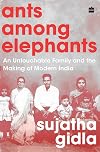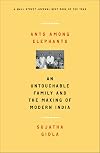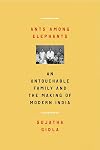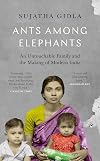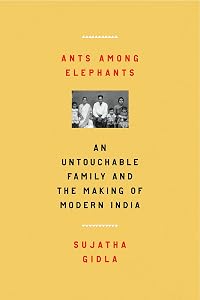
Ants Among Elephants: An Untouchable Family and the Making of Modern India
by Sujatha Gidla
On This Page
Description
"The stunning true story of an untouchable family who become teachers, and one, a poet and revolutionary. Like one in six people in India, Sujatha Gidla was born an untouchable. While most untouchables are illiterate, her family was educated by Canadian missionaries in the 1930s, making it possible for Gidla to attend elite schools and move to America at the age of twenty-six. It was only then that she saw how extraordinary--and yet how typical--her family history truly was. Her mother, show more Manjula, and uncles Satyam and Carey were born in the last days of British colonial rule. They grew up in a world marked by poverty and injustice, but also full of possibility. In the slums where they lived, everyone had a political side, and rallies, agitations, and arrests were commonplace. The Independence movement promised freedom. Yet for untouchables and other poor and working people, little changed. Satyam, the eldest, switched allegiance to the Communist Party. Gidla recounts his incredible life--how he became a famous poet, student, labor organizer, and founder of a left-wing guerrilla movement. And Gidla charts her mother's battles with caste and women's oppression. Page by page, Gidla takes us into a complicated, close-knit family as they desperately strive for a decent life and a more just society. A moving portrait of love, hardship, and struggle, Ants Among Elephants is also that rare thing: a personal history of modern India told from the bottom up"-- show lessTags
Recommendations








Member Reviews
I wavered between 3 and 4 stars, so went with 3.5 stars rounded up. But what the hell do stars matter, in the end. I would recommend this book to anyone, and especially so if you want to learn about the ingrained brutality and injustice of the caste system in India. It's also a great look at radical politics and the social values that continue to trip up revolutionary movements (casteism, patriarchy, bourgeois leaders). I found it incredibly illuminating, and the sections about what women in particular had to endure were both infuriating and heartbreaking, as is always the case.
My problem was that the writing/style was occasionally choppy and brusque. I think I understand why this is the case--Gidla was transcribing oral history, show more basically, and as an author I think maybe it was a conscious decision not to "fill out" or pad out sentiments and thoughts of characters in the story in order to make it more readable. Because she's not making up this story and the author has a responsibility to the truth. But on the other hand an editor could have maybe helped to polish or smooth over those rough edges.
It's a minor complaint. And I'm seeing some reviews here by people living in the West who are referring to Satyam, her communist uncle, as a "bum". It's not controversial to say that no one has any right to call a Dalit who organised labourers and peasants and went to prison for his political beliefs a "bum". Especially if you're judging his life from the comforts of your chair while reading a book. A sexist wanker? Yes, most likely. But not a "bum". The lack of self-awareness among reviewers reviewing a person's LIFE is astonishing, especially among readers with privilege who never had to live in the circumstances Gidla's family was subjected to because of both caste and poverty. I mean, fuck off. So to counter ignorant negative reviews, I'm giving this 4 fucking stars. show less
My problem was that the writing/style was occasionally choppy and brusque. I think I understand why this is the case--Gidla was transcribing oral history, show more basically, and as an author I think maybe it was a conscious decision not to "fill out" or pad out sentiments and thoughts of characters in the story in order to make it more readable. Because she's not making up this story and the author has a responsibility to the truth. But on the other hand an editor could have maybe helped to polish or smooth over those rough edges.
It's a minor complaint. And I'm seeing some reviews here by people living in the West who are referring to Satyam, her communist uncle, as a "bum". It's not controversial to say that no one has any right to call a Dalit who organised labourers and peasants and went to prison for his political beliefs a "bum". Especially if you're judging his life from the comforts of your chair while reading a book. A sexist wanker? Yes, most likely. But not a "bum". The lack of self-awareness among reviewers reviewing a person's LIFE is astonishing, especially among readers with privilege who never had to live in the circumstances Gidla's family was subjected to because of both caste and poverty. I mean, fuck off. So to counter ignorant negative reviews, I'm giving this 4 fucking stars. show less
The Indian political system is a monster of a machine even more so than most systems which makes it very daunting to tackle, especially for people that aren't from India to comprehend. And while this book only looks at a tiny glimpse at a small side of party politics it's very well done, a great jumping off point towards understanding.
The focus is on the author's family through the lens of her uncle: his beginnings, struggles through life in the Indian caste system as an untouchable, early communist party activities and fighting in a young India. Too much to describe without ruining a lot of what there is to discover through the book itself.
The narrative did tend to drag at a lot of points however the information was worth the time to show more drive through it. Those outside of India like myself might have to do some look ups to fully understand some of the historical context of stuff but the good side of course is he learning. show less
The focus is on the author's family through the lens of her uncle: his beginnings, struggles through life in the Indian caste system as an untouchable, early communist party activities and fighting in a young India. Too much to describe without ruining a lot of what there is to discover through the book itself.
The narrative did tend to drag at a lot of points however the information was worth the time to show more drive through it. Those outside of India like myself might have to do some look ups to fully understand some of the historical context of stuff but the good side of course is he learning. show less
3 ⭐️ Ants Among Elephants is a memoir of sorts. Sujata Gidla writes about her grandparents, uncle and aunt, all in the untouchable caste, who were part of the Communist party in India. The treatment of the untouchables is horrific and limits them for their lifetime in terms of education, jobs and blatant prejudice.
As someone with very little understanding of India history, I was lost in a majority of the story, even after some google searches. Sujata's introduction said she didn't realize she had a story to tell until she moved to the US, but I think she still didn't understand how unknown the details of Indian revolutionaries are to Americans. I looked up reader reviews and found that most Americans and Brits had the same show more confusion, while Indians give it 5 stars and says it is an uncomfortable but important read. show less
As someone with very little understanding of India history, I was lost in a majority of the story, even after some google searches. Sujata's introduction said she didn't realize she had a story to tell until she moved to the US, but I think she still didn't understand how unknown the details of Indian revolutionaries are to Americans. I looked up reader reviews and found that most Americans and Brits had the same show more confusion, while Indians give it 5 stars and says it is an uncomfortable but important read. show less
What a perfect title for a book about the untouchables of India. At times the story was too detailed for me, but I came away with an appreciation of how communism was attractive to untouchables, the different levels of untouchables, and how hard it is for the caste system to end.
This was an interesting story, but I found it very, very difficult to get past the writing. It needed another editing pass.
This was the December selection for the Book & Wine Club. They are a newsletter that pairs a book and wine selection every month for local groups to meet. It this month they decided to do a Zoom meeting, so my best friend and I joined.
This book was not as advertised, the blurb on Amazon's and good reads said it was the history of a family as they rose above their caste to become educated, leaders and an improved life. Eventually Gilda moves from India to America and writes her family's history. It was marketed as a rare family history from the lowest of the castes in India, and their move triumph and success. It was also supposed to be about the bonds of family. Wow that sounds enlightening and amazing right? Yeah I would love to read show more that book! Sadly instead I read this one. It wasn't about family and triumph, it was recounting the deeds of the the oldest brother Satyam as he became a political activist who founded the People's War Group, which sounded like a communist terrorist group to me
Which per my internet research is exactly what it is! I'm sure I'm now on some monitoring list for even looking it up. There was almost no discussion of the author's mother, besides when she was being mistreated first by her Father and Brothers, then by her husband. It definitely wasn't about woman's rights or gaining empowerment in India. This book was horrible and the description was do misleading I felt betrayed for it being selected.
For additional reviews please see my blog at www.adventuresofabibliophile.blogspot.com show less
This book was not as advertised, the blurb on Amazon's and good reads said it was the history of a family as they rose above their caste to become educated, leaders and an improved life. Eventually Gilda moves from India to America and writes her family's history. It was marketed as a rare family history from the lowest of the castes in India, and their move triumph and success. It was also supposed to be about the bonds of family. Wow that sounds enlightening and amazing right? Yeah I would love to read show more that book! Sadly instead I read this one. It wasn't about family and triumph, it was recounting the deeds of the the oldest brother Satyam as he became a political activist who founded the People's War Group, which sounded like a communist terrorist group to me
Which per my internet research is exactly what it is! I'm sure I'm now on some monitoring list for even looking it up. There was almost no discussion of the author's mother, besides when she was being mistreated first by her Father and Brothers, then by her husband. It definitely wasn't about woman's rights or gaining empowerment in India. This book was horrible and the description was do misleading I felt betrayed for it being selected.
For additional reviews please see my blog at www.adventuresofabibliophile.blogspot.com show less
Members
- Recently Added By
Lists

History: Asia
103 works; 1 member

Not the NYT list of top 100 21st century books
100 works; 6 members
Author Information

1 Work 234 Members
Awards and Honors
Awards
Distinctions
Notable Lists
Common Knowledge
- Important places
- India
Classifications
- Genres
- Biography & Memoir, Nonfiction, General Nonfiction, History
- DDC/MDS
- 305.5 — Society, government, & culture Social sciences, sociology & anthropology Social group - Age, Gender, Ethnicity People by social and economic levels
- LCC
- DS422 .C3 .G54 — History of Europe, Asia, Africa and Oceania Asia History of Asia India (Bharat)
- BISAC
Statistics
- Members
- 233
- Popularity
- 140,091
- Reviews
- 7
- Rating
- (3.13)
- Languages
- English
- Media
- Paper, Audiobook, Ebook
- ISBNs
- 14
- ASINs
- 2