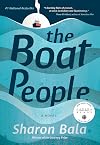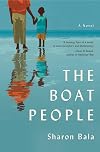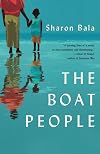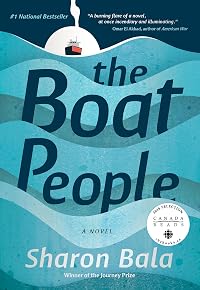
The Boat People
by Sharon Bala
On This Page
Description
"For readers of Khaled Hosseini and Chris Cleave, The Boat People is an extraordinary novel about a group of refugees who survive a perilous ocean voyage only to face the threat of deportation amid accusations of terrorism When a rusty cargo ship carrying Mahindan and five hundred fellow refugees from Sri Lanka's bloody civil war reaches Vancouver's shores, the young father thinks he and his six-year-old son can finally start a new life. Instead, the group is thrown into a detention show more processing center, with government officials and news headlines speculating that among the "boat people" are members of a separatist militant organization responsible for countless suicide attacks--and that these terrorists now pose a threat to Canada's national security. As the refugees become subject to heavy interrogation, Mahindan begins to fear that a desperate act taken in Sri Lanka to fund their escape may now jeopardize his and his son's chance for asylum. Told through the alternating perspectives of Mahindan; his lawyer, Priya, a second-generation Sri Lankan Canadian who reluctantly represents the refugees; and Grace, a third-generation Japanese Canadian adjudicator who must decide Mahindan's fate as evidence mounts against him, The Boat People is a spellbinding and timely novel that provokes a deeply compassionate lens through which to view the current refugee crisis"-- "A debut novel about a thirty-five-year-old Sri Lankan refugee who has survived the harrowing experiences of civil war, a prison camp, and a perilous ocean voyage to Canada -- but his journey has only begun, as he and his young son navigate the morass of the refugee system"-- show lessTags
Recommendations


















































Member Reviews
In 2009, a boat arrives in Canadian waters. On board, are 500 passengers, Tamils fleeing war and persecution in Sri Lanka. Among these passengers is Mahindan, a car mechanic, and his six-year-old son, Sellian. They have come seeking refugee status but their hope for a safe refuge will not be easy. They soon find themselves facing a long and arduous fight to stay. The passengers are placed in detention camps and separated by gender. Children are placed with the women so Sellian is first placed with one of the women whom he hardly knows and is later placed in foster care with a Canadian couple who are well-meaning and kind but who know little of the Tamil culture and nothing of the language.
Mahinder's story is divided between his show more detention as he faces seemingly endless tribunals on his status and flashbacks to the horrors of life in Sri Lanka. Interwoven into the present timeline are two other major characters:
Priya - a second-generation Tamil Canadian and articling law student who wishes to enter corporate law but finds herself pressed into immigration law helping to represent several of the Tamils. Although, at first unhappy about this, she finds herself more and more in sympathy with the refugees and angry at the government's insistence on keeping many of the Tamils confined with the argument that terrorists may be trying to slip into the country under the guise of asylum-seekers. Priya's parents had told her little of their life in Sri Lanka and had chosen not to have her learn Tamil so that she can more easily assimilate into Canadian culture
Grace - a third generation Japanese-Canadian and one of the adjudicators hearing the cases of many of the Tamils including Mahinder. Graces's mother, who is showing signs of Altzheimer's, is obsessed with obtaining reparations from the Canadian government for the property that was confiscated from the family during their internment during WWII and never returned. She has enlisted Grace's two teen-aged daughters in the fight. Grace is determined to remain objective as she listens to the Tamils' stories but, as the government lays out what they claim proves that many of these asylum seekers, including Mahinder, at the very least aided the rebel groups, she begins to wonder what she would have done in their place to protect her family.
The Boat People, the debut novel by author Sharon Bala, is a beautifully written story. It is based on a true event, the arrival in 2010 of a barely sea-worthy boat containing almost 500 Sri Lankan Tamils seeking asylum, an event that divided the nation and raised questions about racism in Canada - even before the boat reached land, then Prime Minister Stephen Harper began a narrative about the possibility of terrorists hidden among the group and the need for caution in dealing with these refugees in the name of security. In her novel, Bala moves the story away from the narrative of refugees as some nebulous and potentially dangerous unknown and makes the reader see them as individuals with backstories that explain why they have risked everything to make this dangerous trip, something that we rarely see examined in news stories and she asks the reader to, like Grace, ponder what they would do to protect their loved ones in the same situation.
Not surprisingly, The Boat People won several awards in Canada and was a finalist for Canada Reads. It is, at the risk of sounding hyperbolic, amazing even more so perhaps because it is a debut novel and because Bala takes what has become, unfortunately, a very controversial subject and moves it from the general and too often ideological and makes it personal - we get to know these people, especially Mahinder, what he was forced to do to survive, to build a safe and secure life for his son. The ending is ambiguous but, given the nature of the story, this is fitting. Of all the books that I have read this year, this one will stay with me the longest and I cannot recommend it highly enough.
Thanks to Netgalley and Penguin Random House Canada for the opportunity to read this book in exchange for an honest review show less
Mahinder's story is divided between his show more detention as he faces seemingly endless tribunals on his status and flashbacks to the horrors of life in Sri Lanka. Interwoven into the present timeline are two other major characters:
Priya - a second-generation Tamil Canadian and articling law student who wishes to enter corporate law but finds herself pressed into immigration law helping to represent several of the Tamils. Although, at first unhappy about this, she finds herself more and more in sympathy with the refugees and angry at the government's insistence on keeping many of the Tamils confined with the argument that terrorists may be trying to slip into the country under the guise of asylum-seekers. Priya's parents had told her little of their life in Sri Lanka and had chosen not to have her learn Tamil so that she can more easily assimilate into Canadian culture
Grace - a third generation Japanese-Canadian and one of the adjudicators hearing the cases of many of the Tamils including Mahinder. Graces's mother, who is showing signs of Altzheimer's, is obsessed with obtaining reparations from the Canadian government for the property that was confiscated from the family during their internment during WWII and never returned. She has enlisted Grace's two teen-aged daughters in the fight. Grace is determined to remain objective as she listens to the Tamils' stories but, as the government lays out what they claim proves that many of these asylum seekers, including Mahinder, at the very least aided the rebel groups, she begins to wonder what she would have done in their place to protect her family.
The Boat People, the debut novel by author Sharon Bala, is a beautifully written story. It is based on a true event, the arrival in 2010 of a barely sea-worthy boat containing almost 500 Sri Lankan Tamils seeking asylum, an event that divided the nation and raised questions about racism in Canada - even before the boat reached land, then Prime Minister Stephen Harper began a narrative about the possibility of terrorists hidden among the group and the need for caution in dealing with these refugees in the name of security. In her novel, Bala moves the story away from the narrative of refugees as some nebulous and potentially dangerous unknown and makes the reader see them as individuals with backstories that explain why they have risked everything to make this dangerous trip, something that we rarely see examined in news stories and she asks the reader to, like Grace, ponder what they would do to protect their loved ones in the same situation.
Not surprisingly, The Boat People won several awards in Canada and was a finalist for Canada Reads. It is, at the risk of sounding hyperbolic, amazing even more so perhaps because it is a debut novel and because Bala takes what has become, unfortunately, a very controversial subject and moves it from the general and too often ideological and makes it personal - we get to know these people, especially Mahinder, what he was forced to do to survive, to build a safe and secure life for his son. The ending is ambiguous but, given the nature of the story, this is fitting. Of all the books that I have read this year, this one will stay with me the longest and I cannot recommend it highly enough.
Thanks to Netgalley and Penguin Random House Canada for the opportunity to read this book in exchange for an honest review show less
Author Sharon Bala has taken a real event....the arrival of a ship in Canada with close to 500 people on it claiming refugee status....and crafted a novel about survival, empathy and living in a time of concern about terrorism.
The story is told from the perspectives of three main characters: Mahindan, a young, widowed father who arrives from Sri Lanka with his young son claiming refugee status. Mahindan is held in a detention centre, separated from his son. We follow him through his multiple detention hearings, his struggles to maintain his relationship with his son and his struggles to learn English. We learn about his back-story, including his interactions with the Tamil Tigers, considered by Canada to be a terrorist organization.
We show more also have the perspective of Grace, the adjudicator who will decide Mahindan's fate. She is a third-generation Canadian, whose mother is still dealing with the loss of all the family's property and civil rights during the internment of Japanese Canadians in WW2. Grace is a political appointee determined to do the right thing. But, there are no certainties when it comes to which stories to believe and which people to release.
Finally, there is Priya, a young lawyer who secured an articling position in corporate law, but finds herself "poached" by another senior lawyer to help represent the Sri Lankan refugee claimants because of her own Sri Lankan heritage. Her family becomes involved, and she learns about their own experiences a generation earlier in Sri Lanka.
What I loved about this book was the complexity of the characters -- they all had rich backgrounds to take their own decisions and actions beyond a simple either/or choice. There is so much we cannot know about others, so whom do we trust? How do we decide who is guilty and who is innocent? The choices we make about refugees (and immigrants) are very topical. Should we err on the side of compassion? Or public safety? Canada represents a beacon of hope for many displaced persons throughout the world. It was especially poignant in the novel when, as the ship is nearing the end of its journey and is about to be intercepted by coast guard vessels and helicopters, the refugees on board cheered when they found it was Canada, not the US, who had arrived. An excellent choice for Canada Reads, and a good story. show less
The story is told from the perspectives of three main characters: Mahindan, a young, widowed father who arrives from Sri Lanka with his young son claiming refugee status. Mahindan is held in a detention centre, separated from his son. We follow him through his multiple detention hearings, his struggles to maintain his relationship with his son and his struggles to learn English. We learn about his back-story, including his interactions with the Tamil Tigers, considered by Canada to be a terrorist organization.
We show more also have the perspective of Grace, the adjudicator who will decide Mahindan's fate. She is a third-generation Canadian, whose mother is still dealing with the loss of all the family's property and civil rights during the internment of Japanese Canadians in WW2. Grace is a political appointee determined to do the right thing. But, there are no certainties when it comes to which stories to believe and which people to release.
Finally, there is Priya, a young lawyer who secured an articling position in corporate law, but finds herself "poached" by another senior lawyer to help represent the Sri Lankan refugee claimants because of her own Sri Lankan heritage. Her family becomes involved, and she learns about their own experiences a generation earlier in Sri Lanka.
What I loved about this book was the complexity of the characters -- they all had rich backgrounds to take their own decisions and actions beyond a simple either/or choice. There is so much we cannot know about others, so whom do we trust? How do we decide who is guilty and who is innocent? The choices we make about refugees (and immigrants) are very topical. Should we err on the side of compassion? Or public safety? Canada represents a beacon of hope for many displaced persons throughout the world. It was especially poignant in the novel when, as the ship is nearing the end of its journey and is about to be intercepted by coast guard vessels and helicopters, the refugees on board cheered when they found it was Canada, not the US, who had arrived. An excellent choice for Canada Reads, and a good story. show less
Immigration is and, in all likelihood—given the state of the world—will remain a polarizing topic for years to come: a flashpoint for divisive sentiment and lines drawn in the sand. Is it courageous or reckless for a fiction writer to tackle what could very well be the hot-button issue of our time, and moreover one that ensures her novel will be viewed through the distorting lens of political opinion? Sharon Bala’s The Boat People manages to come across more as valiant than imprudent, largely due to her considerable storytelling skills, adept characterization, and an engaging multi-perspective structure. The novel, inspired by events that took place in August 2010, when the Thai cargo ship Sun Sea landed at CFB Esquimalt in show more British Columbia with a payload of several hundred Sri Lankan asylum seekers, begins in the immediate aftermath of the boat’s arrival in Canadian waters and the detention of the refugees under the authority of Canada Border Services. The story Bala tells takes us into the lives of three characters impacted by the influx of refugees. Priya Rajasekaran is a law student articling at a high-profile Vancouver law firm. Though her main interest is corporate law, she is commandeered by the firm’s immigration lawyer, named Gigovaz, who is representing some of the refugees, when he discovers her Sri Lankan background. Grace Nakamura, a recently appointed adjudicator for the Immigration and Refugee Board, is overseeing hearings in which the asylum claims of the refugees are being assessed and their fates decided. Grace’s background is Japanese, and her mother, Kumi, who is in the early stages of dementia, has become obsessed with the internment of Japanese Canadians during World War Two, specifically the injustices perpetrated against her family by the Canadian government. Finally, the bulk of the novel is told from the perspective of Tamil refugee Mahindan, who has come to Canada fleeing persecution at the hands of the Sinhalese rulers of Sri Lanka following the bloody civil war. Mahindan, a widower, has made the journey with his six-year-old son Sellian. We see much of the action through Mahindan’s eyes. Bala wants us to share his fear, anger and frustration as he struggles with the language barrier, endures an interminable period of incarceration while his motives for entering the country are endlessly dissected and questioned, and is separated from his son because the facility where he is housed cannot accommodate children. Bala also devotes significant space to Mahindan’s personal history: taking us to his war-torn homeland where we witness Sellian’s birth, the death of Mahindan’s wife Chithra, the daily hardships and torments of living in a place where ethnicity alone is sufficient reason to fear for one’s life, and the events that lead to his decision to get on the boat. The Boat People walks a fine line, navigating its way through several complex narrative threads while struggling at times to maintain a balanced perspective and avoid the tempest of opinion, belief and emotion that any discussion of immigration can stir up. Are the Canadian officials who are barring the way forward for the refugees simply being cautious, or are they motivated first and foremost by politics, kowtowing to the xenophobic sentiments of a jittery and fickle voter base? Is the concern that terrorists have embedded themselves among the refugees justified, or is the official hard line simply for show, an opportunity to discourage similar mass migrations by pushing sound bites into the global news cycle and demonstrate to the world that Canada will not be a pushover haven for all and sundry? Without a doubt Sharon Bala encourages her readers to take a sympathetic and compassionate view of the boat people and consider the choices they face. She also asks that we look beyond our own borders and think about what drives people in desperate circumstances to risk everything for a chance to build a new and better life in an unfamiliar country. In the end, many questions remain unanswered. But that is the nature of life and art. show less
When I hate a character, root for another one, and feel sadness for others, I know that I am reading a great book. This book had all of those things. It also made me feel ashamed of my country. We have done horrible things to others while claiming to be righteous.
Books like this one are difficult to read, both emotionally and intellectually. They reveal things that we as a people do not want to acknowledge. These occurrences are not always in the past. It is up to all of us to be aware, to keep our eyes open, to isolationist views.
Books like this one are difficult to read, both emotionally and intellectually. They reveal things that we as a people do not want to acknowledge. These occurrences are not always in the past. It is up to all of us to be aware, to keep our eyes open, to isolationist views.
This story is narrated from three perspectives. Mahindan, a Tamil, arrives in Vancouver aboard a rusted cargo ship (along with 500 other refugees) seeking asylum for himself and his six-year-old son, Sellian. Priya, a second-generation Sri-Lankan-Canadian, is an articling student who wants to specialize in corporate law but is reluctantly coerced into helping the firm’s immigration lawyer who has Mahindan as one of his clients. Grace, a third-generation Japanese-Canadian, is a political appointee who is charged with adjudicating refugee cases and will determine Mahindan’s ultimate fate.
The theme of the book is that, except for Indigenous Peoples, all Canadians are the descendants of immigrants who came to the country seeking refuge show more and hoping for a better life. The epigraph is a Martin Luther King quotation: “We may have all come on different ships, but we’re in the same boat now.” All the major characters are refugees or the children of immigrants. Grace, for example, tells her daughters, “If your great-grandfather hadn’t gotten on that ship a century ago, none of us would be here” (106). The problem is that people forget that their ancestors were like Mahindan; Grace’s mother points out that Grace is in danger of repeating racist actions of the past: “Certain people felt too rooted, too comfortable. They took it for granted that they deserved to be here more than us. Entitlement closed their hearts” (275).
Mahindan is a very nuanced character. He, like all the refugees on the ship, is considered the enemy until he can prove that he is innocent and so worthy of protection. The problem is that he did work for the Tamil Tigers whom the Canadian government has designated a terrorist group. As a mechanic, he worked on vehicles for the Tigers because he had no choice: “If I had refused, [the Tiger cadre] would have beaten me. If I had refused again, he would have killed me. . . . My wife was pregnant at the time. . . . With my son. The cadre would have set fire to our house, allowed my wife to burn inside” (198). To get himself and his son to safety, he had to do things that went against his morals, but he was desperate.
Mahindan may not be innocent, but Priya’s situation emphasizes that no one is. She ends up learning about some hidden family history which shows that members of her own family had made choices like Mahindan’s. Priya’s uncle says, “Priya, what do you think happens when you terrorize a people, force them to flee, take away their options, then put them in a cage all together? Will they not try and break down the bars? . . . It is very convenient, no? These labels. Terrorist” (230).
Grace is the weakest character because she is used by the author, rather heavy-handedly, to make a political statement. Grace is appointed by Blair, a cabinet minister, and is ill-equipped for her position. An immigration lawyer describes people like Grace: “Half those adjudicators are patronage appointments. Do you think they’ve studied the Act? Done their due diligence? Or do you think they just let Blair drip his poison in their ears? Illegals. Snakeheads. Terrorists. You scare people stupid and then you pull their strings” (119). At the beginning, Grace comes across as very unfeeling. When Mahindan is separated from his son, Grace thinks, “of all the times she had spent working late or away at conferences when the girls were small. These little absences were only short chapters in long parent-child histories” (90). Blair, her boss, seems as clueless: “We have to encourage people to go through the proper channels and not just jump on the first boat that sails into the harbour” (339). Initially, Grace seems to have difficulty seeing connections between her actions and those of government officials who during World War II designated her family as enemy aliens. Fortunately, later she questions her superior so there is hope that Mahindan’s admissibility hearing might have a positive outcome.
The book really does show the complex situation in which refugees find themselves. They flee horrific situations and are often take desperate measures to find a safe haven. Even if they do make it to supposedly safe shores, they face a long process of reviews and hearings. Though the book was quickly eliminated from Canada Reads 2018, I do think that the book is one that can open people’s eyes.
Note: Please check out my reader's blog (https://schatjesshelves.blogspot.ca/) and follow me on Twitter (@DCYakabuski). show less
The theme of the book is that, except for Indigenous Peoples, all Canadians are the descendants of immigrants who came to the country seeking refuge show more and hoping for a better life. The epigraph is a Martin Luther King quotation: “We may have all come on different ships, but we’re in the same boat now.” All the major characters are refugees or the children of immigrants. Grace, for example, tells her daughters, “If your great-grandfather hadn’t gotten on that ship a century ago, none of us would be here” (106). The problem is that people forget that their ancestors were like Mahindan; Grace’s mother points out that Grace is in danger of repeating racist actions of the past: “Certain people felt too rooted, too comfortable. They took it for granted that they deserved to be here more than us. Entitlement closed their hearts” (275).
Mahindan is a very nuanced character. He, like all the refugees on the ship, is considered the enemy until he can prove that he is innocent and so worthy of protection. The problem is that he did work for the Tamil Tigers whom the Canadian government has designated a terrorist group. As a mechanic, he worked on vehicles for the Tigers because he had no choice: “If I had refused, [the Tiger cadre] would have beaten me. If I had refused again, he would have killed me. . . . My wife was pregnant at the time. . . . With my son. The cadre would have set fire to our house, allowed my wife to burn inside” (198). To get himself and his son to safety, he had to do things that went against his morals, but he was desperate.
Mahindan may not be innocent, but Priya’s situation emphasizes that no one is. She ends up learning about some hidden family history which shows that members of her own family had made choices like Mahindan’s. Priya’s uncle says, “Priya, what do you think happens when you terrorize a people, force them to flee, take away their options, then put them in a cage all together? Will they not try and break down the bars? . . . It is very convenient, no? These labels. Terrorist” (230).
Grace is the weakest character because she is used by the author, rather heavy-handedly, to make a political statement. Grace is appointed by Blair, a cabinet minister, and is ill-equipped for her position. An immigration lawyer describes people like Grace: “Half those adjudicators are patronage appointments. Do you think they’ve studied the Act? Done their due diligence? Or do you think they just let Blair drip his poison in their ears? Illegals. Snakeheads. Terrorists. You scare people stupid and then you pull their strings” (119). At the beginning, Grace comes across as very unfeeling. When Mahindan is separated from his son, Grace thinks, “of all the times she had spent working late or away at conferences when the girls were small. These little absences were only short chapters in long parent-child histories” (90). Blair, her boss, seems as clueless: “We have to encourage people to go through the proper channels and not just jump on the first boat that sails into the harbour” (339). Initially, Grace seems to have difficulty seeing connections between her actions and those of government officials who during World War II designated her family as enemy aliens. Fortunately, later she questions her superior so there is hope that Mahindan’s admissibility hearing might have a positive outcome.
The book really does show the complex situation in which refugees find themselves. They flee horrific situations and are often take desperate measures to find a safe haven. Even if they do make it to supposedly safe shores, they face a long process of reviews and hearings. Though the book was quickly eliminated from Canada Reads 2018, I do think that the book is one that can open people’s eyes.
Note: Please check out my reader's blog (https://schatjesshelves.blogspot.ca/) and follow me on Twitter (@DCYakabuski). show less
Another emotional gut-punch of a novel, but in a good way. Based on true events around 2010--a boat of Tamil refugees arriving in Victoria claiming asylum, and the handling of this by Canada and our government--it was difficult to read and impossible to put down. Mahindan's story is utterly heartbreaking and he is as fully realized a character as I've seen in fiction.
The one off note was Grace Nakamura. The author's perspective, and one suspects most of the readers' perspectives, favouring humanitarianism towards refugees, I imagine made it difficult to inhabit the interior life of a conservative appointee deciding refugee cases on the basis of terrorism-avoidance. It never felt quite fully real. The other characters more than made up show more for it, though. show less
The one off note was Grace Nakamura. The author's perspective, and one suspects most of the readers' perspectives, favouring humanitarianism towards refugees, I imagine made it difficult to inhabit the interior life of a conservative appointee deciding refugee cases on the basis of terrorism-avoidance. It never felt quite fully real. The other characters more than made up show more for it, though. show less
A fascinating and illuminating look into our refugee system, at the least the one that was around for the " boat people " that arrived on British Columbia's shores in 2009 and 2010, under the Stephen Harper Government. This book is fiction, but loosely based on the arrival of two ships , the Ocean Lady and the M.V. Sea Sun. Both ships arrived on BC's shore's , carrying 550 Tamil immigrants from Sri Lanka. This is the story of the dreadful events that led up to people fleeing Sri Lanka, and the very unfortunate and unconscionable way that the refugees were treated. On one hand, there were kind people wanting to help the refugees, but on the other hand, the government separated families and incarcerated many of the refugees until lengthy show more background checks could be done.
I'm giving it 4 stars because I really feel it's an important book for all Canadians to read and understand what refugees go through as they are processed through the system. I also gained a great deal of knowledge about the the civil war in Sri Lanka and how we often assume that the Tamil people are " Tamil Tigers."
My criticisms would be that perhaps the book was a bit overlong and was not at subtle in its story telling. I felt a bit like I was being lectured at by the author, and her prose was a bit clunky. That said, I think it is a very important book to read.
4 stars. Recommended. show less
I'm giving it 4 stars because I really feel it's an important book for all Canadians to read and understand what refugees go through as they are processed through the system. I also gained a great deal of knowledge about the the civil war in Sri Lanka and how we often assume that the Tamil people are " Tamil Tigers."
My criticisms would be that perhaps the book was a bit overlong and was not at subtle in its story telling. I felt a bit like I was being lectured at by the author, and her prose was a bit clunky. That said, I think it is a very important book to read.
4 stars. Recommended. show less
Members
- Recently Added By
Published Reviews
ThingScore 75
A real ship of refugees inspires a novel about the messy consequences of war... The headlines inspired Bala to write and launch her first novel as books about migrants are at flood tide. This one toggles between Sri Lankan flashbacks and Vancouver, British Columbia, where the passengers come ashore, mistaking the helicopter and Canadian ships for a welcome party...This is never a subtle show more book...Bala’s writing is generally crisp, with occasional glints of humor. ..This first book has a workshopped feel as well as a few memorable passages.. But compared to nuanced recent literature set amid Sri Lankan strife—On Sal Mal Lane by Ru Freeman or The Story of a Brief Marriage by Anuk Arudpragasam—this is thin fare.
A strong premise runs aground trying to form a set of convictions into a novel. show less
A strong premise runs aground trying to form a set of convictions into a novel. show less
added by vancouverdeb
This news story provided the inspiration for Newfoundland-based author Sharon Bala's debut novel, The Boat People. The narrative is divided between Vancouver in the present and Sri Lanka in recollections..Bala displays her talent as a compassionate, reflective author early when she conveys this heartbreaking and absurd misunderstanding in two ways, through her characters....As the novel show more progresses, Bala carefully replaces the reader's instinctive sympathy with much more challenging ambivalence...Bala has vividly conjured worlds, both on Canadian soil and back in Sri Lanka, that show the dualities of living in any country – and that show how powerful the need for safety, the need for home, is in all of us. The characters Bala brings together in The Boat People are different and the same. They all want one thing: to be able to breathe. What we also get from a novel like this is a new way of seeing. show less
added by vancouverdeb
Lists

Amazon best fictional genre picks monthly for 2018
418 works; 9 members

HARPER LEE PRIZE FOR LEGAL FICTION
10 works; 1 member

Books Read in 2018
4,360 works; 110 members

Canada Reads Winners and Nominees
129 works; 9 members

Books Read in 2021
5,361 works; 113 members

Fiction: Asia
85 works; 2 members
Author Information

4 Works 323 Members
Awards and Honors
Awards
Common Knowledge
- Canonical title
- The Boat People
- Original publication date
- 2018
- People/Characters
- Priya Rajakaran; Mr. Gigovaz; Joyce Lau; Mahindan; Sellian
- Important places
- Sir Lanka; Canada
- Epigraph
- We may have all come on different ships, but we're in the same boat now - Martin Luther King JR.
- Dedication
- This book is for my parents, Mohan and Swarna Bala.
- First words
- Mahindan was flat on his back when the screaming began, one arm right - angled over his eyes.
- Last words
- (Click to show. Warning: May contain spoilers.)I'm ready, Mahindan said, and stepped over the threshold.
- Blurbers
- El Akkad, Omar; Kutsukake, Lynne
Classifications
Statistics
- Members
- 312
- Popularity
- 102,328
- Reviews
- 25
- Rating
- (4.02)
- Languages
- English, French, German
- Media
- Paper, Audiobook, Ebook
- ISBNs
- 14
- ASINs
- 3