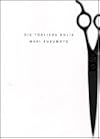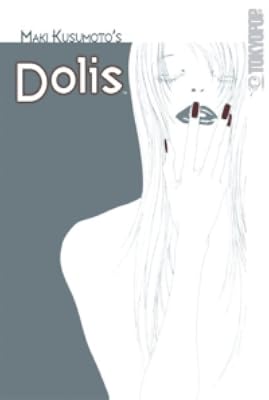
Dolis
by Maki Kusumoto
On This Page
Description
When Kishi falls head-over-heels in love with Mitsu, he soon discovers another side to this seemingly flawless woman. As the drama and romance between Mitsu and Kishi unfolds towards an unforgettable climax, the couple takes an extraordinary excursion into the uncharted arena where desire and romance confront hope and survival.Tags
Recommendations




































Member Reviews
(spoilage) ironically billed by tokyopop as a "drama/romance". a kind of deconstruction, really: an autopsy that lends new meaning to the phrase 'lost in love'. definitely aimed at a grownup demographic: josei or seinen, though? i think maybe only a woman would write it, even though by the end it's the male voice that by default owns the view. and the tabula rasa described, well-grounded in psychology, knows quite well the territory she inhabits and can speak for herself. but it's not clinical, this treatment; instead it pulls the reader into itself, claustrophobic. the interiority of both characters is sympathetically drawn. and the cut's sharp enough that the reader bleeds, is not mere audience, pulled in and even complicit somehow in show more the pain. also, as befits its subject matter, very beautiful on every page, hard as it might get sometimes to look.
when Kishi meets Mitsu, he sees her as his ideal woman. he is a musician; she is a grad student writing a thesis on aesthetics. but Mitsu, he notices, seems to be waiting for something. and her world seems so internalized she's hardly there. she asks him, not about himself, but how he sees her. her books include Hans Bellmer, Helmut Newton, Irina Ionesco: among them Kishi finds a note that says only DOLIS. he asks her what it means. it's her, she says, as an early lover will tell him later. she is object, not subject, in her own eyes. the dolly. Kishi sees beauty. she feels cut off. cut out. twice in the narrative, she cuts her hair.
the text of the page in Mitsu's PoV is full of blank spaces. Kishi's questions overflow the panel boxes. the figures are barely suggested. she cuts herself to feel, telling herself she won't go deeper. but then she must. perhaps she has no reflection, but in metaphor she is lost inside the artist's need to paint her. the gorgeous monochromes of the unmoored panels turn red as Mitsu, almost mute, bleeds out. forks become knives; the world bleeds sharp edges. the panel boundaries disappear. she lives, he lives, only inside the locked room box which they both inhabit alone. deep inside Mitsu's depthless but bottomless environment, the text belongs more and more to Kishi, using more and more words in an attempt to understand her, meet her, inhabit her. are they really real inside the Schroedinger box before it's opened? even the sketches almost disappear, as the real girl disappears forever into the ideal. yet she's the one who in the end opens the door.
then only Kishi is left, to choose. it's an evocation of a downward spiral. you can hear the train, but you're in it, cutting, feeling... nothing down to the bone, that shattering sense of loss inside the Other, that too-full intensity shown up in relief against too-empty feeling. calculate the weight of it, the pressure exerted in entropy, in space, in time slammed up against the other side of the crypt door. what does it take to open it? to close it? and can we ever call it, a pathology, two solitudes, the intensity of love? show less
when Kishi meets Mitsu, he sees her as his ideal woman. he is a musician; she is a grad student writing a thesis on aesthetics. but Mitsu, he notices, seems to be waiting for something. and her world seems so internalized she's hardly there. she asks him, not about himself, but how he sees her. her books include Hans Bellmer, Helmut Newton, Irina Ionesco: among them Kishi finds a note that says only DOLIS. he asks her what it means. it's her, she says, as an early lover will tell him later. she is object, not subject, in her own eyes. the dolly. Kishi sees beauty. she feels cut off. cut out. twice in the narrative, she cuts her hair.
the text of the page in Mitsu's PoV is full of blank spaces. Kishi's questions overflow the panel boxes. the figures are barely suggested. she cuts herself to feel, telling herself she won't go deeper. but then she must. perhaps she has no reflection, but in metaphor she is lost inside the artist's need to paint her. the gorgeous monochromes of the unmoored panels turn red as Mitsu, almost mute, bleeds out. forks become knives; the world bleeds sharp edges. the panel boundaries disappear. she lives, he lives, only inside the locked room box which they both inhabit alone. deep inside Mitsu's depthless but bottomless environment, the text belongs more and more to Kishi, using more and more words in an attempt to understand her, meet her, inhabit her. are they really real inside the Schroedinger box before it's opened? even the sketches almost disappear, as the real girl disappears forever into the ideal. yet she's the one who in the end opens the door.
then only Kishi is left, to choose. it's an evocation of a downward spiral. you can hear the train, but you're in it, cutting, feeling... nothing down to the bone, that shattering sense of loss inside the Other, that too-full intensity shown up in relief against too-empty feeling. calculate the weight of it, the pressure exerted in entropy, in space, in time slammed up against the other side of the crypt door. what does it take to open it? to close it? and can we ever call it, a pathology, two solitudes, the intensity of love? show less
Ratings
Members
- Recently Added By
Lists

Best Science Fiction Comics and Graphic Novels
144 works; 11 members
Author Information
36+ Works 95 Members
Series
Belongs to Publisher Series
Common Knowledge
Classifications
- Genre
- Graphic Novels & Comics
- DDC/MDS
- 741.5952 — Arts & recreation Drawing & decorative arts Drawing Comic books, graphic novels, fotonovelas, cartoons, caricatures, comic strips History, geographic treatment, biography Asian Japanese
- LCC
- PN6790 .J33 .K8513 — Language and Literature Literature (General) Literature (General) Collections of general literature Comic books, strips, etc.
- BISAC
Statistics
- Members
- 41
- Popularity
- 715,778
- Reviews
- 1
- Rating
- (3.50)
- Languages
- English, French, Japanese
- Media
- Paper
- ISBNs
- 4