On This Page
Description
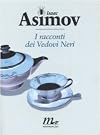
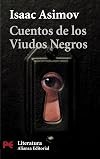
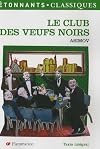
There were six of them. Professional men and their waiter. They gather at the Milano Restaurant once a month for good food and good conversation. But lately the Black Widowers have added a new entertainment to their meetings. They have begun to solve mysteries, murders, and conspiracies of seemingly impossible dimensions.Tags
Recommendations
















Member Reviews
The Black Widowers are an amusing (if chauvinistically all-male) group of bickering friends who meet once a month for dinner, with an invited guest to provide variety. Over the twelve courses presented, they (invariably Henry the waiter) develop a tradition of solving some problem or mystery for the guest. Some of the twists are better than others but the setting adds charm to the stories, all of which I found eminently enjoyable.
This is a review of the entire series of Black Widower books.
I'm a bit of a sucker for classic mysteries, so when I found out that Isaac Asimov, one of my favorite childhood authors, had published a number of short mysteries in the style of Agatha Christie, I immediately searched them out at the library.
His mysteries all follow the same short story format. The Black Widowers, a fictional men-only dinner club, meet monthly at a restaurant to dine, socialize, and interview the host's guest. The guest (or occasionally the host) presents a puzzle drawn from his personal or professional life, and the Black Widowers attempt some armchair detective work before Henry, the waiter, invariably deduces the solution. These are not forensics and show more footprints crime cases, obviously. In fact, in many instances, no crime took place. There was the story of a man whose wife disappeared from a restaurant and turned up at home safe and sound, one in which a man who is convinced that his lover has cheated at an academic exam, and several instances of guests who need to unravel a riddle to claim an inheritance from a deceased, idiosyncratic friend. Etc. Generally, the solution rests upon peeling away irrelevant information to reveal a simple, obvious explanation. Kind of like Miss Marple meets Encyclopedia Brown (historical facts and trivia have been the crux of the issue on many occasions).
However, it's the structure in addition to the (rather mundane) mysteries that makes these stories so appealing. The six (seven, counting Hentry) members of the Black Widowers are caricatures, but nonetheless solidly consistent in their characterization. (I wouldn't say that any of the regulars involve themselves in any sort of character arc or personal growth, but that's not really the point. Hercule Poirot and Miss Marple never really grew, either.) My problem with them is that Asimov relies too much on the same idiosyncracies, such that a number of people are loud and opinionated, and as they all participate equally in all conversations on all subjects, it becomes difficult to differentiate between them. Nonetheless, their very presence is reassuring; when you read a Black Widower story, you know exactly what you'll get. The stories generally devote half their length to whatever subject Asimov feels like discussing, whether it's extrasensory perception or extraterrestrial life or English grammar, and I found that just as enjoyable as the puzzle-solving half.
Most of the stories were published in various mystery or science fiction magazines before being collected by Asimov in several 12-story anthologies. Asimov himself writes a little blurb after each one describing its history, and his comments are charming to read. The last book was published after Asimov's death and collects a few stories that were not anthologized in the previous volumes. It also contains a rather sappy foreward by Harlan Ellison, somewhat cluttered with in-jokes and personal references, reprints of the "best of" stories as selected by Charles Ardai, and two original stories not by Asimov. I actually haven't finished reading this last one yet. Once I do, there will be no more Black Widower stories, and they have been such superb comfort fare that I find myself saving the last few for when I truly need them. show less
I'm a bit of a sucker for classic mysteries, so when I found out that Isaac Asimov, one of my favorite childhood authors, had published a number of short mysteries in the style of Agatha Christie, I immediately searched them out at the library.
His mysteries all follow the same short story format. The Black Widowers, a fictional men-only dinner club, meet monthly at a restaurant to dine, socialize, and interview the host's guest. The guest (or occasionally the host) presents a puzzle drawn from his personal or professional life, and the Black Widowers attempt some armchair detective work before Henry, the waiter, invariably deduces the solution. These are not forensics and show more footprints crime cases, obviously. In fact, in many instances, no crime took place. There was the story of a man whose wife disappeared from a restaurant and turned up at home safe and sound, one in which a man who is convinced that his lover has cheated at an academic exam, and several instances of guests who need to unravel a riddle to claim an inheritance from a deceased, idiosyncratic friend. Etc. Generally, the solution rests upon peeling away irrelevant information to reveal a simple, obvious explanation. Kind of like Miss Marple meets Encyclopedia Brown (historical facts and trivia have been the crux of the issue on many occasions).
However, it's the structure in addition to the (rather mundane) mysteries that makes these stories so appealing. The six (seven, counting Hentry) members of the Black Widowers are caricatures, but nonetheless solidly consistent in their characterization. (I wouldn't say that any of the regulars involve themselves in any sort of character arc or personal growth, but that's not really the point. Hercule Poirot and Miss Marple never really grew, either.) My problem with them is that Asimov relies too much on the same idiosyncracies, such that a number of people are loud and opinionated, and as they all participate equally in all conversations on all subjects, it becomes difficult to differentiate between them. Nonetheless, their very presence is reassuring; when you read a Black Widower story, you know exactly what you'll get. The stories generally devote half their length to whatever subject Asimov feels like discussing, whether it's extrasensory perception or extraterrestrial life or English grammar, and I found that just as enjoyable as the puzzle-solving half.
Most of the stories were published in various mystery or science fiction magazines before being collected by Asimov in several 12-story anthologies. Asimov himself writes a little blurb after each one describing its history, and his comments are charming to read. The last book was published after Asimov's death and collects a few stories that were not anthologized in the previous volumes. It also contains a rather sappy foreward by Harlan Ellison, somewhat cluttered with in-jokes and personal references, reprints of the "best of" stories as selected by Charles Ardai, and two original stories not by Asimov. I actually haven't finished reading this last one yet. Once I do, there will be no more Black Widower stories, and they have been such superb comfort fare that I find myself saving the last few for when I truly need them. show less
Asimov may be best known for his science fiction, but he was also a master of murder mysteries. Each Black Widowers book is an anthology of short stories with the same group of characters. The "Black Widowers" is a men's club that meets once a month to host a guest for dinner. Each guest always has a mystery that needs to be solved, and the butler Henry (also a club member) always solves it. These mysteries are heavily based on logic and are actually more puzzles than mysteries. Readers have to think carefully to "solve" the case without waiting for the author to introduce a villain, or device to move the plot. Great brain teasers that really satisfy - fabulous! It is a terrible shame these books are OOP.
Fun little mysteries written in Asimov's approachable, friendly style. Not terribly deep, but one shouldn't crack open a book of short, formulaic stories expecting that anyway.
Well thought out plots as per the usual Isaac standards.
I think he rivals Arthur Conan-Doyle here.
I think he rivals Arthur Conan-Doyle here.
Short puzzle stories rather than crime and detection tales, each resolved by Asimov's Sherlock Holmes, namely Henry the impassive waiter and confidante of members of the Black Widowers dining club.
First volume of Asimov's interesting fellows in the Black Widowers and their entertaining mystery stories.
Members
- Recently Added By
Lists

Books Read in 2015
3,299 works; 129 members

Books Read in 2018
4,360 works; 110 members

Books Read in 2021
5,361 works; 114 members
Author Information

2,439+ Works 294,738 Members
Isaac Asimov was born in Petrovichi, Russia, on January 2, 1920. His family emigrated to the United States in 1923 and settled in Brooklyn, New York, where they owned and operated a candy store. Asimov became a naturalized U.S. citizen at the age of eight. As a youngster he discovered his talent for writing, producing his first original fiction at show more the age of eleven. He went on to become one of the world's most prolific writers, publishing nearly 500 books in his lifetime. Asimov was not only a writer; he also was a biochemist and an educator. He studied chemistry at Columbia University, earning a B.S., M.A. and Ph.D. In 1951, Asimov accepted a position as an instructor of biochemistry at Boston University's School of Medicine even though he had no practical experience in the field. His exceptional intelligence enabled him to master new systems rapidly, and he soon became a successful and distinguished professor at Columbia and even co-authored a biochemistry textbook within a few years. Asimov won numerous awards and honors for his books and stories, and he is considered to be a leading writer of the Golden Age of science fiction. While he did not invent science fiction, he helped to legitimize it by adding the narrative structure that had been missing from the traditional science fiction books of the period. He also introduced several innovative concepts, including the thematic concern for technological progress and its impact on humanity. Asimov is probably best known for his Foundation series, which includes Foundation, Foundation and Empire, and Second Foundation. In 1966, this trilogy won the Hugo award for best all-time science fiction series. In 1983, Asimov wrote an additional Foundation novel, Foundation's Edge, which won the Hugo for best novel of that year. Asimov also wrote a series of robot books that included I, Robot, and eventually he tied the two series together. He won three additional Hugos, including one awarded posthumously for the best non-fiction book of 1995, I. Asimov. "Nightfall" was chosen the best science fiction story of all time by the Science Fiction Writers of America. In 1979, Asimov wrote his autobiography, In Memory Yet Green. He continued writing until just a few years before his death from heart and kidney failure on April 6, 1992. (Bowker Author Biography) show less
Series

Belongs to Publisher Series
Zwarte Beertjes (1679)
Work Relationships
Is contained in
Contains
Common Knowledge
- Canonical title
- Tales of the Black Widowers
- Original title
- Tales of the Black Widowers
- Original publication date
- 1974 (collection) (collection)
- People/Characters
- Geoffrey Avalon; James Drake; Mario Gonzalo; Roger Halsted; Henry Jackson; Emmanuel Rubin (show all 17); Thomas Trumbull; Jeremy Atwood; Hanley Bartram (private investigator); Samuel Davenheim (Colonel); Voss Eldridge; Aloysius Gordon; Ronald Klein; Simon Levy; Waldemar Long; John Sand (the man who never told a lie); Arnold Stacey
- Important places
- New York, New York, USA; Milano Restaurant, New York, New York, USA
- Dedication
- to Ellery Queen's Mystery Magazine, to David Ford and to the Trap-door Spiders for reasons detailed in the introduction
- First words
- Introduction: Because I have a friendly and personal writing style, readers have a tendency to write to me in a friendly and personal way, asking all kinds of friendly and personal questions.
The acquisitive chuckle: Hanley Bartram was the guest, that night, of the Black Widowers, who monthly met in their quiet haunt and vowed death to any female who intruded—for that one night per month, at any rate. - Last words
- (Click to show. Warning: May contain spoilers.)'Only very few are as interested in waiters as I am.' (Out of sight)
- Publisher's editor
- Dannay, Fred (Ellery Queen)
- Original language
- English
Classifications
Statistics
- Members
- 808
- Popularity
- 34,458
- Reviews
- 12
- Rating
- (3.69)
- Languages
- 6 — Catalan, Dutch, English, French, Italian, Spanish
- Media
- Paper, Ebook
- ISBNs
- 17
- ASINs
- 6