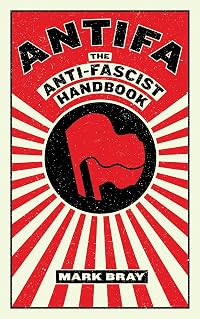
Antifa: The Anti-Fascist Handbook
by Mark Bray
On This Page
Description
In the wake of tragic events in Charlottesville, Virginia, and Donald Trump's initial refusal to denounce the white nationalists behind it all, the "antifa" opposition movement is suddenly appearing everywhere. But what is it, precisely? And where did it come from? As long as there has been fascism, there has been anti-fascism-also known as "antifa." Born out of resistance to Mussolini and Hitler in Europe during the 1920s and '30s, the antifa movement has suddenly burst into the headlines show more amid opposition to the Trump administration and the alt-right. They could be seen in news reports, often clad all in black with balaclavas covering their faces, demonstrating at the presidential inauguration, and on California college campuses protesting far-right speakers, and most recently, on the streets of Charlottesville, Virginia, protecting, among others, a group of ministers including Cornel West from neo-Nazi violence. (West would later tell reporters, "The anti-fascists saved our lives.")Simply, antifa aims to deny fascists the opportunity to promote their oppressive politics, and to protect tolerant communities from acts of violence promulgated by fascists. Critics say shutting down political adversaries is anti-democratic; antifa adherents argue that the horrors of fascism must never be allowed the slightest chance to triumph again. In a smart and gripping investigation, historian and former Occupy Wall Street organizer Mark Bray provides a detailed survey of the full history of anti-fascism from its origins to the present day-the first transnational history of postwar anti-fascism in English. Based on interviews with anti-fascists from around the world, Antifa details the tactics of the movement and the philosophy behind it, offering insight into the growing but little-understood resistance fighting back against fascism in all its guises. show lessTags
Recommendations
















Member Reviews
Having grown in the sixties, public protest has been normalized for me. I have personal experience as well with the alt-right and Antifa as they were protesting on the college campus where I work. I am glad they were there to protest, but as with any protest that turns to violence -- you have to ask yourself is there an alternative. My belief is that if you don't stand up for yourself, no one else will. It's easy to sit in your living room and make judgements about how other people should act. With that said, this is a thorough history of the anti-fascist movement in both Europe and the United States. Thank you, Mark Bray, for writing it. I received this book as an ARC through Edelweiss Plus and the publishers.
A history of the militant struggle against fascism during peacetime from around 1900 to the present. It's important to be aware of the contribution of the militant struggle to keeping fascism down. But, as the book itself says, we also need to build a broad popular movement to prevent fascism gaining a foothold on the political landscape.
The major problem with this book is that it doesn’t mention any mainstream anti-fascist activism (examples in the UK include Unite Against Fascism, Hope Not Hate, and Movement for Justice). The policy of no platform for racists has been very widely used to prevent racists and fascists from speaking at universities and other venues.
If you didn’t know anything about anti fascist organizations, you show more could come away from this book with the impression that the only thing that held fascism at bay was the armed struggle against it — which is clearly important, but not the whole story.
Given the fact that we are currently dealing with an upsurge of fascist violence, and the penetration of fascistic behaviour and policy into the governments of various countries (the UK and the USA among them), a re-evaluation of the contribution of armed antifa groups was clearly overdue.
However, I would have liked to see more about groups like Unite Against Fascism, Hope Not Hate, and Movement for Justice.
I did find the book somewhat unputdownable and would definitely recommend reading it. It's very well written and explains a lot that was previously unclear to me. It's very clear that we all owe a debt of gratitude to the generations of unsung Antifa whose eternal vigilance has kept the fascists from organizing.
The section on free speech is important, as it provides good arguments as to why fascist ideas should have no place in public discourse, and there's no point debating them because they are not rational.
We as a culture have to push back against all manifestations of racism: micro-aggressions, slurs, hate speech, statues glorifying colonialism, under-representation of BAME/BIPOC people in the media, racist policing, courts, prisons, all the way to fascist and white supremacist groups. It will take a broad and deep approach to root out fascism and racism and white supremacism.
The book concludes with the view that both mass organization against fascism and militant anti-fascism are necessary to prevent outbreaks of fascism (such as the ones we are currently witnessing). show less
The major problem with this book is that it doesn’t mention any mainstream anti-fascist activism (examples in the UK include Unite Against Fascism, Hope Not Hate, and Movement for Justice). The policy of no platform for racists has been very widely used to prevent racists and fascists from speaking at universities and other venues.
If you didn’t know anything about anti fascist organizations, you show more could come away from this book with the impression that the only thing that held fascism at bay was the armed struggle against it — which is clearly important, but not the whole story.
Given the fact that we are currently dealing with an upsurge of fascist violence, and the penetration of fascistic behaviour and policy into the governments of various countries (the UK and the USA among them), a re-evaluation of the contribution of armed antifa groups was clearly overdue.
However, I would have liked to see more about groups like Unite Against Fascism, Hope Not Hate, and Movement for Justice.
I did find the book somewhat unputdownable and would definitely recommend reading it. It's very well written and explains a lot that was previously unclear to me. It's very clear that we all owe a debt of gratitude to the generations of unsung Antifa whose eternal vigilance has kept the fascists from organizing.
The section on free speech is important, as it provides good arguments as to why fascist ideas should have no place in public discourse, and there's no point debating them because they are not rational.
We as a culture have to push back against all manifestations of racism: micro-aggressions, slurs, hate speech, statues glorifying colonialism, under-representation of BAME/BIPOC people in the media, racist policing, courts, prisons, all the way to fascist and white supremacist groups. It will take a broad and deep approach to root out fascism and racism and white supremacism.
The book concludes with the view that both mass organization against fascism and militant anti-fascism are necessary to prevent outbreaks of fascism (such as the ones we are currently witnessing). show less
A nice overview of antifascist activities and arguments of why they were and are still needed. Of course, the author wasn't even attempting to hide their biases and personal viewpoints, but I think that helped bolster the impassioned message, no matter how morally ambigious it is.
Informative about the roots and current struggles of Antifa groups. However, the first chapter reads like a Trotsky tract with an eye-crossing rapid fire of political faction names both foreign and domestic making the read a little bit of a slog but it is necessary for political grounding when moving on to the more interesting second chapter and beyond. The same problem is apparent in later chapters but not to the degree as the first and the reading off of org names is necessary. The paragraph-long anecdote at the beginning of chapter 6 was enlightening and I found this quote a good measure of Antifa itself:
You fight them by writing letters and making phone calls so you don't have to fight them with fists. You fight them with fists so show more you don't have to fight them with knives. You fight them with knives so you don't have to fight them with guns. You fight them with guns so you don't have to fight them with tanks.
-Murray from Baltimore
There were many pertinent historical and unfortunately current examples as to why Antifa is a necessary force on the stage of modern politics. Overall I would recommend this to anyone with a passing interest in Antifa especially those fed up with the far right and Trump emboldened racist groups. show less
You fight them by writing letters and making phone calls so you don't have to fight them with fists. You fight them with fists so show more you don't have to fight them with knives. You fight them with knives so you don't have to fight them with guns. You fight them with guns so you don't have to fight them with tanks.
-Murray from Baltimore
There were many pertinent historical and unfortunately current examples as to why Antifa is a necessary force on the stage of modern politics. Overall I would recommend this to anyone with a passing interest in Antifa especially those fed up with the far right and Trump emboldened racist groups. show less
I wanted to read Antifa: The Anti-Fascist Handbook by historian Mark Bray because I am conflicted by Antifa. On the one hand, every human being who aspires to morality and decency must be anti-fascist. On the other hand, violence other than in self-defense is an immoral tactic. It is also strategically wrong. However, I wanted to understand how they perceived this moral dilemma.
The first chapters are a history of the anti-fascist movement. This resembles nothing so much as a military campaign history, recounting the endless encounters and troop movements of nearly a century of anti-fascist struggle. It is the dreariest collection of acronyms and mentioning that I have read. Bray seems driven by a desire not to forget any chapter of show more Antifa, no matter how small, for fear of offending. To be fair, I think there is nothing duller than military histories that follow every company from battle to battle to battle. It’s not more interesting when it’s about political activism, even though it is important to me.
It would be far better to have an appendix listing the Antifa organizations or perhaps a graphic timeline. This is boring. It also makes it hard to see broad historical movement because we are awash in the minutia. Nonetheless, Bray makes the argument that Antifa was successful in making fascism “not worth it” and kept them at bay through the end of the 20th century.
In the third chapter, Bray covers more recent fascist and anti-fascist conflict – conflict the fascists are winning by changing their tactics and anti-fascists seem to be losing by not changing their tactics. We certainly see the results with Golden Dawn in Green, National Front in France, and the alt-right in the United States. Encouraged by the defective election of Donald Trump, Nazis are marching in the open and Antifa is standing up to them. From this history, Bray condenses five historical lessons to inform anti-fascist organizing.
The rest of the book is far more interesting. Bray wrestles with the many critiques of Antifa from free speech legalists and nonviolent direct action proponents. Some of his arguments are very persuasive and center on what Karl Popper called the Paradox of Tolerance. It’s kind of weird that Bray does not mention Popper at all since his argument echoes Popper’s argument that tolerating the intolerant leads to an intolerant society. It’s not that he does not reach to philosophy, he tackles John Milton’s Areopagitica asserting that Milton is wrong on the fact, Truth does not always win. If the first half of the book was half as interesting as the second, I would be far more enthusiastic about it.
I agree that there should be no platform for fascists. I don’t want the government to suppress their speech, but I do want anyone who gives them air to feel the swift reprisal of public opinion, of boycotts, public shaming, and economic punishment. If a university is committed to honest scholarship, they will never give air to fascists. There is no academic integrity in promoting lies. Academic freedom is expansive, but it must not expand to promoting racist, genocidal ideologies.
Bray is correct that fascism does not require a military coup to take power. Historically, it gained power much the way the alt-right is gaining power and the way Trump succeeded in being installed by the Electoral College and Putin. They get money and support from corporatists while recruiting working-class whites with racist blandishments.
As to violence, while I can understand the rationale, when he gives examples of nonviolent protesters who were protected by Antifa from fascist violence, I recall that the success of the civil rights movement was won by the moral contrast between the nonviolent resistance and the abuses and violence of the state. When that contrast is lost, can we win?
These are tough questions and I don’t know the answers. I think this book is a useful guide to some of the questions and to understanding how people in Antifa understand the dilemma – though there is no unanimity and Antifa members are divided on tactics, but they are united always, as we all should be, in opposing fascism.
As to all of us being Antifa, Bray makes that much more complicated. For him, Antifa is not just anti-fascist. It is also anarchic and anti-capitalist. For him, there’s no such thing as a liberal anti-fascist. As economic injustice creates space for fascist recruitment, he argues that anti-fascism must be anti-capitalist. This seems to come from the same false presumption that economic justice will solve racial justice, a fatal misunderstanding of how racism is how economic injustice is perpetuated.
I received an e-galley of Antifa: The Anti-Fascist Handbook from the publisher through Edelweiss.
Antifa: The Anti-Fascist Handbook at Melville House
Mark Bray author site
https://tonstantweaderreviews.wordpress.com/2017/09/26/9781612197036/ show less
The first chapters are a history of the anti-fascist movement. This resembles nothing so much as a military campaign history, recounting the endless encounters and troop movements of nearly a century of anti-fascist struggle. It is the dreariest collection of acronyms and mentioning that I have read. Bray seems driven by a desire not to forget any chapter of show more Antifa, no matter how small, for fear of offending. To be fair, I think there is nothing duller than military histories that follow every company from battle to battle to battle. It’s not more interesting when it’s about political activism, even though it is important to me.
It would be far better to have an appendix listing the Antifa organizations or perhaps a graphic timeline. This is boring. It also makes it hard to see broad historical movement because we are awash in the minutia. Nonetheless, Bray makes the argument that Antifa was successful in making fascism “not worth it” and kept them at bay through the end of the 20th century.
In the third chapter, Bray covers more recent fascist and anti-fascist conflict – conflict the fascists are winning by changing their tactics and anti-fascists seem to be losing by not changing their tactics. We certainly see the results with Golden Dawn in Green, National Front in France, and the alt-right in the United States. Encouraged by the defective election of Donald Trump, Nazis are marching in the open and Antifa is standing up to them. From this history, Bray condenses five historical lessons to inform anti-fascist organizing.
The rest of the book is far more interesting. Bray wrestles with the many critiques of Antifa from free speech legalists and nonviolent direct action proponents. Some of his arguments are very persuasive and center on what Karl Popper called the Paradox of Tolerance. It’s kind of weird that Bray does not mention Popper at all since his argument echoes Popper’s argument that tolerating the intolerant leads to an intolerant society. It’s not that he does not reach to philosophy, he tackles John Milton’s Areopagitica asserting that Milton is wrong on the fact, Truth does not always win. If the first half of the book was half as interesting as the second, I would be far more enthusiastic about it.
I agree that there should be no platform for fascists. I don’t want the government to suppress their speech, but I do want anyone who gives them air to feel the swift reprisal of public opinion, of boycotts, public shaming, and economic punishment. If a university is committed to honest scholarship, they will never give air to fascists. There is no academic integrity in promoting lies. Academic freedom is expansive, but it must not expand to promoting racist, genocidal ideologies.
Bray is correct that fascism does not require a military coup to take power. Historically, it gained power much the way the alt-right is gaining power and the way Trump succeeded in being installed by the Electoral College and Putin. They get money and support from corporatists while recruiting working-class whites with racist blandishments.
As to violence, while I can understand the rationale, when he gives examples of nonviolent protesters who were protected by Antifa from fascist violence, I recall that the success of the civil rights movement was won by the moral contrast between the nonviolent resistance and the abuses and violence of the state. When that contrast is lost, can we win?
These are tough questions and I don’t know the answers. I think this book is a useful guide to some of the questions and to understanding how people in Antifa understand the dilemma – though there is no unanimity and Antifa members are divided on tactics, but they are united always, as we all should be, in opposing fascism.
As to all of us being Antifa, Bray makes that much more complicated. For him, Antifa is not just anti-fascist. It is also anarchic and anti-capitalist. For him, there’s no such thing as a liberal anti-fascist. As economic injustice creates space for fascist recruitment, he argues that anti-fascism must be anti-capitalist. This seems to come from the same false presumption that economic justice will solve racial justice, a fatal misunderstanding of how racism is how economic injustice is perpetuated.
I received an e-galley of Antifa: The Anti-Fascist Handbook from the publisher through Edelweiss.
Antifa: The Anti-Fascist Handbook at Melville House
Mark Bray author site
https://tonstantweaderreviews.wordpress.com/2017/09/26/9781612197036/ show less
CONTENT SUMMARY:
This is a book for those who are curious and want to learn more about anti-fascism but aren't very familiar with it. I saw the book as separated into two main categories, the history of antifascist struggle in Europe and USA and an analysis of antifascist philosophy and tactics.
THOUGHTS:
In the first part there are a few key nations that are in focus. Germany, Italy, England, France, Greece and the United States. Antifascist struggle in other parts of Europe is also examined but not to the same extent and depth as those nations mentioned. Even though I really enjoyed reading and learning more about the history of anti-fascist struggle i struggled while reading it. Bray doesn't shy away from the details of historic events show more making this part of the book a very tough read, especially if you try to keep all the acronyms straight that the author throws at you. I got around that by in my mind substituting the acronyms with "the nazis" and "the antifascists" making it easier on my head.
In the second part Bray delves into the philosophical aspects of anti-fascism. Unfortunately it doesn't delve deeper than responding to the most basic arguments against militant anti-fascism like "shutting down nazis makes you a nazi" or "just ignore them, attacking them only gives them the attention they want" and others in the same vein. I can imagine it would be very useful for those who are only starting out learning about anti-fascism but there is little or no new insights to be had if you are anything else than completely unfamiliar with the subject. Despite this I still found this part useful since it put in words feelings and thoughts I haven't quite been able to articulate in a clear manner.
The book concludes with a collection of advice given by the antifascists Bray interviewed in the process of collecting material for his work. They range from obvious to thought-provoking. Some contradict each other, some are heart-warming while others are bone chilling reminders of the world we live in. A stylish way to wrap up a work that probably has no real natural ending. show less
This is a book for those who are curious and want to learn more about anti-fascism but aren't very familiar with it. I saw the book as separated into two main categories, the history of antifascist struggle in Europe and USA and an analysis of antifascist philosophy and tactics.
THOUGHTS:
In the first part there are a few key nations that are in focus. Germany, Italy, England, France, Greece and the United States. Antifascist struggle in other parts of Europe is also examined but not to the same extent and depth as those nations mentioned. Even though I really enjoyed reading and learning more about the history of anti-fascist struggle i struggled while reading it. Bray doesn't shy away from the details of historic events show more making this part of the book a very tough read, especially if you try to keep all the acronyms straight that the author throws at you. I got around that by in my mind substituting the acronyms with "the nazis" and "the antifascists" making it easier on my head.
In the second part Bray delves into the philosophical aspects of anti-fascism. Unfortunately it doesn't delve deeper than responding to the most basic arguments against militant anti-fascism like "shutting down nazis makes you a nazi" or "just ignore them, attacking them only gives them the attention they want" and others in the same vein. I can imagine it would be very useful for those who are only starting out learning about anti-fascism but there is little or no new insights to be had if you are anything else than completely unfamiliar with the subject. Despite this I still found this part useful since it put in words feelings and thoughts I haven't quite been able to articulate in a clear manner.
The book concludes with a collection of advice given by the antifascists Bray interviewed in the process of collecting material for his work. They range from obvious to thought-provoking. Some contradict each other, some are heart-warming while others are bone chilling reminders of the world we live in. A stylish way to wrap up a work that probably has no real natural ending. show less
Incredibly uneven. Early pre-WWII history section and last two or three chapters about current antifa strategies are solid. Strangely skips Spanish Civil War and German anti-Nazi resistance in favor of long retelling of spotty, marginal antifa actions through 70s-2000s. Completely ignores dealing with the anti-WTO black bloc actions in Seattle. A slog to get through and fairly disappointing.
Members
- Recently Added By
Lists

Library Wishlist
46 works; 1 member
Author Information

7 Works 520 Members
Common Knowledge
- Original title
- Antifa: The Anti-Fascist Handbook
- Original publication date
- 2007
- Epigraph
- “Fascism is not to be debated, it is to be destroyed.”
- BUENAVENTURA DURRURI - Dedication
- To the Jews of Knyszyn, Poland
- First words
- I wish there were no need for this book.
Classifications
- Genres
- Nonfiction, Politics and Government, History, General Nonfiction, Philosophy
- DDC/MDS
- 320.53 — Society, government, & culture Political science Types of Government Political ideologies Radicalism, collectivism, fascism
- LCC
- JC481 .B695 — Political Science Political theory Political theory. The state. Theories of the state Forms of the state
- BISAC
Statistics
- Members
- 465
- Popularity
- 65,831
- Reviews
- 11
- Rating
- (3.94)
- Languages
- 5 — English, French, Italian, Portuguese (Portugal), Spanish
- Media
- Paper, Audiobook, Ebook
- ISBNs
- 21
- ASINs
- 4