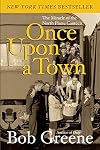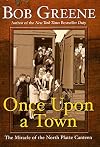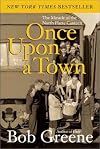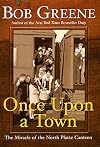
Once Upon a Town
by Bob Greene
On This Page
Description
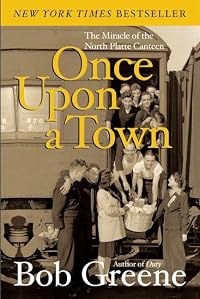
During World War II, American soldiers from every city and walk of life rolled through North Platte, Nebraska on troop trains, en route to Europe and the Pacific. The tiny town transformed its modest railroad depot into the North Platte Canteen -- a place where soldiers could enjoy coffee, music, home-cooked food, magazines, and friendly conversation during a stopover that lasted only a few minutes. It provided homesick military personnel with the encouragement they needed to help them show more through the difficult times ahead. Every day of the war, the Canteen -- staffed and funded entirely by local volunteers from the community of twelve thousand -- was open from 5 a.m. until the last troop train of the day pulled away after midnight. By war's end they provided welcoming words, friendship, and baskets of food to more than six million GIs. Based on interviews with North Platte residents and the GIs who once passed through, Bob Greene unearths and reveals a classic, lost-in-the-mists-of-time American story of a grateful country honoring its brave and dedicated sons. show lessTags
Recommendations


















Member Reviews
Once Upon a Town, The Story of the North Platte Canteen, by Bob Greene (pp 257). Don’t read this book if you fear tears welling up in your eyes at various points. This was a bestselling book when published, and it deserves to be in every high school mandatory reading list. The town of Platte River is about six and a half hours drive from Denver (where I live), and probably triple that during WWII when there were no interstate highways, and cars ran at much lower speeds on local roads. In this day and age, it’s a world away. At the advent of the war, Platte River residents began giving away food, refreshments, magazines, and smiles (and occasional hugs) to military members traveling across country. Everything was free to the troops show more during ten to twenty minutes stops for refueling the trains. Over the course of the war, six million troops came through town. And every one was offered the town’s hospitality. The town itself sported only 12,000 residents, some of whom were themselves off to fight. People from 125 towns, some as far away as Colorado, but most from rural Nebraska donated sugar, chickens, pheasant, beef, milk, eggs, cookies, cakes, apples, oranges, magazines. newspapers, bread, themselves and so much more. Few of us alive can understand what this sacrifice, given that wartime rationing limited what people could buy for their own use, let alone to give away. Thousands of women from surrounding towns donated their time to meet every train that came through morning, noon, or night. The military men and smaller numbers of women were treated as if they were sons, daughters, brothers, and sisters of the caring townspeople. They continued this effort until eight months after the war and returning veteran numbers dwindled. The author spent considerable time in Platte River, researching this story, talking to nearly everyone who had a related tale to tell. He even tracked down dozens of veterans living all over the country who retained vivid memories of their ten or twenty minutes in the Canteen. Almost to a person, these seventy, eighty, and ninety year old veterans broke down crying while relating their interactions with the amazing people who were there for them. The impact of their 20 minute acts of kindness stayed with men and women who later fought on Utah Beach, Saipan, and other far flung battlefields. A goodly number of the military members and young women volunteers stayed in touch throughout the war and eventually married. They connected via names and addresses stuck inside popcorn balls, on cards tucked into birthday cakes (every train got one or more, regardless of whether any of the troops had a birthday), and other more conventional means. The town received no funding from the government: it was all donated by philanthropic minded citizens. No other town in America did what Platte River did, and they did it every day for over four years. It’d be nice to say this typified rural wartime America in the 1940s, but even then it was extraordinarily exceptional. This is a wonderful story about thousands of real life hometown heroes doing what they could for young men and women heading off to war. show less
5677 Once Upon a Town The Miracle of the North Platte Canteen, by Bob Greene (read 16 Feb 2020)This book, published in 2002, and written by a newspaper columnist who was born in 1947, tells of the canteen in North Platte, Nebraska which from December 1941 till April 1, 1946 met every troop train which came to North Platte,and offered free food and things to the servicemen on the trains. According to the book thousands of servicemen came through North Platte and they all went gaga over how kind the people at the canteen treated them. It is a schmaltzy book, repeating often the words of praise which the recipients of the generosity of the people who operated the canteen spoke of their benefactors, long after the war. One gets the idea of show more the goodness of the people and the gratitude of the servicemen long before the book ends. I was impressed by what the people of that area of Nebraska accomplished and at times found the book poignant. But I think a more restrained account might have more compelling. show less
This is the first of several books about Nebraska (or the High Plains) that I hope to read this year. I have to say, I hope it's not the best of them. I was all excited when I found it; I was just poking around the bookstore in Omaha where I used to work, and I ran across a book about North Platte that was a NYT Bestseller. Man, I thought, this is going to be good. I should have known better.
The book concerns a phenomenon that took place in North Platte (current population ~ 24,000) during WWII. It was a central stopping point for the troop trains that took armed-services personnel across the country. Trains would stop briefly at the station in North Platte, and the residents of the area began a program called the Canteen, where they show more would provide free food, drinks, magazines, etc. for the boys on the trains. It really was quite a thing—it was in operation from Christmas Day, 1941 through April 1, 1946, and they greeted every single train in that period (they served somewhere around 6.5 million soldiers total). All the provisions came from volunteers' own pockets, and this was during a time of rationing when people were having a hard time anyway.
So the subject is interesting enough. My problem was Greene's approach. I should have guessed it from the first chapter, but it took a little longer. Basically, what this book amounts to is a huge sob story about how people used to be nice to each other, and Everything Was So Much Better Then. Even that simplistic message, for what it's worth, gets muddled by his memoirist style, in which he roams aimlessly around current-day North Platte bemoaning the lack of Studebakers and bobby socks. I'm not a big fan of nostalgia anyway, and this was the worst kind. What kept me reading was the actual purported subject: the Canteen itself. Beyond that, I would never have bothered with more than a couple of chapters. But the stories are interesting, affecting, and worth reading for.
By the way, though, this book has the absolute worst ending I've ever seen. He actually quotes the rock group Kansas to close it. "All we are is dust in the wind." I'm not kidding. He and his editor should both be run out of the business for that bit of bathos. Frankly, everyone down to the typesetter should be. Someone should have stepped in and stopped it. show less
The book concerns a phenomenon that took place in North Platte (current population ~ 24,000) during WWII. It was a central stopping point for the troop trains that took armed-services personnel across the country. Trains would stop briefly at the station in North Platte, and the residents of the area began a program called the Canteen, where they show more would provide free food, drinks, magazines, etc. for the boys on the trains. It really was quite a thing—it was in operation from Christmas Day, 1941 through April 1, 1946, and they greeted every single train in that period (they served somewhere around 6.5 million soldiers total). All the provisions came from volunteers' own pockets, and this was during a time of rationing when people were having a hard time anyway.
So the subject is interesting enough. My problem was Greene's approach. I should have guessed it from the first chapter, but it took a little longer. Basically, what this book amounts to is a huge sob story about how people used to be nice to each other, and Everything Was So Much Better Then. Even that simplistic message, for what it's worth, gets muddled by his memoirist style, in which he roams aimlessly around current-day North Platte bemoaning the lack of Studebakers and bobby socks. I'm not a big fan of nostalgia anyway, and this was the worst kind. What kept me reading was the actual purported subject: the Canteen itself. Beyond that, I would never have bothered with more than a couple of chapters. But the stories are interesting, affecting, and worth reading for.
By the way, though, this book has the absolute worst ending I've ever seen. He actually quotes the rock group Kansas to close it. "All we are is dust in the wind." I'm not kidding. He and his editor should both be run out of the business for that bit of bathos. Frankly, everyone down to the typesetter should be. Someone should have stepped in and stopped it. show less
The story of the Nebraska town that was at a railroad crossroads during World War II. The residents of that town and ultimately the surrounding area used their ration coupons and the food they produced in their gardens and farms to feed servicemen that were crisscrossing the country going either to or from the war. I picked up this title in the talking book version and listened to it on the way to visit my mother. My father, who had served in the Marines during WW II, had recently died and I could not ask him about this, but I am convinced that he must have traveled through here on his way from Pa. to Ca. to serve in the Pacific theater. It's not often that a book moves me to tears, but I just cried and cried listening to these stories. show more The generosity of the Nebraska residents moved me so much that I can partially understand how the servicemen felt getting food, cigarettes and playing cards at the North Platte Canteen. EVERYONE should hear this story. show less
I live in this area (70 miles away), and already knew some of the story. But this book brings it into focus in a special way. It truly was unprecedented: The ladies of the North Platte Canteen met EVERY train and fed EVERY soldier EVERY day for 5 years. You may call if fluff and hyperbole if you want to. I call it heroic, self-sacrificing, and amazing. My father, not even 20 years old yet, rode through there 3 times during his hitch.
The framing story about modern day North Platte is interesting too. It is strange to see a town I take so for granted through an outsider's eyes.
I gave a copy of this book to my 80-year-old father to read. He cried.
The framing story about modern day North Platte is interesting too. It is strange to see a town I take so for granted through an outsider's eyes.
I gave a copy of this book to my 80-year-old father to read. He cried.
I'm a huge Bob Greene fan and this book about the North Platte Canteen during WWII really hits home right now. Greene travels to modern day North Platte to find out about the Canteen, where the folks from the town and surrounding towns used their rations to meet each train of soldiers being shipped out and offer them some home cooking, a birthday cake and more. They were met with love by women who could have been their mothers. People from all around donated massive amounts of food. The dichotomy with today's soldiers, flying high over the country alone makes this an even more moving tale.
The people that Green tracks down, those who cooked, drove miles to deliver food on their assigned day, the soldiers who remember the miracle and joy show more of the North Platte Canteen to this day -- these are wonderful memories shared in a respectful and lovely book. show less
The people that Green tracks down, those who cooked, drove miles to deliver food on their assigned day, the soldiers who remember the miracle and joy show more of the North Platte Canteen to this day -- these are wonderful memories shared in a respectful and lovely book. show less
A nice little read, I was given this book as a gift many years ago by a teacher who said my writing reminded her of Bob Greene. As nice a compliment I've received.
This collection of stories were each heart-warming, if a little redundant when read as a collection. It certainly engaged in the usual mythologizing about the second World War and the so-called "Greatest Generation"- a collective trait of the American experience I particularly dislike.
This collection of stories were each heart-warming, if a little redundant when read as a collection. It certainly engaged in the usual mythologizing about the second World War and the so-called "Greatest Generation"- a collective trait of the American experience I particularly dislike.
Members
- Recently Added By
Author Information

25+ Works 2,483 Members
Bob Greene is a syndicated columnist for the Chicago Tribune. His book topics have included politics, basketball, and rock and roll; he toured with Alice Cooper to get the background for Billion Dollar Baby (1974). His books are often a collection of his newspaper columns, covering a wide range of topics with interesting portraits of both everyday show more people and celebrities, but sometimes focus on his own reactions to life's changes. The rediscovery of his old high school diary resulted in Be True to Your School: A Diary of 1964 (1987). Turning age 50 led to his The Fifty Year Dash: The Feelings, Foibles, and Fears of Being Half-a-Century Old (1997). Greene was born in 1947 and lives in Illinois with his wife, Susan, and their daughter Amanda, who provided the inspiration for his book Good Morning, Merry Sunshine: A Father's Journal of His Child's First Year (1984). (Bowker Author Biography) show less
Awards and Honors
Awards
Distinctions
Common Knowledge
- Canonical title
- Once Upon a Town
- Original publication date
- 2002
- Important places
- North Platte, Nebraska, USA
- Important events
- World War II (1939 | 1945); World War II, American Home Front
- Dedication
- For Keith and Mary Ann Blackledge
- First words
- On Interstate 80, three or hour hours into the long westward drive across Nebraska, with the sun hovering mercilessly in the midsummer sky on a cloudless and broiling July afternoon, there were moments when I thought there wa... (show all)s no way I'd ever find what I had come here to seek: The best America there ever was.
- Last words
- (Click to show. Warning: May contain spoilers.)I stayed a few more minutes, then departed for my room, turning off the lights on my way out.
Classifications
Statistics
- Members
- 492
- Popularity
- 61,119
- Reviews
- 16
- Rating
- (3.73)
- Languages
- English
- Media
- Paper, Audiobook, Ebook
- ISBNs
- 9
- ASINs
- 7