On This Page
Description
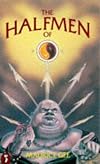
Susan and Nick are drawn into a frightening adventure in the land of O where Otis Claw and the evil Halfmen are trying to take over the planet.Tags
Recommendations





















Member Reviews
I had vague recollections of reading but not finishing this as a kid, and 30 years later a few certain details stuck with me, so I decided to finally finish it.
With adult eyes it was nice to recognise the New Zealand setting, and even when we moved to the fantasy world, there was such a focus on the details of landscape that I really felt a sense of recognition. Most of the time in fantasy, landscapes are described in a grand sweeping way, with a lack of attention to detail which leaves them quite abstract. Maurice Gee describes scree, gullies and pathways in such an intimate way that resonates with me as someone who has explored the New Zealand wilderness and experienced similar settings personally.
The bad guys are pretty show more one-dimensional edgy evil dudes, complete with black leather and everything, but that's presumably part of the point since the entire premise of the novel hinges on every human in the world having been split into either entirely good or entirely evil, which is what our heroes have to fix. This does raise a few philosophical questions that might not be obvious to a child - the evil humans almost entirely wiped out the good ones, because the good ones are incapable of violence. At one point the last remaining Good human has to siphon some "evil" power from Susan so that she can kill the pursuing bad guys. It makes the point that some evil is a requirement to any fully functional human, since killing or violence is always evil even if you are doing it in defence of yourself or others. Then there is the meat eating vs vegetarian theme - it's not super in-your-face but killing animals, even to survive, could be considered evil. It's part of Jimmy Jaspers dual - perhaps more-evil-than-good - character.
We also see a single child in the evil land - which raises the question - can a child really be evil?
Susan demonstrates a believable emotional response to her situation, one that is not often portrayed in fantasy fiction - the chosen hero feeling isolated and overwhelmed by the task given her. I did get a little pissy at her for abandoning her companions over the darklands - they could easily have died while she floated off.
The bird people and the underground people were one of the ideas I'd remembered all these years, and I enjoyed the bird people culture. Would have loved to experience more of the undergrounders, however the effect of the darkness stayed with me for thirty years so I can't fault the episode too much.
It was a bit weird at the end that they never bothered to turn off the pollution machine themselves - the device that threatened to destroy both our world and the world of O. Instead they trusted the surviving humans to choose their own way. I guess that's very noble of our heroes, but personally I wouldn't take the risk!!
Great read, and finishing it gave me some long-delayed satisfaction. show less
With adult eyes it was nice to recognise the New Zealand setting, and even when we moved to the fantasy world, there was such a focus on the details of landscape that I really felt a sense of recognition. Most of the time in fantasy, landscapes are described in a grand sweeping way, with a lack of attention to detail which leaves them quite abstract. Maurice Gee describes scree, gullies and pathways in such an intimate way that resonates with me as someone who has explored the New Zealand wilderness and experienced similar settings personally.
The bad guys are pretty show more one-dimensional edgy evil dudes, complete with black leather and everything, but that's presumably part of the point since the entire premise of the novel hinges on every human in the world having been split into either entirely good or entirely evil, which is what our heroes have to fix. This does raise a few philosophical questions that might not be obvious to a child - the evil humans almost entirely wiped out the good ones, because the good ones are incapable of violence. At one point the last remaining Good human has to siphon some "evil" power from Susan so that she can kill the pursuing bad guys. It makes the point that some evil is a requirement to any fully functional human, since killing or violence is always evil even if you are doing it in defence of yourself or others. Then there is the meat eating vs vegetarian theme - it's not super in-your-face but killing animals, even to survive, could be considered evil. It's part of Jimmy Jaspers dual - perhaps more-evil-than-good - character.
We also see a single child in the evil land - which raises the question - can a child really be evil?
Susan demonstrates a believable emotional response to her situation, one that is not often portrayed in fantasy fiction - the chosen hero feeling isolated and overwhelmed by the task given her. I did get a little pissy at her for abandoning her companions over the darklands - they could easily have died while she floated off.
The bird people and the underground people were one of the ideas I'd remembered all these years, and I enjoyed the bird people culture. Would have loved to experience more of the undergrounders, however the effect of the darkness stayed with me for thirty years so I can't fault the episode too much.
It was a bit weird at the end that they never bothered to turn off the pollution machine themselves - the device that threatened to destroy both our world and the world of O. Instead they trusted the surviving humans to choose their own way. I guess that's very noble of our heroes, but personally I wouldn't take the risk!!
Great read, and finishing it gave me some long-delayed satisfaction. show less
Susan Ferris has a “mark” on her skin, that appeared under mysterious circumstances shortly after she was born. When Nick comes to stay, they meet old Jimmy Jaspers, who gives Susan a drug, which transports her to the world of O. Nick follows, to find that O is ruled by Otis Claw and his terrible Halfmen. Only Susan, as the bearer of the Mark, can restore Balance to mankind on O, and save the rest of the world from destruction.
The author’s idea is that mankind is (or should be) in a state of balance between the good and evil nature in all of us: each person contains some good and some evil. The Halfmen are so called because, on O, the race of men have been forced to abide in only one half of this balance; whichever was the more show more dominant in them. Regrettably, evil tends to dominate: as one of the other characters observes, “that is the way with men”.
Susan’s task involves travelling all over O, where she meets and works with the other intelligent native races (Woodlanders, Birdfolk, Stonefolk, Seafolk), each of whom are presented with their own personalities and culture. Susan must collect the two Halves- one pale, one dark- which match the mark on her wrist, and replace them on the Motherstone in the midst of the city of Darkland.
The two children take a long journey, through forest and desert, on foot and by air, and the land they see is described in carefully imagined detail. Although the book includes no map, the reader finishes the story with a vivid image of how the world of O is laid out and what it looks like. O is similar in many ways to Earth, indeed this is where the real danger lies, and why Susan agrees to help: the evil Halfmen are plotting to force their way eventually through to Earth, and take over here as well.
Throughout the story the relationship between Susan and her cousin, Nicholas Quinn, grows and develops; from the childish dislike of family members to the loyalty of being kin and having shared an adventure together. Both children have characteristics to dislike, but they learn to look out for each other, and rely on the other’s talents when the need arises. By the end of the book they are both conspirators and firm friends.
Females and males will both enjoy this story, as there is something for each to identify with. It is suitable for readers aged 9 and up. show less
The author’s idea is that mankind is (or should be) in a state of balance between the good and evil nature in all of us: each person contains some good and some evil. The Halfmen are so called because, on O, the race of men have been forced to abide in only one half of this balance; whichever was the more show more dominant in them. Regrettably, evil tends to dominate: as one of the other characters observes, “that is the way with men”.
Susan’s task involves travelling all over O, where she meets and works with the other intelligent native races (Woodlanders, Birdfolk, Stonefolk, Seafolk), each of whom are presented with their own personalities and culture. Susan must collect the two Halves- one pale, one dark- which match the mark on her wrist, and replace them on the Motherstone in the midst of the city of Darkland.
The two children take a long journey, through forest and desert, on foot and by air, and the land they see is described in carefully imagined detail. Although the book includes no map, the reader finishes the story with a vivid image of how the world of O is laid out and what it looks like. O is similar in many ways to Earth, indeed this is where the real danger lies, and why Susan agrees to help: the evil Halfmen are plotting to force their way eventually through to Earth, and take over here as well.
Throughout the story the relationship between Susan and her cousin, Nicholas Quinn, grows and develops; from the childish dislike of family members to the loyalty of being kin and having shared an adventure together. Both children have characteristics to dislike, but they learn to look out for each other, and rely on the other’s talents when the need arises. By the end of the book they are both conspirators and firm friends.
Females and males will both enjoy this story, as there is something for each to identify with. It is suitable for readers aged 9 and up. show less
great good versus evil character and plot story. Gee writes very descriptively. When Susan is spirited down a mineshaft into the world of O, she learns that only she bears the mark that will restore the balance of good and evil, and free the world from the Halfmen and their terrifying leader Otis Claw.
Ratings
Members
- Recently Added By
Lists

Top 100 NZ Children's Books
100 works; 1 member

Travel from real to fantasy world -- children's/young adult fiction
125 works; 11 members
Author Information

45+ Works 2,458 Members
Maurice Gee of New Zealand is a novelist and author of children's books. Gee's first book, The Big Season, was published in 1962. He has since produced nearly two dozens novels and collections of short stories and his work has appeared in such publications as Arena, Mate, Landfall, Islands, and Listener. Gee received the New Zealand Book Award in show more fiction in 1979 for Plumb, in 1982 for Meg, and in 1991 for The Burning Boy. Going West won the Goodman Fielder Wattie Book Award in 1993. In 1995 The Fat Man won the AIM Children's Book Award for Junior Fiction, as well as The Esther Glen Award, given for the most distinguished contribution to New Zealand literature for children and young adults. He had previously received The Esther Glen Award in 1983 for Motherstone. (Bowker Author Biography) show less
Awards and Honors
Series

Common Knowledge
- Canonical title
- The Halfmen of O
- Original publication date
- 1982
- People/Characters
- Nick Quinn; Susan Ferris; Jimmy Jaspers
- Important places
- O
- Dedication
- For Abigail
- First words
- Our story begins on Lodestone Creek one summer holiday.
- Last words
- (Click to show. Warning: May contain spoilers.)'I'll think of something,' Nick said.
Classifications
Statistics
- Members
- 195
- Popularity
- 168,563
- Reviews
- 3
- Rating
- (3.77)
- Languages
- English
- Media
- Paper, Ebook
- ISBNs
- 3
- ASINs
- 4