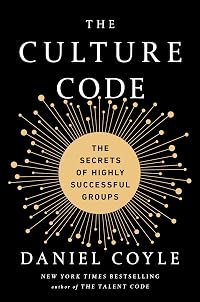
The Culture Code: The Secrets of Highly Successful Groups
by Daniel Coyle
On This Page
Description
NEW YORK TIMES BESTSELLER • The author of The Talent Code unlocks the secrets of highly successful groups and provides tomorrow’s leaders with the tools to build a cohesive, motivated culture.NAMED ONE OF THE BEST BOOKS OF THE YEAR BY BLOOMBERG AND LIBRARY JOURNAL
Where does great culture come from? How do you build and sustain it in your group, or strengthen a culture that needs fixing?
In The Culture Code, Daniel Coyle goes inside some of the world’s most successful show more organizations—including the U.S. Navy’s SEAL Team Six, IDEO, and the San Antonio Spurs—and reveals what makes them tick. He demystifies the culture-building process by identifying three key skills that generate cohesion and cooperation, and explains how diverse groups learn to function with a single mind. Drawing on examples that range from Internet retailer Zappos to the comedy troupe Upright Citizens Brigade to a daring gang of jewel thieves, Coyle offers specific strategies that trigger learning, spark collaboration, build trust, and drive positive change. Coyle unearths helpful stories of failure that illustrate what not to do, troubleshoots common pitfalls, and shares advice about reforming a toxic culture. Combining leading-edge science, on-the-ground insights from world-class leaders, and practical ideas for action, The Culture Code offers a roadmap for creating an environment where innovation flourishes, problems get solved, and expectations are exceeded.
Culture is not something you are—it’s something you do. The Culture Code puts the power in your hands. No matter the size of your group or your goal, this book can teach you the principles of cultural chemistry that transform individuals into teams that can accomplish amazing things together.
Praise for The Culture Code
“I’ve been waiting years for someone to write this book—I’ve built it up in my mind into something extraordinary. But it is even better than I imagined. Daniel Coyle has produced a truly brilliant, mesmerizing read that demystifies the magic of great groups. It blows all other books on culture right out of the water.”—Adam Grant, New York Times bestselling author of Option B, Originals, and Give and Take
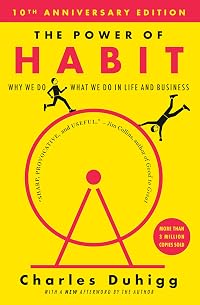
“If you want to understand how successful groups work—the signals they transmit, the language they speak, the cues that foster creativity—you won’t find a more essential guide than The Culture Code.”—Charles Duhigg, New York Times bestselling author of The Power of Habit and Smarter Faster Better. show less
Tags
Recommendations
















Member Reviews
The Culture Code has a provocative premise, watered down by undue hero worship and a commitment to mediocre neoliberalism.
The basic idea is that real work, real innovative, value-added work, is done by dedicated people who are emotionally invested, who are together in this effort, who are vulnerable and unconcerned with social status games. This emotional bond is something that can be tracked in how team-members interact with one another, even in total ignorance of the content of their communication. It's something delicate, which is fostered by great leaders, and spoiled by a single bad apple. Potentially, it's even something that can be trained, though Coyle is fuzzy on those details.
The twin problems are that so many teams are far show more from Coyle's ideal. First, most business propositions are fundamentally irrelevant and almost pointless. It's one thing to be beholden to an ideal of perfect service, another thing entirely to go for a 3% improvement on NPS at Applebee's. Given a choice between being excellent and maximizing short-term returns, most companies will go for the short-term returns. Second, and this is the hard part: humans love social status games. We're good at playing them, we're invested in them, and I'm not sure 'good teamwork' is enough to tell the boss his ideas are bad.
And on a methodological note, Coyle uses a lot of examples of flashy, design-centric companies, but building anything even moderately complex involves a host of technical challenges and choices. It's one thing to say that empowered swarms can do it all, but I think most work is far less romantic than that ideal. show less
The basic idea is that real work, real innovative, value-added work, is done by dedicated people who are emotionally invested, who are together in this effort, who are vulnerable and unconcerned with social status games. This emotional bond is something that can be tracked in how team-members interact with one another, even in total ignorance of the content of their communication. It's something delicate, which is fostered by great leaders, and spoiled by a single bad apple. Potentially, it's even something that can be trained, though Coyle is fuzzy on those details.
The twin problems are that so many teams are far show more from Coyle's ideal. First, most business propositions are fundamentally irrelevant and almost pointless. It's one thing to be beholden to an ideal of perfect service, another thing entirely to go for a 3% improvement on NPS at Applebee's. Given a choice between being excellent and maximizing short-term returns, most companies will go for the short-term returns. Second, and this is the hard part: humans love social status games. We're good at playing them, we're invested in them, and I'm not sure 'good teamwork' is enough to tell the boss his ideas are bad.
And on a methodological note, Coyle uses a lot of examples of flashy, design-centric companies, but building anything even moderately complex involves a host of technical challenges and choices. It's one thing to say that empowered swarms can do it all, but I think most work is far less romantic than that ideal. show less
It's not easy to rate this book. On one hand, it's an entertaining read, but on the other, it completely misses its premise.
I was expecting an explanation of "culture code", something that will make nebulous culture thing more tangible and maybe even provide some practical tips. Well... there no such thing here. No broad and deep research, nothing about psychology, sociology, neuroscience, anthropology, etc. that would make arguments in the book convincing. It is written by a journalist, not a scientist.
What do you get here then? A collection of stories, anecdotes, and interviews about exceptional teams. They are all well written and entertaining, present teams facing grand challenges or approaching everyday duties in a special way. You show more get to know what makes them tick... but rarely it will translate to what can make your team tick.
There are many issues with this approach.
First - the selection of teams to showcase. We are told they have effective work cultures, but it remains a mystery what does it actually mean. You could explore organizations that bring exceptional results, have the most satisfied and loyal employees, or make customers, partners, and investors happy. Go through top10 in each category and try to understand what makes them different. But instead, you get cherrypicked selection of... simply good stories that fit the author's narrative.
Second - all presented teams have a very similar culture, like there is only one that works. It seems like the author had some idea of a culture he wanted to describe and found teams that fit his ideal. I believe that there are different cultures that are interesting and worth exploring. There is a lot of diversity that one needs to take into account, but instead, we get American-only examples, led almost entirely by white males (only 1 woman presented), working very close to each other (when IRL we go more into distributed and remote).
Third - the resulting conclusions are surely not bad. Also, not very surprising or original. I just have a problem with believing the author that he cracked the code and found universal truths. It might not translate to other teams as easily as the author suggests. You won't put your accounting team through Navy SEALs training and make the risk their lives every day at work to build this special bond soldiers have with each other... yes, you can do AARs, but this doesn't automatically make you as effective as Navy SEAL.
So if you want to read entertaining stories about teams that are engaged and motivated and striving for excellence, this book is for you! Although, some of them have dedicated books that explain how they work in more detail (Pixar, IDEO, Zappos). If you want to find some practical advice in leading a team of yours, this book can be a good starter but if you already explored this domain you won't find anything spectacular here. And lastly, if you are looking for the science of culture, pass on this one. show less
I was expecting an explanation of "culture code", something that will make nebulous culture thing more tangible and maybe even provide some practical tips. Well... there no such thing here. No broad and deep research, nothing about psychology, sociology, neuroscience, anthropology, etc. that would make arguments in the book convincing. It is written by a journalist, not a scientist.
What do you get here then? A collection of stories, anecdotes, and interviews about exceptional teams. They are all well written and entertaining, present teams facing grand challenges or approaching everyday duties in a special way. You show more get to know what makes them tick... but rarely it will translate to what can make your team tick.
There are many issues with this approach.
First - the selection of teams to showcase. We are told they have effective work cultures, but it remains a mystery what does it actually mean. You could explore organizations that bring exceptional results, have the most satisfied and loyal employees, or make customers, partners, and investors happy. Go through top10 in each category and try to understand what makes them different. But instead, you get cherrypicked selection of... simply good stories that fit the author's narrative.
Second - all presented teams have a very similar culture, like there is only one that works. It seems like the author had some idea of a culture he wanted to describe and found teams that fit his ideal. I believe that there are different cultures that are interesting and worth exploring. There is a lot of diversity that one needs to take into account, but instead, we get American-only examples, led almost entirely by white males (only 1 woman presented), working very close to each other (when IRL we go more into distributed and remote).
Third - the resulting conclusions are surely not bad. Also, not very surprising or original. I just have a problem with believing the author that he cracked the code and found universal truths. It might not translate to other teams as easily as the author suggests. You won't put your accounting team through Navy SEALs training and make the risk their lives every day at work to build this special bond soldiers have with each other... yes, you can do AARs, but this doesn't automatically make you as effective as Navy SEAL.
So if you want to read entertaining stories about teams that are engaged and motivated and striving for excellence, this book is for you! Although, some of them have dedicated books that explain how they work in more detail (Pixar, IDEO, Zappos). If you want to find some practical advice in leading a team of yours, this book can be a good starter but if you already explored this domain you won't find anything spectacular here. And lastly, if you are looking for the science of culture, pass on this one. show less
This could be titled "Psychological Safety: The book". Psychological safety is a belief, shared by all members of a group, that it is safe to take risks as part of that group. But saying what psychological safety looks like does not tell a leader how to create and nourish a psychologically safe environment (because psychological safety is never done). Although this book discusses building safety and sharing vulnerability separately, they are both ultimately part of psychological safety. Even the way that this book frames purpose — heavily emphasizing empowerment, autonomy, and positive culture — borrows from psychological safety.
Structurally, this book belongs to the storytelling genre of business books rather than the model heavy show more genre. It has lots of useful concrete advice, but it is not embedded within a model. The storytelling genre can sometimes feel as if the narrative is the most important thing and the advice just a side effect. That was not the case with this book. Coyle successfully gives just the right amount of narrative to illustrate and emphasize his points. Some of the chapters are short enough to feel like sections, but that is ignorable since the content was good. (The only reason it was even a bit annoying for me is that I take my detailed notes chapter-by-chapter so sometimes it felt like I had just started reading and it was time to take notes again. This was easily worked around by reading a couple of chapters before taking notes.)
The introduction of this book emphasizes a key point that grounds the whole book: the skills of building safety, sharing vulnerability, and establishing purpose are not add-ons to make a good group better. They are the basis on which a successful group is built. These properties are not optional. They are critical. This is true in industries where individual autonomy is traditionally low (manufacturing, restaurants) and in industries where individual autonomy is high. Like Alive At Work by Daniel Cable (my review), I see this as part of a shift in leadership literature where the systems properties such as group safety are taking center stage rather than being seen as an add-on or as a personal improvement technique (à la emotional intelligence). Note that I am not saying this realization is new. Rather, it seems to be becoming more popular of a perspective to take as we learn that truly effective organizations are not commanded and controlled into success.
The first of the key skills is build safety. To build psychological safety, everyone in a group needs to feel connected and valued. This connection is expressed through the verbal and, especially, non-verbal interactions that a group engages in. Connection can be encouraged by, among other things, overcommunicating your listening, visibly thanking people who bring bad news, explicitly connect people and their roles to the organization and the group, name and discourage bad behaviors (and get rid of the people who won't change), and embracing fun (authentic fun, not forced fun).
The second of the keys skills is to share vulnerability. A key element of sharing vulnerability is that leaders must model and welcome vulnerability. A critical element of this is that leaders need to be open with their mistakes and be forgiving of the mistakes of others (in ways that are consistent with naming and discouraging bad behaviors). Leaders should also pay close attention to key moments in group formation: the first time someone shows vulnerability in a group the first disagreement.
Leaders need to model how to listen, listen, listen. Conversations should not be about how a leader can make their point. It should be about listening and gently guiding. Related to this is allowing discomfort to sit awhile before resolving it. Not always fixing things right away communicates that it's ok to be uncomfortable (and gives space for others to provide solutions). These are things that I am not very good at; I often feel the need to make a decision or share a perspective. There is a time for that, but it can interfere with listening.
Leaders should aim for candor, not brutal honesty. The difference, in Coyle's model, is that candid feedback is smaller, more targeted, less personal, and less judgmental than brutal honesty. It is, importantly, just as honest.
The third key skill is to establish purpose. A sense of purpose is what separates a purely social group from a group that is trying to accomplish something. Purpose (and values, which in Coyle's model are intertwined) cannot be trickled down from on high. Everyone has to engage with a group's purpose if they are to enact it when decisions need to be made. Thus, some of the advice Coyle gives matches fairly common advice on purpose setting: name and rank priorities; be super clear about them (both in content and via repetition). Coyle also emphasizes the importance of regularly having opportunities to stress test values (such as conversations about whether or not they should be thrown out).
Leaders also need to structure values and purpose in a way that is action oriented. It is not enough to say what we are trying to achieve. This also needs to be connected to the actions that will achieve it. This can be done by having value-to-action catchphrases, highlighting examples of key behavior, and measuring and rewarding behaviors which reflect purpose and values rather than rewarding outcomes.
Overall, this was an excellent read and one that I recommend to anyone who needs to help a group be effective. show less
Structurally, this book belongs to the storytelling genre of business books rather than the model heavy show more genre. It has lots of useful concrete advice, but it is not embedded within a model. The storytelling genre can sometimes feel as if the narrative is the most important thing and the advice just a side effect. That was not the case with this book. Coyle successfully gives just the right amount of narrative to illustrate and emphasize his points. Some of the chapters are short enough to feel like sections, but that is ignorable since the content was good. (The only reason it was even a bit annoying for me is that I take my detailed notes chapter-by-chapter so sometimes it felt like I had just started reading and it was time to take notes again. This was easily worked around by reading a couple of chapters before taking notes.)
The introduction of this book emphasizes a key point that grounds the whole book: the skills of building safety, sharing vulnerability, and establishing purpose are not add-ons to make a good group better. They are the basis on which a successful group is built. These properties are not optional. They are critical. This is true in industries where individual autonomy is traditionally low (manufacturing, restaurants) and in industries where individual autonomy is high. Like Alive At Work by Daniel Cable (my review), I see this as part of a shift in leadership literature where the systems properties such as group safety are taking center stage rather than being seen as an add-on or as a personal improvement technique (à la emotional intelligence). Note that I am not saying this realization is new. Rather, it seems to be becoming more popular of a perspective to take as we learn that truly effective organizations are not commanded and controlled into success.
The first of the key skills is build safety. To build psychological safety, everyone in a group needs to feel connected and valued. This connection is expressed through the verbal and, especially, non-verbal interactions that a group engages in. Connection can be encouraged by, among other things, overcommunicating your listening, visibly thanking people who bring bad news, explicitly connect people and their roles to the organization and the group, name and discourage bad behaviors (and get rid of the people who won't change), and embracing fun (authentic fun, not forced fun).
The second of the keys skills is to share vulnerability. A key element of sharing vulnerability is that leaders must model and welcome vulnerability. A critical element of this is that leaders need to be open with their mistakes and be forgiving of the mistakes of others (in ways that are consistent with naming and discouraging bad behaviors). Leaders should also pay close attention to key moments in group formation: the first time someone shows vulnerability in a group the first disagreement.
Leaders need to model how to listen, listen, listen. Conversations should not be about how a leader can make their point. It should be about listening and gently guiding. Related to this is allowing discomfort to sit awhile before resolving it. Not always fixing things right away communicates that it's ok to be uncomfortable (and gives space for others to provide solutions). These are things that I am not very good at; I often feel the need to make a decision or share a perspective. There is a time for that, but it can interfere with listening.
Leaders should aim for candor, not brutal honesty. The difference, in Coyle's model, is that candid feedback is smaller, more targeted, less personal, and less judgmental than brutal honesty. It is, importantly, just as honest.
The third key skill is to establish purpose. A sense of purpose is what separates a purely social group from a group that is trying to accomplish something. Purpose (and values, which in Coyle's model are intertwined) cannot be trickled down from on high. Everyone has to engage with a group's purpose if they are to enact it when decisions need to be made. Thus, some of the advice Coyle gives matches fairly common advice on purpose setting: name and rank priorities; be super clear about them (both in content and via repetition). Coyle also emphasizes the importance of regularly having opportunities to stress test values (such as conversations about whether or not they should be thrown out).
Leaders also need to structure values and purpose in a way that is action oriented. It is not enough to say what we are trying to achieve. This also needs to be connected to the actions that will achieve it. This can be done by having value-to-action catchphrases, highlighting examples of key behavior, and measuring and rewarding behaviors which reflect purpose and values rather than rewarding outcomes.
Overall, this was an excellent read and one that I recommend to anyone who needs to help a group be effective. show less
Coyle’s book on business cultures centers on the theme that highly successful groups over-perform when they have healthy interactions. This trait – not smarts or good marketing or strong financial support – is what business leaders should focus on cultivating in the people they direct.
This theme is then explicated in a series of success stories from a variety of groups in fields like NBA basketball, the Navy Seals, restaurant service, and college hockey. Although the intellectual rigor seems to fall short of proving that they caused the successful results (Coyle only rarely cites studies that critically analyze these groups), it seems evident that these healthy behaviors correlate with success.
Another shortcoming lies in the fact show more that many, if not all, of these teams seem overtly male-oriented. I’m left curious about how predominantly female teams can maintain healthy group dynamics. Does gender play any role in the nature of a healthy culture or are gender dynamics independent of group dynamics? He does not, likewise, analyze culture on a global level. How do cultures different than America convey healthy group dynamics? How can international companies have healthy international teams?
Despite these weaknesses, Coyle provides a group of inspirational stories that can spark ideas for business leaders on how to lead healthy and productive teams. The focus is not merely on being nice but on getting the most out of a team. The stories are easy to relate to and interesting. Many deal with well-known entities in American culture. They universally take a new spin on team-work and provide good food-for-thought on how to transform the groups the reader works with into more successful teams. show less
This theme is then explicated in a series of success stories from a variety of groups in fields like NBA basketball, the Navy Seals, restaurant service, and college hockey. Although the intellectual rigor seems to fall short of proving that they caused the successful results (Coyle only rarely cites studies that critically analyze these groups), it seems evident that these healthy behaviors correlate with success.
Another shortcoming lies in the fact show more that many, if not all, of these teams seem overtly male-oriented. I’m left curious about how predominantly female teams can maintain healthy group dynamics. Does gender play any role in the nature of a healthy culture or are gender dynamics independent of group dynamics? He does not, likewise, analyze culture on a global level. How do cultures different than America convey healthy group dynamics? How can international companies have healthy international teams?
Despite these weaknesses, Coyle provides a group of inspirational stories that can spark ideas for business leaders on how to lead healthy and productive teams. The focus is not merely on being nice but on getting the most out of a team. The stories are easy to relate to and interesting. Many deal with well-known entities in American culture. They universally take a new spin on team-work and provide good food-for-thought on how to transform the groups the reader works with into more successful teams. show less
While reading this book, the phrase "necessary, but not sufficient" kept popping into my head.
This book describes a necessary component to having a great group/company culture: having a high sense of belonging by continuously sending signals of safety and shared purpose. It goes into detail about how these signals are needed for great culture, and gives examples from various fields and companies.
While it's clearly a critical component, it doesn't feel like it's enough on its own. I mean, at the very least to run a successful organization you have to have good accountability, good hiring practices, proactive strategy etc. The author does hint at some of these factors, but the book seems to imply that if you get this one thing right show more (belonging signals), you're set. I disagree.
So I think this book describes a highly necessary (arguably the most necessary), but not sufficient, aspect of creating great cultures. Still a good read and good information to know, though. show less
This book describes a necessary component to having a great group/company culture: having a high sense of belonging by continuously sending signals of safety and shared purpose. It goes into detail about how these signals are needed for great culture, and gives examples from various fields and companies.
While it's clearly a critical component, it doesn't feel like it's enough on its own. I mean, at the very least to run a successful organization you have to have good accountability, good hiring practices, proactive strategy etc. The author does hint at some of these factors, but the book seems to imply that if you get this one thing right show more (belonging signals), you're set. I disagree.
So I think this book describes a highly necessary (arguably the most necessary), but not sufficient, aspect of creating great cultures. Still a good read and good information to know, though. show less
Rarely does a "business" book tug on my heart strings, have more than one new conceptual tool, and get me spreading little bits around wherever I go. Usually the books that do that are more academic, and I probably would not have even picked this up were it in print. But the library had the audiobook and I am now thinking I need to augment the bits of insight I have scrawled in my planner with flipping through some summaries and so forth.
Mr. Coyle does a great job with this book. Everyone from normal people living their daily lives like me to management and Jeff Bezos can find something useful in this book. In fact, Mr. Bezos would probably outline many of the steps and advice in this book as to how he built Amazon to the successful empire that it is today and still growing.
As I was reading this book I could see practical ways that my employer could apply these principles better; especially in meetings and coming together for a common goal. Now is the best time as there are many projects starting. The book starts out with an experiment involving business students, kindergartners, lawyers, and CEOs. Every time the kindergartners won. This is because they did no worry show more about who was the leader but worked energetically together with short communications to achieve the goal. This is just one of the examples of a successful group. Not to say that no leader is better but working together with clear communication is key. Also, having really good employees that can be trained is worth a lot.
Mr. Coyle showcases a different business like Pixar, Goggle, Navy Seals, and San Antonio Spurs to name a few. He shows what has made them successful and then breaks it down into easy and understandably analysis. My favorite one was reading about the San Antonio Spurs and Mr. Popovich. Mr. Popovich knew all of his players on a personal level. He bonded with them not through yelling or texts but with human interaction. He knows this is the best way to build a strong team. After reading this book, I have a respect for Mr. Popovich. The Culture Code is a wonderful book that is not to be missed. show less
As I was reading this book I could see practical ways that my employer could apply these principles better; especially in meetings and coming together for a common goal. Now is the best time as there are many projects starting. The book starts out with an experiment involving business students, kindergartners, lawyers, and CEOs. Every time the kindergartners won. This is because they did no worry show more about who was the leader but worked energetically together with short communications to achieve the goal. This is just one of the examples of a successful group. Not to say that no leader is better but working together with clear communication is key. Also, having really good employees that can be trained is worth a lot.
Mr. Coyle showcases a different business like Pixar, Goggle, Navy Seals, and San Antonio Spurs to name a few. He shows what has made them successful and then breaks it down into easy and understandably analysis. My favorite one was reading about the San Antonio Spurs and Mr. Popovich. Mr. Popovich knew all of his players on a personal level. He bonded with them not through yelling or texts but with human interaction. He knows this is the best way to build a strong team. After reading this book, I have a respect for Mr. Popovich. The Culture Code is a wonderful book that is not to be missed. show less
Members
- Recently Added By
Lists

Books for Educators
164 works; 6 members

The Joe Rogan Experience Library
254 works; 3 members

Best Self Help Books
87 works; 18 members

Office Library
41 works; 1 member
Author Information

18 Works 4,158 Members
Daniel Coyle is a contributing editor for Outside magazine and the author of six books, including the New York Times bestseller, Lance Armstrong's War. His latest book is The Culture Code: The Secrets of Highly Successful Groups, published January 2018. Coyle lives with his wife, Jen, and their four children in Homer, Alaska. (Bowker Author show more Biography) show less
Work Relationships
Is contained in
Is abridged in
Common Knowledge
- Canonical title
- The Culture Code: The Secrets of Highly Successful Groups
- First words
- Let's start with a question, which might be the oldest question of all: Why do certain groups add up to be greater than the sum of their parts, while others add up to be less?
- Last words
- (Click to show. Warning: May contain spoilers.)Then we would all start working together to make that story even better.
Classifications
Statistics
- Members
- 1,173
- Popularity
- 21,391
- Reviews
- 19
- Rating
- (4.06)
- Languages
- English, Romanian, Spanish, Portuguese (Portugal)
- Media
- Paper, Audiobook, Ebook
- ISBNs
- 20
- ASINs
- 9