Folk Song in England
by Steve Roud
On This Page
Description
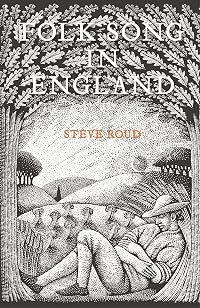
In Victorian times, England was famously dubbed the land without music - but one of the great musical discoveries of the early twentieth century was that England had a vital heritage of folk song and music which was easily good enough to stand comparison with those of other parts of Britain and overseas. Cecil Sharp, Ralph Vaughan Williams, Percy Grainger, and a number of other enthusiasts gathered a huge harvest of songs and tunes which we can study and enjoy at our leisure. But after over show more a century of collection and discussion, publication and performance, there are still many things we don't know about traditional song - Where did the songs come from? Who sang them, where, when and why? What part did singing play in the lives of the communities in which the songs thrived? More importantly, have the pioneer collectors' restricted definitions and narrow focus hindered or helped our understanding? This is the first book for many years to investigate the wider social history of traditional song in England, and draws on a wide range of sources to answer these questions and many more. show lessTags
Recommendations














Member Reviews
I must admit that I only read this weighty tome because it was a Christmas present - I used to listen to quite a lot of vaguely traditional music when I was younger but don't so much now. I am also a little wary of the academic approach to what is essentially organic subject matter.
For all those reservations, I am glad I gave it a chance - Roud's knowledge and research is extensive and although the scope of the book ends before the 50s revivalists, his argument, that the tradition has always been inclusive and that the distinctions made by earlier collectors between true traditional songs and old popular songs is so blurred as to be almost meaningless, is convincing.
The book takes several approaches to discussing the tradition in turn. show more The first part focuses on song collectors and their legacies, the second attempts to describe what is known about the music in each century back to the 16th, and the final part is arranged different categories of song (for example types of work). show less
For all those reservations, I am glad I gave it a chance - Roud's knowledge and research is extensive and although the scope of the book ends before the 50s revivalists, his argument, that the tradition has always been inclusive and that the distinctions made by earlier collectors between true traditional songs and old popular songs is so blurred as to be almost meaningless, is convincing.
The book takes several approaches to discussing the tradition in turn. show more The first part focuses on song collectors and their legacies, the second attempts to describe what is known about the music in each century back to the 16th, and the final part is arranged different categories of song (for example types of work). show less
Does what it says on the tin: A lengthy 'social history' of 'folk music' in England, and rather a good one at that.
This is not a 'tune book', there are almost no musical examples in the book for reasons which the authors explain.
My personal preference would be for tunes to be included - the consequent doubling in size (and price) of the book
would not have put me off.
The book contains much that is of interest to the English 'folkie' including a sensible and (more or less) comprehensible
discussion of modes (a notoriously 'difficult' topic for those without formal musical training), and a re-appraisal of the
activities of the Victorian and Edwardian collectors such as Vaughn-Williams, Grainger, Sharp, et.al.
Re-assesses the '2nd folk show more revival' and provides (amongst other things) a counterbalance to A. L. Lloyds similarly
named book, which some regards as suffering a little from Lloyds tendencies to pepper his writing with (mild) left
wing bias, too many East European examples, a little romanticism regarding his own biography and an inclination
to re-write songs to fit the situation in which he found himself (singing, writing, radio production). show less
This is not a 'tune book', there are almost no musical examples in the book for reasons which the authors explain.
My personal preference would be for tunes to be included - the consequent doubling in size (and price) of the book
would not have put me off.
The book contains much that is of interest to the English 'folkie' including a sensible and (more or less) comprehensible
discussion of modes (a notoriously 'difficult' topic for those without formal musical training), and a re-appraisal of the
activities of the Victorian and Edwardian collectors such as Vaughn-Williams, Grainger, Sharp, et.al.
Re-assesses the '2nd folk show more revival' and provides (amongst other things) a counterbalance to A. L. Lloyds similarly
named book, which some regards as suffering a little from Lloyds tendencies to pepper his writing with (mild) left
wing bias, too many East European examples, a little romanticism regarding his own biography and an inclination
to re-write songs to fit the situation in which he found himself (singing, writing, radio production). show less
Members
- Recently Added By
Published Reviews
ThingScore 100
When is a folk song not a folk song? When it’s accompanied by someone on the piano? When its origins lie not in a ploughed field but on a music hall stage? When it's written not by "anon" but by a person with a proper name? When Vaughan Williams decides to riff on it using the full resources of a military band? When it could equally accurately be described as a madrigal, a ballad or a show more nursery rhyme? These are the questions over which clergymen, antiquarians and ladies of a liberal bent fretted at the end of the 19th century as they set out to recover the precious remnants of England's vernacular musical culture. Armed with notepad, pencil and even the occasional phonograph, they cycled out into the shrinking countryside, determined to catch the tail end of a song culture that they feared was about to go for good.
[...] Sharp has long been an easy figure to mock, and historians in the 1970s and 80s, especially of the Marxist persuasion, had a high old time suggesting that his efforts to conjure a Merrie England of perpetual song and dance were really an attempt to reconcile the urban working classes to the injustices and disparities of mature capitalism. To the familiar accusations of Sharp's fakery, appropriation and profiteering, Roud mounts a compelling yet proportionate defence. In particular he points out that it was thanks to Sharp's strenuous efforts in publishing song books for use in schools that generations of children grew up experiencing a popular musical culture that was not exclusively shaped by commercial interests. Anyone who has ever been a Brownie will probably still be able to mouth along to "John Peel", "Bobby Shaftoe" and "The Lincolnshire Poacher" should the need arise. These catchy tunes with their satisfyingly repeating choruses – the correct term is "strophic" – are part of a landscape that is recognisably communal without being nationalistic. And as for the fact that many of them turn out to be as arriviste as Sharp himself, it’s not clear why it should really matter. show less
[...] Sharp has long been an easy figure to mock, and historians in the 1970s and 80s, especially of the Marxist persuasion, had a high old time suggesting that his efforts to conjure a Merrie England of perpetual song and dance were really an attempt to reconcile the urban working classes to the injustices and disparities of mature capitalism. To the familiar accusations of Sharp's fakery, appropriation and profiteering, Roud mounts a compelling yet proportionate defence. In particular he points out that it was thanks to Sharp's strenuous efforts in publishing song books for use in schools that generations of children grew up experiencing a popular musical culture that was not exclusively shaped by commercial interests. Anyone who has ever been a Brownie will probably still be able to mouth along to "John Peel", "Bobby Shaftoe" and "The Lincolnshire Poacher" should the need arise. These catchy tunes with their satisfyingly repeating choruses – the correct term is "strophic" – are part of a landscape that is recognisably communal without being nationalistic. And as for the fact that many of them turn out to be as arriviste as Sharp himself, it’s not clear why it should really matter. show less
added by Cynfelyn
Author Information
18 Works 999 Members
Steve Roud is Local Studies Librarian for the London borough of Croydon.
All Editions
Some Editions
Awards and Honors
Awards
Common Knowledge
- Important places
- England, UK
- Original language
- English
Classifications
- Genres
- Music, Nonfiction, History, General Nonfiction
- DDC/MDS
- 782.421622 — Arts & recreation Music Vocal music Secular forms of vocal music Songs General principles and musical forms Traditions of secular songs {genres} Folk songs Folk songs of British, English, Anglo-Saxons
- LCC
- ML3652 .R67 — Music Literature on music Literature on music History and criticism Folk, national, and ethnic music
- BISAC
Statistics
- Members
- 62
- Popularity
- 499,400
- Reviews
- 2
- Rating
- (4.50)
- Languages
- English
- Media
- Paper, Ebook
- ISBNs
- 3
- ASINs
- 1