On This Page
Description
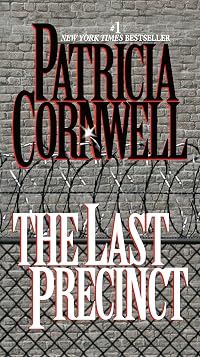
The eleventh Scarpetta novel, in which the Chief Medical Examiner is under a Grand Jury investigation for murder. She knows she's being framed and she no longer knows who she can trust… Physically and psychologically bruised by her encounter with the killer Chandonne, Dr Kay Scarpetta has to leave her home in the hands of the police team investigating the attack. She finds shelter with an old friend, Anna Zenner, but it is not the haven of security she needs when she discovers that Anna show more has been subpoenaed to appear before a Grand Jury which is investigating Scarpetta for murder. Kay knows she is being framed and she also knows she can trust no-one. Meanwhile it appears that Chandonne killed a woman in New York before his murderous spree in Virginia, but when Scarpetta looks more closely into that case with the NY prosecutor Jaime Berger, proof of his guilt is far from certain-in fact she begins to believe that he may not be the perpetrator of any of the crimes he is accused of. As she follows the forensic trail to the real killer she gradually realizes that someone has been spinning a web for years with the aim of entrapping her. Who is it, and why are they so desperate to be rid of her? show lessTags
Recommendations

Member Reviews
The storyline is much the same as in previous books, despite Cornwell's assertion that this is the first time we see Kay in professional jeopardy. There's a bad guy, Kay gets personally involved, Lucy goes off on some weird tangent, Kay's professional judgement is called into question..the bare bones of this story are the same as the others.
What bothered me most about this book was the extremely sudden and startling change in the way we see Kay, and through her, all the other characters. She suddenly analyzes every thought, every emotion; we see all of the characters in a new light, and it is almost without exception, unflattering. Suddenly we are literally forced to consider Kay's sexual orientation, Marino's weird attraction to her; show more even the deceased Benton is re-examined and somehow comes off looking the worse for it.
Cornwell said in an interviews I saw that she doesn't model Kay after herself, but there are several aspects of this book that almost feel voyeuristic. The forensic and investigational parts of the book almost seem like an afterthought. The main purpose of this entry in the Scarpetta series seems mainly to explore her psyche; at the end of it all, I've lost my respect for the character.
I had a hard time deciding how many stars to give this book. Taken alone, simply judging this book's writing style, plot and character development, I would have given it 4 stars; as part of the Scarpetta series, comparing it to past books, I would have rated this one a 2, so I split the difference and gave it a 3. show less
What bothered me most about this book was the extremely sudden and startling change in the way we see Kay, and through her, all the other characters. She suddenly analyzes every thought, every emotion; we see all of the characters in a new light, and it is almost without exception, unflattering. Suddenly we are literally forced to consider Kay's sexual orientation, Marino's weird attraction to her; show more even the deceased Benton is re-examined and somehow comes off looking the worse for it.
Cornwell said in an interviews I saw that she doesn't model Kay after herself, but there are several aspects of this book that almost feel voyeuristic. The forensic and investigational parts of the book almost seem like an afterthought. The main purpose of this entry in the Scarpetta series seems mainly to explore her psyche; at the end of it all, I've lost my respect for the character.
I had a hard time deciding how many stars to give this book. Taken alone, simply judging this book's writing style, plot and character development, I would have given it 4 stars; as part of the Scarpetta series, comparing it to past books, I would have rated this one a 2, so I split the difference and gave it a 3. show less
This novel follows on directly from the one before, Black Notice. In that, a body found in a container at Richmond Port resulted in Scarpetta and Marino being flown to Paris to be briefed by Interpol on a powerful French gangster family, the Chandonnes. Their victim and his murderer were both members of the family. Further, the murderer suffered from a genetic disorder that left them disfigured and covered in fine colourless hair from head to toe. Scarpetta is trying to put her life together after Jean-Baptiste Chandonne, the “werewolf”, tried to murder her. But now he’s positioning himself as the victim of a conspiracy run by the authorities in France and the US. And when two murders prove to be related and, further, linked to show more the murders committed by jean-Baptiste, things begin to unravel.
Then a Manhattan prosecutor applies to have Jean-Baptiste tried in New York for an earlier murder. But witness testimony and trace evidence never quite matches up. There’s an obvious explanation - another Chandonne - but it takes a while before Scarpetta and the others latch onto the obvious candidate. None of this is helped by Scarpatta herself coming under suspicion for one of Jean-Baptiste’s murders…
I enjoy these books because Cornwell provides plenty of forensic detail and the IT is surprisingly accurate for the time. There’s a lot of self-analysis too, which crime novel series protagonists are not typically known for. However, these last few novels have all felt a bit unbelievable, in as much as each instalment reveals yet another layer of conspiracy, to the extent it’s become a little hard to swallow that pretty much everything in the last four or five books of the series has been part of one great interconnected plot. I once heard science fiction critic John Clute describe EE Doc Smith’s Lensman series as similar to Thomas Mann’s The Magic Mountain (I’ve read the former and have the latter on the TBR), in that as the story progressed it gradually widened in scope. Having one psycho killer team up with another psycho killer, and then for the pair of them prove to have been working for a third psycho killer, who in turn… well, it’s not quite the same thing (although I’d argue the Scarpetta books are better-written than anything by EE Doc Smith).
I’m hoping The Last Precinct sees the last of that particular story arc. By the end of the novel, Scarpetta is a free agent, and her niece Lucy now works for a New York-based private agency called… The Last Precinct. show less
Then a Manhattan prosecutor applies to have Jean-Baptiste tried in New York for an earlier murder. But witness testimony and trace evidence never quite matches up. There’s an obvious explanation - another Chandonne - but it takes a while before Scarpetta and the others latch onto the obvious candidate. None of this is helped by Scarpatta herself coming under suspicion for one of Jean-Baptiste’s murders…
I enjoy these books because Cornwell provides plenty of forensic detail and the IT is surprisingly accurate for the time. There’s a lot of self-analysis too, which crime novel series protagonists are not typically known for. However, these last few novels have all felt a bit unbelievable, in as much as each instalment reveals yet another layer of conspiracy, to the extent it’s become a little hard to swallow that pretty much everything in the last four or five books of the series has been part of one great interconnected plot. I once heard science fiction critic John Clute describe EE Doc Smith’s Lensman series as similar to Thomas Mann’s The Magic Mountain (I’ve read the former and have the latter on the TBR), in that as the story progressed it gradually widened in scope. Having one psycho killer team up with another psycho killer, and then for the pair of them prove to have been working for a third psycho killer, who in turn… well, it’s not quite the same thing (although I’d argue the Scarpetta books are better-written than anything by EE Doc Smith).
I’m hoping The Last Precinct sees the last of that particular story arc. By the end of the novel, Scarpetta is a free agent, and her niece Lucy now works for a New York-based private agency called… The Last Precinct. show less
Long ago I read an early Scarpetta story and, as far as I can recall, enjoyed it. The Last Precinct is a horse of a different colour. The reader is flung in to the plot at the deep end, unless he or she has read the preceding episodes. Who is this lanugo-covered dog-faced French serial killer? Why does Scarpetta hate his last victim? What happened to her late lover? This is an infelicitous start.
I get irritated by product placement: Cornwell is a dab hand at this with, for instance, unnecessarily detailed descriptions of the whisky offered to the stressed Scarpetta (Glenmorangie Sherry Wood Finish single malt) and the olive oil she needs for her marinara sauce (Mission Olives Supremo extra virgin olive oil Italian integrate style). show more Surely she is a sufficiently successful author not to need extra handouts from advertisers?
I am not a fan of the 'with a single bound she was free' type of solution to a character's difficulties. Another cast member new to me is Scarpetta's gay and apparently trigger-happy niece. She clearly has major employment issues which are instantly solved by her announcement that she is now a dot-com multi-millionaire - what a surprise for auntie!
My chief complaint, however, and the reason for casting the book aside after eighty pages or so is Cornwell's use of gratuitously disgusting and brutal crimes. Serial killers cutting the faces from their victims - while still alive as that seems to give a better aesthetic effect - has been done before ( maybe Lecter used his teeth rather than a knife) and doesn't, for me at any rate, improve the story. Cornwell gets herself into a difficult place by having Scarpetta describe an illustrated lecture from her forensic student days where the audience is shown pictures of a screaming woman, breasts tied up with rope, having needles stuck into her nipple. She remarks that many of the watchers, all men apart from her, are obviously sexually aroused by what they have seen and sees this as a feminist issue. I can only see this sort of writing as exploitative, relying on just the sort of attitudes which she condemns. show less
I get irritated by product placement: Cornwell is a dab hand at this with, for instance, unnecessarily detailed descriptions of the whisky offered to the stressed Scarpetta (Glenmorangie Sherry Wood Finish single malt) and the olive oil she needs for her marinara sauce (Mission Olives Supremo extra virgin olive oil Italian integrate style). show more Surely she is a sufficiently successful author not to need extra handouts from advertisers?
I am not a fan of the 'with a single bound she was free' type of solution to a character's difficulties. Another cast member new to me is Scarpetta's gay and apparently trigger-happy niece. She clearly has major employment issues which are instantly solved by her announcement that she is now a dot-com multi-millionaire - what a surprise for auntie!
My chief complaint, however, and the reason for casting the book aside after eighty pages or so is Cornwell's use of gratuitously disgusting and brutal crimes. Serial killers cutting the faces from their victims - while still alive as that seems to give a better aesthetic effect - has been done before ( maybe Lecter used his teeth rather than a knife) and doesn't, for me at any rate, improve the story. Cornwell gets herself into a difficult place by having Scarpetta describe an illustrated lecture from her forensic student days where the audience is shown pictures of a screaming woman, breasts tied up with rope, having needles stuck into her nipple. She remarks that many of the watchers, all men apart from her, are obviously sexually aroused by what they have seen and sees this as a feminist issue. I can only see this sort of writing as exploitative, relying on just the sort of attitudes which she condemns. show less
In the book preceding this one, [b:Black Notice|123598|Black Notice (Kay Scarpetta, #10)|Patricia Cornwell|http://photo.goodreads.com/books/1309287684s/123598.jpg|1454722], I thought that the werewolf serial killer was the creepiest thing ever. In [b:The Last Precinct|320167|The Last Precinct (Kay Scarpetta, #11)|Patricia Cornwell|http://photo.goodreads.com/books/1173736910s/320167.jpg|865958], the werewolf killer is back, but seems much more pathetic this time. Maybe because we get to hear him make lengthy speeches. He has lost his mystery.
There are so many double crosses and false identities in this book, that it is hard to keep them all straight. It is also hard to believe all of them. Has Dr. Scarpetta really made so many enemies, show more that they can create international conspiracies to frame/discredit/kill her?
And does the reader need to be hit over the head so much about discrimination against gays and strong females. I feel her point would be better made if the characters were proudly gay and female, and doing their best at whatever jobs they choose, without constantly comment on how they are mistreated.
For me, this book was just ok. Didn't love it, didn't hate it. show less
There are so many double crosses and false identities in this book, that it is hard to keep them all straight. It is also hard to believe all of them. Has Dr. Scarpetta really made so many enemies, show more that they can create international conspiracies to frame/discredit/kill her?
And does the reader need to be hit over the head so much about discrimination against gays and strong females. I feel her point would be better made if the characters were proudly gay and female, and doing their best at whatever jobs they choose, without constantly comment on how they are mistreated.
For me, this book was just ok. Didn't love it, didn't hate it. show less
First read: February 2006
Original rating: 4/5 stars
Re-read: Dec 2016- Jan 2017
New Rating: 2/5 stars
The Plot: The Last Precinct directly follows on from the events in Black Notice, picking up merely twenty hours later. Scarpetta is still struggling to cope with the fallout of being attacked and injured in her own home, while still greiving for Benton, worrying about Lucy and trying to return to normality by going back to work. While all this is going on she also discovers a link between two seperate murder cases which may mean there is another serial killer on the loose.
I struggled with this book on my second read. I enjoyed certain aspects of it - in particular the follow-up investigation from the attack, and also Lucy's much darker show more character development - but at the same time, a lot of this book felt like filler material. Pages and pages of text were devoted to single conversations between two characters which slowed the pace of the story and felt frustrating. I also disliked the use of present tense here, which hadn't been used in any of the previous books. I was glad to finally reach the end of the book after almost giving up on it at about the halfway point.
However one of my favourite moments in The Last Precinct was Kay's verbal response to Marino after her attack:
"There is a difference between being victimized and being a victim. I'm not a sideshow for character disorders[...]I haven't become what he [the killer] wanted to turn me into[...]even if he'd had his way, I wouldn't be what he tried to project on me. I would just be dead. Not changed. Not something less than I am. Just dead." (pg 31) show less
Original rating: 4/5 stars
Re-read: Dec 2016- Jan 2017
New Rating: 2/5 stars
The Plot: The Last Precinct directly follows on from the events in Black Notice, picking up merely twenty hours later. Scarpetta is still struggling to cope with the fallout of being attacked and injured in her own home, while still greiving for Benton, worrying about Lucy and trying to return to normality by going back to work. While all this is going on she also discovers a link between two seperate murder cases which may mean there is another serial killer on the loose.
I struggled with this book on my second read. I enjoyed certain aspects of it - in particular the follow-up investigation from the attack, and also Lucy's much darker show more character development - but at the same time, a lot of this book felt like filler material. Pages and pages of text were devoted to single conversations between two characters which slowed the pace of the story and felt frustrating. I also disliked the use of present tense here, which hadn't been used in any of the previous books. I was glad to finally reach the end of the book after almost giving up on it at about the halfway point.
However one of my favourite moments in The Last Precinct was Kay's verbal response to Marino after her attack:
"There is a difference between being victimized and being a victim. I'm not a sideshow for character disorders[...]I haven't become what he [the killer] wanted to turn me into[...]even if he'd had his way, I wouldn't be what he tried to project on me. I would just be dead. Not changed. Not something less than I am. Just dead." (pg 31) show less
7/10
Marino has become a caricature, Scarpetta is getting more psychologically messed up with every turned page, and no one can be trusted. This is a downer book—not that any of the Kay Scarpetta series so far have been sunshine and roses, but this is unrelentingly dark.
It picks up exactly where the previous book left off, and is really a continuation of that story. And yes, I read the final third of the book in one sitting, staying up extremely late to do so. Thick tension and plot developments roll inexorably forward. Not enough is resolved, so it’s on to the next book.
Marino has become a caricature, Scarpetta is getting more psychologically messed up with every turned page, and no one can be trusted. This is a downer book—not that any of the Kay Scarpetta series so far have been sunshine and roses, but this is unrelentingly dark.
It picks up exactly where the previous book left off, and is really a continuation of that story. And yes, I read the final third of the book in one sitting, staying up extremely late to do so. Thick tension and plot developments roll inexorably forward. Not enough is resolved, so it’s on to the next book.
Patricia Cornwell delves into a story, and leaves no stone uncovered. In this installment, Kay Scarpetta deals with the lingering paranoia from the attack by Jean-Baptiste Chandonne. A New York attorney, Jaime Berger, ties Chandonne with a brutal murder in New York. Just when Kay thinks she may rebuild her life, a grand jury investigates Kay's involvement into the death of Diane Bray, believing that Kay committed the murder. As many of Cornwell's novels, this is set during the Christmas season when Virginia is covered with snow and bad weather. Kay must fight for her professional integrity and sanity in this chilling story. More people are killed and the trail leads to Chandonne and his family, and Kay must decide which people are show more friends or foes. An interesting study in the secrets that each person carries. show less
Members
- Recently Added By
Lists

Crime and Mysteries to Read
746 works; 31 members

Female Author
1,234 works; 67 members

Books About Murder
313 works; 7 members

Detective Stories
343 works; 5 members

Books Read in 2015
3,299 works; 129 members

Llibres que he llegit el 2014
23 works; 1 member

Books - Cornwell, Patricia: Kay Scarpetta
29 works; 1 member
Author Information

200+ Works 137,243 Members
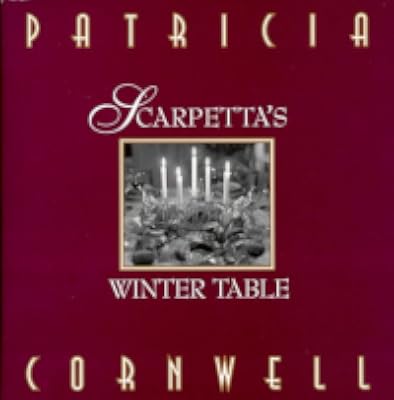
Patricia Cornwell was born in Miami, Florida on June 9, 1956. When she was nine years old, her mother tried to give her and her two brothers to evangelist Billy Graham and his wife to care for. For a while the children lived with missionaries since their mother was unable to care for them. After graduating from Davidson College in 1979, she worked show more for The Charlotte Observer eventually covering the police beat and winning an investigative reporting award from the North Carolina Press Association for a series of articles on prostitution and crime in downtown Charlotte. Her award-winning biography of Ruth Bell Graham, the wife of Billy Graham, A Time for Remembering, was published in 1983. From 1984 to 1990, she worked as a technical writer and a computer analyst at the Office of the Chief Medical Examiner in Richmond, Virginia. While working for the medical examiner, she began to write novels. Although the award-winning novel Postmortem was initially rejected by seven different publishers, once it was published in 1990 it became the only novel ever to win the Edgar, Creasey, Anthony, and Macavity awards as well as the French Prix du Roman d'Adventure, in one year. She is the author of the Kay Scarpetta series, the Andy Brazil series, and the Winston Garano series. She has also written two cookbooks entitled Scarpetta's Winter Table and Food to Die For; a children's book entitled Life's Little Fable; and non-fiction works like Portrait of a Killer: Jack the Ripper - Case Closed. (Bowker Author Biography) show less
Some Editions
Awards and Honors
Distinctions
Series

Belongs to Publisher Series
I miti [Mondadori] (221)
Work Relationships
Common Knowledge
- Canonical title
- The Last Precinct
- Original title
- The Last Precinct
- Alternate titles
- Último Intento (Spanish) (Spanish)
- Original publication date
- 2000
- People/Characters
- Kay Scarpetta (Chief Medical Examiner); Anna Zenner (Psychiatrist); Jaime Berger (Prosecutor); Lucy Farinelli (Kay's niece, co-founder of the Last Precinct); Pete Marino (Captain, Richmond Police Department)
- Important places
- Richmond, Virginia, USA; Virginia, USA
- Dedication
- To Linda Fairstein - prosecutor, novelist, mentor. (This one's for you.)
- First words
- The cold dusk gives up its bruised color to complete darkness, and I am grateful that the draperies in my bedroom are heavy enough to absorb even the faintest hint of my silhouette as I move about packing my bags.
- Last words
- (Click to show. Warning: May contain spoilers.)"See you in court, Kay," she says.
- Disambiguation notice
- ISBN 000715481X search results show it as both abridged and unabridged.
Classifications
Statistics
- Members
- 5,622
- Popularity
- 2,360
- Reviews
- 46
- Rating
- (3.33)
- Languages
- 16 — Czech, Danish, Dutch, English, Finnish, French, German, Italian, Japanese, Korean, Norwegian (Bokmål), Portuguese, Russian, Spanish, Swedish, Turkish
- Media
- Paper, Audiobook, Ebook
- ISBNs
- 89
- UPCs
- 1
- ASINs
- 33