Wish
by Barbara O'Connor
On This Page
Description
"A story about a girl who, with the help of the dog of her dreams, discovers that family doesn't always have to be related--they are simply people who love you for who you are"--Tags
Recommendations












Member Reviews
3.5 rounded up. This was a sweet story of a little girl who is wrestling with her emotions after being placed in home away from the only family she has known. She is navigating anger, resentment, but also still feeling hopeful that things will go back to "normal". I would say that this is more for older kids, as there are some actions and verbage a younger audience will need maturity to grasp and understand. Overall, it was a really endearing read and I appreciated the character development and growth throughout the story.
When I read a book like Wish, it's like I'm visiting with a friend I haven't seen in awhile. Without a doubt this is a comfort book. I happen to love words like smack dab, sorry excuse for, passel, all get out, carrying on, hightail it and looky here. When I read books set in the south where the author nails the language, I just want to give that author a big fist bump. If I ever meet Barbara O'Connor she's getting a high five from me.
Charlemagne, better known as Charlie, has a father in prison and a sorry excuse for a mother. But she's one tough little girl. She has a temper and she tells it like it is. Social services has sent her to live with an aunt and uncle who live smack dab in the middle of the Blue Ridge Mountains. She's not show more thrilled with the arrangement and she can't wait to hightail it back to Raleigh once her mom gets back on her feet. In the meantime, she has a whole passel of ways to make wishes, and she hasn't missed a day since 4th grade. In the end, she gets her wish, but wrapped up in a different package.
I loved the southern charm of this book. Everyone who grew up in the south and is still a kid at heart will be endeared to this book. You'll love Aunt Bertha and her sweet ways. She's always cooking and serving pie or cobbler after every meal. She's the aunt everyone wants. There's Charlie's best friend Howard who walks with a limp, but never lets anything get him down. He happily puts up with Charlie and gives great advice. His house is as run down as all get out, but his family is the kindest you'll find in their little town. Then there's Wishbone, the stray dog that Charlie is determined to catch and make her own.
This book is loaded with tiny details that add up to one big story. The character's personalities are superbly defined. I will always be on the lookout for O'Connor's next book. show less
Charlemagne, better known as Charlie, has a father in prison and a sorry excuse for a mother. But she's one tough little girl. She has a temper and she tells it like it is. Social services has sent her to live with an aunt and uncle who live smack dab in the middle of the Blue Ridge Mountains. She's not show more thrilled with the arrangement and she can't wait to hightail it back to Raleigh once her mom gets back on her feet. In the meantime, she has a whole passel of ways to make wishes, and she hasn't missed a day since 4th grade. In the end, she gets her wish, but wrapped up in a different package.
I loved the southern charm of this book. Everyone who grew up in the south and is still a kid at heart will be endeared to this book. You'll love Aunt Bertha and her sweet ways. She's always cooking and serving pie or cobbler after every meal. She's the aunt everyone wants. There's Charlie's best friend Howard who walks with a limp, but never lets anything get him down. He happily puts up with Charlie and gives great advice. His house is as run down as all get out, but his family is the kindest you'll find in their little town. Then there's Wishbone, the stray dog that Charlie is determined to catch and make her own.
This book is loaded with tiny details that add up to one big story. The character's personalities are superbly defined. I will always be on the lookout for O'Connor's next book. show less
In a Nutshell: A middle-grade novel about a little girl with a secret wish. A nice mix of characters though the lead character is not exactly typical middle-grade material. Somewhat bittersweet themes, and a good ending as befits the genre. Can lead to a thought-provoking discussion with kids. Not a perfect read, though.
~~~~~~~~~~~~~~~~~~~~~~~
Plot Preview:
Some middle-grade books are purely entertaining, while some lend themselves to introspection and discussions. This book is in the latter category.
Some middle-grade books feature protagonists who are brave and kind and loving, while others are led by a character whose behaviour needs a lot of finetuning. This book is in the latter category.
Some middle-grade books depict the merits of the family you are born into while others highlight how a family can be built in different ways. This book is in the latter category.
In several ways, this is a typical middle-grade book. It offers a protagonist facing challenges, a nice new friend who becomes the voice of reason, and a loveable canine. However, it also breaks the norm several times, especially in its depiction of the lead character. This doesn’t necessarily work to its advantage.
Charlie isn’t an inspiring protagonist in any way. She is quick to lose her temper, is rude without justification, has a strong bias against the people she looks down upon as “hillbillies”, and is envious of her older sister. Charlie’s family background isn't the kind you often see in this genre. Her father is imprisoned and her mother seems to be facing a severe mental health issue. As such, several of Charlie’s problems can be attributed to her upbringing, but several others are directly because of her closemindedness. I am not a fan of the “Bullies need to be forgiven if their home circumstances are bad” theory; deliberate bad behaviour towards others is never justified.
In such cases, it is nice to see the character learn from their mistakes, change their thinking, and apologise when needed. Charlie does have a learning curve over the course of the story, but it is a bit too slow and unsteady to be satisfactory. She gets away with a lot in the book, and I am not sure what signal this sends to young readers.
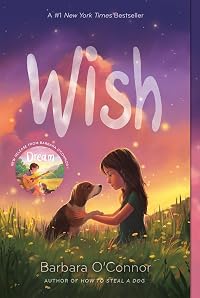
The rest of the characters compensate excellently. Charlie’s Aunt Bertha and Uncle Gus are gems in every way. Middle-grade books often depict foster parents from within the extended family as being cruel or selfish, so seeing Bertha and Gus portrayed as kind-hearted and loving human beings was a refreshing change. Charlie’s new friend Howard and his family are also great characters, possibly too good to be true. As we see ‘Wishbone’ the dog on the cover, it would be easy to assume that he has a proper role in the story. But Wishbone is present in hardly a handful of scenes. He does add fun to the story, but I wish he had a larger presence in the plot, especially considering the cover.
Through Charlie’s experiences, the story offers several lessons to its little readers. Be it inculcating an attitude of gratitude for life’s little blessings, not being envious of others based on partial information, retaining hope even when things seem dismal, and not judging people based on hearsay or physical appearance, the lessons are not just important but also highly relevant in today’s world. Even Bertha and Gus are stellar examples of positive parenting, though they were a bit too lax for my liking. My favourite was the ‘problems on the clothesline’ analogy, something we all would do well to remember.
Charlie’s wishes are an important part of the story. Quite interesting how she knows so many ways of making wishes! Kids would already be aware of a couple of them, but they might enjoy the new wish-making methods as well. That said, this is merely a motif and doesn’t influence the story in any way. Don’t expect any magic or magical realism.
The plot itself is somewhat bland and predictable. Of course, middle-grade stories are often straightforward considering the target age group. But this book was a bit too on-the-nose about it. Also, I disliked the stereotyping of “Southern” USA – the portrayal seems too cliched. I have no personal experience to offer in this regard, so my opinion is just based on whatever books I have read set in this part of the world.
The ending is apt for the plot. Not too perfect, not too coincidental, not too forced. Just the best option possible given the circumstances.
The story is written in an easy-to-understand language. Do note that Charlie’s first-person includes a few regionalisms that might be considered grammatical errors elsewhere. (“Me and Howard” or “can’t hardly believe”) Her speaking style does suits her character.
show less
~~~~~~~~~~~~~~~~~~~~~~~
Plot Preview:
Colby, North Carolina. Charlie Reese, who is almost eleven, has been making the same wish every single day since more than a year. By now, she is an expert at knowing all the ways possible to make a wish. However, when she is sent away to the Blue Ridge mountains to stay with her maternal aunt and her husband, whom Charlie hasn’t even met before, the little girl is sure that hershow more
wish won't ever come true in a backward town filled with “hillbillies”. But as we know, life has a way of throwing surprises your way when you least expect them.
The story comes to us in Charlie’s first-person perspective.
Some middle-grade books are purely entertaining, while some lend themselves to introspection and discussions. This book is in the latter category.
Some middle-grade books feature protagonists who are brave and kind and loving, while others are led by a character whose behaviour needs a lot of finetuning. This book is in the latter category.
Some middle-grade books depict the merits of the family you are born into while others highlight how a family can be built in different ways. This book is in the latter category.
In several ways, this is a typical middle-grade book. It offers a protagonist facing challenges, a nice new friend who becomes the voice of reason, and a loveable canine. However, it also breaks the norm several times, especially in its depiction of the lead character. This doesn’t necessarily work to its advantage.
Charlie isn’t an inspiring protagonist in any way. She is quick to lose her temper, is rude without justification, has a strong bias against the people she looks down upon as “hillbillies”, and is envious of her older sister. Charlie’s family background isn't the kind you often see in this genre. Her father is imprisoned and her mother seems to be facing a severe mental health issue. As such, several of Charlie’s problems can be attributed to her upbringing, but several others are directly because of her closemindedness. I am not a fan of the “Bullies need to be forgiven if their home circumstances are bad” theory; deliberate bad behaviour towards others is never justified.
In such cases, it is nice to see the character learn from their mistakes, change their thinking, and apologise when needed. Charlie does have a learning curve over the course of the story, but it is a bit too slow and unsteady to be satisfactory. She gets away with a lot in the book, and I am not sure what signal this sends to young readers.
The rest of the characters compensate excellently. Charlie’s Aunt Bertha and Uncle Gus are gems in every way. Middle-grade books often depict foster parents from within the extended family as being cruel or selfish, so seeing Bertha and Gus portrayed as kind-hearted and loving human beings was a refreshing change. Charlie’s new friend Howard and his family are also great characters, possibly too good to be true. As we see ‘Wishbone’ the dog on the cover, it would be easy to assume that he has a proper role in the story. But Wishbone is present in hardly a handful of scenes. He does add fun to the story, but I wish he had a larger presence in the plot, especially considering the cover.
Through Charlie’s experiences, the story offers several lessons to its little readers. Be it inculcating an attitude of gratitude for life’s little blessings, not being envious of others based on partial information, retaining hope even when things seem dismal, and not judging people based on hearsay or physical appearance, the lessons are not just important but also highly relevant in today’s world. Even Bertha and Gus are stellar examples of positive parenting, though they were a bit too lax for my liking. My favourite was the ‘problems on the clothesline’ analogy, something we all would do well to remember.
Charlie’s wishes are an important part of the story. Quite interesting how she knows so many ways of making wishes! Kids would already be aware of a couple of them, but they might enjoy the new wish-making methods as well. That said, this is merely a motif and doesn’t influence the story in any way. Don’t expect any magic or magical realism.
The plot itself is somewhat bland and predictable. Of course, middle-grade stories are often straightforward considering the target age group. But this book was a bit too on-the-nose about it. Also, I disliked the stereotyping of “Southern” USA – the portrayal seems too cliched. I have no personal experience to offer in this regard, so my opinion is just based on whatever books I have read set in this part of the world.
The ending is apt for the plot. Not too perfect, not too coincidental, not too forced. Just the best option possible given the circumstances.
The story is written in an easy-to-understand language. Do note that Charlie’s first-person includes a few regionalisms that might be considered grammatical errors elsewhere. (“Me and Howard” or “can’t hardly believe”) Her speaking style does suits her character.
show less
Charlie is an eleven-year-old girl who does not know what it is like to have a family that is “put together.” Her dad is in jail and her mother is uninvolved and distant. Charlie is sent to live with her aunt and uncle while her mother gets back on her feet. Charlie makes the same wish any chance she gets. But she cannot tell anyone the wish or it will not come true. Determined to make this time at her aunt and uncles short, Charlie is not invested in making friends or getting along with the teachers. Little does Charlie know, being sent away might just be the best thing that happened to her. A little love goes a long way.
It has taken me awhile to write this review. WISH was so epic, I was left speechless after finishing the book. show more WISH is powerful, loving, heart-warming, and inspiring. Barbara O’Connor uses this story to tug at the hearts of the reader. Charlie is a mess of a person, and yet, just a little love can go a long way. Being a teacher of students like Charlie, I was drawn to the emotion of the book, “wishing” all my students who deal with what Charlie deals with could be as lucky as Charlie to land with an amazing aunt and uncle. After reading this book, you will want to make Charlie a part of your family. show less
It has taken me awhile to write this review. WISH was so epic, I was left speechless after finishing the book. show more WISH is powerful, loving, heart-warming, and inspiring. Barbara O’Connor uses this story to tug at the hearts of the reader. Charlie is a mess of a person, and yet, just a little love can go a long way. Being a teacher of students like Charlie, I was drawn to the emotion of the book, “wishing” all my students who deal with what Charlie deals with could be as lucky as Charlie to land with an amazing aunt and uncle. After reading this book, you will want to make Charlie a part of your family. show less
Very good book but not a huge 'dog' book. Our heroine Charlie comes from a broken home to go live with her Aunt and Uncle. She has to move from big city Raleigh North Carolina, to a small town named Colby more in the mountains where people are said to eat squirrel. The dog part is she sees a stray dog, has to find a way to catch it, and then the dog is a comfort to her.
It was an adjustment coming from a previous book which also had a young girl main character, but had small normal type challenges, to this one where she has big problems, with her dad in prison, and her mom confined to her bed with severe depression. At various times she says really mean things to good people trying to help her and be her friend. Luckily she has a great show more friend and aunt and uncle.
Here is one passage of her thoughts after saying something mean in anger:
'When those words left my mouth, I could practically see them hurtling through the air toward Howard, quick and sharp like razors.'
This seems like a great book for youths to read. If they have a great family situation it will help give some empathy to those that don't and great examples of those who patiently deal with her. If they have a similar bad family they can know they aren't the only one, or that people understand.
The great thing about this book as the title strongly hints at, is regarding wishing. There is a LOT of wishing in this book and you will have to read it for the why. What is fun is how many different ways Charlie thinks will give you the opportunity to wish. I will add a few of my favorites:
'If you cut off the pointed end of a slice of pie and save it for last, you can make a wish when you eat it.'
'What I did see was a truck full of hay. Jackie's friend Casey told me if you count to thirteen when you see a truck full of hay, you can make a wish.'
'That was the rule for black-horse wishing. If you see a white horse, just make a wish. But for a black horse you have to shake your fist at it three times.'
'From far off in the trees outside the window came the song of a mockingbird. Hearing a bird sing in the rain is on my list of things to make a wish on.'
"Yellow railroad cars aren't too plentiful," he told me. "When you see one, make a wish."
Charlie learns from the people who help her. Like Howard who only finds the good part when things are bad and teaches her to say 'Pineapple' when she gets made. One bit about the uncle I really loved:
'Then Gus stood up and said the perfect Gus thing.
"Let's have some of that blackberry cobbler before supper."
So that's what we did.'
Then after supper, they had more blackberry cobbler. The only thing that bugged me is there was no mention of vanilla ice cream to go with it, so I had to just imagine that going with it on my own.
So maybe not a big 'dog' story, but a good story nevertheless. And having a dog in a any story does generally make it better. And no Kleenex needed for unhappy tears in the end. show less
It was an adjustment coming from a previous book which also had a young girl main character, but had small normal type challenges, to this one where she has big problems, with her dad in prison, and her mom confined to her bed with severe depression. At various times she says really mean things to good people trying to help her and be her friend. Luckily she has a great show more friend and aunt and uncle.
Here is one passage of her thoughts after saying something mean in anger:
'When those words left my mouth, I could practically see them hurtling through the air toward Howard, quick and sharp like razors.'
This seems like a great book for youths to read. If they have a great family situation it will help give some empathy to those that don't and great examples of those who patiently deal with her. If they have a similar bad family they can know they aren't the only one, or that people understand.
The great thing about this book as the title strongly hints at, is regarding wishing. There is a LOT of wishing in this book and you will have to read it for the why. What is fun is how many different ways Charlie thinks will give you the opportunity to wish. I will add a few of my favorites:
'If you cut off the pointed end of a slice of pie and save it for last, you can make a wish when you eat it.'
'What I did see was a truck full of hay. Jackie's friend Casey told me if you count to thirteen when you see a truck full of hay, you can make a wish.'
'That was the rule for black-horse wishing. If you see a white horse, just make a wish. But for a black horse you have to shake your fist at it three times.'
'From far off in the trees outside the window came the song of a mockingbird. Hearing a bird sing in the rain is on my list of things to make a wish on.'
"Yellow railroad cars aren't too plentiful," he told me. "When you see one, make a wish."
Charlie learns from the people who help her. Like Howard who only finds the good part when things are bad and teaches her to say 'Pineapple' when she gets made. One bit about the uncle I really loved:
'Then Gus stood up and said the perfect Gus thing.
"Let's have some of that blackberry cobbler before supper."
So that's what we did.'
Then after supper, they had more blackberry cobbler. The only thing that bugged me is there was no mention of vanilla ice cream to go with it, so I had to just imagine that going with it on my own.
So maybe not a big 'dog' story, but a good story nevertheless. And having a dog in a any story does generally make it better. And no Kleenex needed for unhappy tears in the end. show less
Very good book but not a huge 'dog' book. Our heroine Charlie comes from a broken home to go live with her Aunt and Uncle. She has to move from big city Raleigh North Carolina, to a small town named Colby more in the mountains where people are said to eat squirrel. The dog part is she sees a stray dog, has to find a way to catch it, and then the dog is a comfort to her.
It was an adjustment coming from a previous book which also had a young girl main character, but had small normal type challenges, to this one where she has big problems, with her dad in prison, and her mom confined to her bed with severe depression. At various times she says really mean things to good people trying to help her and be her friend. Luckily she has a great show more friend and aunt and uncle.
Here is one passage of her thoughts after saying something mean in anger:
'When those words left my mouth, I could practically see them hurtling through the air toward Howard, quick and sharp like razors.'
This seems like a great book for youths to read. If they have a great family situation it will help give some empathy to those that don't and great examples of those who patiently deal with her. If they have a similar bad family they can know they aren't the only one, or that people understand.
The great thing about this book as the title strongly hints at, is regarding wishing. There is a LOT of wishing in this book and you will have to read it for the why. What is fun is how many different ways Charlie thinks will give you the opportunity to wish. I will add a few of my favorites:
'If you cut off the pointed end of a slice of pie and save it for last, you can make a wish when you eat it.'
'What I did see was a truck full of hay. Jackie's friend Casey told me if you count to thirteen when you see a truck full of hay, you can make a wish.'
'That was the rule for black-horse wishing. If you see a white horse, just make a wish. But for a black horse you have to shake your fist at it three times.'
'From far off in the trees outside the window came the song of a mockingbird. Hearing a bird sing in the rain is on my list of things to make a wish on.'
"Yellow railroad cars aren't too plentiful," he told me. "When you see one, make a wish."
Charlie learns from the people who help her. Like Howard who only finds the good part when things are bad and teaches her to say 'Pineapple' when she gets made. One bit about the uncle I really loved:
'Then Gus stood up and said the perfect Gus thing.
"Let's have some of that blackberry cobbler before supper."
So that's what we did.'
Then after supper, they had more blackberry cobbler. The only thing that bugged me is there was no mention of vanilla ice cream to go with it, so I had to just imagine that going with it on my own.
So maybe not a big 'dog' story, but a good story nevertheless. And having a dog in a any story does generally make it better. And no Kleenex needed for unhappy tears in the end. show less
It was an adjustment coming from a previous book which also had a young girl main character, but had small normal type challenges, to this one where she has big problems, with her dad in prison, and her mom confined to her bed with severe depression. At various times she says really mean things to good people trying to help her and be her friend. Luckily she has a great show more friend and aunt and uncle.
Here is one passage of her thoughts after saying something mean in anger:
'When those words left my mouth, I could practically see them hurtling through the air toward Howard, quick and sharp like razors.'
This seems like a great book for youths to read. If they have a great family situation it will help give some empathy to those that don't and great examples of those who patiently deal with her. If they have a similar bad family they can know they aren't the only one, or that people understand.
The great thing about this book as the title strongly hints at, is regarding wishing. There is a LOT of wishing in this book and you will have to read it for the why. What is fun is how many different ways Charlie thinks will give you the opportunity to wish. I will add a few of my favorites:
'If you cut off the pointed end of a slice of pie and save it for last, you can make a wish when you eat it.'
'What I did see was a truck full of hay. Jackie's friend Casey told me if you count to thirteen when you see a truck full of hay, you can make a wish.'
'That was the rule for black-horse wishing. If you see a white horse, just make a wish. But for a black horse you have to shake your fist at it three times.'
'From far off in the trees outside the window came the song of a mockingbird. Hearing a bird sing in the rain is on my list of things to make a wish on.'
"Yellow railroad cars aren't too plentiful," he told me. "When you see one, make a wish."
Charlie learns from the people who help her. Like Howard who only finds the good part when things are bad and teaches her to say 'Pineapple' when she gets made. One bit about the uncle I really loved:
'Then Gus stood up and said the perfect Gus thing.
"Let's have some of that blackberry cobbler before supper."
So that's what we did.'
Then after supper, they had more blackberry cobbler. The only thing that bugged me is there was no mention of vanilla ice cream to go with it, so I had to just imagine that going with it on my own.
So maybe not a big 'dog' story, but a good story nevertheless. And having a dog in a any story does generally make it better. And no Kleenex needed for unhappy tears in the end. show less
This is a great book recommended for students who are struggling going through a change, or just having a hard time in general. Eleven year old Charlie has not had the best upbringing and is forced to go live with another family miles away. Charlie is having a hard time adjusting. She wishes and wishes for things to change. She even uses many different -wishing- techniques she has heard of to make her wishes come true. This would make a great lesson for embracing change in one's life, that not all change is bad, and that it is something everyone goes through in their life.
Members
- Recently Added By
Author Information

20 Works 7,586 Members
Awards and Honors
Awards
Distinctions
Classifications
Statistics
- Members
- 2,805
- Popularity
- 6,514
- Reviews
- 42
- Rating
- (4.19)
- Languages
- English, Italian
- Media
- Paper, Audiobook, Ebook
- ISBNs
- 22
- ASINs
- 4