On This Page
Description
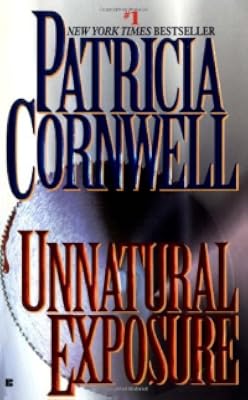
Kay Scarpetta finds herself pitted against a possible bioterrorist in this suspense-filled read from #1 New York Times bestselling author Patricia Cornwell.When a woman turns up dismembered in a landfill, Scarpetta initially suspects the work of a serial killer she’s been tracking. But her investigation turns far more dangerous when she realizes the victim’s skin is covered in an unusual rash—and Scarpetta herself may have just been exposed to a deadly virus.
Tags
Recommendations










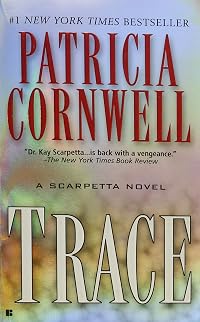

Member Reviews
This is a solid mystery in the Cornwell tradition, although if you’ve read a lot of her (as I have), she may be wearing thin on you by now (as she is on me). I like following the ongoing developments of her four main characters: Kay Scarpetta; her lover FBI agent; her niece Lucy; and her curmudgeonly police detective friend. But the mysteries seem to be getting less and less believable as the series rolls on. Maybe it’s time for Cornwell to move in a different direction. (And she does aggravate a major pet peeve of mine – over-reliance on the “and” conjunction, resulting in convoluted and nonsensical sentences.)
Medical Examiner Kay Scarpetta has been investigating a series of murders in which the victims' bodies have been decapitated and dismembered. But when the latest unidentified torso turns up, the M.O. now appears to be very different, and the consequences may be disastrous.
This is actually book 8 in a series, none of which I had previously read, but while it did leave me feeling like I'd come in in the middle of the story as far as developments in the main character's personal life go, Cornwell is diligent enough about bringing new readers up to speed that I had no trouble with it, even though I'm usually not a fan of coming into series in the middle.
I read this one only because it was given to me by a mystery-loving friend who thought show more it seemed like the sort of mystery story that science-nerd me would like, because there's a fair amount of medical science in it and the investigation takes a scientific approach. And while I'd hardly call it the most science-oriented book I've ever read -- hey, I read a lot of SF -- I did find some of the forensic details quite interesting.
Said friend also described Scarpetta as a "strong female character." That, unfortunately, is a phrase that now too often seems to either be used in a way that's so vague it means almost nothing, or else reserved only for female characters who are very limited and stereotyped varieties of "strong." But I'm pleased to report that the phrase fits Scarpetta in the good way: she's an intelligent, respected professional, but she also has flaws, and she feels very human, rather than being anybody's wish-fulfillment idea of a strong woman. I liked her.
As for the plot, it's nothing particularly groundbreaking, but I did find it engaging enough, and, pleasantly, it turned out to be exactly the kind of thing I was in the mood to read. I only have one real complaint about it, but unfortunately it's a significant complaint for this kind of story. The ending, I felt, was entirely too abrupt and not really very satisfying. Especially as, now that I think about it, it does leave a pretty serious dangling plot thread. So that was a little disappointing, but despite it, I've come out with a reasonably good impression of Cornwell, and wouldn't be adverse to picking up another of her novels sometime.
I will add that this particular work, having come out in 1999, now feels kind of dated. Not in a bad way that made it more difficult or uncomfortable to read. But I can't help finding it amusing that it includes careful explanations of what the internet is, or how it's possible to scan a photograph and e-mail it to someone. And the story also includes several gay and lesbian characters. They're treated by both the author and the main character with acceptance and sympathy, but reading this in 2019, it's hard not to find it weird how both author and character seem to feel the need to address the subject of their love lives with a sort of coy delicacy, and the way it's taken for granted that it could be disastrous for any of them if their employers found out does kind of bring home just how much some things have changed. On the other hand, the fact that the novel is set during a federal government shutdown thanks to congress not being able to pass a budget is a depressingly familiar detail.
Rating: I'm giving this one a 3.5/5, although I probably would have gone up to a slightly generous 4/5 if the ending had been stronger. show less
This is actually book 8 in a series, none of which I had previously read, but while it did leave me feeling like I'd come in in the middle of the story as far as developments in the main character's personal life go, Cornwell is diligent enough about bringing new readers up to speed that I had no trouble with it, even though I'm usually not a fan of coming into series in the middle.
I read this one only because it was given to me by a mystery-loving friend who thought show more it seemed like the sort of mystery story that science-nerd me would like, because there's a fair amount of medical science in it and the investigation takes a scientific approach. And while I'd hardly call it the most science-oriented book I've ever read -- hey, I read a lot of SF -- I did find some of the forensic details quite interesting.
Said friend also described Scarpetta as a "strong female character." That, unfortunately, is a phrase that now too often seems to either be used in a way that's so vague it means almost nothing, or else reserved only for female characters who are very limited and stereotyped varieties of "strong." But I'm pleased to report that the phrase fits Scarpetta in the good way: she's an intelligent, respected professional, but she also has flaws, and she feels very human, rather than being anybody's wish-fulfillment idea of a strong woman. I liked her.
As for the plot, it's nothing particularly groundbreaking, but I did find it engaging enough, and, pleasantly, it turned out to be exactly the kind of thing I was in the mood to read. I only have one real complaint about it, but unfortunately it's a significant complaint for this kind of story. The ending, I felt, was entirely too abrupt and not really very satisfying. Especially as, now that I think about it, it does leave a pretty serious dangling plot thread. So that was a little disappointing, but despite it, I've come out with a reasonably good impression of Cornwell, and wouldn't be adverse to picking up another of her novels sometime.
I will add that this particular work, having come out in 1999, now feels kind of dated. Not in a bad way that made it more difficult or uncomfortable to read. But I can't help finding it amusing that it includes careful explanations of what the internet is, or how it's possible to scan a photograph and e-mail it to someone. And the story also includes several gay and lesbian characters. They're treated by both the author and the main character with acceptance and sympathy, but reading this in 2019, it's hard not to find it weird how both author and character seem to feel the need to address the subject of their love lives with a sort of coy delicacy, and the way it's taken for granted that it could be disastrous for any of them if their employers found out does kind of bring home just how much some things have changed. On the other hand, the fact that the novel is set during a federal government shutdown thanks to congress not being able to pass a budget is a depressingly familiar detail.
Rating: I'm giving this one a 3.5/5, although I probably would have gone up to a slightly generous 4/5 if the ending had been stronger. show less
I’m just not sure what to think about this series. I like forensics angle, and the mystery, but these later books are just so bogged down in the sturm und drang of Kay’s life. Oh, the malaise! Kay Scarpetta has the angst of your average 15 year old girl, and it’s starting to get in the way. The story here is interesting and does make you wonder about what would have to happen if a disease such as smallpox were to be used as a weapon, and the final confrontation was good, but I found the "who" in the "whodunnit" rather unsatisfying. Part of what makes a mystery satisfying is the discovery of whether or not you are right in your suspicions, but in this book there really was no way to figure it out ahead of time. Yet, I keep reading show more them. show less
This is the eighth book in the Kay Scarpetta series, which made Cornwell a bestselling author (28 books to date). The books are, unfortunately, somewhat formulaic, and usually end up with series protagonist Dr Kay Scarpetta, Chief Examiner (ie, pathologist) of the Commonwealth of Virginia, confronting the villain herself in the last few pages. Here, the title refers to exposure to disease, and a serial killer who seems to be using a mutated smallpox virus to kill their victims. The investigation is somewhat hampered by superficial resemblances between the state of the first victim and that of a serial killer who may have moved from Ireland to the US (a narrative thread that’s not resolved here, but will no doubt be concluded in a show more later volume). Cornwell scores high on her descriptions of procedure, and is unusual among her contemporaries (this book was published in 1997) for her treatment of computers–which is sort of like almost nearly accurate (for the time). The same, unfortunately, can’t be said for Cornwell’s UK-set scenes, which include several small mistakes. The identity of the killer also didn’t come as much of a surprise as I was aware of the smallpox outbreak in the UK in the 1970s - but it’s unlikely a US reader would know about that. Readable, bot not one of the better entries in the series. show less
Eine rätselhafte Mordserie versetzt Amerika in Angst und Schrecken
Auf einer Mülldeponie in Virginia wird eine Leiche gefunden, der Kopf und Gliedmaßen fehlen – und die einen unbekannten, tödlichen Virus in sich trägt. Fieberhaft versucht Gerichtsmedizinerin Dr. Kay Scarpetta den Erreger zu identifizieren und eine Verbreitung der Seuche zu verhindern. Die Medien stürzen sich auf den Fall und bedrängen Scarpetta mit Spekulationen. Und dann nimmt der Täter per E-Mail Kontakt zu ihr auf und verwickelt sie in ein gefährliches Spiel ...
Auf einer Mülldeponie in Virginia wird eine Leiche gefunden, der Kopf und Gliedmaßen fehlen – und die einen unbekannten, tödlichen Virus in sich trägt. Fieberhaft versucht Gerichtsmedizinerin Dr. Kay Scarpetta den Erreger zu identifizieren und eine Verbreitung der Seuche zu verhindern. Die Medien stürzen sich auf den Fall und bedrängen Scarpetta mit Spekulationen. Und dann nimmt der Täter per E-Mail Kontakt zu ihr auf und verwickelt sie in ein gefährliches Spiel ...
Kay Scarpetta is investigating not only murder in this eighth volume of her series, but also a possibly intentional outbreak of a pox-like virus. In fact, she herself might have been exposed!
My impressions:
-I think it's ridiculously sad that one of Kay's staff or colleagues has to die in every book.
-It's also pretty far-fetched that Kay, as the chief medical examiner for the state, has a personal face-to-face encounter with the killer at the end of every book. I don't expect my fictional entertainment to be exactly like real life, but this particular trope is getting pretty old.
-Kay spends some time in quarantine after thinking she might be exposed to the virus and she's not a good patient. She snaps at people who are just trying to show more help and she's super bored, which is, as you can imagine is also boring to read about.
-Previous to this volume, there was a three book arc in which Scarpetta was chasing the same killer around. This seems to be happening again, as there is another mystery began in this book which is not solved by the end of it.
-I'm getting pretty impatient with the relationship between Kay and Benton. There's no longer any obstructions (i.e. his wife) so, there shouldn't be any reason for them to stay apart, but Kay's prevaricating. Fortunately, now that Lucy is older, her relationship with Kay seems to be improving.
-I enjoyed learning more about viruses and quarantine procedures. Cornwell has definitely done her research here. It's just mystifying sometimes how she can be so accurate and factual about certain things like procedures and time-lines, but then feels like she has to manufacture suspense and manipulate her characters into doing things that seem out of character for them to do in order to create relationship conflicts.
I've read these first eight books pretty much back to back...I think I'm pretty much Scarpetta'd out at this point. I'm going to take a break for a while and revisit this series again in the future. show less
My impressions:
-I think it's ridiculously sad that one of Kay's staff or colleagues has to die in every book.
-It's also pretty far-fetched that Kay, as the chief medical examiner for the state, has a personal face-to-face encounter with the killer at the end of every book. I don't expect my fictional entertainment to be exactly like real life, but this particular trope is getting pretty old.
-Kay spends some time in quarantine after thinking she might be exposed to the virus and she's not a good patient. She snaps at people who are just trying to show more help and she's super bored, which is, as you can imagine is also boring to read about.
-Previous to this volume, there was a three book arc in which Scarpetta was chasing the same killer around. This seems to be happening again, as there is another mystery began in this book which is not solved by the end of it.
-I'm getting pretty impatient with the relationship between Kay and Benton. There's no longer any obstructions (i.e. his wife) so, there shouldn't be any reason for them to stay apart, but Kay's prevaricating. Fortunately, now that Lucy is older, her relationship with Kay seems to be improving.
-I enjoyed learning more about viruses and quarantine procedures. Cornwell has definitely done her research here. It's just mystifying sometimes how she can be so accurate and factual about certain things like procedures and time-lines, but then feels like she has to manufacture suspense and manipulate her characters into doing things that seem out of character for them to do in order to create relationship conflicts.
I've read these first eight books pretty much back to back...I think I'm pretty much Scarpetta'd out at this point. I'm going to take a break for a while and revisit this series again in the future. show less
I read this one in one day, because once the first pox victim showed up, I realized I had read this one before.
The beginning of the book focuses on the hunt for a serial killer who dismembers his victims. This killer has been working both in Ireland and in the United States. Dr. Scarpetta has been looking at the evidence from both the countries. About half way through the book, a new victim shows up who has been dismembered, but not quite in the same way, and also with possible small pox lesions on her body. This leads to the question of a copycat killer, or has the original killer changed his m.o.?
I guess I am not quite clear on if the same person was doing all the killings, or if the small pox victims were killed by one person, and show more the original dismembered victims killed by another. By the end of the book, when the killer is caught, I understand the reasoning for the small pox killings. But why all the previous dismemberments? That wasn't super clear to me.
Even with some plot flaws, I enjoyed this book very much. Biomedical terrorism is a very scary subject, and it is easy to imagine it happening now. The pace of the book was brisk, and the story was compelling. This is one of the best Sarpetta books. show less
The beginning of the book focuses on the hunt for a serial killer who dismembers his victims. This killer has been working both in Ireland and in the United States. Dr. Scarpetta has been looking at the evidence from both the countries. About half way through the book, a new victim shows up who has been dismembered, but not quite in the same way, and also with possible small pox lesions on her body. This leads to the question of a copycat killer, or has the original killer changed his m.o.?
I guess I am not quite clear on if the same person was doing all the killings, or if the small pox victims were killed by one person, and show more the original dismembered victims killed by another. By the end of the book, when the killer is caught, I understand the reasoning for the small pox killings. But why all the previous dismemberments? That wasn't super clear to me.
Even with some plot flaws, I enjoyed this book very much. Biomedical terrorism is a very scary subject, and it is easy to imagine it happening now. The pace of the book was brisk, and the story was compelling. This is one of the best Sarpetta books. show less
Members
- Recently Added By
Lists

Books That Will Keep You on the Edge of Your Seat
73 works; 20 members

Top Cops (Detectives in Fiction)
86 works; 24 members

Best Female Detectives and "Cozy Mysteries"
23 works; 17 members

Crime and Mysteries to Read
746 works; 31 members

501 Must-Read Books
529 works; 72 members

Books About Murder
313 works; 7 members

Detective Stories
343 works; 5 members

Books Read in 2015
3,299 works; 126 members

Other books mentioned in Patricia Cornwell's Black Notice
7 works; 1 member

Books - Cornwell, Patricia: Kay Scarpetta
29 works; 1 member
Author Information

201+ Works 137,345 Members
Patricia Cornwell was born in Miami, Florida on June 9, 1956. When she was nine years old, her mother tried to give her and her two brothers to evangelist Billy Graham and his wife to care for. For a while the children lived with missionaries since their mother was unable to care for them. After graduating from Davidson College in 1979, she worked show more for The Charlotte Observer eventually covering the police beat and winning an investigative reporting award from the North Carolina Press Association for a series of articles on prostitution and crime in downtown Charlotte. Her award-winning biography of Ruth Bell Graham, the wife of Billy Graham, A Time for Remembering, was published in 1983. From 1984 to 1990, she worked as a technical writer and a computer analyst at the Office of the Chief Medical Examiner in Richmond, Virginia. While working for the medical examiner, she began to write novels. Although the award-winning novel Postmortem was initially rejected by seven different publishers, once it was published in 1990 it became the only novel ever to win the Edgar, Creasey, Anthony, and Macavity awards as well as the French Prix du Roman d'Adventure, in one year. She is the author of the Kay Scarpetta series, the Andy Brazil series, and the Winston Garano series. She has also written two cookbooks entitled Scarpetta's Winter Table and Food to Die For; a children's book entitled Life's Little Fable; and non-fiction works like Portrait of a Killer: Jack the Ripper - Case Closed. (Bowker Author Biography) show less
Some Editions
Awards and Honors
Distinctions
Notable Lists
Series

Belongs to Publisher Series
Work Relationships
Common Knowledge
- Canonical title
- Unnatural Exposure
- Original title
- Unnatural Exposure
- Alternate titles*
- Verderben
- Original publication date
- 1997
- People/Characters
- Kay Scarpetta; Pete Marino; Lucy Farinelli; Benton Wesley; Keith Pleasants; Percy Ring (show all 9); Lila Pruitt; Wingo; Phyllis Croweder
- Important places
- Richmond, Virginia, USA; Virginia, USA; Dublin, Ireland
- Epigraph
- And there came unto me one of the seven angels which had the seven vials full of the seven last plagues... Revelation 21:9
- Dedication
- To Esther Newberg Vision, No Fear
- First words
- Night fell clean and cold in Dublin, and wind moaned beyond my room as if a million pipes played the air.
- Last words
- (Click to show. Warning: May contain spoilers.)"I love you, Benton," I said.
*Some information comes from Common Knowledge in other languages. Click "Edit" for more information.
Classifications
Statistics
- Members
- 5,673
- Popularity
- 2,335
- Reviews
- 54
- Rating
- (3.54)
- Languages
- 14 — Czech, Danish, Dutch, English, Estonian, Finnish, French, German, Italian, Japanese, Norwegian (Bokmål), Portuguese, Spanish, Swedish
- Media
- Paper, Audiobook, Ebook
- ISBNs
- 116
- ASINs
- 39