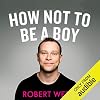
How Not to Be a Boy
by Robert Webb
On This Page
Description
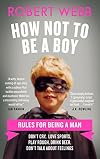
"Rules For Being A Man: Don't Cry Love Sport Play Rough Drink Beer Don't Talk About Feelings But Robert Webb has been wondering for some time now: are those rules actually any use? To anyone? Looking back over his life, from schoolboy crushes (on girls and boys) to discovering the power of making people laugh (in the Cambridge Footlights with David Mitchell), and from losing his beloved mother to becoming a husband and father, Robert Webb considers the absurd expectations boys and men have show more thrust upon them at every stage of life. Hilarious and heart-breaking, How Not To Be a Boy explores the relationships that made Robert who he is as a man, the lessons we learn as sons and daughters, and the understanding that sometimes you aren't the Luke Skywalker of your life - you're actually Darth Vader." -- provided by publisher. show lessTags
Recommendations




Member Reviews
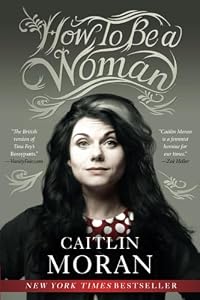
I thought I knew what I was getting with this. The title and cover design channel Caitlin Moran’s How to be a Woman, which left me squirming in scandalised delight several years ago. And, to some extent, I was right; but Webb’s book takes the celebrity-does-gender-studies memoir to new and much darker regions. Written with fearsome honesty, it’s a ruthless exposé of what British society does to its young men, but also a tale of what it’s like to grow up in a world where you simply don’t fit in. It’s a humorous, frank and thought-provoking counterpart to Moran’s book, a welcome view from the other side of the gender barricade, and yet at the same time a completely different beast. Reading this, I feel (to some degree) as show more my male friends may have felt on reading Moran. Ahead lies terra incognita. And there may be dragons...
For the rest of the review, please see my blog:
https://theidlewoman.net/2018/02/20/how-not-to-be-a-boy-robert-webb/ show less
For the rest of the review, please see my blog:
https://theidlewoman.net/2018/02/20/how-not-to-be-a-boy-robert-webb/ show less
I guess my introduction to this book did taint me somewhat as I had been led to believe it was a takedown of toxic masculinity. It's not.
It's a pretty readable autobiography of someone who did some boy things and some things boys don't do, but it's the Guardian "oh that's nice" version of tackling masculinity rather than anything truly reflective or groundbreaking.
As it stands, it's a very readable, enjoyable autobiography of a man who worked hard to get to Oxbridge, and had some difficulty in the way. And then the final chapter is a essay on what needs to be done to reach table stakes in dealing with gender equality.
I can see why this sounds worthy to Guardian readers and revolutionary to others, but it's an autobiography. Anyone show more familiar with the shows Webb has written will be familiar with the self-defacing, gentle style, with the occasional curve ball, and it succeeds at fleshing out the man behind those shows.
Just don't expect it to change your world. show less
It's a pretty readable autobiography of someone who did some boy things and some things boys don't do, but it's the Guardian "oh that's nice" version of tackling masculinity rather than anything truly reflective or groundbreaking.
As it stands, it's a very readable, enjoyable autobiography of a man who worked hard to get to Oxbridge, and had some difficulty in the way. And then the final chapter is a essay on what needs to be done to reach table stakes in dealing with gender equality.
I can see why this sounds worthy to Guardian readers and revolutionary to others, but it's an autobiography. Anyone show more familiar with the shows Webb has written will be familiar with the self-defacing, gentle style, with the occasional curve ball, and it succeeds at fleshing out the man behind those shows.
Just don't expect it to change your world. show less
“A funny-but-with-sad-bits memoir, themed around masculinity… A look at my life through the lens of gender.”
(Webb’s summation of this book on the TV show The Last Leg.)
This is a celebrity memoir that is more about abstract ideas than celebrity - which makes it worthwhile even for those who are unfamiliar with him.
Webb is a mid-forties comedian (writer and performer) I’ve long enjoyed, and I was vaguely aware that his mother had died shortly before he was due to finish school. The funny bits are funny, though mostly at his expense, but the sad bits are far sadder than I expected, and his thoughts on the damage of masculine stereotypes is more insightful than I foresaw. It’s told in a very conversational, but not entirely show more chronological way: I could “hear” him (or maybe him as Jeremy in Peep Show), even though I was reading dead trees, rather than listening to him narrate the audiobook.
Sad
“Hell hath no fury like an angry son with a book deal.”
He has much to be angry about, but he repeatedly strives "to be Tremendously Fair" (especially to his late father). That’s disarming, and gives his message more punch.
He grew up in working class rural Lincolnshire, with brothers who were five and six years older than him. His father drank and was sometimes violent, and his parents divorced when he was five. He was unlike any of the males in his family or at school, but he was labelled “shy” rather than traumatised by his dysfunctional family. Things improved somewhat, and then, just as he was about to sit A level exams with the hope of getting the grades to go to Cambridge, where he wanted to join the Footlights and become a famous actor (in part because “Famous people are safe. Famous people don’t have problems”), his mother was given four months to live and died. Men “man up” and soldier on. So he tried to.
Funny
“Puberty rushes in like a pyrophobic arsonist.”
There’s always a little humour to be milked for hormone-raged teen fumbles. And for fellow sci-fi fans, there are plenty of references, especially to Star Wars (Luke, Vader - and eventually, the real Princess Leia). There’s also a Dr Who anecdote that combines the two!
Funny-but-with-sad-bits
“One of the oddest things about being terminally ill is that you get a new job - host.”
Most of the humour is tinged with sadness, and much of the sadness is leavened with humour. This is encapsulated in his final conversation with his dying mother. She wants to know if there’s anything he wants to ask her. To avoid “losing it” (crying), he says he’s worried about still being a virgin, and promises to get the slightly improbable three As needed to go to Cambridge.
He’s also haunted by the knowledge that for him to exist, someone else had to die.
“What I partly miss about having a mum is the teenager’s God-given right to refuse her help.”
At school, as the boy with no mother, who flunked his exams but still plans to get to Cambridge, he is both glamorous and a cautionary tale. “I’m gagging on humble pie.”
Masculinity
“Men’s rights activists tend to make a series of valid observations from which they proceed to a single, 180-degree-wrong conclusion.”
Yes, men are more likely to become alcoholic, turn to crime, kill themselves, and various other things, but rather than being the fault of feminism, Webb thinks the traditional expectations on men are the issue.
The theme is framed by chapter titles, including: Boys Aren't Shy, Boys Love Sport, Boys Don't Fall in Love (with other boys), Boys Don't Cry, Men Don't Need Therapy, and Men Are Good at Directions, topped and tailed by bright pink end-papers.
Gender Differences
His thesis is that many gender differences are primarily cultural, exacerbated and entrenched by stereotypes. I broadly agree. He was initially concerned about the damaging pressure for boys and men to be traditionally masculine, but now, as the father of two young girls, he’s equally aware of how damaging narrow expectations are to girls and women. He cites Cordelia Fine’s Delusions of Gender - a widely admired book that I was less keen on. I want to agree with her, but I don’t think she proves her case very well, as I explained in my review HERE. Conversely, he correctly, imo, identifies the trouble with Men Are from Mars, Women Are from Venus and its ilk is that “they all start from the premise of difference… [and] excuse and reinforce them.”
A couple of other relevant books:
• Bongiovanni and Jimerson's A Quick & Easy Guide to They/Them Pronouns, which I reviewed HERE. It’s a comic book that is mainly about non-binary and genderfluid people who don’t identify fully and consistently as either male or female, so prefer non-gendered nouns and pronouns.
• Sally Hines' Is Gender Fluid?, which I reviewed HERE. It also has a very youthful, funky format, though not comic book.
Personal Struggles
“I don’t seem to be very good at being a boy and I’m afraid of men. One man in particular.”
He’s a crap boyfriend. Repeatedly. And he gives the impression that it’s not only in hindsight he sees it that way: “I wanted a girlfriend but couldn’t be bothered to deserve one.” For all that he was never a “proper boy”, when he becomes a husband and then father, he finds himself slipping into the only model he really knows. The one he most wanted to avoid. “I want to be the opposite of Dad.” The difference is, that he faces up to it. And changes.
His father, uncle, and grandfather died within a couple of years. Webb believes their regrets were more about the non-masculine things they didn’t do enough of: “friendship, understanding, family and love”. When Webb is an old man, I think he’ll be able to hold his head high and not have those regrets (though I’m sure he’ll have others, as everyone does).
Your homework
When you hear - or use - gender-based generalisations, replace boy/girl/man/woman with a race or religion and see if it still sounds acceptable.
“Masculinity adds up to little more than the pursuit of not being a woman.”
Ditch the word ‘masculinity’:
“What is this word doing apart from conjuring a bunch of stereotypes…? And ‘femininity’ - what is it? Having hair? I mean, long hair on your head but none on your legs, under your armpits or within a square mile of your Feminine Ladysecret.”
The “Trick”
"Feminism is not about men versus women; it's about men and women versus The Trick [the patriarchy]."
When his five-year old daughter wonders if dressing as Spider-Man, rather than a princess might mean she’s laughed at, her mother asks what she’d say if that happens.
“Shall I tell them that they’re laughing because of The Trick that makes boys unhappy and girls get rubbish jobs?”
Quotes
• “The London streetlights liquefy as I cry all the way home.”
• “I welcome the sight of the [foot]ball coming arching towards me in the same way that a quadriplegic nudist covered in jam welcomes the sight of a hornet.”
• “Privilege is just a posh word for luck.”
• “I’ve settled at the disappointing end of clever or the hopeful side of dim.”
• “They sound like people on the news rather than people in Lincolnshire watching it.” (Fellow pupils at senior school)
• “Will patrols his heterosexuality like a prison guard who has recently lost faith in the penal system.”
• “It’s as if I can feel my soul being stitched back together.” (An encounter with Wordsworth’s Tintern Abbey, poem HERE)
• “If I think too hard about how he used to treat Mum, there’s always the chance I might kill him. Otherwise I’m just scared of him.” (Aged 18)
• “We [men] were all playing pool as skillfully as possible while not giving the slightest fuck about winning.”
• “The Care Home Kaleidoscope Synecdoche - a house concentrated into a single, glittering room.”
• “It’s difficult to give an honest performance when you’ve been handed a lousy part.” (A problem of being female.)
• In a village, there’s nowhere to hide; everyone knows everything about everyone. “Rural conservatives are not the monsters of bigotry that I… have occasionally found it convenient to assume. In fact, they’re some of the most tolerant people I’ve ever met. Not because they’re inherently nicer than city-dwellers, but because they don’t have a choice.” Webb is made welcome at the bar of the local Conservative Club, and his public support of the Labour Party “discreetly overlooked”. They make exceptions for each other.
Who is this guy anyway?
If you’re not familiar with Webb, try these links:
• An excellent 15-minute interview with him about this book: HERE.
• Radio sketch show, That Mitchell and Webb Sound: Wikipedia page HERE. Search for sketches on YouTube.
• TV sketch show, That Mitchell and Webb Look: Wikipedia page HERE and recordings HERE. Search for sketches on YouTube.
• A few favourite M&W sketches (most audio-only):
Are we the baddies?
No one drowned
Homeopathic A&E
Identity theft
Milk helpline
Train safety
Brain Surgeon
• Wikipedia page about flat-sharing TV sit-com, Peep Show: HERE.
Review approved by the man himself
Tweet source show less
(Webb’s summation of this book on the TV show The Last Leg.)
This is a celebrity memoir that is more about abstract ideas than celebrity - which makes it worthwhile even for those who are unfamiliar with him.
Webb is a mid-forties comedian (writer and performer) I’ve long enjoyed, and I was vaguely aware that his mother had died shortly before he was due to finish school. The funny bits are funny, though mostly at his expense, but the sad bits are far sadder than I expected, and his thoughts on the damage of masculine stereotypes is more insightful than I foresaw. It’s told in a very conversational, but not entirely show more chronological way: I could “hear” him (or maybe him as Jeremy in Peep Show), even though I was reading dead trees, rather than listening to him narrate the audiobook.
Sad
“Hell hath no fury like an angry son with a book deal.”
He has much to be angry about, but he repeatedly strives "to be Tremendously Fair" (especially to his late father). That’s disarming, and gives his message more punch.
He grew up in working class rural Lincolnshire, with brothers who were five and six years older than him. His father drank and was sometimes violent, and his parents divorced when he was five. He was unlike any of the males in his family or at school, but he was labelled “shy” rather than traumatised by his dysfunctional family. Things improved somewhat, and then, just as he was about to sit A level exams with the hope of getting the grades to go to Cambridge, where he wanted to join the Footlights and become a famous actor (in part because “Famous people are safe. Famous people don’t have problems”), his mother was given four months to live and died. Men “man up” and soldier on. So he tried to.
Funny
“Puberty rushes in like a pyrophobic arsonist.”
There’s always a little humour to be milked for hormone-raged teen fumbles. And for fellow sci-fi fans, there are plenty of references, especially to Star Wars (Luke, Vader - and eventually, the real Princess Leia). There’s also a Dr Who anecdote that combines the two!
Funny-but-with-sad-bits
“One of the oddest things about being terminally ill is that you get a new job - host.”
Most of the humour is tinged with sadness, and much of the sadness is leavened with humour. This is encapsulated in his final conversation with his dying mother. She wants to know if there’s anything he wants to ask her. To avoid “losing it” (crying), he says he’s worried about still being a virgin, and promises to get the slightly improbable three As needed to go to Cambridge.
He’s also haunted by the knowledge that for him to exist, someone else had to die.
“What I partly miss about having a mum is the teenager’s God-given right to refuse her help.”
At school, as the boy with no mother, who flunked his exams but still plans to get to Cambridge, he is both glamorous and a cautionary tale. “I’m gagging on humble pie.”
Masculinity
“Men’s rights activists tend to make a series of valid observations from which they proceed to a single, 180-degree-wrong conclusion.”
Yes, men are more likely to become alcoholic, turn to crime, kill themselves, and various other things, but rather than being the fault of feminism, Webb thinks the traditional expectations on men are the issue.
The theme is framed by chapter titles, including: Boys Aren't Shy, Boys Love Sport, Boys Don't Fall in Love (with other boys), Boys Don't Cry, Men Don't Need Therapy, and Men Are Good at Directions, topped and tailed by bright pink end-papers.
Gender Differences
His thesis is that many gender differences are primarily cultural, exacerbated and entrenched by stereotypes. I broadly agree. He was initially concerned about the damaging pressure for boys and men to be traditionally masculine, but now, as the father of two young girls, he’s equally aware of how damaging narrow expectations are to girls and women. He cites Cordelia Fine’s Delusions of Gender - a widely admired book that I was less keen on. I want to agree with her, but I don’t think she proves her case very well, as I explained in my review HERE. Conversely, he correctly, imo, identifies the trouble with Men Are from Mars, Women Are from Venus and its ilk is that “they all start from the premise of difference… [and] excuse and reinforce them.”
A couple of other relevant books:
• Bongiovanni and Jimerson's A Quick & Easy Guide to They/Them Pronouns, which I reviewed HERE. It’s a comic book that is mainly about non-binary and genderfluid people who don’t identify fully and consistently as either male or female, so prefer non-gendered nouns and pronouns.
• Sally Hines' Is Gender Fluid?, which I reviewed HERE. It also has a very youthful, funky format, though not comic book.
Personal Struggles
“I don’t seem to be very good at being a boy and I’m afraid of men. One man in particular.”
He’s a crap boyfriend. Repeatedly. And he gives the impression that it’s not only in hindsight he sees it that way: “I wanted a girlfriend but couldn’t be bothered to deserve one.” For all that he was never a “proper boy”, when he becomes a husband and then father, he finds himself slipping into the only model he really knows. The one he most wanted to avoid. “I want to be the opposite of Dad.” The difference is, that he faces up to it. And changes.
His father, uncle, and grandfather died within a couple of years. Webb believes their regrets were more about the non-masculine things they didn’t do enough of: “friendship, understanding, family and love”. When Webb is an old man, I think he’ll be able to hold his head high and not have those regrets (though I’m sure he’ll have others, as everyone does).
Your homework
When you hear - or use - gender-based generalisations, replace boy/girl/man/woman with a race or religion and see if it still sounds acceptable.
“Masculinity adds up to little more than the pursuit of not being a woman.”
Ditch the word ‘masculinity’:
“What is this word doing apart from conjuring a bunch of stereotypes…? And ‘femininity’ - what is it? Having hair? I mean, long hair on your head but none on your legs, under your armpits or within a square mile of your Feminine Ladysecret.”
The “Trick”
"Feminism is not about men versus women; it's about men and women versus The Trick [the patriarchy]."
When his five-year old daughter wonders if dressing as Spider-Man, rather than a princess might mean she’s laughed at, her mother asks what she’d say if that happens.
“Shall I tell them that they’re laughing because of The Trick that makes boys unhappy and girls get rubbish jobs?”
Quotes
• “The London streetlights liquefy as I cry all the way home.”
• “I welcome the sight of the [foot]ball coming arching towards me in the same way that a quadriplegic nudist covered in jam welcomes the sight of a hornet.”
• “Privilege is just a posh word for luck.”
• “I’ve settled at the disappointing end of clever or the hopeful side of dim.”
• “They sound like people on the news rather than people in Lincolnshire watching it.” (Fellow pupils at senior school)
• “Will patrols his heterosexuality like a prison guard who has recently lost faith in the penal system.”
• “It’s as if I can feel my soul being stitched back together.” (An encounter with Wordsworth’s Tintern Abbey, poem HERE)
• “If I think too hard about how he used to treat Mum, there’s always the chance I might kill him. Otherwise I’m just scared of him.” (Aged 18)
• “We [men] were all playing pool as skillfully as possible while not giving the slightest fuck about winning.”
• “The Care Home Kaleidoscope Synecdoche - a house concentrated into a single, glittering room.”
• “It’s difficult to give an honest performance when you’ve been handed a lousy part.” (A problem of being female.)
• In a village, there’s nowhere to hide; everyone knows everything about everyone. “Rural conservatives are not the monsters of bigotry that I… have occasionally found it convenient to assume. In fact, they’re some of the most tolerant people I’ve ever met. Not because they’re inherently nicer than city-dwellers, but because they don’t have a choice.” Webb is made welcome at the bar of the local Conservative Club, and his public support of the Labour Party “discreetly overlooked”. They make exceptions for each other.
Who is this guy anyway?
If you’re not familiar with Webb, try these links:
• An excellent 15-minute interview with him about this book: HERE.
• Radio sketch show, That Mitchell and Webb Sound: Wikipedia page HERE. Search for sketches on YouTube.
• TV sketch show, That Mitchell and Webb Look: Wikipedia page HERE and recordings HERE. Search for sketches on YouTube.
• A few favourite M&W sketches (most audio-only):
Are we the baddies?
No one drowned
Homeopathic A&E
Identity theft
Milk helpline
Train safety
Brain Surgeon
• Wikipedia page about flat-sharing TV sit-com, Peep Show: HERE.
Review approved by the man himself
Tweet source show less
Very readable - I first heard an extract on radio 4 and was fascinated. I am always interested in the process of death as part of life and so wanted to know more about the death of his mother. It was very moving.
In addition he is very frank about his shallowness as a young man. So much so that I wondered if either he is a nob or still struggling with some issues around self-loathing.
I appreciate his view on ‘the patriarchy’ and think it would be a valuable book for my son to read when he is a teen! As a theme for his memoir, I’m not sure. Honestly I wanted to know more of his internal struggles and his relationship with his father.
In addition he is very frank about his shallowness as a young man. So much so that I wondered if either he is a nob or still struggling with some issues around self-loathing.
I appreciate his view on ‘the patriarchy’ and think it would be a valuable book for my son to read when he is a teen! As a theme for his memoir, I’m not sure. Honestly I wanted to know more of his internal struggles and his relationship with his father.
Searingly honest about himself, both the good and the selfish arrogant not so attractive. A clever, funny / sad, thoughtful person, who wants to do better. Very personal and universal.
Although I don't agree with all the view points that the author shoves down your throat, there's no doubt that the Robert Web beautifully captures the voices of his younger self. It's hard not to imagine yourself in his shows feeling his feelings with the way he writes
I've always liked most of Robert Webb's TV work and was attracted to this book because of some similarities in our early lives - raised in Lincolnshire and losing our mums as teenagers.
I enjoyed his candidness and the way he articulates what he's learned through life.
I enjoyed his candidness and the way he articulates what he's learned through life.
Members
- Recently Added By
Author Information

8+ Works 570 Members
Awards and Honors
Awards
Notable Lists
Common Knowledge
- Canonical title
- How Not to Be a Boy
- Original publication date
- 2017
- People/Characters
- Robert Webb
- Dedication
- For Abigail
- Blurbers
- Rowling, J. K.; Fry, Stephen; Lumley, Joanna; French, Dawn; Haig, Matt; Dawson, Juno (show all 7); Rankin, Ian
Classifications
- Genres
- Biography & Memoir, Nonfiction, General Nonfiction
- DDC/MDS
- 791.45028092 — Arts & recreation Recreation, sports, and performing arts Public performances Motion pictures, radio, television, podcasting Television Acting Biography
- LCC
- PN1992.4 .W45 .H69 — Language and Literature Literature (General) Literature (General) Drama Broadcasting Television broadcasts
- BISAC
Statistics
- Members
- 308
- Popularity
- 103,294
- Reviews
- 9
- Rating
- (3.84)
- Languages
- English
- Media
- Paper, Audiobook, Ebook
- ISBNs
- 11
- ASINs
- 3