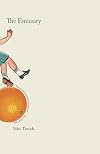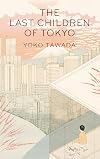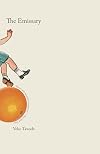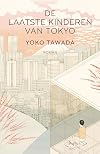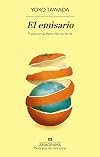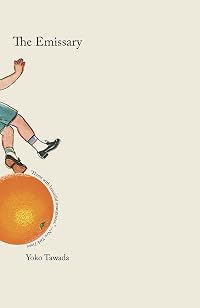
The Emissary
by Yōko Tawada
On This Page
Description
Japan, after suffering from a massive irreparable disaster, cuts itself off from the world. Children are so weak they can barely stand or walk: the only people with any get-go are the elderly. Mumei lives with his grandfather Yoshiro, who worries about him constantly. They carry on a day-to-day routine in what could be viewed as a post-Fukushima time, with all the children born ancient--frail and gray-haired, yet incredibly compassionate and wise. Mumei may be enfeebled and feverish, but he show more is a beacon of hope, full of wit and free of self-pity and pessimism. Yoshiro concentrates on nourishing Mumei, a strangely wonderful boy who offers "the beauty of the time that is yet to come."A delightful, irrepressibly funny book, The Emissary is filled with light. Yoko Tawada, deftly turning inside-out "the curse," defies gravity and creates a playful joyous novel out of a dystopian one, with a legerdemain uniquely her own. show lessTags
Recommendations









Member Reviews
What a strange little book.
The Emissary is set in a not-so-distance future version of Japan, where eternal life has basically been achieved (i.e. everyone lives well into their hundreds and remains strong and able-bodied) but the upshot is that all the children are weak and unhealthy and age so quickly that they are all dead before they're twenty. This future Japan has also completely shut down its borders; travel to and from foreign countries has ceased and trade is a thing of the past.
The two main characters are Yoshiro, a former novelist, and his great-grandson Mumei, whose teeth have fallen out and who can barely walk, but still has such joy and a zest for life that his great-grandfather has completely lost. "Mumei may be frail and show more gray-haired, but he is a beacon full of hope: full of wit and free of self-pity."
The back cover (see the quote above) makes it sound like this book is about Yoshiro's constant state of worry over the state of Japan and his feelings of marvel at his great-grandson's innocence in the face of such calamity (a very Japanese theme). But it's just as much a book about an imagined dystopia that is all too real to its readers. The Earth itself is collapsing; fish from the polluted oceans are so contaminated as to be inedible. Tawada's Japan has adopted a nationalistic, isolationist policy: foreign words and ideas are banned. Bread that originated in Germany is rechristened with a Japanese name, and English words and phrases like "overalls" and "one, two" are taboo so that younger Japanese do not recognize those English counting words. In today's political climate, this extreme behavior is familiar.
A chilling and even (very) interesting parable but not quite a must-read. show less
The Emissary is set in a not-so-distance future version of Japan, where eternal life has basically been achieved (i.e. everyone lives well into their hundreds and remains strong and able-bodied) but the upshot is that all the children are weak and unhealthy and age so quickly that they are all dead before they're twenty. This future Japan has also completely shut down its borders; travel to and from foreign countries has ceased and trade is a thing of the past.
The two main characters are Yoshiro, a former novelist, and his great-grandson Mumei, whose teeth have fallen out and who can barely walk, but still has such joy and a zest for life that his great-grandfather has completely lost. "Mumei may be frail and show more gray-haired, but he is a beacon full of hope: full of wit and free of self-pity."
The back cover (see the quote above) makes it sound like this book is about Yoshiro's constant state of worry over the state of Japan and his feelings of marvel at his great-grandson's innocence in the face of such calamity (a very Japanese theme). But it's just as much a book about an imagined dystopia that is all too real to its readers. The Earth itself is collapsing; fish from the polluted oceans are so contaminated as to be inedible. Tawada's Japan has adopted a nationalistic, isolationist policy: foreign words and ideas are banned. Bread that originated in Germany is rechristened with a Japanese name, and English words and phrases like "overalls" and "one, two" are taboo so that younger Japanese do not recognize those English counting words. In today's political climate, this extreme behavior is familiar.
A chilling and even (very) interesting parable but not quite a must-read. show less
I read this book twice because I enjoyed it so much. I can see myself reading it a third time. It's meandering and fluid in its organization, wandering in and out of character's heads and even in and out of time. Those who like more traditionally plotted novels (like Parul Sehgal of the New York Times) maybe find themselves frustrated. I was entranced and also moved. For me the book is one of the starkest and saddest statements on the environmental devastation one generation leaves for another -- told metaphorically and fantastically. What if we had to witness how humanity's poor environmental actions today will affect our great-grandchildren? What if those environmental actions, in addition to destroying the Earth, destroyed our show more great-grandchildren physically? What if we were fine and nearly immortal while our great-grandchildren were neither fine nor immortal so we had to take care of them and watch them die? A powerful and beautiful book.
(Because of the meandering plot, I found the audiobook a little hard to follow. Reading the novel on the page worked much better for me.) show less
(Because of the meandering plot, I found the audiobook a little hard to follow. Reading the novel on the page worked much better for me.) show less
I can never resist a short dystopian fable and devour them like snacks, all in one go. This quite possibly results in my deriving less meaning from them than I could. In this case, I felt myself lacking the linguistic and cultural reference points to appreciate it properly. I quite often find this with Russian literature and sometimes other fiction in translation. There are probably references to the Fukushima disaster in ‘The Last Children of Tokyo’, for instance, although I couldn’t pin them down. The narrative centres on a hale and hearty centenarian great-grandfather and his delicate and sickly great-grandson. As a consequence of major environmental disaster, future Japan has retreated from the rest the world in an echo of the show more Edo period. Cutting the country off completely has not addressed the environmental crisis or falling population, so shadowy authorities are considering sending youthful ambassadors overseas. There are many intriguing world-building details, such as privatisation of the government, pervasive gender fluidity, and dismantling of the electric grid. The plot is minimal, however. The reader observes the elderly and energetic Yoshiro painstakingly care of young Mumei, whose delicate body seems unlikely to reach adulthood. Yoshiro also observes that soon it will be unsafe to go outside at all, as well as frequently commenting on food contamination, because the environment continues to deteriorate.
Quite a lot of the book’s short length consists of flashbacks centring on the rest of Yoshiro’s family. These are slightly frustrating, as they lack sufficient context to provide any explanation of how the environment, economy, and society collapsed to such an extent. Mumei’s grandparents and parents are depicted as somewhat flighty individuals, while he himself is a calm person apparently unconcerned by mortality. Yoshiro is likewise a peaceable and reliable fellow, albeit afraid for Mumei who can barely survive a short walk. I found the reflections on generation gaps striking:
Such minor details are the only signs of anger, fear, and dread in the face of civilisation’s apparent collapse. If children cannot survive, there is no prospect of a future for Japan, yet this remains subtext hidden behind daily routines. I did like the way that the narrative conveys significant changes in society via material details, often of food. By contrast, the relationships between characters are quite ephemeral, except the touching bond between Yoshiro and Mumei. The unsettling generational differences are perhaps the most memorable parts of the book:
‘The Last Children of Tokyo’ is mysterious, atmospheric, and guarded, although that could in part be due to my lack of familiarity with Japan. While technically apocalyptic in content, it is at heart a quiet tale of an old man and a young child that comes to no firm conclusions about how the generation gap can be bridged.The final scenes seem to be Mumei’s hallucinations while he dies of a stroke, foreclosing hope for the future. Rather than showing potential for revival, the narrative is of declining with dignity. Older generations survive so they can witness the results of their greed and destructiveness. Despite the gentle style in which it is told, this is a harsh and bleak story when you think about it. show less
Quite a lot of the book’s short length consists of flashbacks centring on the rest of Yoshiro’s family. These are slightly frustrating, as they lack sufficient context to provide any explanation of how the environment, economy, and society collapsed to such an extent. Mumei’s grandparents and parents are depicted as somewhat flighty individuals, while he himself is a calm person apparently unconcerned by mortality. Yoshiro is likewise a peaceable and reliable fellow, albeit afraid for Mumei who can barely survive a short walk. I found the reflections on generation gaps striking:
Assuming he had knowledge and wealth to leave to his descendants was mere arrogance, Yoshiro now realised. This life with his great-grandson was about all he could manage. And for that he needed to be flexible, in mind and body, with the courage to doubt what he had believed for over a century. Sloughing off his pride like an old jacket, he’d have to go around in his shirtsleeves. If he was cold, rather than buying a new jacket it would be better to think of ways to grow a coat of fur like a bear’s. He was not really an ‘old man’, but a man who, after living for a century, had become a new species of human being, he thought, clenching his fists again and again.
Such minor details are the only signs of anger, fear, and dread in the face of civilisation’s apparent collapse. If children cannot survive, there is no prospect of a future for Japan, yet this remains subtext hidden behind daily routines. I did like the way that the narrative conveys significant changes in society via material details, often of food. By contrast, the relationships between characters are quite ephemeral, except the touching bond between Yoshiro and Mumei. The unsettling generational differences are perhaps the most memorable parts of the book:
You could tell the younger relations by their rounded backs, thinning hair, pale faces, and by how slowly their chopsticks moved. Realising their descendants were in such a state because they’d been so feckless made the elderly feel guilty, dampening the festivities.
While it wasn’t clear whether or not Yoshiro’s generation would really have to live forever, for the time being they had definitely been robbed of death. Perhaps when their bodies had reached the end, even their fingers and toes worn down to nothing, their minds would hang on, refusing to shut down, writhing still against immobile flesh.
‘The Last Children of Tokyo’ is mysterious, atmospheric, and guarded, although that could in part be due to my lack of familiarity with Japan. While technically apocalyptic in content, it is at heart a quiet tale of an old man and a young child that comes to no firm conclusions about how the generation gap can be bridged.
An instant classic, in my opinion. The Last Children of Tokyo is a Kafkaesque take on cli-fi, written with a tremendous sense of humor, although the overall mood is resigned. In the Japan of the future, environmental waste has drastically shortened the life expectations of the younger generations, whereas the elderly seem to be neigh immortal. Tawada weaves her strange plot around two characters, a great-grandfather and his great-grandson, and she takes the reader along a cast of absurd side characters, from a baker that gave up painting when others mistook his works for European landscapes, to a service called Rent-a-Dog where one can rent pure-bred dogs for a day. Every beginning of a story is smothered in the core, so that the show more temporality of this novel is one of waiting for something that will never come, while the world slowly crumbles. Despite all its absurdity and gloom, it is touching too and it prepares us for passing on a world that will be a little less whole for every generation. show less
'The Emissary' is a curious little book, packed with oversized ideas. A post-apocalyptic Japan is reeling in isolation, old people don't die and young people are fragile and evolving along a different path. Yoshiro, the great-grandfather and an author, raises Mumei, the great-grandson with untethered curiosity and a fascination with language; Mumei's father is a gambling addict and unable to be responsible, the mother died in childbirth; the grandparents live in Okinawa, now tenuously part of Japan; great-grandmother is a teacher in Shikoku. The great-grandmother and Yonatani, the elementary school teacher, are part of a loosely knit organization to track and identify children as potential 'emissaries' to go abroad--both as ambassadors show more and to allow foreign doctors to study the children's fragilities. Is it important to know what caused the apocalypse? Probably not. Should the reader know more about the context or outcome? Again, probably not. The enigma is left to the reader's interpretation. What I found enjoyable was the sense of language in the writing (even in translation), the wildly creative world and its cryptic relation to the past and future, the enigmatic plot, the shifting point of view, and the ambiguity of the end. Any other approach would have been too neat. show less
In a vaguely distant future Japan that has reverted to extreme isolationism in the face of an ecological or man-made disaster, an elderly (but still vibrant) great-grandfather, Yoshiro, is the sole carer for Mumei, his great-grandson. Along with aggressive restrictions against foreign ideas, technology, and words, nature itself has rebelled. The lives of the young are excessively precarious, either due to mutation or some other change. Mumei, for example, loses all of his baby teeth at once, has difficulty walking, and has a peculiar relationship to his own sensations and emotions. But Yoshiro’s care for him is unquestioned, despite his own failed marriage and earlier experiences with his own daughter and grandson. There is a show more recurring mention of emissaries, both in the form of a novel that Yoshiro wrote years earlier but never managed to get published and in the need for actual emissaries to go abroad surreptitiously in order, perhaps, to reforge Japan’s ties with the wider world.
This is a strange, almost oblique, novel. The characters are nearly transparent. So much so that you may begin to think that it sounds like a novelization of a futuristic Japanese anime. I found that although the overall story was curiously compelling, I never felt at home in the story. And I wasn’t certain that the transformation at the end was fully earned (a point which might hold for early points as well). However, the premise was so out-there that I would certainly be willing to read further works by Tawada on the basis of this one.
Gently recommended. show less
This is a strange, almost oblique, novel. The characters are nearly transparent. So much so that you may begin to think that it sounds like a novelization of a futuristic Japanese anime. I found that although the overall story was curiously compelling, I never felt at home in the story. And I wasn’t certain that the transformation at the end was fully earned (a point which might hold for early points as well). However, the premise was so out-there that I would certainly be willing to read further works by Tawada on the basis of this one.
Gently recommended. show less
The Emissary has a layer of whimsy that contradicts the horrors of the post-apocalyptic story it tells. This contradiction is compelling, but also distancing. Take away the whimsy and what's left reminds me of Ibuse's Black Rain, the story of a young woman's slow death from radiation poisoning following the bombing of Hiroshima, as told through her uncle's diaries. Both novels tell the story of a young person with no future, and of a civilization with no hope. They both beautifully capture the stoic-with-a-smile fatalism of Japanese culture, too, where people honor their obligations even in the most apocalyptic circumstances. But Ibuse's novel is almost unbearably truthful and intimate, whereas Tawada's has a sheen of light-hearted show more detachment. Ibuse's novel is unforgettable, and Tawada's novel never became more than a what-if exercise: interesting to read, full of fascinating detail about one possible future, but lacking any deeper follow-through to make it memorable. show less
Members
- Recently Added By
Published Reviews
[An] askew way of looking at things amid the ostensibly grim premise, and a sprightly use of language [...] makes The Last Children of Tokyo a book unlike any other.
added by Nevov
Lists

Speculative Fiction from around the World
610 works; 18 members

2021 Christmas Gifts
66 works; 13 members

National Book Award winners
65 works; 11 members

Books We Discovered On LibraryThing
530 works; 130 members
Author Information

79+ Works 2,809 Members
Some Editions
Awards and Honors
Common Knowledge
- Canonical title*
- Sändebudet
- Original title
- Kentoshi; 献灯使
- Alternate titles
- The Last Children of Tokyo; The Emissary (US title) (US title)
- Original publication date
- 2014
- Important places
- Japan; Germany
- First words
- Still in his blue silk pajamas, Mumei sat with his bottom flat on the tatami.
- Last words
- (Click to show. Warning: May contain spoilers.)That's what he was thinking when darkness, wearing a glove, reached for the back of his head to take hold of his brains, and Mumei fell into the pitch-black depths of the strait.
- Blurbers
- Baume, Sara
- Original language
- Japanese
*Some information comes from Common Knowledge in other languages. Click "Edit" for more information.
Classifications
- Genres
- Fiction and Literature, General Fiction, Science Fiction
- DDC/MDS
- 895.6 — Literature & rhetoric Literatures of other languages Literatures of East and Southeast Asia Japanese
- LCC
- PL862 .A85 .K4613 — Language and Literature Languages and literatures of Eastern Asia, Africa, Oceania Languages of Eastern Asia, Africa, Oceania Japanese language and literature Japanese literature Individual authors and works
- BISAC
Statistics
- Members
- 704
- Popularity
- 40,658
- Reviews
- 30
- Rating
- (3.53)
- Languages
- 7 — Danish, Dutch, English, French, German, Spanish, Swedish
- Media
- Paper, Audiobook, Ebook
- ISBNs
- 12
- ASINs
- 5