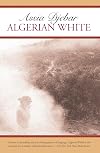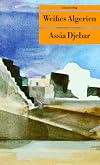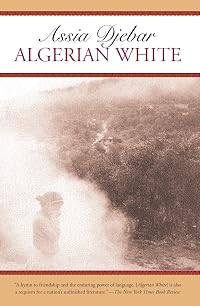
Algerian White
by Assia Djebar
On This Page
Description
At times strikingly lucid, at others stirringly implicated, this history of Algeria from its 1956 struggle for independence to the present day, records the horrors of civil war and the complex social and political issues that have drowned the country in bloodshed. Living in exile, Djebar expresses her guilt for fleeing murder when so many of her colleagues have been killed and, in a work that is part history and part memoir, expresses universal truths about the pain of loss 'A hymn to show more friendship and the power of language' The New York Times show lessTags
Recommendations










Member Reviews
Algerian White is essentially a longform personal essay: Djebar explores the deaths of three friends in particular and of Algerian writers in general, some from accidents or illness but a distressingly long procession assassinated in the succession of “events” from the 1950s to the 1990s. Where writing is so heavily intermingled with politics, this book becomes an overview of both Algerian history and Algerian literature from the War of Independence through to its publication in 1995, but all told from this very intimate point of view.
In retrospect I should have tried harder to find it in the original French. Language is so central to its theme – right from the start Djebar discusses her relationships with French, Arabic, and show more Berber in a way that reminded me of the Engliss Only, Pliss Tumblr, and this idea emerges again and again, only gaining importance throughout the book as it’s seen through the lens of the different authors and their lives and deaths. And Djebar chooses her words so very carefully, writing in the very literary French where you don’t use a vague word when a precise one will do, nor a simple sentence structure in place of the complex – although ellipsis… The translator has clearly been reluctant to mess with this language, so that reading it in English put me into the francophone mindset just the same way reading actual French does, to the point where I was tutoie-ing my cat. Since literary French and literary English work so differently, this makes it very difficult to read to begin with, and at least once I noticed an undertranslation (“C’est normal” doesn’t mean what we mean by “It’s normal”; it’s more akin to “It’s proper” formally, or informally “It’s the Way We Do Things around here”.)
But though it can be annoying to need to reread every second sentence to understand it, it’s mind-expanding to read prose that rewards it as Djebar’s prose does. It’s highly allusive, often close to poetry. I found myself making extracts just to come back to the thought later. Slow reading, because so very dense with meaning.
(Read for my "Around the World in 204 Books" project.) show less
In retrospect I should have tried harder to find it in the original French. Language is so central to its theme – right from the start Djebar discusses her relationships with French, Arabic, and show more Berber in a way that reminded me of the Engliss Only, Pliss Tumblr, and this idea emerges again and again, only gaining importance throughout the book as it’s seen through the lens of the different authors and their lives and deaths. And Djebar chooses her words so very carefully, writing in the very literary French where you don’t use a vague word when a precise one will do, nor a simple sentence structure in place of the complex – although ellipsis… The translator has clearly been reluctant to mess with this language, so that reading it in English put me into the francophone mindset just the same way reading actual French does, to the point where I was tutoie-ing my cat. Since literary French and literary English work so differently, this makes it very difficult to read to begin with, and at least once I noticed an undertranslation (“C’est normal” doesn’t mean what we mean by “It’s normal”; it’s more akin to “It’s proper” formally, or informally “It’s the Way We Do Things around here”.)
But though it can be annoying to need to reread every second sentence to understand it, it’s mind-expanding to read prose that rewards it as Djebar’s prose does. It’s highly allusive, often close to poetry. I found myself making extracts just to come back to the thought later. Slow reading, because so very dense with meaning.
(Read for my "Around the World in 204 Books" project.) show less
I think that I picked the wrong book by Djebar to start with. She writes beautifully and has won several prestigious awards. She is known for her feminist stance, which is interesting to me.
This book is written as a conversation with a group of Algerian writers and intellectuals who had died since the 1956 struggle for independence. It would have meant more to me if I knew more about Algerian history and literature.
I wish that I did know more. For instance, she quotes these awesome lines from [[Kateb Yacine]]:
Thus to die is to live
War and cancer of the blood
Slow or violent, to each his death
And it always is the same
For those who have learned
To read in the shadows
And who, eyes closed
Have not stopped writing
Thus to die is to show more live.
Unfortunately, since I did not have the background in Algerian culture, reading this book was a little like eavesdropping on someone else’s family dinner. Interesting, but at times baffling.
One thing that I noticed was the ambivalence about language, and which language one uses. It must be hard to be a writer in a colonial or post-colonial country who loves language, but has learned to love the language of the oppressor.
Djebar reflects on how she conversed with her friends in French, rather than in Arabic:
“Thus there came to light, in a light, gray by its very glitter, the noise of language, their language, the language of all three of them, each in turn and all together, with me too: a French with neither nerves, nor veins, nor even memories, a French both abstract and carnal, warm in tis consonances. “Their” French, the French of my friends—so they disappeared, will I finally end up knowing it, believing it—whereas, freed from the shroud of the past, the French of the old days now begins to be generated within us, between us, transformed into a language of the dead.” show less
This book is written as a conversation with a group of Algerian writers and intellectuals who had died since the 1956 struggle for independence. It would have meant more to me if I knew more about Algerian history and literature.
I wish that I did know more. For instance, she quotes these awesome lines from [[Kateb Yacine]]:
Thus to die is to live
War and cancer of the blood
Slow or violent, to each his death
And it always is the same
For those who have learned
To read in the shadows
And who, eyes closed
Have not stopped writing
Thus to die is to show more live.
Unfortunately, since I did not have the background in Algerian culture, reading this book was a little like eavesdropping on someone else’s family dinner. Interesting, but at times baffling.
One thing that I noticed was the ambivalence about language, and which language one uses. It must be hard to be a writer in a colonial or post-colonial country who loves language, but has learned to love the language of the oppressor.
Djebar reflects on how she conversed with her friends in French, rather than in Arabic:
“Thus there came to light, in a light, gray by its very glitter, the noise of language, their language, the language of all three of them, each in turn and all together, with me too: a French with neither nerves, nor veins, nor even memories, a French both abstract and carnal, warm in tis consonances. “Their” French, the French of my friends—so they disappeared, will I finally end up knowing it, believing it—whereas, freed from the shroud of the past, the French of the old days now begins to be generated within us, between us, transformed into a language of the dead.” show less
Il libro della Djebar prende le mosse dalla morte di tre amici, tre intellettuali assassinati. La scrittura per l'autrice è una forma di impegno etico, di denuncia, di riscatto della memoria civile oltre che privata ed affettiva. La guerra civile, l'integralismo, le contraddizioni di un popolo sono i grandi temi affrontati in queste pagine lucide e crude e, non ultimo, il bisogno di ricercare un'identità, una libertà senza il prezzo del sangue, un'emancipazione. Il "bianco" nella cultura islamica è il colore della morte e del lutto, un colore dominante nella storia algerina che il mondo non ha saputo leggere adeguatamente. La scrittura si poggia su uno stile spoglio e scabro e su toni volutamente drammatici come dolorosa necessità.
Dec 26, 2010 (Edited)Italian
Ratings
Members
- Recently Added By
Lists

Books Read in 2015
3,299 works; 129 members

Around the World in 80 Books
79 works; 4 members
Author Information

26+ Works 1,556 Members
Assia Djebar was born Fatima-Zohra Imalayan in Cherchell, Algeria on June 30, 1936. She read history at the Sorbonne in Paris, and, after teaching at Tunis and Rabat universities, emigrated to France with her husband and children. Her first novel, La Soif (The Mischief), was published in 1957. She wrote more than 15 novels during her lifetime show more including Algerian White, So Vast the Prison, The Tongue's Blood Does Not Run Dry, and The Children of the New World. She was also a playwright and filmmaker. In 2005, she became the fifth woman to be elected to the Académie Française. She received numerous awards for her work including the International Prize of Palmi, the Peace Prize of the Frankfurt Book Fair, the International Critics' Prize at the Venice Biennale for the film La Nouba des Femmes du Mont Chenoua, and the International Literary Neustadt Prize. She died on February 7, 2015 at the age of 78. (Bowker Author Biography) show less
Some Editions
Awards and Honors
Common Knowledge
- Canonical title
- Algerian White
- Original title
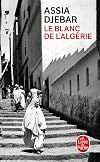
- Le blanc de l'Algérie
- Original publication date
- 1995
- Original language
- French
Classifications
Statistics
- Members
- 77
- Popularity
- 410,528
- Reviews
- 3
- Rating
- (3.19)
- Languages
- English, French, German, Italian
- Media
- Paper, Ebook
- ISBNs
- 9