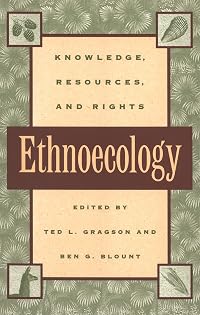
Ethnoecology: Knowledge, Resources, and Rights
by Ted L. Gragson
On This Page
Description
Scholars studying the ecology of specific areas often fail to take into account the presence of humans in those environments. People not only are fundamental components of an ecosystem but possess a unique understanding of its nature. This book examines subjects ranging from pastoralism to the use of medicinal plants to show that understanding the knowledge system of any people is essential to understanding their relation to their environment. Using cases from the American Southwest and show more Pacific Northwest, the Highland Maya Region of Central America, and the Lowland and Andean regions of South America, the contributors examine the relation of humans and environment within the context of each local system's beliefs, values, and knowledge. All emphasize the practical and cultural significance of indigenous knowledge of the environment and the importance of comparing this knowledge to scientific understanding prior to initiating development or conservation programs. They also contribute to a theoretical approach that allows findings to be applied across studies, regardless of ethnographic differences. show lessTags
Members
- Recently Added By
Lists

Reading list
170 works; 1 member
Author Information
1 Work 3 Members
Classifications
- Genres
- Science & Nature, Nonfiction, Anthropology
- DDC/MDS
- 304.2 — Society, government, & culture Social sciences, sociology & anthropology Factors affecting social behavior Human ecology
- LCC
- GN476.7 .E75 — Geography, Anthropology and Recreation Anthropology Anthropology Ethnology. Social and cultural anthropology Cultural traits, customs, and institutions Intellectual life
- BISAC
Statistics
- Members
- 3
- Popularity
- 4,752,323
- Languages
- English
- Media
- Paper
- ISBNs
- 1