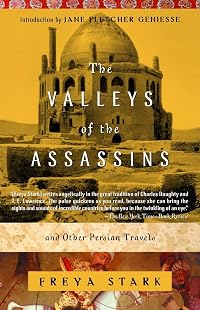
The Valleys of the Assassins: and Other Persian Travels
by Freya Stark
On This Page
Description
Hailed as a classic upon its first publication in 1934, The Valleys of the Assassins firmly established Freya Stark as one of her generation's most intrepid explorers. The book chronicles her travels into Luristan, the mountainous terrain nestled between Iraq and present-day Iran, often with only a single guide and on a shoestring budget. Stark writes engagingly of the nomadic peoples who inhabit the region's valleys and brings to life the stories of the ancient kingdoms of the Middle East, show more including that of the Lords of Alamut, a band of hashish-eating terrorists whose stronghold in the Elburz Mountains Stark was the first to document for the Royal Geographical Society. Her account is at once a highly readable travel narrative and a richly drawn, sympathetic portrait of a people told from their own compelling point of view. This edition includes a new Introduction by Jane Fletcher Geniesse, Stark's biographer. show lessTags
Recommendations














Member Recommendations
Member Reviews
There is no doubt that Freya wanted to live a life full of adventure that was challenging, rewarding, and more than a little dangerous. While she carried letters of introduction to give her access to key people, Freya relied heavily on her own wits to maintain her safety while in Persia. She recognized villains when she saw them. She played upon her novelty, knowing no European woman had ever been in various regions before. She would further confound the natives by putting the fragments of a skull in a jar as a keepsake or best them at their customs of all possible polite greetings and the responses one could go through. Freya demonstrated her sense of humor even when she was in sticky situations. Her attempt to find hidden treasure in show more a cave was both heroic and hilarious.
When people asked Freya why she wanted to travel the way that she did she blamed "the trouble" on an aunt after this relative sent Freya a copy of Arabian Nights for her 9th birthday. Freya was instantly bitten by the adventure bug. Most children would snuggle down in their beds and dream of spitting camels and endless sand, but Stark's dreams took her to ride real camels across real deserts. Confessional: Freya never mentions camels. Her mode of transportation was a mule.
Part One takes the reader through Luristan, as it was a country where one is less frequently murdered, but the threat is not completely out of the question. As Freya maps the area for British Intelligence her actions put her in constant danger of being thought of as a spy. At the same time, Freya becomes a healer of sorts; being called upon to parse out quinine and castor oil; administer care for for snake bites, broken limbs and mysterious ailments.
Throughout Valleys of the Assassins are wonderful full page photographs. My favorite is of Keram Khan with his majestic horse and magnificent coat. show less
When people asked Freya why she wanted to travel the way that she did she blamed "the trouble" on an aunt after this relative sent Freya a copy of Arabian Nights for her 9th birthday. Freya was instantly bitten by the adventure bug. Most children would snuggle down in their beds and dream of spitting camels and endless sand, but Stark's dreams took her to ride real camels across real deserts. Confessional: Freya never mentions camels. Her mode of transportation was a mule.
Part One takes the reader through Luristan, as it was a country where one is less frequently murdered, but the threat is not completely out of the question. As Freya maps the area for British Intelligence her actions put her in constant danger of being thought of as a spy. At the same time, Freya becomes a healer of sorts; being called upon to parse out quinine and castor oil; administer care for for snake bites, broken limbs and mysterious ailments.
Throughout Valleys of the Assassins are wonderful full page photographs. My favorite is of Keram Khan with his majestic horse and magnificent coat. show less
Narratives of several journeys in remote areas of the Middle East, principally the Persia-Iraq border region, in the 1930's. Armed with the self-assurance of empire, but also innate savvy, cunning, and fluency in various local languages, the author explores the tribal hill-country of Luristan, and the area of northern Persia which was home to the titular assassins first described by Marco Polo, outwitting and deceiving unfriendly officials/police as necessary. She is motivated partly by her own curiosity and wanderlust, and partly by a never fully explained commission from the British Foreign Office (I think) which likely relates to mapping and general intelligence gathering but apparently also includes a bona fide treasure hunt.
It's a show more remarkable insight into a people (peoples really) and place which most of us know nothing about. As a Western woman she is able to report from both sides of the patriarchal societies with whom she stays. But I was frustrated by how little humanity she gives us: what there is is memorable, like the smart young tribesman with big plans to make it in Tehran, or the sorrowful first wife of a polygamous chief now supplanted by a younger model, but the focus is on geographical description - map-making, really - archaeology, and Stark's daily camp routine.
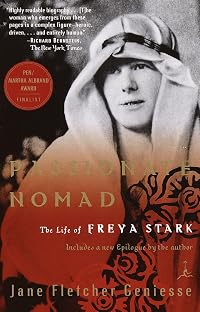
The prose is mostly functional, again in keeping with Stark's semi-hidden mapping agenda, but always precise and there are some nice descriptive passages. I think as long as you don't go into this expecting a modern travelogue a la Chatwin or Theroux, you won't be disappointed. Its uniqueness alone is enough to recommend it. I'll read the acclaimed biography of Stark, "Passionate Nomad" by Jane Fletcher sooner or later. She led a pretty incredible life. show less
It's a show more remarkable insight into a people (peoples really) and place which most of us know nothing about. As a Western woman she is able to report from both sides of the patriarchal societies with whom she stays. But I was frustrated by how little humanity she gives us: what there is is memorable, like the smart young tribesman with big plans to make it in Tehran, or the sorrowful first wife of a polygamous chief now supplanted by a younger model, but the focus is on geographical description - map-making, really - archaeology, and Stark's daily camp routine.
The prose is mostly functional, again in keeping with Stark's semi-hidden mapping agenda, but always precise and there are some nice descriptive passages. I think as long as you don't go into this expecting a modern travelogue a la Chatwin or Theroux, you won't be disappointed. Its uniqueness alone is enough to recommend it. I'll read the acclaimed biography of Stark, "Passionate Nomad" by Jane Fletcher sooner or later. She led a pretty incredible life. show less
Freya Stark lived a fascinating, fearless, adventurous, long life. She spent most of it traveling in the Middle East, much of that travel in regions where women traveling alone was unheard of. She traveled as a native, on a pack mule, sleeping in homes in small villages, learning how the locals lived.
She wrote many articles about her discoveries that were published in the journals of the Royal Geographic Society, and drew up maps of regions that were until then unmapped. She took photographs and accumulated items of historical significance (this was an era of unbelievable grave-robbing and pillaging).
This novel is her accounts of 5 trips in Persia which occurred in the early '30's, soon after the new Shah has assumed control of the show more country. Although there are roads and electricity in the major cities, where Stark is heading the people still live as they have for millennium. They have been disarmed and there are now Police patrolling, so the outlaw tribes are no longer warring, making it safer for travel.
The book is not an anthropologic documentation of Stark's findings - for that she refers the reader to her published article. Instead this is writings from her diary/journals and here are more her impressions of the places she visits, the receptions she receives and her travels. The only problem was that the reader is not really made aware of this until 3/4 of the way throughout the book. The maps are few and one is illegible so I did not have a good sense of where she was or how far the distances were. There is only one photo in my edition - of one of her guides - and I longed for more - the people, the tents, the dress, the vistas...I wound up spending hours on Google trying to see what she had been writing about, and it was not always easy to find! Names of places have changed and photos of that era are few and far between, the area was being modernized as she traveled and it is very different seeing a road up a mountain rather than a precarious mule path!
Stark presented history of places as told to her by her guides and the locals. She is offered unlimited hospitality everywhere she travels - families move out of their homes so she has shelter, go without so she can eat; it is quite amazing. She tells of villages where traditional enemies live side by side in relative peace, and shows the day to day lives of people who move with the seasons, live off the land and are, for the most part, very happy. It is a fascinating peek into an unknown and mostly gone world.
Stark was a very bright woman, she spoke Arabic and had studied the Koran. She used her wits to get out of tight situations and her humor to convey them to us, the reader. Fascinating, enriching, engrossing read! show less
She wrote many articles about her discoveries that were published in the journals of the Royal Geographic Society, and drew up maps of regions that were until then unmapped. She took photographs and accumulated items of historical significance (this was an era of unbelievable grave-robbing and pillaging).
This novel is her accounts of 5 trips in Persia which occurred in the early '30's, soon after the new Shah has assumed control of the show more country. Although there are roads and electricity in the major cities, where Stark is heading the people still live as they have for millennium. They have been disarmed and there are now Police patrolling, so the outlaw tribes are no longer warring, making it safer for travel.
The book is not an anthropologic documentation of Stark's findings - for that she refers the reader to her published article. Instead this is writings from her diary/journals and here are more her impressions of the places she visits, the receptions she receives and her travels. The only problem was that the reader is not really made aware of this until 3/4 of the way throughout the book. The maps are few and one is illegible so I did not have a good sense of where she was or how far the distances were. There is only one photo in my edition - of one of her guides - and I longed for more - the people, the tents, the dress, the vistas...I wound up spending hours on Google trying to see what she had been writing about, and it was not always easy to find! Names of places have changed and photos of that era are few and far between, the area was being modernized as she traveled and it is very different seeing a road up a mountain rather than a precarious mule path!
Stark presented history of places as told to her by her guides and the locals. She is offered unlimited hospitality everywhere she travels - families move out of their homes so she has shelter, go without so she can eat; it is quite amazing. She tells of villages where traditional enemies live side by side in relative peace, and shows the day to day lives of people who move with the seasons, live off the land and are, for the most part, very happy. It is a fascinating peek into an unknown and mostly gone world.
Stark was a very bright woman, she spoke Arabic and had studied the Koran. She used her wits to get out of tight situations and her humor to convey them to us, the reader. Fascinating, enriching, engrossing read! show less
This was a bit difficult to get through. Freya Stark, who was a powerhouse in the world of Middle Eastern affairs and travels during much of her life, presents us with a book about her travels in Persia. I'm sure that had I read this when it was originally published I would've given it higher marks. But, reading it in 2022, I was honestly bored. This boredom was magnified by a complete lack of photos. It's hard to get a sense of what she saw, as so much of one place in her writings resembles the next. There are a couple of old hand-drawn maps, which, I must confess, were of no value to me, the reader.
Also, I felt like Freya would start out a section by building up this splendid idea of what the trip would be like, where she would go, show more and what she would discover. By the end of the segment, we find that she gave up entirely due to one reason or another. This was an extreme let-down and anti-climax. I did like hearing some of the stories told to her by some of those she came in contact with, particularly stories and legends surrounding King Solomon and the Queen of Sheba.
I have another book to read by Freya Stark, but after this one, I'm not sure I want to delve into it quite yet. show less
Also, I felt like Freya would start out a section by building up this splendid idea of what the trip would be like, where she would go, show more and what she would discover. By the end of the segment, we find that she gave up entirely due to one reason or another. This was an extreme let-down and anti-climax. I did like hearing some of the stories told to her by some of those she came in contact with, particularly stories and legends surrounding King Solomon and the Queen of Sheba.
I have another book to read by Freya Stark, but after this one, I'm not sure I want to delve into it quite yet. show less
This is a collection of essays about Freya Stark's travels in Persia in the early 1930's. In her preface she admits that these travels were mostly for fun - not any serious purpose. so, accompanied only by local guides, this is a personal account of a woman who was travelling just because she could. Though she did have an interest in the geography, history and archaeology of the region. She meets various peoples - Kurds, Shia and others - during her travels; attempts to visit certain sites of potential archaeological and historical interest and describes the landscape she travels through. Along with some more personal musings.
There were some aspects of this that I did not like - a casual attitude to illegal activities; a degree of show more "looking-down" on some of the people she meets - but on the whole this was a fascinating insight into a culture that was undergoing change and is even more changed now. I think that the author's attitudes were very much of her time, and bearing this in mind, I did enjoy reading about her travels. show less
There were some aspects of this that I did not like - a casual attitude to illegal activities; a degree of show more "looking-down" on some of the people she meets - but on the whole this was a fascinating insight into a culture that was undergoing change and is even more changed now. I think that the author's attitudes were very much of her time, and bearing this in mind, I did enjoy reading about her travels. show less
Joy's review: Freya Stark roamed around the Middle East in the 1930's learning Persian and Arabic in the process. I read lots of her stuff when I was in my late 20's. But I've got to admit this book did not live up to my memories of her writing. Full of vivid and wonderful descriptions of landscape, individuals, and customs, but if felt to me like it never really had a point or purpose. Of course, that's how Stark felt about travel itself: you don't need a point or purpose; you do it because you love it. What redeemed the book for me was her regular insights like the one about the lack of recognition of the need for solitude contributing to half our domestic troubles.
Having read about Freya Stark (Jane Fletcher Geniesse's "Passionate Nomad"), I decided to read something Ms. Stark herself had written. There were snippets of her writing in the biography to whet my appetite....
Ms. Stark is a very good writer: "This is a great moment, when you see, however distant, the goal of your wandering. The thing which has been living in our imagination suddenly becomes part of the tangible world."
I especially enjoyed her writings about the people she met on her travels through Persia. I did get a bit bored during detailed geographic descriptions, which I think she included as part of her work for the Royal Geographic Society.
Freya Stark is a good writer and a fascinating woman. Well worth reading.
Ms. Stark is a very good writer: "This is a great moment, when you see, however distant, the goal of your wandering. The thing which has been living in our imagination suddenly becomes part of the tangible world."
I especially enjoyed her writings about the people she met on her travels through Persia. I did get a bit bored during detailed geographic descriptions, which I think she included as part of her work for the Royal Geographic Society.
Freya Stark is a good writer and a fascinating woman. Well worth reading.
Members
- Recently Added By
Lists

501 Must-Read Books
529 works; 72 members

Mustich's 1000 Books to Read Before You Die: A Life Changing List
1,001 works; 20 members
Author Information

43+ Works 2,486 Members
Freya Stark (1893-1993), 'the poet of travel', was the doyenne of Middle East travel writers. Her travels earned her the title of Dame and huge public acclaim. Her many, now classic, books include Traveller's Prelude, Ionia, The Southern Gates of Arabia, Alexander's Path, Dust in the Lion's Paw, East is West and Valleys of the Assassins.
Awards and Honors
Series
Belongs to Publisher Series
Common Knowledge
- Canonical title
- The Valleys of the Assassins: and Other Persian Travels
- Alternate titles
- The Valleys of the Assassins and Other Persian Travels
- Original publication date
- 1934
- People/Characters
- Freya Stark
- Important places
- Valleys of the Assassins, Iran; Iraq; Persia; Iran
- Dedication
- To W.P. Ker in loving memory
- First words
- An imaginative aunt, who for my ninth birthday, sent a copy of the Arabian Nights, was, I suppose, the original cause of trouble.
(Preface)
In the wastes of civilization, Luristan is still an enchanted name.
Classifications
Statistics
- Members
- 591
- Popularity
- 49,867
- Reviews
- 14
- Rating
- (3.64)
- Languages
- 6 — English, French, German, Italian, Portuguese, Spanish
- Media
- Paper
- ISBNs
- 17
- ASINs
- 13