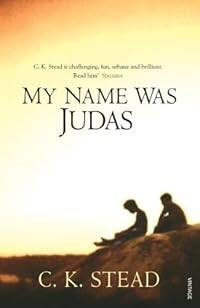
My Name Was Judas
by C. K. Stead
On This Page
Description
We all know the story of Jesus told by Matthew, Mark, Luke and John, but what about the version according to Judas? In this witty, original and teasingly controversial account, some forty years after the death of Jesus, Judas finally tells the story as he remembers it. Looking back on his childhood and youth from an old age the gospel writers denied him, Judas recalls his friendship with Jesus; their schooling together; their families; the people who would go on to be disciples and show more followers; their journeys together and their dealings with the powers of Rome and the Temple. His is a story of friendship and rivalry, of a time of uncertainty and enquiry, a testing of belief, endurance and loyalty. show lessTags
Recommendations
































Member Recommendations
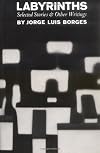
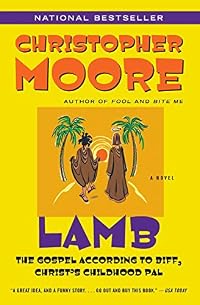
Voise15 See Borges' essay 'Three versions of Judas' for an equally subversive perspective
Member Reviews
Such a surprisingly good novel that reprises "The Greatest Story Ever Told" as a memoir recounted in old age by Judas Keraiyot (Iscariot). It's intelligent and reasoned, also absorbing reading.
The central premise to this novel is that Judas' betrayal was not the thirty pieces of silver incident, but that he, Judas, could not come to accept that Jesus was Messiah. Despite being friends from boyhood, fellow students together, Judas the disciple gradually becomes disenchanted with Jesus' message, especially in the period preceding the crucifixion when Christ's preaching becomes more condemnatory of the powerful, the rich and the Jewish establishment.
The novel is a plea for rational thinking and a warning that inflamed rhetoric and blind show more faith together inevitably produce discord and disaster if they are permitted to persist. Two thousand years of Middle Eastern mutual loathing among cultures and a lack of true compassion for the human family has been a blight on human well-being. It's hard to imagine a worse place on Earth to advance a Christian message. show less
The central premise to this novel is that Judas' betrayal was not the thirty pieces of silver incident, but that he, Judas, could not come to accept that Jesus was Messiah. Despite being friends from boyhood, fellow students together, Judas the disciple gradually becomes disenchanted with Jesus' message, especially in the period preceding the crucifixion when Christ's preaching becomes more condemnatory of the powerful, the rich and the Jewish establishment.
The novel is a plea for rational thinking and a warning that inflamed rhetoric and blind show more faith together inevitably produce discord and disaster if they are permitted to persist. Two thousand years of Middle Eastern mutual loathing among cultures and a lack of true compassion for the human family has been a blight on human well-being. It's hard to imagine a worse place on Earth to advance a Christian message. show less
If you're an avid reader, you'll no doubt nod your head in agreement when I say that every once in a while you come across a book that is such a surprise, that exceeds your expectations by so much, that you devour each and every word. My Name is Judas is such a book. It sat unread on my shelf for many months and yesterday, after I put it down after devouring it in two short sittings, I lamented why I had left it so long.
It is a truly exceptional book; its genius lies in the familiar. The story of Jesus is one we are all familiar with, but C. K. Stead finds a new and subtly subversive angle on it. He tells the story of Judas of Keraiyot (Iscariot) and his boyhood friend Jesus, and charts their childhood in Nazareth and their growing show more differences in adulthood as the gifted Jesus becomes a well-known orator and prophet. Told from the perspective of an elderly Judas, it paints a picture of a flawed and charismatic, though very much human, Jesus who is come to be seen by many (and perhaps by himself) as the Messiah, the Christ spoken of in prophecy.
This is where the subtle, subversive genius is evident, as Judas recounts their lives at this time, as the cult of Jesus the Christ grows. Judas struggles throughout the book with his scepticism and his thoughtful agnosticism, causing conflict with the other disciples and their blind faith. In an eloquent passage by the author on pages three through six, Judas finally resolves, in his old age, that he will trust in his reason and rationality. You see, Judas' betrayal" was not the thirty pieces of silver as the gospel writers had it, but that, he alone of all the disciples, did not believe his friend was actually the Messiah, and argued with those other disciples who proclaimed his divinity. Key events in the life of Jesus (the loaves and fishes, Lazarus' resurrection, etc.) are ingeniously shown by Stead to have had rational explanations, or were metaphors that over time came to be seen as literal truth. By presenting an entirely-believable interpretation of the life of Jesus which does not require any magic, any divinity, he plants a subversive seed in the reader's mind. As Judas explains as early as page four, he found "that the less we believed in these [divine] forces, the less they gave us reason to." Once the stories are given rational explanations, the need for magical or superstitious explanations crumbles away, just as a scary shadow on a child's bedroom wall ceases to cause fear once it has been revealed as a trick of the light, or a branch swaying in the wind outside. As someone who has read and thought about atheism and religion quite extensively, I have never encountered such a simple and yet gently potent advocacy of rationalism over superstition as My Name is Judas.
But the book is doubly special as it is also a good read. Beyond the admirable and eloquent message, it is also very well-written. The prose is clean and the poetry unobstructive, making it accessible to a potentially great number of people. There is a fair amount of anachronistic language but, with the exception of one of Zebedee's utterances at the bottom of page 147, this never takes you out of the story. If anything, it only emphasises the timelessness of the story - that of two friends growing apart. The characters are also very well-drawn. Judas' recollections never seem self-pitying or biased, Jesus walks a perfectly-balanced line between gifted, thoughtful philosopher and a damaged, insecure man starting to believe his own hype, and the various other characters, from the eleven other disciples to Mary and Joseph and also Mary Magdalene, seem like real human beings rather than pawns in a divinely-ordained game, strongly reinforcing C. K. Stead's secular interpretation of events in Nazareth. The narrative is also surprisingly engaging, breathing new life into the tired old Greatest Story Ever Told. The crucifixion is especially emotional, as Judas' warnings are not heeded and his friend dies slowly and agonisingly (and pointlessly, perhaps counter-productively) on the cross. As Judas reflects in his old age, that was when he realised once and for all that there was no God, for "if there had been one, and He had ordained this end for His faithful son and servant, He would at that moment surely have died of shame." (pg. 231). As mentioned above, the rational explanations for many of the Bible events are ingenious and more believable than their religious interpretations, particularly the ways in which Stead explains the actions of Pontius Pilate and the reason Jesus' body was not present when his tomb was unsealed. I also liked the part where a young and confused Judas, in love with a local girl, looks for the love stories of Hebrew literature for guidance and finds nothing. In contrast to the Greek society which is "full of stories of the love of man and woman, man and muse, human and demigod", the only comparable stories in his own society were ones about the love between man and God (pg. 76). This short, subtle paragraph is a damning indictment of the paucity of genuine expressions of love and compassion in Abrahamic cultures, going a long way in explaining the stunted social growth of mankind and the endless religious conflicts which have plagued the world for millennia, and continue to do so today.
I have often wondered how one might 'convert', for want of a better phrase, someone to atheism. Atheist polemics can be enjoyable to read, but often seem like they are preaching to the choir (again, please excuse the inappropriateness of the phrase). I have concluded that there is no sure-fire way to do so, but one can create doubt, and doubt is not a bad thing. C. K. Stead has managed to create a novel that is subversive and yet also respectful, so that anyone with a truly open mind will be able to engage with it. They will be able to see how religions are created, how the story of one charismatic man can, by a mix of ignorance, hubris and deceit, mutate into a story about the same man being a 'man-god', the Messiah, the son of God. You will begin to wonder how you could ever have believed it in the first place (that is, of course, if you ever did), now that Stead has presented such a believable, rational alternative interpretation of events. My Name is Judas should be at the top of the reading list for every man or woman who holds themselves to certain standards of conscientiousness, thoughtfulness and intelligence." show less
It is a truly exceptional book; its genius lies in the familiar. The story of Jesus is one we are all familiar with, but C. K. Stead finds a new and subtly subversive angle on it. He tells the story of Judas of Keraiyot (Iscariot) and his boyhood friend Jesus, and charts their childhood in Nazareth and their growing show more differences in adulthood as the gifted Jesus becomes a well-known orator and prophet. Told from the perspective of an elderly Judas, it paints a picture of a flawed and charismatic, though very much human, Jesus who is come to be seen by many (and perhaps by himself) as the Messiah, the Christ spoken of in prophecy.
This is where the subtle, subversive genius is evident, as Judas recounts their lives at this time, as the cult of Jesus the Christ grows. Judas struggles throughout the book with his scepticism and his thoughtful agnosticism, causing conflict with the other disciples and their blind faith. In an eloquent passage by the author on pages three through six, Judas finally resolves, in his old age, that he will trust in his reason and rationality. You see, Judas' betrayal" was not the thirty pieces of silver as the gospel writers had it, but that, he alone of all the disciples, did not believe his friend was actually the Messiah, and argued with those other disciples who proclaimed his divinity. Key events in the life of Jesus (the loaves and fishes, Lazarus' resurrection, etc.) are ingeniously shown by Stead to have had rational explanations, or were metaphors that over time came to be seen as literal truth. By presenting an entirely-believable interpretation of the life of Jesus which does not require any magic, any divinity, he plants a subversive seed in the reader's mind. As Judas explains as early as page four, he found "that the less we believed in these [divine] forces, the less they gave us reason to." Once the stories are given rational explanations, the need for magical or superstitious explanations crumbles away, just as a scary shadow on a child's bedroom wall ceases to cause fear once it has been revealed as a trick of the light, or a branch swaying in the wind outside. As someone who has read and thought about atheism and religion quite extensively, I have never encountered such a simple and yet gently potent advocacy of rationalism over superstition as My Name is Judas.
But the book is doubly special as it is also a good read. Beyond the admirable and eloquent message, it is also very well-written. The prose is clean and the poetry unobstructive, making it accessible to a potentially great number of people. There is a fair amount of anachronistic language but, with the exception of one of Zebedee's utterances at the bottom of page 147, this never takes you out of the story. If anything, it only emphasises the timelessness of the story - that of two friends growing apart. The characters are also very well-drawn. Judas' recollections never seem self-pitying or biased, Jesus walks a perfectly-balanced line between gifted, thoughtful philosopher and a damaged, insecure man starting to believe his own hype, and the various other characters, from the eleven other disciples to Mary and Joseph and also Mary Magdalene, seem like real human beings rather than pawns in a divinely-ordained game, strongly reinforcing C. K. Stead's secular interpretation of events in Nazareth. The narrative is also surprisingly engaging, breathing new life into the tired old Greatest Story Ever Told. The crucifixion is especially emotional, as Judas' warnings are not heeded and his friend dies slowly and agonisingly (and pointlessly, perhaps counter-productively) on the cross. As Judas reflects in his old age, that was when he realised once and for all that there was no God, for "if there had been one, and He had ordained this end for His faithful son and servant, He would at that moment surely have died of shame." (pg. 231). As mentioned above, the rational explanations for many of the Bible events are ingenious and more believable than their religious interpretations, particularly the ways in which Stead explains the actions of Pontius Pilate and the reason Jesus' body was not present when his tomb was unsealed. I also liked the part where a young and confused Judas, in love with a local girl, looks for the love stories of Hebrew literature for guidance and finds nothing. In contrast to the Greek society which is "full of stories of the love of man and woman, man and muse, human and demigod", the only comparable stories in his own society were ones about the love between man and God (pg. 76). This short, subtle paragraph is a damning indictment of the paucity of genuine expressions of love and compassion in Abrahamic cultures, going a long way in explaining the stunted social growth of mankind and the endless religious conflicts which have plagued the world for millennia, and continue to do so today.
I have often wondered how one might 'convert', for want of a better phrase, someone to atheism. Atheist polemics can be enjoyable to read, but often seem like they are preaching to the choir (again, please excuse the inappropriateness of the phrase). I have concluded that there is no sure-fire way to do so, but one can create doubt, and doubt is not a bad thing. C. K. Stead has managed to create a novel that is subversive and yet also respectful, so that anyone with a truly open mind will be able to engage with it. They will be able to see how religions are created, how the story of one charismatic man can, by a mix of ignorance, hubris and deceit, mutate into a story about the same man being a 'man-god', the Messiah, the son of God. You will begin to wonder how you could ever have believed it in the first place (that is, of course, if you ever did), now that Stead has presented such a believable, rational alternative interpretation of events. My Name is Judas should be at the top of the reading list for every man or woman who holds themselves to certain standards of conscientiousness, thoughtfulness and intelligence." show less
My Name Was Judas by C K Stead Not being a Christian I came to this open-minded-ish.It is completely enthralling. Written by an old Judas looking back on his life he takes us through the Jesus stories one at a time and we see them as he saw them.I'm sure this will upset Christians of pretty much any denomination in some way or another, but I honestly do not think that was the aim. I really think this is the first clear look at any of it that I have been able to get for many many years. Maybe because I am older myself and can empathise with Judas's retrospective wisdom. How foolish we all are when young! and long may it be so.Written with a clarity seldom encountered and no gimmicks or tricks. Just plain old solid writing performance show more from a long in the tooth author of good standing, at least in his own country.Not for the "bible as truth" people I'm afraid, but for those of us still "unsaved" a brilliant take on one of the oldest stories around.
May God help us all :-) show less
May God help us all :-) show less
This terrific novel purports to give an alternative account of the life of Jesus, as witnessed by his childhood friend Judas who didn't, in this telling, hang himself (or even betray Jesus in the first place) being guilty only of skepticism where his fellow disciples were not. In this telling, after the crucifixion Judas lived to a ripe old age and finally got to tell his story in his dotage.
I fear Stead's novel is a couple of millennia late for Judas' global reputation to be restored; all the same, My Name Was Judas is beautifully written, thoroughly researched, and gently (and therefore devastatingly) subversive.
Subversive in exactly the same way that Monty Python's Life of Brian was - not because it is blasphemously irreverent (it show more isn't) nor because it is alleges itself to be true and therefore falsifying of biblical texts (it doesn't), but because the account it gives, even though overtly fictional, is so much more plausible than the traditional story. Where Brian made the "mute" man speak by accidentally treading on his toe, Judas the sceptic explains away most of Jesus' miracles in terms of more prosaic causes - often times nothing more than a bit of hyperbolic hearsay and a distinct - and entirely credible - willing suspension of disbelief from those followers who, with their own agenda, propagated the story.
The Jesus described by Stead is a much more believable radical revolutionary than the one of Christian myth. As a result, the reader is constantly obliged to ask himself, "how could I have bought the gospel stories in the first place?" - much the same question, though more deftly phrased, that Richard Dawkins has bludgeoned his readers over the head with in his The God Delusion. Stead's presentation is 100% more stealthy and, consequently, effective.
The other remarkable thing about this book is that a New Zealander like Stead should be writing a non-domestic story at all, let alone with such elan. New Zealand literary circles, such as they are (we New Zealanders, on the whole, don't go in for reading in a big way), are usually at pains to assert their domestic cultural credentials, and New Zealand literature which doesn't is viewed by the defensive Kiwi literati as either worthless or a bit too big for its boots. This "cultural cringe" factor leads to mostly worthy but humourless and dull output, which is probably *why* New Zealanders don't read much, come to think of it. Stead is one of New Zealand's foremost living writers, so perhaps he can get away with it, but in any case such an openly outward looking perspective is to be celebrated, especially when done so well.
Throughly recommended. show less
I fear Stead's novel is a couple of millennia late for Judas' global reputation to be restored; all the same, My Name Was Judas is beautifully written, thoroughly researched, and gently (and therefore devastatingly) subversive.
Subversive in exactly the same way that Monty Python's Life of Brian was - not because it is blasphemously irreverent (it show more isn't) nor because it is alleges itself to be true and therefore falsifying of biblical texts (it doesn't), but because the account it gives, even though overtly fictional, is so much more plausible than the traditional story. Where Brian made the "mute" man speak by accidentally treading on his toe, Judas the sceptic explains away most of Jesus' miracles in terms of more prosaic causes - often times nothing more than a bit of hyperbolic hearsay and a distinct - and entirely credible - willing suspension of disbelief from those followers who, with their own agenda, propagated the story.
The Jesus described by Stead is a much more believable radical revolutionary than the one of Christian myth. As a result, the reader is constantly obliged to ask himself, "how could I have bought the gospel stories in the first place?" - much the same question, though more deftly phrased, that Richard Dawkins has bludgeoned his readers over the head with in his The God Delusion. Stead's presentation is 100% more stealthy and, consequently, effective.
The other remarkable thing about this book is that a New Zealander like Stead should be writing a non-domestic story at all, let alone with such elan. New Zealand literary circles, such as they are (we New Zealanders, on the whole, don't go in for reading in a big way), are usually at pains to assert their domestic cultural credentials, and New Zealand literature which doesn't is viewed by the defensive Kiwi literati as either worthless or a bit too big for its boots. This "cultural cringe" factor leads to mostly worthy but humourless and dull output, which is probably *why* New Zealanders don't read much, come to think of it. Stead is one of New Zealand's foremost living writers, so perhaps he can get away with it, but in any case such an openly outward looking perspective is to be celebrated, especially when done so well.
Throughly recommended. show less
I picked this book up by chance unsure whether I would like it. I did. In fact I thoroughly enjoyed it to the point of 4.5 stars. It's short enough to read in one sitting and I felt this did it more justice. When I had finished it I spent the rest of the evening reflecting on what I knew about Judas and Jesus and it does through different points up for debate.
As the book says "we all know the story of Jesus told by Matthew, Mark, Luke and John, but what about the version according to Judas?" You have to imagine that Judas has never died, in fact that was a big part of the story as told by Gospels and Judas is telling his tale in his seventies. It is an interesting tale as well. I found it sad and moving as well as being enriching. I show more opened the covers with scepticism expecting to not enjoy it and no matter how hard I tried I didn't succeed. It is well written and extremely engrossing. You don't have to be a believer in Jesus to enjoy the novel as everyone of that faith, practising or otherwise, knows his story.
Choose it, you might be surprised. show less
As the book says "we all know the story of Jesus told by Matthew, Mark, Luke and John, but what about the version according to Judas?" You have to imagine that Judas has never died, in fact that was a big part of the story as told by Gospels and Judas is telling his tale in his seventies. It is an interesting tale as well. I found it sad and moving as well as being enriching. I show more opened the covers with scepticism expecting to not enjoy it and no matter how hard I tried I didn't succeed. It is well written and extremely engrossing. You don't have to be a believer in Jesus to enjoy the novel as everyone of that faith, practising or otherwise, knows his story.
Choose it, you might be surprised. show less
This book retells the story of Jesus from the point of Judas looking back as an old man. Its partly serious, partly fun as it works its way through the miracles and other events from the life of Jesus, giving a plausible spin as to how they got misreported.
Ratings
Members
- Recently Added By
Published Reviews
ThingScore 100
Away from the wry humour, there is serious purpose here, since ours is a time in which the earnest presentation of wishful thinking as fact has become a commonplace. As an old man, Judas meets St Bartholomew again. "Bart", as Judas calls him, is now the Greek Ptolemy, a blind preacher spreading the Truth to the people of Sidon 40 years after the death of Jesus. Judas reveals his true identity show more and demolishes the exaggerations of Bartholomew's testament with a few choice facts, provoking Bartholomew's scorn and suggesting an alternative reason why Judas's name has suffered 20 centuries of vilification. show less
added by avatiakh
Lists

BBC World Book Club
261 works; 5 members
Author Information

47+ Works 887 Members
C. K. Stead is a critic, editor, poet, novelist, and educator from New Zealand. He was a professor of English at Auckland University. He is the author of numerous collections of poetry, short stories, novels and literary criticism. He received a New Zealand Book Award in Poetry in 1976 for Quesada and a New Zealand Book Award in Fiction for The show more Singing Whakapapa in 1995. He is the only person to have won the New Zealand Book Award for both poetry and fiction. He received a third place Goodman Fielder Wattie Book Award in 1972 for Smith's Dream and a Montana Prize in 2009 for Collected Poems 1951-2006. He also received the Jessie Mackay award, the King's Lynn Poetry prize, the Hippocrates Prize for Poetry and Medicine, and the Sarah Broom prize. The National Library of New Zealand named C. K. Stead the 2015-2017 New Zealand Poet Laureate. (Bowker Author Biography) show less
Classifications
- Genres
- Fiction and Literature, General Fiction, Historical Fiction
- DDC/MDS
- 823.914 — Literature & rhetoric English & Old English literatures English fiction 1900- 1901-1999 1945-1999
- LCC
- PR9639.3 .S7 .M9 — Language and Literature English English Literature English literature: Provincial, local, etc.
- BISAC
Statistics
- Members
- 136
- Popularity
- 239,633
- Reviews
- 6
- Rating
- (4.16)
- Languages
- 6 — English, French, Hungarian, Serbian, Croatian, Spanish
- Media
- Paper, Ebook
- ISBNs
- 8
- ASINs
- 1