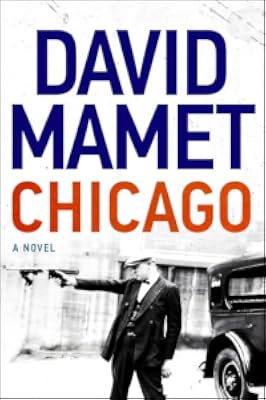
Chicago: A Novel
by David Mamet
On This Page
Description
"A big-shouldered, big-trouble thriller set in mobbed-up 1920s Chicago--a city where some people knew too much, and where everyone should have known better--by the Oscar-nominated screenwriter of The Untouchables and Pulitzer Prize-winning playwright of Glengarry Glen Ross. Mike Hodge--veteran of the Great War, big shot of the Chicago Tribune, medium fry--probably shouldn't have fallen in love with Annie Walsh. Then, again, maybe the man who killed Annie Walsh have known better than to show more trifle with Mike Hodge. In Chicago, David Mamet has created a bracing, kaleidoscopic page-turner that roars through the Windy City's underground on its way to a thunderclap of a conclusion. Here is not only his first novel in more than two decades, but the book he has been building to for his whole career. Mixing some of his most brilliant fictional creations with actual figures of the era, suffused with trademark "Mamet Speak," richness of voice, pace, and brio, and exploring--as no other writer can--questions of honor, deceit, revenge, and devotion, Chicago is that rarest of literary creations: a book that combines spectacular elegance of craft with a kinetic wallop as fierce as the February wind gusting off Lake Michigan"-- "A big shouldered, big trouble thriller set in mobbed up 1920s Chicago--a city where some people knew too much, and where everyone should have known better--by the Oscar-nominated screenwriter of THE UNTOUCHABLES and Pulitzer Prize-winning playwright of GLENGARRY GLEN ROSS"-- show lessTags
Recommendations








Member Reviews
Weirdly anachronistic dialogue combined with deceptive marketing
Mamet can usually be counted on for memorable tough-guy dialogue laced with a liberal use of profanity and the breaking of all rules of grammar ("There is nothing that I will not do" - Spartan; "Put. That coffee. Down. Coffee's for closers only." - Glengarry Glen Ross; "Don't you want to hear my last words?" "I just did." - Heist; etc.). The dialogue in this latest novel (not his usual genre, so one wonders whether an abandoned screenplay or theatrical work was recycled) uses an odd out-of-period Elizabethan or Victorian English in the mouths of the supposed 1920's Prohibition era Chicago characters. At one point after a character jumps into a grave (à la "Hamlet") I show more though the plot might continue with Shakespearean allusions but that didn't come to pass.
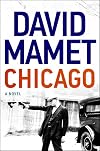
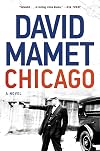
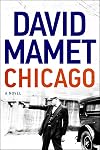
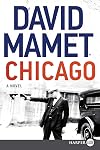
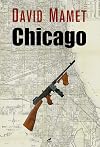
Although the Thompson machine gun depicted on the cover does make a late cameo appearance in the plot, the story has actually very little to do with the gangsters and the Chicago bootlegging wars between the O'Banion and Capone gangs that one would expect in a book promoted as "A Novel of Prohibition." Instead we mostly have two newspapermen fumbling their way through an investigation of a series of homicides that turn out to have nothing to do with the illegal alcohol trade.
#ThereIsAlwaysOne
I listened to the Audible audiobook and was startled to hear about a character's "late demise by lead" with "lead" pronounced to rhyme with "heed" instead of "led." show less
Mamet can usually be counted on for memorable tough-guy dialogue laced with a liberal use of profanity and the breaking of all rules of grammar ("There is nothing that I will not do" - Spartan; "Put. That coffee. Down. Coffee's for closers only." - Glengarry Glen Ross; "Don't you want to hear my last words?" "I just did." - Heist; etc.). The dialogue in this latest novel (not his usual genre, so one wonders whether an abandoned screenplay or theatrical work was recycled) uses an odd out-of-period Elizabethan or Victorian English in the mouths of the supposed 1920's Prohibition era Chicago characters. At one point after a character jumps into a grave (à la "Hamlet") I show more though the plot might continue with Shakespearean allusions but that didn't come to pass.
Although the Thompson machine gun depicted on the cover does make a late cameo appearance in the plot, the story has actually very little to do with the gangsters and the Chicago bootlegging wars between the O'Banion and Capone gangs that one would expect in a book promoted as "A Novel of Prohibition." Instead we mostly have two newspapermen fumbling their way through an investigation of a series of homicides that turn out to have nothing to do with the illegal alcohol trade.
#ThereIsAlwaysOne
I listened to the Audible audiobook and was startled to hear about a character's "late demise by lead" with "lead" pronounced to rhyme with "heed" instead of "led." show less
This is the first David Mamet novel that I've read. Chicago tells a 1920s story about gun-running, the Italian South-side Outfit, the Irish North-siders, a flower-shop girl, a black madame, a singer passing in the speaks, and two Chicago Tribune reporters still dealing with the Great War while happily avoiding the Volstead Act's intended consequences.
The main issue here is that we are more than 100 pages in until the actual plot of the novel begins to truly unfold. Neither the characters nor the dialogue are enough to really compel the reader forward to that point--unless one is just interested in the scene. As a person who loves history and Chicago the city, I had no major issues doing that, but I imagine others could be annoyed.
Also, show more this is neither a thriller nor a true mystery (the solution isn't strictly possible until the end, when the protagonist knows and the narration simply reveals it as a fait accompli). As such, it's hard to figure the genre of this novel and that may be disappointing some of the readers who came expecting X and ended up with Y.
But, if you like 1920s Chicago, David Mamet style conversations, and a wide cast of Chicago's demi-monde, then you will enjoy (though probably not overly so) this book. show less
The main issue here is that we are more than 100 pages in until the actual plot of the novel begins to truly unfold. Neither the characters nor the dialogue are enough to really compel the reader forward to that point--unless one is just interested in the scene. As a person who loves history and Chicago the city, I had no major issues doing that, but I imagine others could be annoyed.
Also, show more this is neither a thriller nor a true mystery (the solution isn't strictly possible until the end, when the protagonist knows and the narration simply reveals it as a fait accompli). As such, it's hard to figure the genre of this novel and that may be disappointing some of the readers who came expecting X and ended up with Y.
But, if you like 1920s Chicago, David Mamet style conversations, and a wide cast of Chicago's demi-monde, then you will enjoy (though probably not overly so) this book. show less
There were so many times I put this book aside that it took about three weeks to read 116 pages. It was slow and meandering. When asked what it was about, I couldn’t answer. It was mostly boring. However, by the end of page 116 I could have answered and the story became focused. I read to the end (p.117 to p. 332) in less than eight hours straight, fully absorbed in the story and characters.
I’d recommend readers to persevere through the first 116 pages as information presented there, though seemingly disconnected, does help develop the main character (and introduce others) and will be useful. It’s really a good story once you get through them.
One thing I especially liked was that I did not guess the resolution at all, but it show more clearly fit both the story and the character. show less
I’d recommend readers to persevere through the first 116 pages as information presented there, though seemingly disconnected, does help develop the main character (and introduce others) and will be useful. It’s really a good story once you get through them.
One thing I especially liked was that I did not guess the resolution at all, but it show more clearly fit both the story and the character. show less
For two weeks, I couldn't wait to read this. An hour into it, I couldn't wait to put it down. Wholly mannered, self-congratulatory writing that calls attention to the author more than his creations. And I love David Mamet.
Chicago Tribune reporter Mike Hodge is an aviator who survived the Great War. He’s covered many stories, written about politicians, gangsters, drug addicts. He knows jazz musician, prostitutes, and bootleggers. He’s also in love with Annie Walsh. And when she falls victim to a killer, Mike sets out to find the murderer . . . and exact revenge.
Set during prohibition in 1920s Chicago, this is a story peopled with a variety of characters: reporters, murderers, and the mob . . . all in a sweeping portrait of Chicago’s underworld. As might be expected for a mob-heavy tale set during the prohibition, there is a great deal of violence and corruption. Readers will find minimal exposition; the story unfolds through dialogue. The weaving of show more real characters and events into the fictional storyline is a strength of the tale; many readers are likely to find this a creative and interesting page-turner. show less
Set during prohibition in 1920s Chicago, this is a story peopled with a variety of characters: reporters, murderers, and the mob . . . all in a sweeping portrait of Chicago’s underworld. As might be expected for a mob-heavy tale set during the prohibition, there is a great deal of violence and corruption. Readers will find minimal exposition; the story unfolds through dialogue. The weaving of show more real characters and events into the fictional storyline is a strength of the tale; many readers are likely to find this a creative and interesting page-turner. show less
The four stars are mostly for the language, at which Mamet excels. The conversations throughout the book may not accurately represent how most spoke in the 20's but they were rich and enjoyable.
I like the story throughout and it came with a satisfying ending.
Did this on audio and the narrator was well matched to the material.
I like the story throughout and it came with a satisfying ending.
Did this on audio and the narrator was well matched to the material.
Great dialog; colorful language; but a bit over engineered! I thought i was reading a play rather than a novel.
Members
- Recently Added By
Lists

Amazon best fictional genre picks monthly for 2018
418 works; 9 members

Kirkus Starred Fiction Reviews of Books Published in 2018
330 works; 3 members
Author Information

209+ Works 11,655 Members
David Mamet, November 30, 1947 - David Mamet was born on November 30, 1947 in Flossmoor, Illinois. He attended Goddard College in Vermont and the Neighborhood Playhouse School of Theater in New York. He began his career as an actor and a director, but soon turned to playwriting. He won acclaim in 1976 with three Off-Broadway plays, "The Duck show more Variations," "Sexual Perversity in Chicago" and "American Buffalo." His work became known for it's strong male characters and the description of the decline of morality in the world. In 1984, Mamet received the Pulitzer Prize in Literature for his play, "Glengarry Glen Ross." In 1981, before he received the Pulitzer, Mamet tried his hand at screenwriting. he started by adapting "The Postman Always Rings Twice," and then adapting his own "Glengarry Glen Ross" as well as writing "The Untouchables" and Wag the Dog." He also taught at Goddard College, Yale Drama School and New York University. Mamet won the Jefferson Award in 1974, the Obie Award in 1976 and 1983, the New York Drama Critics Circle Award in 1977 and 1984, the Outer Circle Award in 1978, the Society of West End Theater Award in 1983, The Pulitzer Prize in 1984, The Dramatists Guild Hall-Warriner Award in 1984, and American Academy Award in 1986 and a Tony Award in 1987. He is considered to be one of the greatest artists in his field. (Bowker Author Biography) show less
Classifications
- Genres
- Fiction and Literature, General Fiction, Historical Fiction, Suspense & Thriller, Mystery
- DDC/MDS
- 813.54 — Literature & rhetoric American literature in English American fiction in English 1900-1999 1945-1999
- LCC
- PS3563 .A4345 .C55 — Language and Literature American literature American literature Individual authors 1961-
- BISAC
Statistics
- Members
- 255
- Popularity
- 128,846
- Reviews
- 11
- Rating
- (2.80)
- Languages
- 5 — English, German, Italian, Spanish, Turkish
- Media
- Paper, Audiobook, Ebook
- ISBNs
- 15
- ASINs
- 3