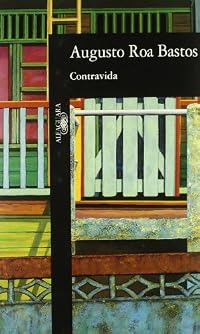
Contravida
by Augusto Roa Bastos
On This Page
Tags
Recommendations




















Member Reviews
Tras una tentativa de fuga, un preso sobrevive al asesinato de sus compañeros de cárcel. Mientras huye, escucha las descargas que van acabando con los demás. Pero también a él lo dan por muerto y enterrado. Su vida, a partir de esta huida, va a convertirse en una odisea, en las etapas de un proceso iniciático, no exentas, a veces, de tensiones suicidas. Todo transcurre entre el sueño y la pesadilla. Augusto Roa Bastos nos transmite en Contravida todo el carácter de su Paraguay: una tierra de pasión y penitencia, con una historia aterradora. Y, al mismo tiempo, el lector siente el desaforado embrujo de su geografía, y aprende que el sufrimiento humano es lección de grandeza y esperanza de remisión. Este libro es un canto a la show more estructura humana frente al Destino y la Naturaleza. Una tragedia americana. show less
Mar 23, 2023Spanish
Ratings
Members
- Recently Added By
Author Information

38+ Works 1,131 Members
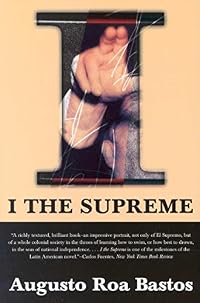
To say that Roa Bastos is the paradigm of the Latin American writer in exile would be no exaggeration. After spending 25 years in Buenos Aires following an abortive conspiracy in the 1940s to overthrow a dictatorship, Roa accepted a teaching position at the Universite de Toulouse-Le Mirail, from which he is now retired. In the mid-1980s, he show more accepted an offer of Spanish citizenship, resigned to his never again living in his native country. Roa Bastos's complex fiction is the attempt to record the "inner" history of Paraguay and to record the many silenced voices: those of the indigenous population (including those who speak the Guarani language, which dominates in Paraguay's bilingual and bicultural society); the original independence fighters and their revolutionary offspring; the marginalized artist who is forced to live, if not an actual exile, an interior exile; and those decent men and women whose very decency exposes them to exploitation and oppression. Roa Bastos's novel Son of Man is his effort to create such an inner history. Passages in an almost biblical style create a panoramic transition between vignettes in which Christ figures represent the injustices of Paraguayan society and its victims' sacrifices. I, the Supreme (1974) is the first-person narrative of Jose Gaspar Rodriguez de Francia, the Enlightenment-inspired Paraguayan strongman of the mid-1800s who sought to create an autochthonous utopia in the Paraguayan heartland. Francia fought against the overwhelming odds of international forces desiring to thwart Paraguay's political independence and to appropriate its natural resources, and Roa Bastos portrays him as a tragic figure. In the novel, he is caught between, on the one hand, the historical necessities of brutal dictatorship and the inevitable destiny of the young South American republics, and, on the other, the profoundly seductive chimeras of sociocultural independence. (Bowker Author Biography) show less
Classifications
Statistics
- Members
- 26
- Popularity
- 1,038,245
- Reviews
- 1
- Rating
- (4.13)
- Languages
- 5 — Dutch, French, German, Portuguese, Spanish
- Media
- Paper
- ISBNs
- 6