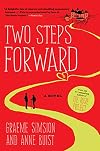
On This Page
Description
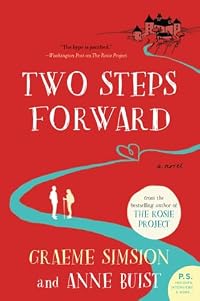
Zoe, a sometime artist, is from California. Martin, an engineer, is from Yorkshire. Both have ended up in picturesque Cluny, in central France. Both are struggling to come to terms with their recent past - for Zoe, the death of her husband; for Martin, a messy divorce. Looking to make a new start, each sets out alone to walk 2000 kilometres from Cluny to Santiago de Compostela, in northwestern Spain, in the footsteps of pilgrims who have walked the Camino (the Way) for centuries. The Camino show more changes you, it's said. It's a chance to find a new version of yourself, and a new beginning. But can these two very different people find themselves? Will they find each other? show lessTags
Recommendations





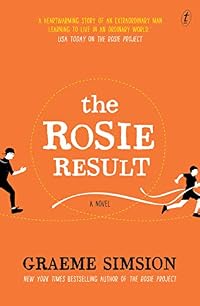
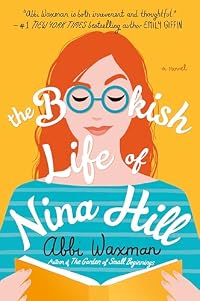
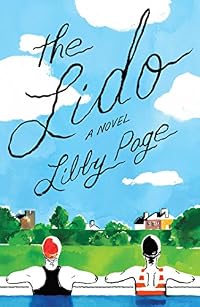

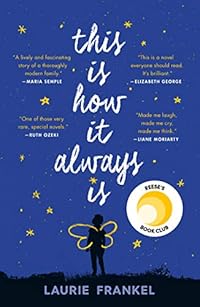






Member Recommendations

Member Reviews
Husband and wife writing team Graeme Simsion and Anne Buist's charming new novel Two Steps Forward was obviously meant for me right now. I had previously read and loved The Rosie Project so the writing was likely to appeal to me. I have been noticing an uptick in the amount of uplifting literature or "up lit" published recently and have been interested not only in the phenomenon but also in these faith-in-humanity restoring stories and what they give to us as readers. And finally I do have a fascination with books about hiking and pilgrimages and the Camino de Santiago in particular pulls at me. With all of that going for it, it's no surprise that I enjoyed this gentle novel.
People undertake pilgrimages for every reason under the sun. show more Zoe, an American, is a recent widow struggling to process the sudden change in her life, her unexpected lack of money, and her re-awakened interest in the art she gave up in order to have children (now grown) and be a wife. She's arrived in Cluny to visit an old college friend as she contemplates what to do with her life now. Martin, a Brit, is an engineer who fled to Cluny, France to teach for a year after his wife's affair with his boss left him both unemployed and divorced. Completely broke, Martin sees a pilgrim on the Camino de Santiago struggling with the trolley he's using to transport his belongings and decides first to see if he can design a better option, and once he does, to try and market it to earn some money. Neither Zoe nor Martin intended to hike the Camino de Santiago (also known as the Chemin or the Way), but it offers each of them a chance to change themselves, their perspectives, and their lives. Zoe will walk it in order to have time to think and to plan her next steps in life, to reflect on her marriage and who she became versus who she wants to be. Martin will walk it to road test his one-wheeled cart as proof to investors that it is everything he claims. But both of them will gain so much more from their walk than just what their original intentions promise.
Starting out within days of each other on their respective walks after having met briefly in Cluny, Zoe and Martin have set (negative) initial ideas about each other and even though they continue to run across each other as they look for places for food and to spend the night, they keep their distance. They each meet a wide variety of fellow travelers as they walk, all of whom have their own reasons for tackling the long and winding way. It is through these fellow pilgrims that Zoe and Martin start to thaw towards each other, coming to value the others' presence on the trail even though long stretches of their time is still spent walking alone. Alternating first person chapters between Zoe and Martin, the reader sees not only their internal motivations for walking but also what they think of each other and of the others they meet along the way. The first person narration also allows the reader to see when and how they each start to confront the things in their life that have brought them to this place and this walk as they learn that no matter how far they go, they cannot out walk the things that burden them and instead must acknowledge them, face them, and either release them or embrace them in order to move forward. Sometimes this knowledge comes as their relationship deepens but at other times it must be learned in solo contemplation.
The novel takes some time to really get going, focused as it is on the walk itself. In the beginning the characters are quite consumed by the purely physical concerns of the journey, finding food and inexpensive shelter, caring for their feet and tired, dirty bodies. It is only later in their respective travels that they start to focus on the emotional aspects of this pilgrimage to find themselves. The pacing is slow and only ever speeds up to leisurely as the novel progresses so readers looking for a romp of any sort are forewarned. Instead of a rollicking adventure, this is a sweet story of starting over, embracing change--good and bad, the goodness of humanity, and second (or third) chances at love. It is a quick and easy read and it is clear to see that Simsion and Buist, who have themselves walked the route that Zoe and Martin take, not only have a knowledge of the Camino but also a strong affection for it and for the changes it made in their own lives. Sweet, sometimes funny, sometimes romantic, and definitely thoughtful, this is a delightful and engaging read. show less
People undertake pilgrimages for every reason under the sun. show more Zoe, an American, is a recent widow struggling to process the sudden change in her life, her unexpected lack of money, and her re-awakened interest in the art she gave up in order to have children (now grown) and be a wife. She's arrived in Cluny to visit an old college friend as she contemplates what to do with her life now. Martin, a Brit, is an engineer who fled to Cluny, France to teach for a year after his wife's affair with his boss left him both unemployed and divorced. Completely broke, Martin sees a pilgrim on the Camino de Santiago struggling with the trolley he's using to transport his belongings and decides first to see if he can design a better option, and once he does, to try and market it to earn some money. Neither Zoe nor Martin intended to hike the Camino de Santiago (also known as the Chemin or the Way), but it offers each of them a chance to change themselves, their perspectives, and their lives. Zoe will walk it in order to have time to think and to plan her next steps in life, to reflect on her marriage and who she became versus who she wants to be. Martin will walk it to road test his one-wheeled cart as proof to investors that it is everything he claims. But both of them will gain so much more from their walk than just what their original intentions promise.
Starting out within days of each other on their respective walks after having met briefly in Cluny, Zoe and Martin have set (negative) initial ideas about each other and even though they continue to run across each other as they look for places for food and to spend the night, they keep their distance. They each meet a wide variety of fellow travelers as they walk, all of whom have their own reasons for tackling the long and winding way. It is through these fellow pilgrims that Zoe and Martin start to thaw towards each other, coming to value the others' presence on the trail even though long stretches of their time is still spent walking alone. Alternating first person chapters between Zoe and Martin, the reader sees not only their internal motivations for walking but also what they think of each other and of the others they meet along the way. The first person narration also allows the reader to see when and how they each start to confront the things in their life that have brought them to this place and this walk as they learn that no matter how far they go, they cannot out walk the things that burden them and instead must acknowledge them, face them, and either release them or embrace them in order to move forward. Sometimes this knowledge comes as their relationship deepens but at other times it must be learned in solo contemplation.
The novel takes some time to really get going, focused as it is on the walk itself. In the beginning the characters are quite consumed by the purely physical concerns of the journey, finding food and inexpensive shelter, caring for their feet and tired, dirty bodies. It is only later in their respective travels that they start to focus on the emotional aspects of this pilgrimage to find themselves. The pacing is slow and only ever speeds up to leisurely as the novel progresses so readers looking for a romp of any sort are forewarned. Instead of a rollicking adventure, this is a sweet story of starting over, embracing change--good and bad, the goodness of humanity, and second (or third) chances at love. It is a quick and easy read and it is clear to see that Simsion and Buist, who have themselves walked the route that Zoe and Martin take, not only have a knowledge of the Camino but also a strong affection for it and for the changes it made in their own lives. Sweet, sometimes funny, sometimes romantic, and definitely thoughtful, this is a delightful and engaging read. show less
Can you imagine walking away from everything you know, everything you have, everyone you love in the name of finding yourself again? Yeah, me neither and yet that's what many do in some way (or completely) when they choose to walk the Camino. The reasons vary as much as the goal sought, but the outcome if given the proper time and attention is all about renewal. A new perspective on the important things in life, a new reason to wake each morning and greet the day with a hearty hello, a new way of living or even letting go...it's all about finding your inner peace, discovering your inner strengths, and allowing life to set you once again on the path meant for you. Zoe had a great heartache to walk for and from, but eventually she was show more able to come to terms with all that was wrapped up in that unexpected goodbye. Martin was seeking new fortune (with some fame), but ended up uncovering past wounds he never realized were still in need of healing. They BOTH learn how to depend on themselves, but also the strength shown in being able to open oneself up to another even after all the ugly has been bared...and yes, there is ugly to share, but there is also glorious hope, humor, and potential for happiness still to come.
When I reached the end of my reading journey and while I wasn't ready to scale mountaintops to proclaim its wonder, I was pleasantly surprised. The paths the character's walked converged and diverged many times along the way, physically and emotionally, and while you can't hope initially for an attachment to form, by book's end it's easier to see it was never about the WE, but the HIM and HER rediscovering themselves; their connection or lack thereof was merely an addendum to which we were lucky to be privy to.
**copy received for review show less
When I reached the end of my reading journey and while I wasn't ready to scale mountaintops to proclaim its wonder, I was pleasantly surprised. The paths the character's walked converged and diverged many times along the way, physically and emotionally, and while you can't hope initially for an attachment to form, by book's end it's easier to see it was never about the WE, but the HIM and HER rediscovering themselves; their connection or lack thereof was merely an addendum to which we were lucky to be privy to.
**copy received for review show less
Enjoyable read. I would like to do the Camino one day and would have by now but due to COVID… well you know. A slow burn at first but a few chapters in and I loved following Zoe, Martin and their tribe of unlikely fellow walkers. A shout out to the Brazilian ladies. Lots of misunderstandings, mishaps and meandering along the way, this fictional story of this pilgrim walk was captivating.
I was also surprised to read that the authors had done the walk twice. Good story by two accomplished authors.
I was also surprised to read that the authors had done the walk twice. Good story by two accomplished authors.
*Free e-book ARC provided by the publisher through Edelweiss/Above the Treeline in exchange for an honest review. No money or other goods were exchanged, and all views are my own.*
Zoe, newly widowed, comes to France to visit her old college roommate, Camille, and - though she's super anti-Catholic and anti-religion - lets fate send her on a pilgrimage down the Camino de Santiago where she's sure she'll learn something. Martin, a British divorce, has his own reasons for walking the Camino: he's going to test out a cart rather than the traditional backpack and see if he can sell his design. The two meet and the wrong kind of sparks fly, but then on the trip though they wind around in different ways, they often seem to meet back up and show more even start a tentative friendship.
The husband-and-wife writing team definitely know the Camino and have walked the routes they describe themselves. The secondary characters are a fun bunch of oddballs with their own histories and reasons for walking. But this middle-aged finding second love romance otherwise fell flat for me. Zoe in particular was unbelievable in many ways - not least of which, at 45, she has a name that didn't reach its popularity until the late 90s-early 00s, at least in the U.S. Possible that her parents were forward-thinking in giving her an unusual name, but her self-awareness struck me as about as clear as most 20-year-olds too. In short, she did not read her age to me at all. It probably didn't help that she was all the things that annoy me most - very "fate will decide" and impulsive, quick to make snap judgments about people, and self-righteous in her world view. And yes, the Camino does change her, but because I started out with an "Are you kidding me?" attitude I'm afraid some of the events that were supposed to evoke a very emotional response in me just got a shrug. Disappointing. show less
Zoe, newly widowed, comes to France to visit her old college roommate, Camille, and - though she's super anti-Catholic and anti-religion - lets fate send her on a pilgrimage down the Camino de Santiago where she's sure she'll learn something. Martin, a British divorce, has his own reasons for walking the Camino: he's going to test out a cart rather than the traditional backpack and see if he can sell his design. The two meet and the wrong kind of sparks fly, but then on the trip though they wind around in different ways, they often seem to meet back up and show more even start a tentative friendship.
The husband-and-wife writing team definitely know the Camino and have walked the routes they describe themselves. The secondary characters are a fun bunch of oddballs with their own histories and reasons for walking. But this middle-aged finding second love romance otherwise fell flat for me. Zoe in particular was unbelievable in many ways - not least of which, at 45, she has a name that didn't reach its popularity until the late 90s-early 00s, at least in the U.S. Possible that her parents were forward-thinking in giving her an unusual name, but her self-awareness struck me as about as clear as most 20-year-olds too. In short, she did not read her age to me at all. It probably didn't help that she was all the things that annoy me most - very "fate will decide" and impulsive, quick to make snap judgments about people, and self-righteous in her world view. And yes, the Camino does change her, but because I started out with an "Are you kidding me?" attitude I'm afraid some of the events that were supposed to evoke a very emotional response in me just got a shrug. Disappointing. show less
I went into this not knowing anything about 'The Chemin', the Camino de Santiago, that pilgrims take every year to the cathedral of Santiago de Compostela in Spain. And learning about the network of routes covering thousands of miles throughout Europe was enjoyable. But I can’t say the same about the intertwining stories of the two main characters, a recently widowed American and a Brit recovering from a rough divorce. At first, I got caught up in the potential romance between a pair of mature adults but a drawn-out series of missteps and miscommunication squelched any interest I had in the outcome. By the end, I really didn’t care one way or the other. Also, this read more like a pitch for a movie script than a novel and the wrap show more up was a little too Hollywood for my taste.
Disclosure: I received a free copy of this book through Librarything Early Reviewers. show less
Disclosure: I received a free copy of this book through Librarything Early Reviewers. show less
 This review was written for LibraryThing Early Reviewers.
Zoe decides to walk the Chermin/Camino on an impulse. Martin is doing it for business reasons. Their paths cross early on, but it isn't until later that they help each other find what each is running from, what each needs to learn. But this isn't a romance, this is a story about the power of the Camino and how it changes the pilgrim who walks it.
Simsion and Buist (partners in life) have walked the Camino twice, so they have experienced this first hand, and so the experiences of their characters ring with truth and honesty. I've been drawn in by Simsion's writing in the Rosie books, and this was even better.
Simsion and Buist (partners in life) have walked the Camino twice, so they have experienced this first hand, and so the experiences of their characters ring with truth and honesty. I've been drawn in by Simsion's writing in the Rosie books, and this was even better.
This review was written for LibraryThing Early Reviewers.A quietly enjoyable novel that tells of two separate travelers' attempts to find peace and meaning while taking a long-distance walk. Graeme Simsion (the author of "The Rosie Project") has co-written the book with Anne Buist, each writing alternative chapters from the perspectives of two middle-aged walkers.
For me, this wasn't the YOU MUST READ IT BOOK that I found in "The Unlikely Pilgrimmage of Harold Fry," (Rachel Joyce) but it was an intriguing story with comic touches about the surprises life deals, how little we actually control, and how solitude and space can help us to find meaning.
As well, I learned a lot about the Camion de Santiago, something that has always interested me. A good beach read.
For me, this wasn't the YOU MUST READ IT BOOK that I found in "The Unlikely Pilgrimmage of Harold Fry," (Rachel Joyce) but it was an intriguing story with comic touches about the surprises life deals, how little we actually control, and how solitude and space can help us to find meaning.
As well, I learned a lot about the Camion de Santiago, something that has always interested me. A good beach read.
This review was written for LibraryThing Early Reviewers.Members
- Recently Added By
Lists

Books Read in 2018
4,360 works; 110 members

Books Read in 2021
5,361 works; 114 members
Author Information

20+ Works 13,488 Members
Graeme Simsion was born in Auckland, New Zealand. His education includes a BSc, GDipC and IS from Monash University, an MBA from Deakin University, a PhD from University of Melbourne, an Advanced Diploma of Screenwriting from RMIT, and a 2014 Diploma of Professional Writing and Editing, RMIT. His Ph.D thesis, Data Modeling: Description or Design, show more was published in 2006. He is a former IT consultant and the author of two nonfiction books on database design. He won the 2012 Victorian Premier's Unpublished Manuscript Award for his book, The Rosie Project, which was published in 2013. It also won the Australian Book Industry's General Fiction Book of the Year for 2014 and the Australian Book Industry's Book of the Year for 2014. The screenplay for this book has been optioned to Sony Pictures Entertainment. In 2014 the sequel, called The Rosie Effect, made the New York Times bestseller list. His 2016 novel, The Best of Adam Sharp, has been optioned by Vocab Films for a screenplay. He has written numerous award-winning short stories. His most recent short stories include The Life and Times of Greasy Joe, The Big Issue, Like It Was Yesterday, Review of Australian Fiction, and Intervention on the Number 3 Tram, Melbourne Writers Festival. (Bowker Author Biography) show less
11 Works 622 Members
Series

Common Knowledge
- Canonical title
- Two Steps Forward
- Original title
- Two Steps Forward
- Alternate titles
- Two Steps Forward: A Novel of Blisters, Second Chances, and Renewal Along the Camino de Santiago
- Original publication date
- 2018-04-05
- People/Characters
- Zoe; Martin
- Important places
- El Camino de Santiago
- Epigraph
- There is a time for departure, even when there is no certain place to go.
- - Tennessee Williams
Midlife is when you reach the top of the ladder and find that it was against the wrong wall.
- - Joseph Campbell - First words
- Fate took the form of a silver scallop shell in the window of an antique store in the medieval French town of Cluny.
- Original language*
- Engels
*Some information comes from Common Knowledge in other languages. Click "Edit" for more information.
Classifications
Statistics
- Members
- 424
- Popularity
- 72,398
- Reviews
- 32
- Rating
- (3.50)
- Languages
- Dutch, English, German, Slovenian
- Media
- Paper, Audiobook, Ebook
- ISBNs
- 35
- ASINs
- 4