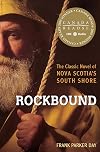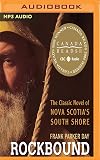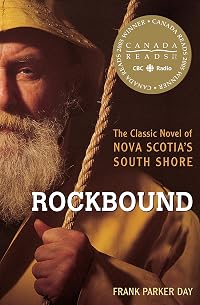
Rockbound
by Frank Parker Day
On This Page
Description
To the harsh domain of Rockbound -- governed by the sternly righteous and rapacious Uriah Jung --comes the youthful David Jung to claim his small share of the island. Filled with dreamy optimism and a love for the unspoken promises of the night sky, David tries to find his way in a narrow, unforgiving, and controlled world. His conflicts are both internal and external, locking him in an unceasing struggle for survival; sometimes the sea is his enemy, sometimes his own rude behavior, show more sometimes his best friend Gershom Born, sometimes his secret love for the island teacher Mary Dauphiny; but always, inevitably, his Jung relatives and their manifold ambitions for money and power. The balance of life on Rockbound is precarious and thus fiercely guarded by all who inhabit its lonely domain, but just as a sudden change in the direction of the wind can lead to certain peril at sea, so too can the sudden change in the direction of a man's heart lead to a danger altogether unknown. Enormously evocative of the power, terror, and dramatic beauty of the Atlantic sea, and unrelenting in its portrait of back-breaking labour, cunning bitterness, and family strife, Rockbound is a story of many passions-love, pride, greed, and yearning -- all formed and buffeted on a small island by an unyielding wind and the rocky landscape of the human spirit. Canada Reads 2005 Winner! In a David and Goliath style battle to the finish, Rockbound by Frank Parker Day triumphed over Oryx and Crake by Margaret Atwood and was declared the 2005 Canada Reads winner. In a series of debates that aired on the CBC in February, panelist Donna Morrissey, author of Kit's Law and Downhill Chance, passionately championed this 1928 novel about life and nature on the small maritime island of Rockbound. The victory has brought this Atlantic Province favourite back into the limelight and is receiving nationwide attention, appearing on several bestseller lists across the country. After its initial publication, Rockbound remained in out of print status until 1973, when the University of Toronto Press acquired the rights to publish as part of their "Literature of Canada Prose and Poetry in Reprint" series. It was reprinted with an introduction by Allan Bevan of Dalhousie University's English Department. In 1989, Gerald Hallowell, an editor with the University of Toronto Press, rescued Rockbound from the backlist of the UTP catalogue. The book was reprinted with an afterword by Gwendolyn Davies, Dean of Graduate Studies and Associate Vice-President (Research) at the University of New Brunswick. UTP had been selling around 200 copies of the book per year, until Donna Morrissey selected it for the Canada Reads debates. Since then, UTP has sold over 35,000 copies and it has been reprinted three times! The University of Toronto Press would like to thank Donna Morrissey for her superb defense of the book and all of the people at the CBC for their support and encouragement. show lessTags
Recommendations
















Member Reviews
Though he looked it not, he was a man of destiny - in small things, it is true, yet in relation to the universe all things upon this earth are small - and this voyage in his yellow dory, a voyage of destiny, less spectacular than Jason's but requiring none the less courage and resolution. For Jason had with him forty heroes and had but to meet a dragon, while David was alone and had to meet Uriah.
It was a harsh life for the fishermen in the islands off Nova Scotia's South Shore in the 1920s, but the people of Ironbound (the real-life equivalent of Rockbound) were insulted and furious at Frank Parker Day's depiction of them as illiterate, superstitious and immoral.
A tale of an orphan who regains his inheritance, family feuds, a tragic show more love triangle, and the endless back-breaking work that the life of the fisher-folk of Rockbound entailed. A book that I really enjoyed after being initially uncertain if I would like it at all. show less
It was a harsh life for the fishermen in the islands off Nova Scotia's South Shore in the 1920s, but the people of Ironbound (the real-life equivalent of Rockbound) were insulted and furious at Frank Parker Day's depiction of them as illiterate, superstitious and immoral.
A tale of an orphan who regains his inheritance, family feuds, a tragic show more love triangle, and the endless back-breaking work that the life of the fisher-folk of Rockbound entailed. A book that I really enjoyed after being initially uncertain if I would like it at all. show less
I love CanLit. It's one of my favourite genres, and I am so proud of our numerous very talented authors in this country. This book is a classic and a fitting winner of the Canada Reads award. The book was written in 1928 by Frank Parker Day, who was born in Nova Scotia. He was schooled in Oxford and in Berlin and came back to North America at the beginning of the Great War. He taught in the States for a while, but came back to Cape Breton to live out the rest of his life. All of Day's experiences with Canadians and the extremely brutal life of Canadian fishermen are honestly and empathicaly portrayed in this dark and savage novel. Yet even in the darkness and within the unrelenting work of the people who live on Rockbound island, we see show more human warmth, compassion and even love. The colloquialisms and the speech patterns from this era, which is pre-WWI, are true to form. They do make for some difficulty following conversations between characters, but I found if I took the time, I could easily figure them out. For example sentences like "Nair a one o' de Rockbound Jungs could do dat." are peppered throughout the book. This speech pattern makes the story more realistic then normal sentences and words would. Life on Rockbound is hard. It's a small island in the Atlantic which is isolated for many months of the year either due to bad storms or winter ice. The people on Rockbound are farmers and fishermen and they all pitch in and work very hard in order to keep food on the table and the wolf from the door. Rockbound breeds a strong, resilient people who will meet any challenge head on. The story and the people of Rockbound will remain with me for a long time. This is a well-deserved winner of the Canada Reads prize. I have always loved stories of the sea and of sea tragedies. The true people of the sea are brave, resourceful and very philosophic about life and death. That comes through very strongly in this book. show less
On a remote island off the southern shore of Novia Scotia, young David ventures to claim a piece of land that is his by inheritance. It's difficult at first to make his livelihood and gain acceptance among the islanders. The community is mostly comprised of two families that are in constant friction. The harsh conditions and rough work make tough men, who are proud of their strength and skill. It was really intriguing reading not only the details about how fishermen make their living, but also the politics on the island, the gossiping and vying for power, the prevalence of ghost stories and superstitions. David's friend becomes keeper of the lighthouse on a small, even lonelier island and it was interesting to read about the work show more involved in tending the lighthouse and ingeniously fixing it up when things broke and no supply ships could get in because of the weather. There's also a love story, acts of forgiveness and revenge, and a picture of how life on the island evolved over time. Machinery replacing some of the work done by cattle, women eventually getting to vote and choose their husbands instead of always being ruled by the men. I even liked the details about managing the land- how the barren rock and thin topsoil was turned into rich gardens by composting with sea wrack- that appealed to the gardener in me! Through it all there's the admirable character of David. He takes his hard knocks and comes through it. He survives shipwreck and debilitating injury, he doesn't stand in his best friends' way when they desire the same future.... I almost didn't get into this book because at first the dialogue written in local slang really threw me off, but before long I got used to it and was caught up in the narrative.
The afterword by Gwendolyn Davies is pretty interesting- it tells about the author's life and research, how the book was first published and its initially poor reception. Apparently the author had visited the fishing community on an island called Ironbound, to learn about the local culture. The inhabitants were offended when the book was finally published- though called fictional, they said it portrayed them in a bad light as being ignorant and crude. The book met strong disfavor and was out of print for over forty years, finally being reprinted in 1973.
more at the Dogear Diary show less
The afterword by Gwendolyn Davies is pretty interesting- it tells about the author's life and research, how the book was first published and its initially poor reception. Apparently the author had visited the fishing community on an island called Ironbound, to learn about the local culture. The inhabitants were offended when the book was finally published- though called fictional, they said it portrayed them in a bad light as being ignorant and crude. The book met strong disfavor and was out of print for over forty years, finally being reprinted in 1973.
more at the Dogear Diary show less
originally published in 1928, 'rockbound' never made much of a splash with book sales, but the novel crops up in CanLit courses across the country. in 2005, the novel was included in Canada Reads - and ended up winning. this was cool because it brought a whole new audience to the book!
set on an island off nova scotia's south shore, the story well depicts the hardships of rural and fishing life, and the challenges of a community almost completely connected as family. the settings are evocative and the characters are interesting. this book is an important part of the canadian canon, and representative of one sort of an Atlantic way of life. but (sorry!), i just didn't find much emotion in the story (for all of the very emotional show more situations that occurred). it felt a bit simplistic at times, and was too tidy at the end.
i am glad i finally had a chance to read this book. i wish i liked it a lot more than i did (to clarify: i liked it. i didn't love it). show less
set on an island off nova scotia's south shore, the story well depicts the hardships of rural and fishing life, and the challenges of a community almost completely connected as family. the settings are evocative and the characters are interesting. this book is an important part of the canadian canon, and representative of one sort of an Atlantic way of life. but (sorry!), i just didn't find much emotion in the story (for all of the very emotional show more situations that occurred). it felt a bit simplistic at times, and was too tidy at the end.
i am glad i finally had a chance to read this book. i wish i liked it a lot more than i did (to clarify: i liked it. i didn't love it). show less
Such a lovely book! Really should be a classic, and I'm glad it was resurrected by U of T and Canada Reads. It follows a basic plot structure, one main likeable protagonist, some not completely evil 'villains,' drama and a bit of romance. Actually, literarily (Shakespearean) speaking, it is a romance because the devil intercedes at one point.
David is a young man with a good work ethic who strives to reclaim his land on a island, Rockbound. There are two feuding families on the island and a local lighthouse. The dialogue is written in dialect, which makes the characters so much more real.
(small spoiler alert)
I just really enjoyed it -- David perseveres and nothing absolutely horrible happens to him, the ending is "happy" (which I show more normally hate) and loose ends are nicely tied up. It's just a cute little story. show less
David is a young man with a good work ethic who strives to reclaim his land on a island, Rockbound. There are two feuding families on the island and a local lighthouse. The dialogue is written in dialect, which makes the characters so much more real.
(small spoiler alert)
I just really enjoyed it -- David perseveres and nothing absolutely horrible happens to him, the ending is "happy" (which I show more normally hate) and loose ends are nicely tied up. It's just a cute little story. show less
This is one of those books I'd never have found except for an online bookgroup, though I think it's been featured in a national reading program in Canada. It was written in 1928 and republished recently with extensive notes.
It's about a small Nova Scotia fishing community on an island named Rockbound in the early 20th century. Two related but feuding families dominate the island. The novel opens when David, an orphan, comes back to the island to live in his mother's house and work for his kinsman, Uriah Jung. David brings a fishing boat, the Phoebe, that he's salvaged and joins the fleet with Uriah, a miser and a manipulator if there ever was one, and his sons, none of whom has the smarts, business acumen or sheer audacity of their show more father. David has sympathetic ties to the Krauses, in the person of Anapest, a Jung who married and became a Krauss (the other party to the feud). Anapest--how she got the name of a rhetorical figure I've no idea!--heads the Krause family. She's a strong woman--one had to be to survive the life on the island--and almost matches Uriah for audacity without having lost her humanity. Still women were inferior in that time and even she advises young women of spirit to follow their fathers' advice on decisions like marriage.
What's fine about the book is the picture of the lives of the fisherman--what and how they fished as well as how they preserved and marketed the fish, the dangers of the sea and of storms breaking over the rocky island, the isolation which is in part self-imposed as the community asserts its superiority over those who live on the mainland. It was a supremely hard life, and those who lived it recognized their own superiority in hard work and tough spirit.
The families on the island are descended from German immigrants of the last century who have lived in an isolation that is clearly on the verge of being breached by the modern world. The entrance of Mary Dauphiny as teacher in a local school promises access to the outside world to the young people who will grow up able to read and write (as many of the fisherman, including David the hero, can't) and to communicate effectively with more language tools than the locale patois.
David's story is mythical in proportion. He starts with nothing, becomes a sterling worker who is not rewarded but who retains the humanity his employer has forfeited. He's assigned the dirty tasks which he does cheerfully. He humbles himself to learn reading and writing as an adult. He's the sole survivor of a hurricane. He loses the love of his life and is generous in his sadness and unlike his friend, the lighthouse keeper, seeks no revenge. And, like Cinderella, wins both love and the place in life he craves in the end. show less
It's about a small Nova Scotia fishing community on an island named Rockbound in the early 20th century. Two related but feuding families dominate the island. The novel opens when David, an orphan, comes back to the island to live in his mother's house and work for his kinsman, Uriah Jung. David brings a fishing boat, the Phoebe, that he's salvaged and joins the fleet with Uriah, a miser and a manipulator if there ever was one, and his sons, none of whom has the smarts, business acumen or sheer audacity of their show more father. David has sympathetic ties to the Krauses, in the person of Anapest, a Jung who married and became a Krauss (the other party to the feud). Anapest--how she got the name of a rhetorical figure I've no idea!--heads the Krause family. She's a strong woman--one had to be to survive the life on the island--and almost matches Uriah for audacity without having lost her humanity. Still women were inferior in that time and even she advises young women of spirit to follow their fathers' advice on decisions like marriage.
What's fine about the book is the picture of the lives of the fisherman--what and how they fished as well as how they preserved and marketed the fish, the dangers of the sea and of storms breaking over the rocky island, the isolation which is in part self-imposed as the community asserts its superiority over those who live on the mainland. It was a supremely hard life, and those who lived it recognized their own superiority in hard work and tough spirit.
The families on the island are descended from German immigrants of the last century who have lived in an isolation that is clearly on the verge of being breached by the modern world. The entrance of Mary Dauphiny as teacher in a local school promises access to the outside world to the young people who will grow up able to read and write (as many of the fisherman, including David the hero, can't) and to communicate effectively with more language tools than the locale patois.
David's story is mythical in proportion. He starts with nothing, becomes a sterling worker who is not rewarded but who retains the humanity his employer has forfeited. He's assigned the dirty tasks which he does cheerfully. He humbles himself to learn reading and writing as an adult. He's the sole survivor of a hurricane. He loses the love of his life and is generous in his sadness and unlike his friend, the lighthouse keeper, seeks no revenge. And, like Cinderella, wins both love and the place in life he craves in the end. show less
Initially it took me a few pages to get into the dialect. After that I thought it was a thoroughly enjoyable read taking one into the harsh life of an east cost fisherman and his struggle to create a his place in this world. Definitely a goodread for this struggling author.
Members
- Recently Added By
Lists

Top Five Books of 2016
795 works; 229 members

Canada Reads Winners and Nominees
129 works; 9 members

CBC's Great Canadian Reading List
149 works; 5 members
Author Information
4 Works 272 Members
Awards and Honors
Awards
Notable Lists
Common Knowledge
- Original publication date
- 1928
- Important places
- Nova Scotia, Canada; Newfoundland, Canada
Classifications
Statistics
- Members
- 265
- Popularity
- 122,156
- Reviews
- 12
- Rating
- (3.81)
- Languages
- English
- Media
- Paper, Audiobook, Ebook
- ISBNs
- 12
- ASINs
- 3