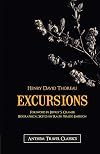
Excursions
by Henry David Thoreau
On This Page
Description
An anthology of several essays by American transcendentalist Henry David Thoreau. The book includes an introduction entitled 'Biographical Sketch' in which fellow transcendentalist Ralph Waldo Emerson provides a description of Thoreau and nine of Thoreau's essays: Natural History of Massachusetts, A Walk to Wachusett, The Landlord, A Winter Walk, The Succession of Forest Trees, Walking, Autumnal Tints, Wild Apples, and Night and Moonlight.Tags
Recommendations






















Member Reviews
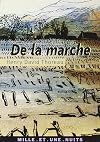
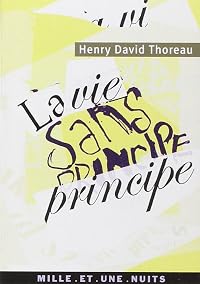
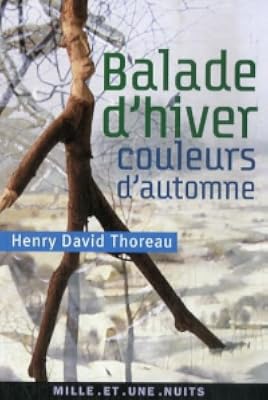
Que l'on me pardonne cette citation empruntée à un fameux personnage de l'Histoire de France, dont le souvenir ravive de mauvais souvenirs. Mais c'est un peu ce que j'ai ressenti à la fin de la lecture de cette conférence de Henry David Thoreau sur la marche et le retour au "sauvage". Car dans l'esprit de l'auteur, ce retour n'est pas simplement l'attention portée à la nature, c'est la contestation même des constructions politiques et sociales humaines qui est mise en avant. Thoreau, en admirateur d'Emerson, reprend également les idées du "bon sauvage" telles quelles étaient exprimées chez Rousseau, lequel mettait aussi en cause la propriété.
Thoreau n'est pas Rousseau et les États-Unis ne sont pas la France. Dans les show more écrits de Thoreau, on voit poindre cette idée de découverte de frontière nouvelle qui fait l'originalité américaine. "L'Ouest" est mythifié dans le texte de cette conférence, bien avant que cela ne soit porté au cinéma ou dans les romans. C'est le mythe de la terre sauvage, de cette aspiration à l'état fusionnel que l'on peut avoir avec la nature, nature vue comme l'état édénique du monde auquel il faut retourner. Nous versons aussi dans le panthéisme car en déifiant la nature, Thoreau n'abolit pas la religion, il en change. Ce n'est pas par hasard si ses écrits ont été à la base d'une forme d'écologisme radical que l'on constate aujourd'hui.
Les idées de Thoreau sont intéressantes mais pas à prendre au pied de la lettre, ce qu'on fait certains (Into the wild) au risque de leur vie. Son apport est dans le fait que les civilisations ne peuvent pas rester centrées sur elles-mêmes et être étrangères à l'environnement naturel qui les entourent. Thoreau conteste l'aspect "prédateur" des sociétés humaines. Il serait difficile de lui chicaner ce constat mais le fait de se tourner exclusivement vers la Nature n'est pas non plus foncièrement un gage de réforme profondes de ces mêmes sociétés.
Pour ma part, c'est le premier livre de Thoreau que je lis. J'en ai apprécié le style, très poétique et délicat. C'est un auteur qui gagne à être lu, tout en sachant faire la part des choses. show less
Thoreau n'est pas Rousseau et les États-Unis ne sont pas la France. Dans les show more écrits de Thoreau, on voit poindre cette idée de découverte de frontière nouvelle qui fait l'originalité américaine. "L'Ouest" est mythifié dans le texte de cette conférence, bien avant que cela ne soit porté au cinéma ou dans les romans. C'est le mythe de la terre sauvage, de cette aspiration à l'état fusionnel que l'on peut avoir avec la nature, nature vue comme l'état édénique du monde auquel il faut retourner. Nous versons aussi dans le panthéisme car en déifiant la nature, Thoreau n'abolit pas la religion, il en change. Ce n'est pas par hasard si ses écrits ont été à la base d'une forme d'écologisme radical que l'on constate aujourd'hui.
Les idées de Thoreau sont intéressantes mais pas à prendre au pied de la lettre, ce qu'on fait certains (Into the wild) au risque de leur vie. Son apport est dans le fait que les civilisations ne peuvent pas rester centrées sur elles-mêmes et être étrangères à l'environnement naturel qui les entourent. Thoreau conteste l'aspect "prédateur" des sociétés humaines. Il serait difficile de lui chicaner ce constat mais le fait de se tourner exclusivement vers la Nature n'est pas non plus foncièrement un gage de réforme profondes de ces mêmes sociétés.
Pour ma part, c'est le premier livre de Thoreau que je lis. J'en ai apprécié le style, très poétique et délicat. C'est un auteur qui gagne à être lu, tout en sachant faire la part des choses. show less
Jan 25, 2011French
> Babelio : https://www.babelio.com/livres/Thoreau-Balades/98859
> « Chercher à soigner l’âme sans référence
au système écologique dont nous sommes
partie intégrante, constitue une forme
d’aveuglement auto-destructeur. »
—Lester R. Brown - Ecopsychology
and environnemental revolution.
> BALADES, de Thoreau, H.D. — Un petit livre d'une douceur inégalé, une balade dans la nature, la contemplation, tel est le message que veut nous livrer cet auteur. Il nous donne le goût de sortir de chez-nous, de nous faire découvrir un état d’être et ce à travers notre quotidien.
—La revue, 18 avril 1995 … ; (Source),
URL : https://collections.banq.qc.ca/ark:/52327/2694639
> « Chercher à soigner l’âme sans référence
au système écologique dont nous sommes
partie intégrante, constitue une forme
d’aveuglement auto-destructeur. »
—Lester R. Brown - Ecopsychology
and environnemental revolution.
> BALADES, de Thoreau, H.D. — Un petit livre d'une douceur inégalé, une balade dans la nature, la contemplation, tel est le message que veut nous livrer cet auteur. Il nous donne le goût de sortir de chez-nous, de nous faire découvrir un état d’être et ce à travers notre quotidien.
—La revue, 18 avril 1995 … ; (Source),
URL : https://collections.banq.qc.ca/ark:/52327/2694639
Jul 11, 2021 (Edited)French
Ratings
Members
- Recently Added By
Lists

Geography and Travel from The Book-Lover
291 works; 1 member
Author Information

618+ Works 49,409 Members
In September 1842, Nathaniel Hawthorne noted this social encounter in his journal: "Mr. Thorow dined with us yesterday. He is a singular character---a young man with much of wild original nature still remaining in him; and so far as he is sophisticated, it is in a way and method of his own. He is as ugly as sin, long-nosed, queer-mouthed, and with show more uncouth and somewhat rustic, although courteous manners, corresponding very well with such an exterior. But his ugliness is of an honest and agreeable fashion, and becomes him much better than beauty. On the whole, I find him a healthy and wholesome man to know." Most responses to Thoreau are as ambiguously respectful as was Hawthorne's. Thoreau was neither an easy person to like nor an easy writer to read. Thoreau described himself as a mystic, a Transcendentalist, and a natural philosopher. He is a writer of essays about nature---not of facts about it but of his ideals and emotions in its presence. His wish to understand nature led him to Walden Pond, where he lived from 1845 to 1847 in a cabin that he built. Though he was an educated man with a Harvard degree, fluent in ancient and modern German, he preferred to study nature by living "a life of simplicity, independence, magnanimity, and trust." Knowing this, we should beware of misreading the book that best reflected this great experience in Thoreau's life: Walden; or, Life in the Woods (1854). It is not a handbook of the simple life. Though there are elements in the book of a "whole-earth catalogue" mentality, to focus on the radical "economic" aspects of Thoreau's work is to miss much in the book. Nor is it an autobiography. The right way to read Walden is as a "transcendental" narrative prose poem, whose hero is a man named Henry, a modern Odysseus in search of a "true America." Thoreau left Walden Pond on September 6, 1846, exactly two years, two months, and two days after he had settled there. As he explained in the pages of Walden: "I left the woods for as good a reason as I went to live there. Perhaps it seemed to me that I had several more lives to live, and could not spare any more time for that one." Growth, change, and development were essential to his character. One should not overlook the significance of his selecting July 4 as the day for taking possession of his residence at Walden Pond, a day that celebrates the establishment of a new government whose highest ideal is individual freedom. In terms of Thoreau's redefinition of the nation-idea, "the only true America" is that place where one may grow wild according to one's nature, where one may "enjoy the land, but own it not." Thoreau believed that each person should live according to individual conscience, willing to oppose the majority if necessary. An early proponent of nonviolent resistance, he was jailed briefly for refusing to pay his poll tax to support the Mexican War and the slave system that had promoted that war. His essay "On Civil Disobedience" (1849), which came from this period of passive resistance, was acknowledged by Mahatma Gandhi (who read it in a South African jail) as the basis for his campaign to free India. Martin Luther King, Jr. later attributed to Thoreau and Gandhi the inspiration for his leadership in the civil rights movement in the United States. Thoreau contracted tuberculosis in 1835 and suffered from it sporadically afterwards. His health declined over three years with brief periods of remission, until he eventually became bedridden. Recognizing the terminal nature of his disease, Thoreau spent his last years revising and editing his unpublished works, particularly The Maine Woods and Excursions, and petitioning publishers to print revised editions of A Week and Walden. He died on May 6, 1862 at age 44. (Bowker Author Biography) show less
Classifications
Statistics
- Members
- 149
- Popularity
- 220,270
- Reviews
- 2
- Rating
- (3.77)
- Languages
- English, French
- Media
- Paper, Ebook
- ISBNs
- 46
- ASINs
- 8