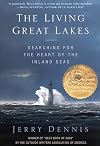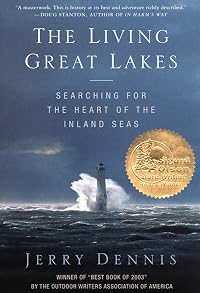
The Living Great Lakes: Searching for the Heart of the Inland Seas
by Jerry Dennis
On This Page
Description
If fresh water is to be treasured, the Great Lakes are the mother lode. No bodies of water can compare to them. One of them, Superior, is the largest lake on earth, and the five lakes together contain a fifth of the world's supply of standing fresh water. Their surface area of 95,000 square miles is greater than New York, New Jersey, Connecticut, Massachusetts, Vermont, New Hampshire, and Rhode Island combined. They are so vast that they dominate much of the geography, climate, and history show more of North America. In one way or another, they affect the lives of tens of millions of people. The Living Great Lakes is the most complete book ever written about the history, nature, and science of these remarkable lakes at the heart of North America. From the geological forces that formed them to the industrial atrocities that nearly destroyed them, to the greatest environmental success stories of our time, the lakes are portrayed in all their complexity. The book, however, is much more than just history. It is also the story of the lakes as told by biologists, fishermen, sailors, and others whom Jerry Dennis grew to know while traveling with them on boats and hiking with them on beaches and islands. show lessTags
Recommendations










































Member Reviews
Even though I live in Michigan, I was a little concerned when I picked up this book that my interest in the topic wouldn't last the length of the book. Dennis turns out to be an excellent storyteller, however, and provides evocative descriptions of history and his own experiences on the Great Lakes. The thread through the book is a trip he and a mostly seasoned crew took across the Great Lakes, up the Erie Canal, to the Atlantic Ocean, to deliver a tall ship to its new owner. Along the way he fills out the narrative with historical and natural details about the areas they sail through. This sort of book isn't a typical read for me, but it turned out to be an excellent companion this summer.
Wow, what an amazing book!
I may not be the most objective reviewer, living as I do so near to these wonders, but I heartily recommend this book. For anyone who appreciates these lakes' beauty, who is awed by their presence, who enjoys time spent on the water or at the beach or in the surrounding region: this book is for you. If you have never seen them, you may enjoy learning about them. But if you have seen them—if you have ever lived where a baby's first words are Dada, Mama, and LakeEffect—then this book will be like coming home.
An in-depth (haha) look at the Great Lakes, covering their history, their ecology, their present environmental concerns, their surrounding areas (both American and Canadian), the people who have lived and show more worked on them, the weather patterns, the mechanics of sailing, the different types of ships, famous Great Lakes shipwrecks, the architecture of the bridges, firsthand accounts of adventures on the Lakes, contrasts with the salt oceans, and even observations from famous writers on the unique properties of these five massive bodies of water. And it's all interspersed with his own memoirs, in which he details his own adventures on the water.
The good:
• Clear writing
• Excellent detail
• Explained complicated subject matter clearly
• Well-sourced
• Adventure! Excitement! Human drama! Survival and death on the Inland Seas!
• Excellent treatment of people the author knew. His fellow shipmates felt well-crafted and nuanced.
• Excellent treatment of the human history surrounding the lake. Details about different Native American nations who interacted with the lakes, as well as America, Canada, and European countries.
• Took the time to explain the science involved
• Warm, conversational tone
• Information about famous events, places, and things that are connected to the lakes, such as the Edmund Fitzgerald disaster, the Great Chicago and Peshtigo fires, and the Mackinac Bridge.
• Jerry Dennis's genuine love of these lakes shines through and informs the whole of the book
The bad:
• Hey, maybe I'll think of something to put here.
Amazing. show less
I may not be the most objective reviewer, living as I do so near to these wonders, but I heartily recommend this book. For anyone who appreciates these lakes' beauty, who is awed by their presence, who enjoys time spent on the water or at the beach or in the surrounding region: this book is for you. If you have never seen them, you may enjoy learning about them. But if you have seen them—if you have ever lived where a baby's first words are Dada, Mama, and LakeEffect—then this book will be like coming home.
An in-depth (haha) look at the Great Lakes, covering their history, their ecology, their present environmental concerns, their surrounding areas (both American and Canadian), the people who have lived and show more worked on them, the weather patterns, the mechanics of sailing, the different types of ships, famous Great Lakes shipwrecks, the architecture of the bridges, firsthand accounts of adventures on the Lakes, contrasts with the salt oceans, and even observations from famous writers on the unique properties of these five massive bodies of water. And it's all interspersed with his own memoirs, in which he details his own adventures on the water.
The good:
• Clear writing
• Excellent detail
• Explained complicated subject matter clearly
• Well-sourced
• Adventure! Excitement! Human drama! Survival and death on the Inland Seas!
• Excellent treatment of people the author knew. His fellow shipmates felt well-crafted and nuanced.
• Excellent treatment of the human history surrounding the lake. Details about different Native American nations who interacted with the lakes, as well as America, Canada, and European countries.
• Took the time to explain the science involved
• Warm, conversational tone
• Information about famous events, places, and things that are connected to the lakes, such as the Edmund Fitzgerald disaster, the Great Chicago and Peshtigo fires, and the Mackinac Bridge.
• Jerry Dennis's genuine love of these lakes shines through and informs the whole of the book
The bad:
• Hey, maybe I'll think of something to put here.
Amazing. show less
For three years, my family and I lived in South Bend, Indiana. In slightly more than 30 minutes, we could be on a beach on the southeast shore of Lake Michigan. My kids dug in the sand and played in the waves, while my husband and I took pictures of sunsets and fell in love with Lake Michigan. We still vacation there often, and this year, I picked up Jerry Dennis's book at a small bookshop in Leelanau.
The Living Great Lakes is part natural history, part travel memoir, and part cautionary environmental tale. Much of the book recounts Dennis's trip from Traverse City, MI to Bangor, ME as a crewmember aboard a tall schooner. Along the way, he peppers his adventures with historical stories and present-day challenges faced by the Great show more Lakes. The end result is a book that helped me better understand the breadth of the impact of these lakes on the economy, the environment, and the people who take the time to find the heart of them. show less
The Living Great Lakes is part natural history, part travel memoir, and part cautionary environmental tale. Much of the book recounts Dennis's trip from Traverse City, MI to Bangor, ME as a crewmember aboard a tall schooner. Along the way, he peppers his adventures with historical stories and present-day challenges faced by the Great show more Lakes. The end result is a book that helped me better understand the breadth of the impact of these lakes on the economy, the environment, and the people who take the time to find the heart of them. show less
http://tinyurl.com/axjdk7m
Yet another example of fantastic science writing. And my second of two in a row that puts the author front and center in the drama surrounding the science.
Clearly, I am not correct in thinking that Rebecca Skloot was unique in making her personal story an important and integral part of The Immortal Life of Henrietta Lacks. Because that's also what Jerry Dennis does in this volume-- in order to tell the story of the Great Lakes, he actually journeys them, describing his feelings and his crew mates' feelings about the adventure, interspersing the adventurous sections with science, history and discussions of pest control.
And in the process, you learn a lot about the Lakes while being entertained. I live smack dab show more between 3 (4 if you count interestingly) of the Lakes, so this was more interesting to me than perhaps for most peopled. But I'd be surprised if people around the world wouldn't be alternately thrilled, saddened and educated by this book. It's quite well written-- he has a poetic side that does him credit for a book of this scope. How do you appropriately describe waves? Dunes? Vast expanses of blue? Poetry has to be in your blood to do that.
Also, water in general? I have a far healthier respect for all aspects of it than I did before reading this. show less
Yet another example of fantastic science writing. And my second of two in a row that puts the author front and center in the drama surrounding the science.
Clearly, I am not correct in thinking that Rebecca Skloot was unique in making her personal story an important and integral part of The Immortal Life of Henrietta Lacks. Because that's also what Jerry Dennis does in this volume-- in order to tell the story of the Great Lakes, he actually journeys them, describing his feelings and his crew mates' feelings about the adventure, interspersing the adventurous sections with science, history and discussions of pest control.
And in the process, you learn a lot about the Lakes while being entertained. I live smack dab show more between 3 (4 if you count interestingly) of the Lakes, so this was more interesting to me than perhaps for most peopled. But I'd be surprised if people around the world wouldn't be alternately thrilled, saddened and educated by this book. It's quite well written-- he has a poetic side that does him credit for a book of this scope. How do you appropriately describe waves? Dunes? Vast expanses of blue? Poetry has to be in your blood to do that.
Also, water in general? I have a far healthier respect for all aspects of it than I did before reading this. show less
rabck from bookstogive; author has lied all his life on Lake Michigan. He talks his way into being a crew member on a tall ship schooner, on a month long journey through the great lakes ending up in Maine. Throughout the book, he interweaves tidbits about current day issues, interviews or researches information from biologists, fishermen, sailors and others, to weave a very comprehensive book on these 3 bodies of fresh water. With the exception of the Erie Canal, and the school acronym "HOMES", I really knew nothing about the lakes. Now I'm inclined to visit some of the museums and other locales mentioned in the book.
This book provides a nice balance of memoir and factual information about the Great Lakes. The author recounts his experience in a Chicago to Mackinac sailing race and sailing through the Great Lakes from Traverse City to the coast of Maine on a tall ship. In his telling of these adventures and growing up near Lake Michigan, he sprinkles information about the geological formation of the Great Lakes, history and lore of shipwrecks, and such things as sport fishing, water pollution, and the future of the Great Lakes. The book was well-paced and clearly written. Overall, it was entertaining and interesting to read.
I have read this book twice, but than again I am from Michigan. I grew up there and this book takes me back to a state that will alway remain in my heart. A wonderful approach to writing about a state with a travel story on a sail boat around the Great Lakes starting in Chicago, through to the Erie Canal out to the Hudson. I highly recommend it.
Members
- Recently Added By
Author Information
22 Works 755 Members
Jerry Dennis is the author of numerous books on the Great Lakes. His work has appeared in the New York Times, Smithsonian, Audubon, National Geographic Traveler, and Gray's Sporting Journal.
Awards and Honors
Awards
Notable Lists
Common Knowledge
Classifications
- Genres
- Science & Nature, Nonfiction, General Nonfiction, Travel, Biography & Memoir
- DDC/MDS
- 977 — History & geography History of North America North central United States
- LCC
- F551 .D39 — Local History of the United States, Canada and Latin America United States local history The Lake region. Great Lakes
- BISAC
Statistics
- Members
- 309
- Popularity
- 104,000
- Reviews
- 9
- Rating
- (4.21)
- Languages
- English
- Media
- Paper, Audiobook, Ebook
- ISBNs
- 7
- ASINs
- 2